
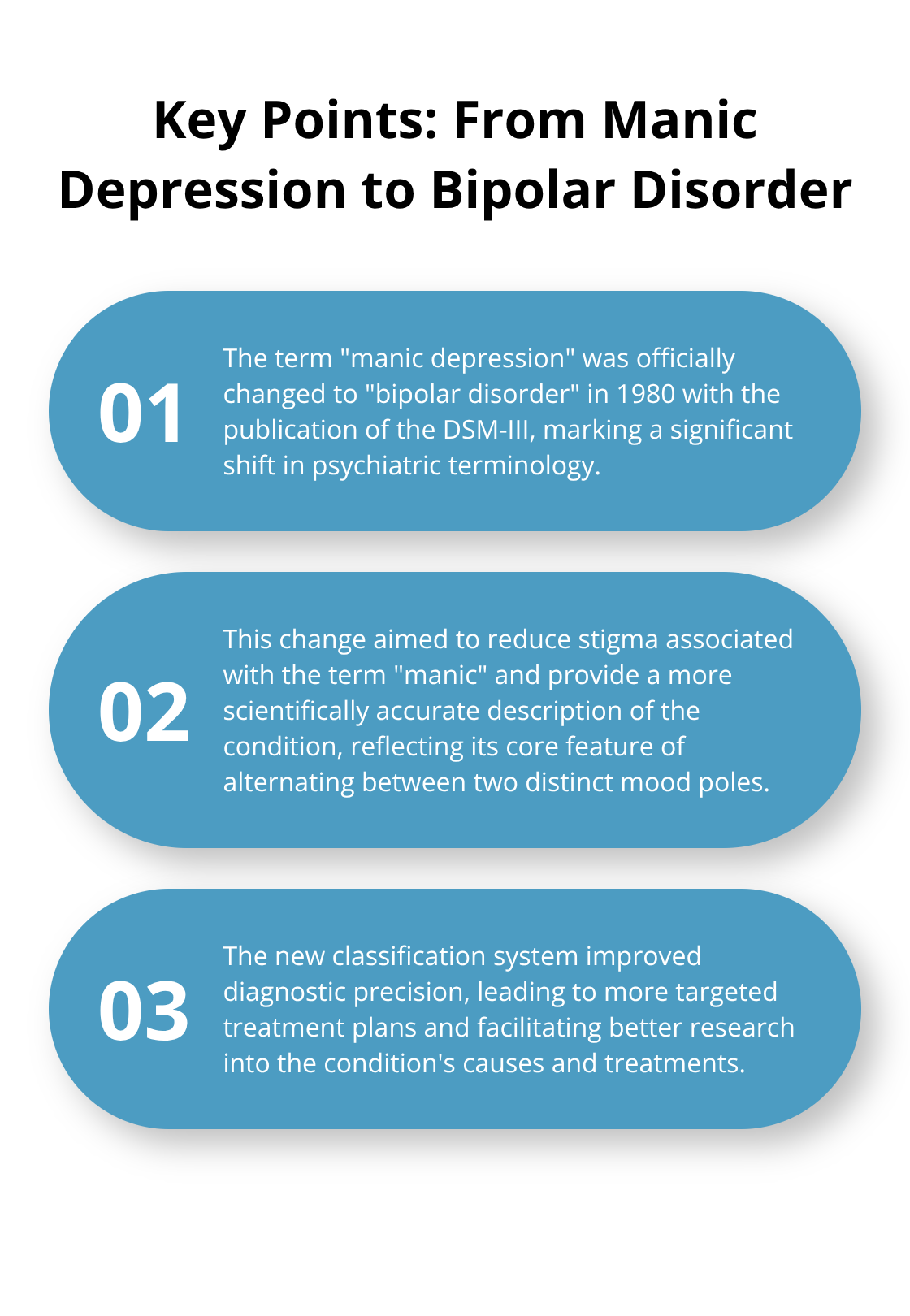
The terminology shift from manic depression to bipolar disorder represents one of psychiatry’s most significant diagnostic changes. This transformation occurred in 1980 when the DSM-III officially adopted the new classification system.
We at Equilibrium Mental Health Services understand how this evolution improved both diagnostic precision and patient care. The change reduced stigma while providing clearer treatment pathways for millions of Americans living with this condition.
How Did Early Psychiatrists First Identify Manic Depression?
Ancient Greek Foundations
The roots of manic depression trace back to ancient Greece, where Hippocrates documented extreme mood states and termed severe sadness melancholia. He linked these conditions to an imbalance of black bile in the body. Aretaeus of Cappadocia advanced this understanding in the first century when he proposed that melancholia and mania existed on a connected spectrum as brain-related conditions.
The French Medical Breakthrough
The formal medical classification didn’t emerge until the 1800s when French psychiatrist Jean-Pierre Falret published an article in 1851 describing what he called “la folie circulaire,” which translates to circular insanity. Falret became the first doctor to recognize that severe mood swings represented a single disorder rather than separate conditions. His colleague Jules Baillarger introduced folie à double forme, which described how mania could evolve into depression without intervals between episodes.
The German Classification Revolution
Emil Kraepelin revolutionized psychiatric diagnosis in the early 1900s when he created the comprehensive category of manic-depressive insanity. His work unified various mood disorders under one classification system that influenced medical practice for decades. Kraepelin’s approach differed from previous doctors because he focused on long-term patterns rather than individual episodes.
Modern Diagnostic Foundations
German psychiatrist Karl Leonhard later distinguished bipolar conditions from unipolar depression in the 1950s, which set the stage for modern diagnostic systems. These early psychiatrists relied primarily on observation and detailed patient histories since modern brain imaging and genetic testing didn’t exist. Treatment options remained limited to basic sedatives, physical restraints, and institutionalization.
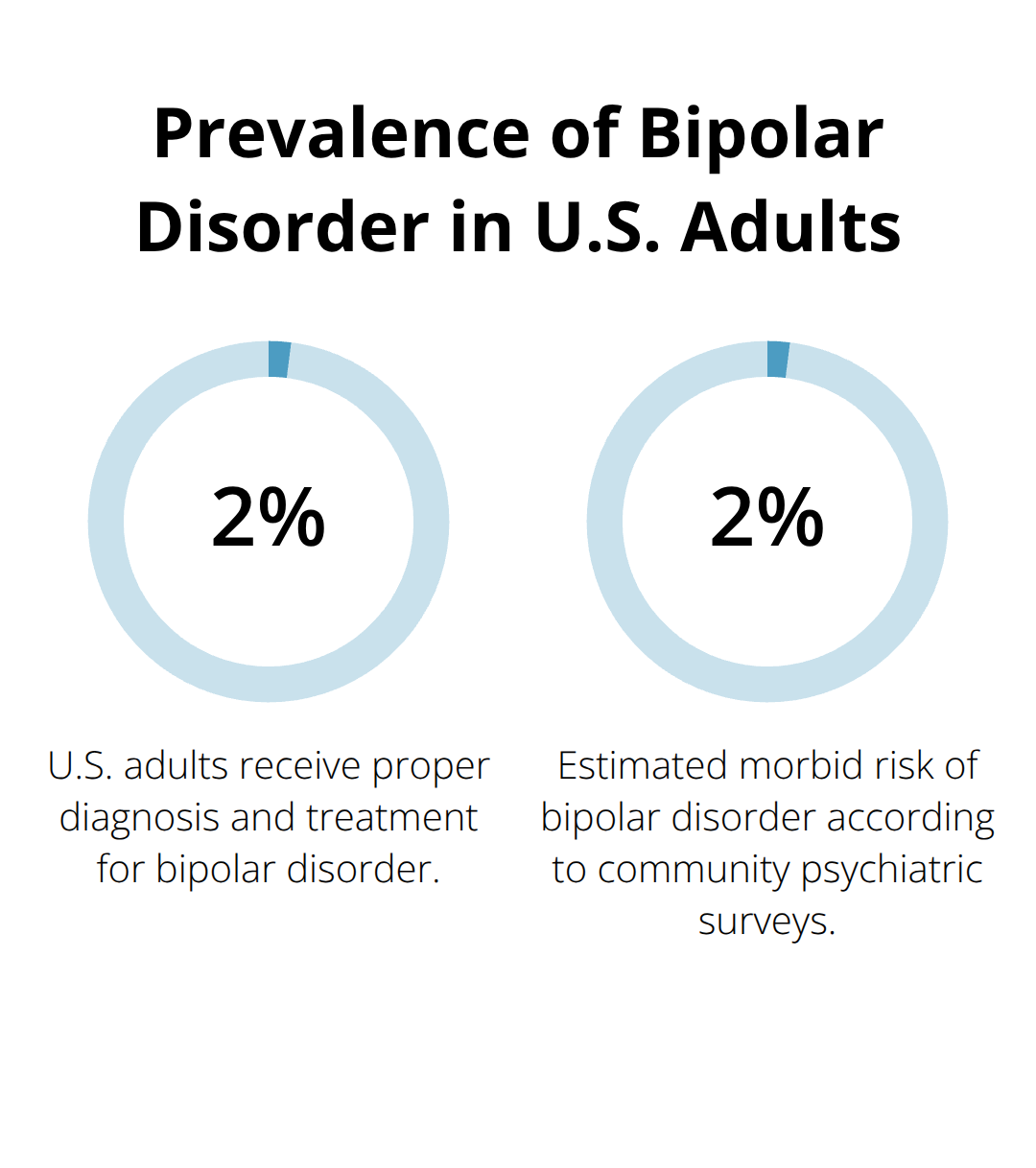
The National Institute of Mental Health notes that approximately 2.8% of U.S. adults now receive proper diagnosis and treatment for bipolar disorder-a dramatic improvement from the era when patients faced lifelong confinement. For those seeking specialized care today, Miami psychiatry offers comprehensive treatment options. This foundation of clinical observation and classification would prove essential when the American Psychiatric Association faced pressure to modernize their diagnostic manual in the late 1970s.
Why Did Psychiatrists Change Manic Depression to Bipolar Disorder?
The Stigma Problem That Demanded Action
The American Psychiatric Association faced mounting pressure in the late 1970s to address the harmful stigma attached to manic depression. Mental health professionals observed that patients avoided treatment because the term “manic” carried negative connotations in popular culture. The word “manic” suggested violent or unpredictable behavior, which prevented accurate public understanding of the condition.
Community psychiatric surveys suggest a morbid risk of bipolar disorder of around 2–2.5%, though this likely includes many false-positives. The APA recognized that terminology changes could improve treatment rates and patient outcomes significantly.
Scientific Precision Drives the 1980 Classification
The DSM-III introduced bipolar disorder as a more scientifically accurate term that reflected the condition’s core feature: alternating between two distinct mood poles. The term manic depression was changed to bipolar disorder with the 1980 publication of the third revision of the Diagnostic and Statistical Manual of Mental Disorders. This change eliminated confusion between manic depression and major depressive disorder, which had caused widespread misdiagnosis throughout the medical community.
The new classification system divided bipolar disorder into specific subtypes based on episode severity and duration. Bipolar I required at least one manic episode that lasted seven days or required hospitalization, while Bipolar II featured hypomanic episodes without full mania.
Improved Diagnostic Accuracy Changes Patient Care
The reclassification brought significant improvements to patient care and diagnostic precision. Patients received more precise diagnoses that led to targeted treatment plans rather than generic mood disorder approaches, which often proved ineffective for bipolar symptoms.
Mental health professionals could now distinguish between different types of mood episodes more clearly. This precision allowed doctors to prescribe appropriate medications and therapy approaches based on specific bipolar subtypes rather than broad categories.
The terminology change also facilitated better research into the condition’s causes and treatments. Scientists could study distinct patient populations with similar symptom patterns, which accelerated the development of evidence-based treatment protocols. For comprehensive bipolar disorder treatment, consider consulting with Miami psychiatry specialists who understand these modern diagnostic approaches.
How Does Modern Psychiatry Diagnose Bipolar Disorder Today?
Current Diagnostic Standards Transform Patient Care
The DSM-5 establishes four distinct bipolar disorder classifications that replace the vague manic depression category. Bipolar I requires at least one manic episode that lasts seven days or requires hospitalization, while Bipolar II features hypomanic episodes without full mania alongside major depressive episodes. Cyclothymic disorder involves milder mood swings that persist for at least two years, and unspecified bipolar disorder covers clinically significant symptoms that don’t meet other criteria.
Mental health professionals now use standardized mood episode criteria that include specific duration requirements, functional impairment measures, and symptom severity scales. The National Institute of Mental Health reports that 83% of bipolar cases are severe, yet proper diagnosis often takes 3.28 years from the first outpatient visit until hospitalization.
Evidence-Based Treatments Deliver Real Results
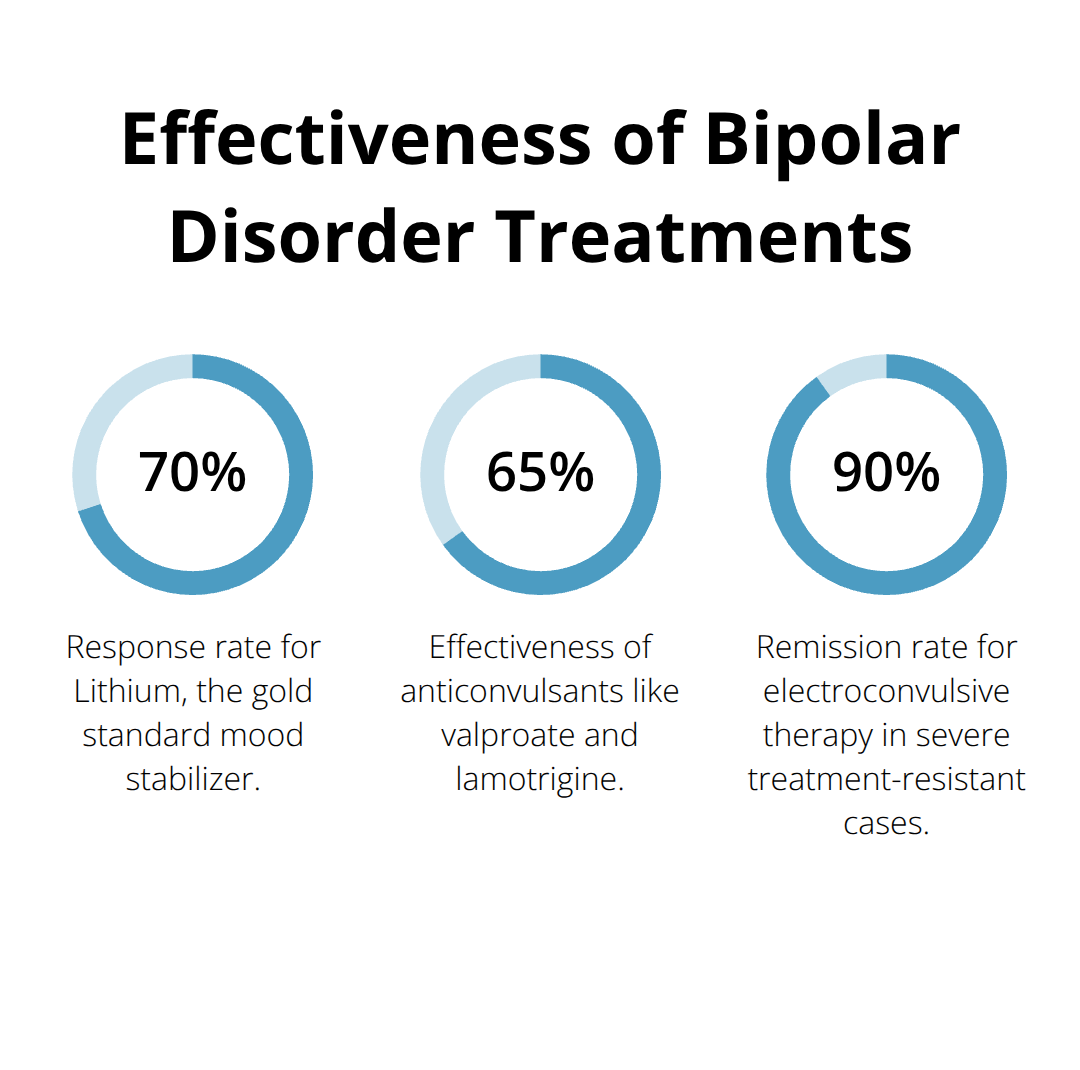
Modern treatment combines FDA-approved medications with targeted psychotherapy approaches that produce measurable outcomes. Lithium remains the gold standard mood stabilizer with a 70% response rate, while anticonvulsants like valproate and lamotrigine show effectiveness in 60-65% of patients according to clinical trials.
Cognitive behavioral therapy and dialectical behavior therapy reduce episode frequency by 40% when doctors combine them with medication management. Electroconvulsive therapy achieves 80-90% remission rates for severe treatment-resistant cases.
How the Name Change Improved Treatment Outcomes
The terminology change eliminated diagnostic confusion that previously led to antidepressant monotherapy, which triggered manic episodes in 25% of bipolar patients. Today’s patients receive comprehensive treatment plans that address both acute episodes and long-term maintenance (resulting in significantly improved quality of life measures and reduced hospitalization rates compared to the manic depression era).
Specialists in Miami psychiatry now provide integrated care approaches that were impossible under the old classification system. Modern diagnostic precision allows psychiatrists to tailor treatment protocols to specific bipolar subtypes rather than apply generic mood disorder interventions.
Final Thoughts
The transformation from manic depression to bipolar disorder in 1980 marked a pivotal moment in psychiatric history. This terminology change eliminated harmful stigma while doctors gained clearer diagnostic criteria that improved patient outcomes across the United States. When did manic depression become bipolar disorder? The DSM-III publication revolutionized how mental health professionals understand and treat this complex condition.
The new classification system enabled doctors to distinguish between different mood episode types and develop targeted treatment approaches. Today’s evidence-based treatments combine medication management with specialized psychotherapy techniques that produce measurable results. Patients receive personalized care plans rather than generic approaches that often proved ineffective under the old system (which frequently led to misdiagnosis and inappropriate treatments).
We at Equilibrium Mental Health Services provide comprehensive bipolar disorder treatment that follows these modern diagnostic standards. Our team specializes in evidence-based psychiatric care and offers both medication management and psychotherapy tailored to each individual’s unique needs. If you experience mood swings or suspect you might have bipolar disorder, professional evaluation with Miami psychiatry specialists can provide the clarity and treatment options you need to achieve better mental health outcomes.


