
At Equilibrium Mental Health Services, we often encounter patients who appear happy on the outside but struggle internally. This phenomenon, known as smiling depression, is a complex and often misunderstood condition.
Smiling depression can be challenging to recognize, as those affected may seem to lead normal, successful lives while battling intense emotional pain. In this post, we’ll explore the signs, symptoms, and treatment options for this hidden form of depression.
What Is Smiling Depression?
The Hidden Face of Depression
Smiling depression describes a form of depression where individuals appear happy and well-adjusted on the outside while battling intense emotional pain internally. This condition often goes unnoticed, as those affected maintain successful careers, active social lives, and seemingly positive relationships.
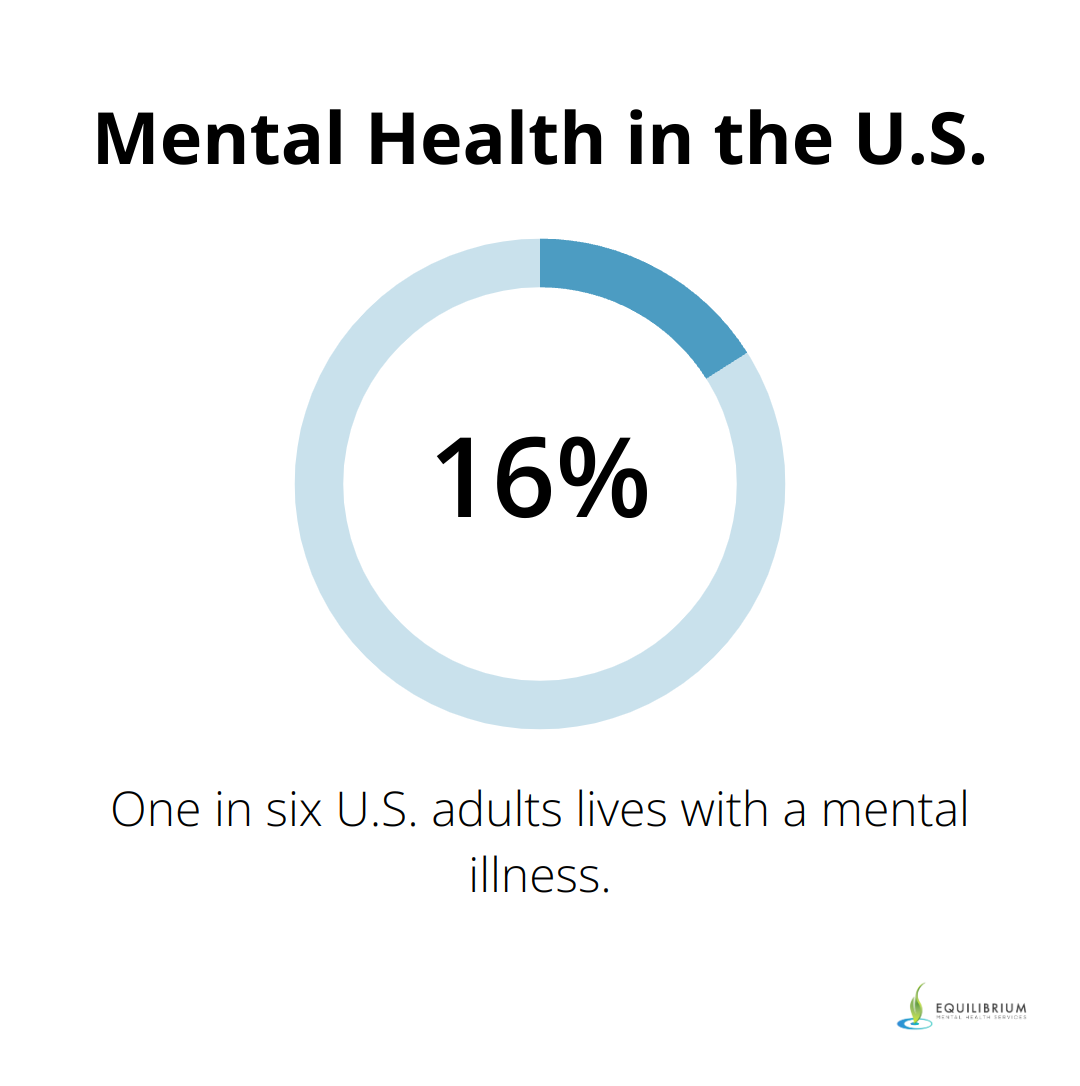
One in six U.S. adults lives with a mental illness. However, the number of people suffering from smiling depression is likely higher due to its concealed nature.
The Dangers Behind the Smile
One of the most significant risks associated with smiling depression is the increased likelihood of suicide. Because these individuals often maintain their energy levels and ability to function, they may plan and attempt suicide without raising suspicion from those around them.
Recognizing the Signs
While smiling depression can be difficult to detect, there are some signs to watch for:
- Perfectionism and unrealistic self-expectations
- Excessive people-pleasing behaviors
- Difficulty expressing negative emotions
- Physical symptoms (changes in appetite or sleep patterns)
- Increased irritability or mood swings when alone
Breaking the Stigma
A common misconception about smiling depression is that it’s not as severe as other forms of depression. This belief can prevent individuals from seeking the help they need. It’s important to understand that all forms of depression are serious and require professional attention.
In Coral Gables and surrounding areas, mental health professionals work to educate the community about the realities of smiling depression. Raising awareness encourages more people to seek help and support.
The Importance of Professional Help
If you notice signs of smiling depression in yourself or a loved one, seeking professional help is essential. Mental health experts can provide comprehensive assessments to identify and address smiling depression effectively.
Treatment options may include psychotherapy (such as Cognitive Behavioral Therapy), medication when necessary, and lifestyle changes. A combination of these approaches often yields the best results.
As we move forward, let’s explore the specific signs and symptoms of smiling depression in more detail, helping you better understand this complex condition and its impact on daily life.
Unmasking Smiling Depression: The Hidden Face of Mental Health
The Facade of Happiness
Smiling depression presents a deceptive condition that often escapes notice. People with this form of depression maintain successful careers, active social lives, and seemingly positive relationships. They often become the life of the party, always ready with a joke or a helping hand. This outward appearance makes it challenging for friends, family, and even healthcare professionals to recognize the underlying pain.
A study by the National Institute of Mental Health found that nearly 7% of U.S. adults experienced at least one major depressive episode in the past year. However, this number likely underestimates the prevalence of smiling depression due to its concealed nature.
The Internal Battlefield
Behind closed doors, individuals with smiling depression grapple with intense negative thoughts and emotions. They experience feelings of worthlessness, hopelessness, and overwhelming sadness. These internal struggles lead to a sense of isolation, as the person feels unable to share their true feelings with others.
Dr. Sarah Johnson, a psychiatrist in Coral Gables, notes, “Many patients describe feeling like they live a double life. They put on a brave face for the world but feel empty and alone when they’re by themselves.”
Physical Manifestations
Smiling depression also manifests in physical symptoms. These include:
- Changes in sleep patterns (insomnia or excessive sleeping)
- Fluctuations in appetite and weight
- Unexplained aches and pains
- Fatigue and low energy levels
These symptoms often appear subtle and people easily attribute them to other factors, which makes diagnosis challenging.
Impact on Daily Life and Relationships
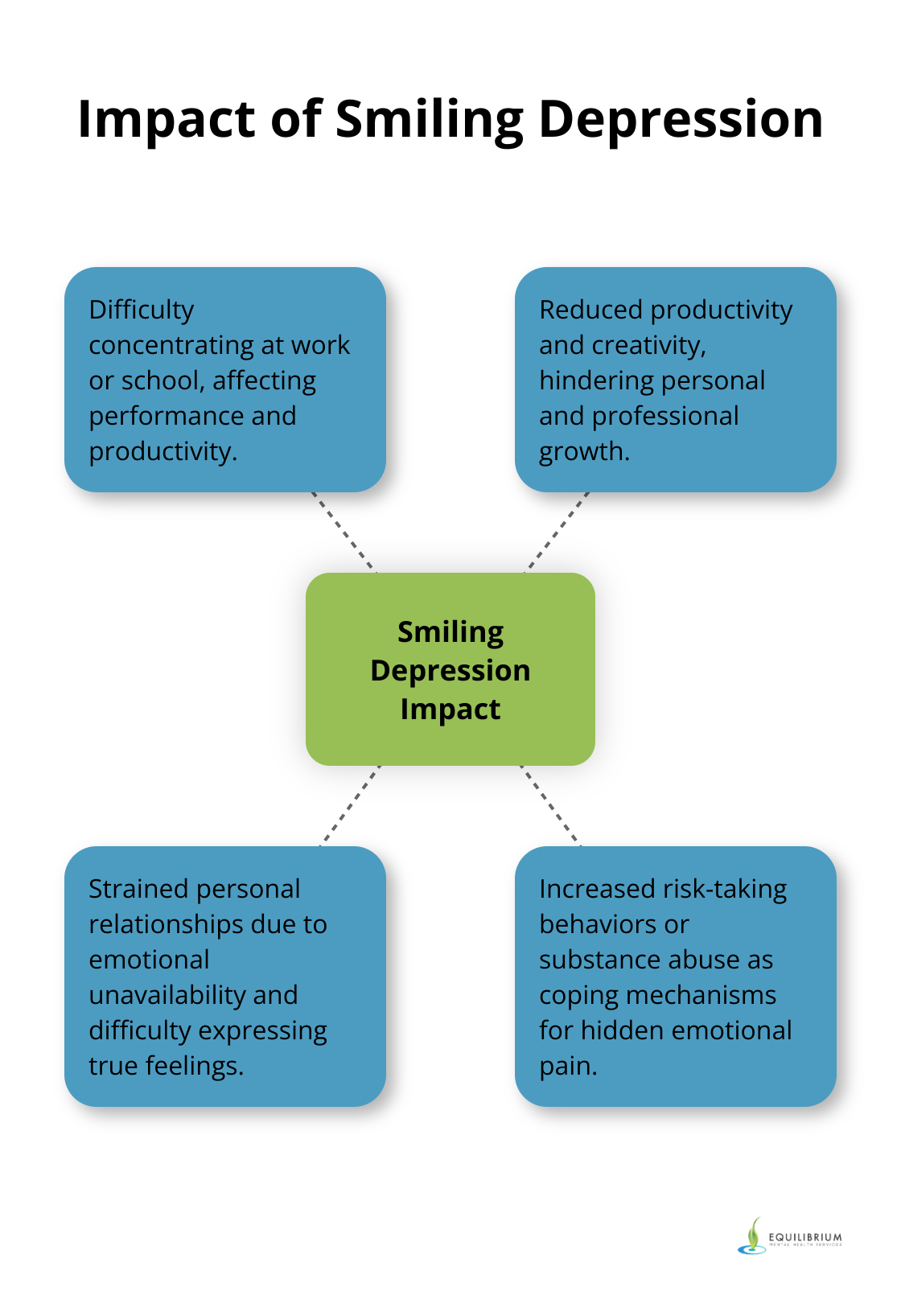
While individuals with smiling depression appear to function well, the condition significantly impacts their quality of life. They struggle with:
- Difficulty concentrating at work or school
- Reduced productivity and creativity
- Strained personal relationships due to emotional unavailability
- Increased risk-taking behaviors or substance abuse as coping mechanisms
In Pinecrest and surrounding areas, smiling depression appears particularly prevalent among high-achieving professionals and students. The pressure to maintain a perfect image exacerbates the condition.
Recognizing the Signs
While smiling depression proves difficult to detect, some signs to watch for include:
- Perfectionism and unrealistic self-expectations
- Excessive people-pleasing behaviors
- Difficulty expressing negative emotions
- Physical symptoms (changes in appetite or sleep patterns)
- Increased irritability or mood swings when alone
The next chapter will explore effective treatment options for those struggling with smiling depression, providing hope and guidance for individuals seeking help in the Miami area.
How Can Smiling Depression Be Treated?
The First Step: Professional Help
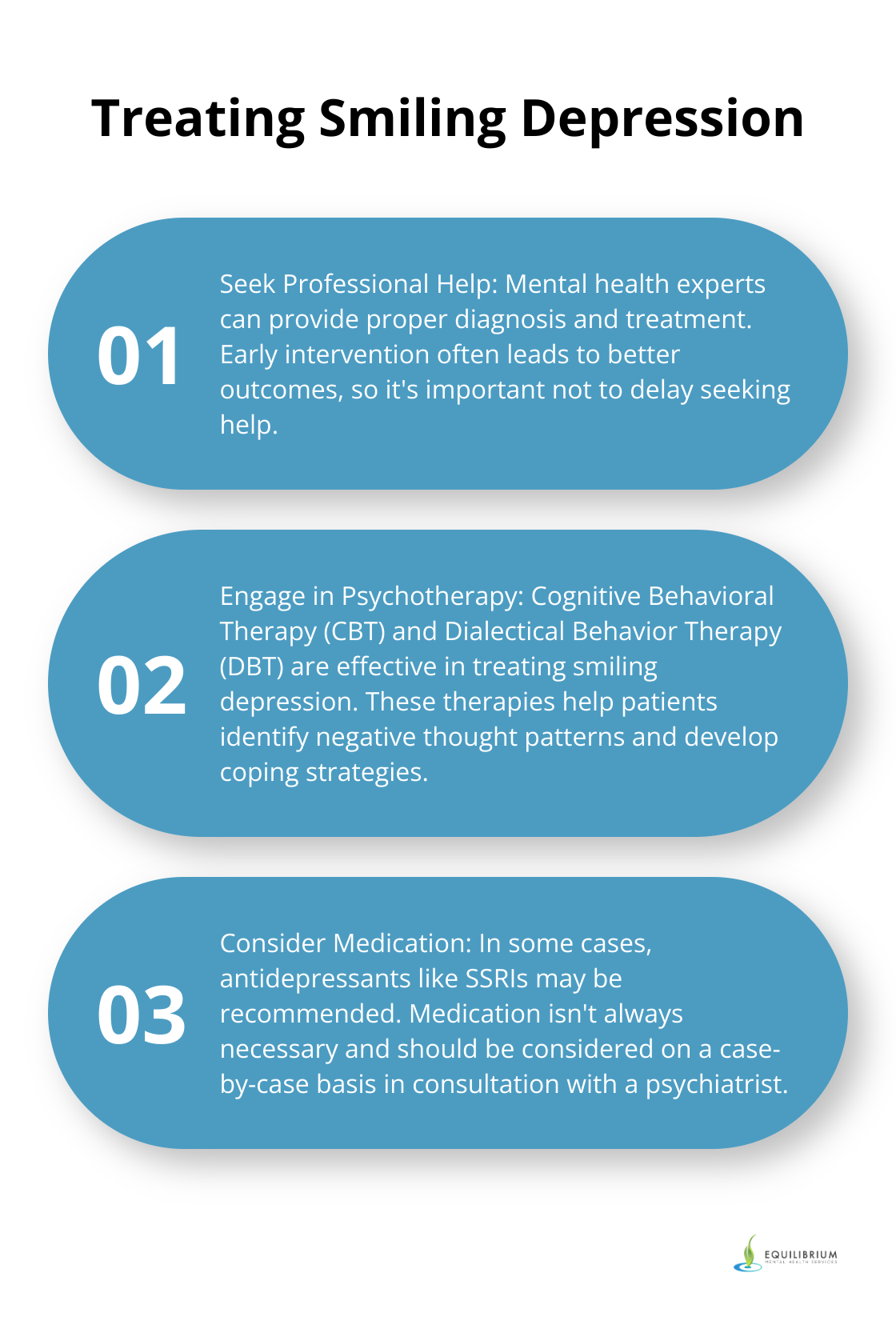
Seeking professional help is essential for effectively managing smiling depression. Many people avoid reaching out, fearing judgment or believing they can handle it alone. However, mental health experts have the tools and knowledge to provide proper diagnosis and treatment.
In Miami and surrounding areas, mental health professionals use various assessment methods to identify smiling depression. These may include in-depth interviews, questionnaires, and psychological evaluations. Early intervention often leads to better outcomes, so it’s important not to delay seeking help if you suspect you or a loved one may experience smiling depression.
Psychotherapy: A Powerful Tool
Psychotherapy plays a vital role in treating smiling depression. Smiling depression is depression disguised. From the outside, people with smiling depression may appear cheerful, even joyful.
Another approach gaining traction is Dialectical Behavior Therapy (DBT). DBT teaches skills for emotional regulation, distress tolerance, and interpersonal effectiveness. These skills prove especially beneficial for those with smiling depression who struggle to express their true feelings.
Medication: When Necessary
In some cases, medication may be recommended as part of the treatment plan. Antidepressants, such as selective serotonin reuptake inhibitors (SSRIs), can help alleviate symptoms of depression. However, medication isn’t always necessary and should be considered on a case-by-case basis.
Dr. Emily Rodriguez, a psychiatrist in Coral Gables, emphasizes, “Medication can be a valuable tool, but it’s not a one-size-fits-all solution. We carefully evaluate each patient’s needs and preferences before recommending any medication.”
Lifestyle Changes and Self-Care
While professional help forms the cornerstone of treatment, lifestyle changes and self-care strategies play a crucial supporting role. Regular exercise, for instance, has significant mood-boosting effects.
Maintaining a consistent sleep schedule also proves vital. Establishing good sleep hygiene can significantly improve mood and overall well-being.
Mindfulness-based interventions are effective in improving obsessive-compulsive symptoms, depression symptoms, and mindfulness skills immediately post-intervention when compared to control.
If you’re in the Pinecrest area and struggling with smiling depression, don’t hesitate to reach out to Equilibrium Mental Health Services (https://g.co/kgs/Toi7gBP). Our team is here to help you on your journey to better mental health.
Final Thoughts
Smiling depression presents a unique challenge in mental health. It hides behind a mask of happiness, which makes it difficult for individuals and their loved ones to recognize and address. Professional help plays an essential role in addressing this often-overlooked form of depression.
Equilibrium Mental Health Services provides expert, evidence-based psychiatric care for adults struggling with various mental health conditions (including smiling depression). Our team offers personalized treatment plans that may include psychotherapy and medication management when necessary. We also provide guidance on lifestyle changes to support mental well-being.
You don’t have to face this challenge alone – help and hope are available. If you’re in the Coral Gables area and struggle with smiling depression or any other mental health concern, we encourage you to reach out. Our dedicated professionals stand ready to support you on your journey towards improved mental health and a more fulfilling life.


