
Depression affects millions of people worldwide, manifesting in various stages and intensities. Understanding these stages of depression is crucial for early recognition and effective treatment.
At Equilibrium Mental Health Services, we’ve seen firsthand how proper identification of depression stages can lead to more targeted and successful interventions. This blog post will guide you through the different stages, their symptoms, and available treatment options.
The Five Faces of Depression
Depression manifests in various forms and intensities. Understanding these different faces of depression helps recognize symptoms and seek appropriate help.
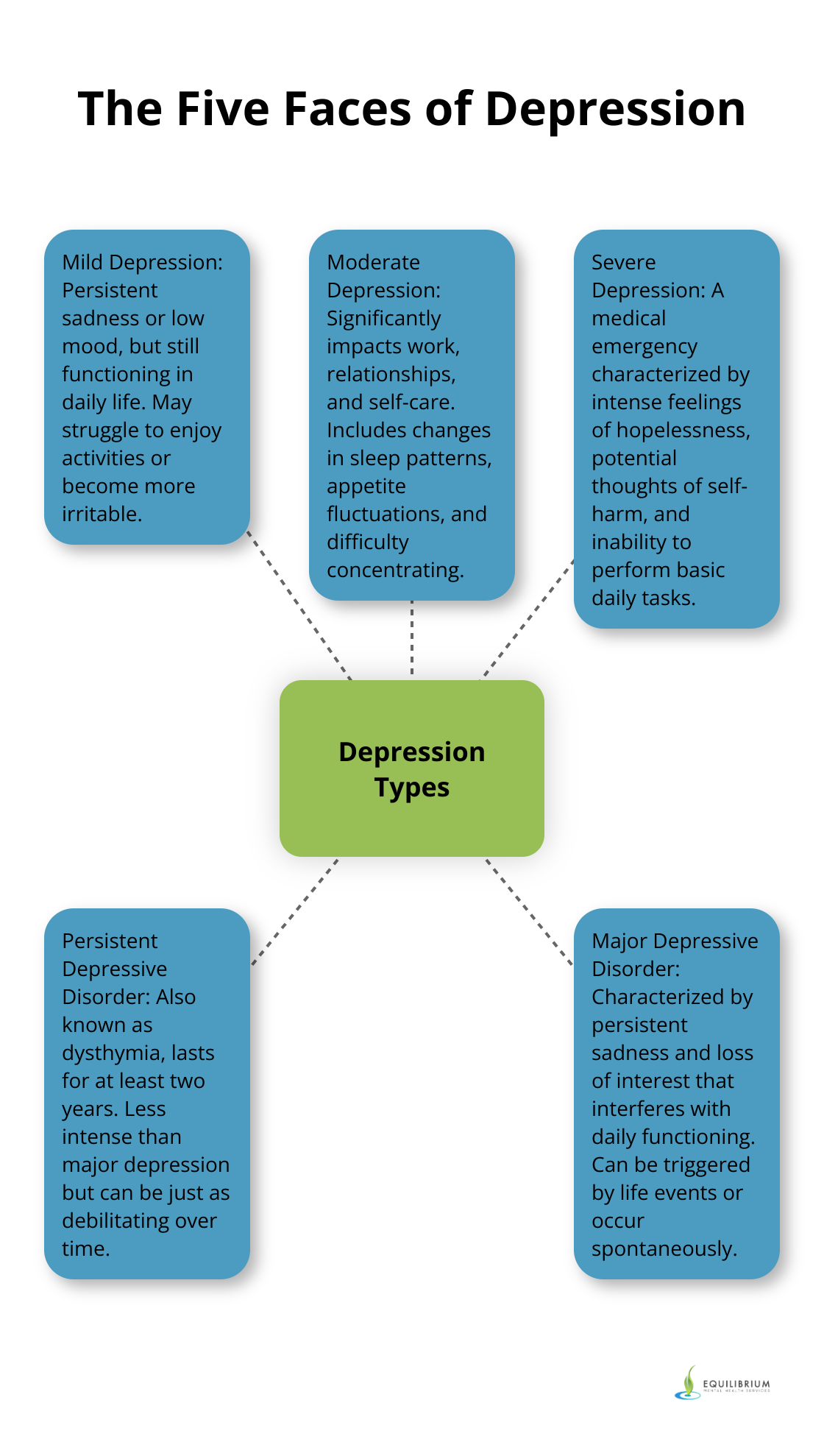
Mild Depression: The Silent Struggle
Mild depression often flies under the radar. People with this form feel persistently sad or low but still function in daily life. They struggle to enjoy activities they once loved or become more irritable than usual. If these symptoms persist for more than two weeks, it’s worth seeking an evaluation.
Moderate Depression: When Life Loses Its Color
As depression intensifies, it becomes harder to ignore. Moderate depression significantly impacts work, relationships, and self-care. Symptoms include changes in sleep patterns, appetite fluctuations, and difficulty concentrating. It often sneaks up on people, dismissed as “just a phase” until it starts affecting daily functioning.
Severe Depression: A Crisis Point
Severe depression constitutes a medical emergency. It’s characterized by intense feelings of hopelessness, potential thoughts of self-harm, and an inability to perform basic daily tasks. Immediate professional help becomes crucial for those experiencing severe depression.
Persistent Depressive Disorder: The Long-Term Battle
Also known as dysthymia, this type of depression lasts for at least two years. It’s less intense than major depression but can be just as debilitating over time. Persistent depressive disorder is not as severe as major depression, but the current depressed mood may be mild, moderate or severe. Management often involves a combination of therapy and medication.
Major Depressive Disorder: The Perfect Storm
Major Depressive Disorder (MDD) represents what most people think of as “clinical depression.” It’s characterized by a persistent feeling of sadness and loss of interest that can interfere with your daily functioning. MDD can be triggered by life events or occur spontaneously.
Personalized treatment plans prove essential in addressing depression (regardless of its form or severity). Whether you’re dealing with mild symptoms or a severe episode, professional help can make a significant difference. Don’t let depression steal your joy – take the first step towards better mental health by reaching out to a mental health professional.
As we move forward, it’s important to recognize the specific symptoms associated with each stage of depression. Understanding these signs can help individuals and their loved ones identify when it’s time to seek help.
DepressionAwareness #MentalHealthMatters #HopeForDepression #MiamiMentalHealth #EquilibriumMHS
Recognizing Depression’s Warning Signs
Depression manifests differently for everyone, but certain symptoms often appear across various stages. We at Equilibrium Mental Health Services in Miami have observed these common signs in our patients.
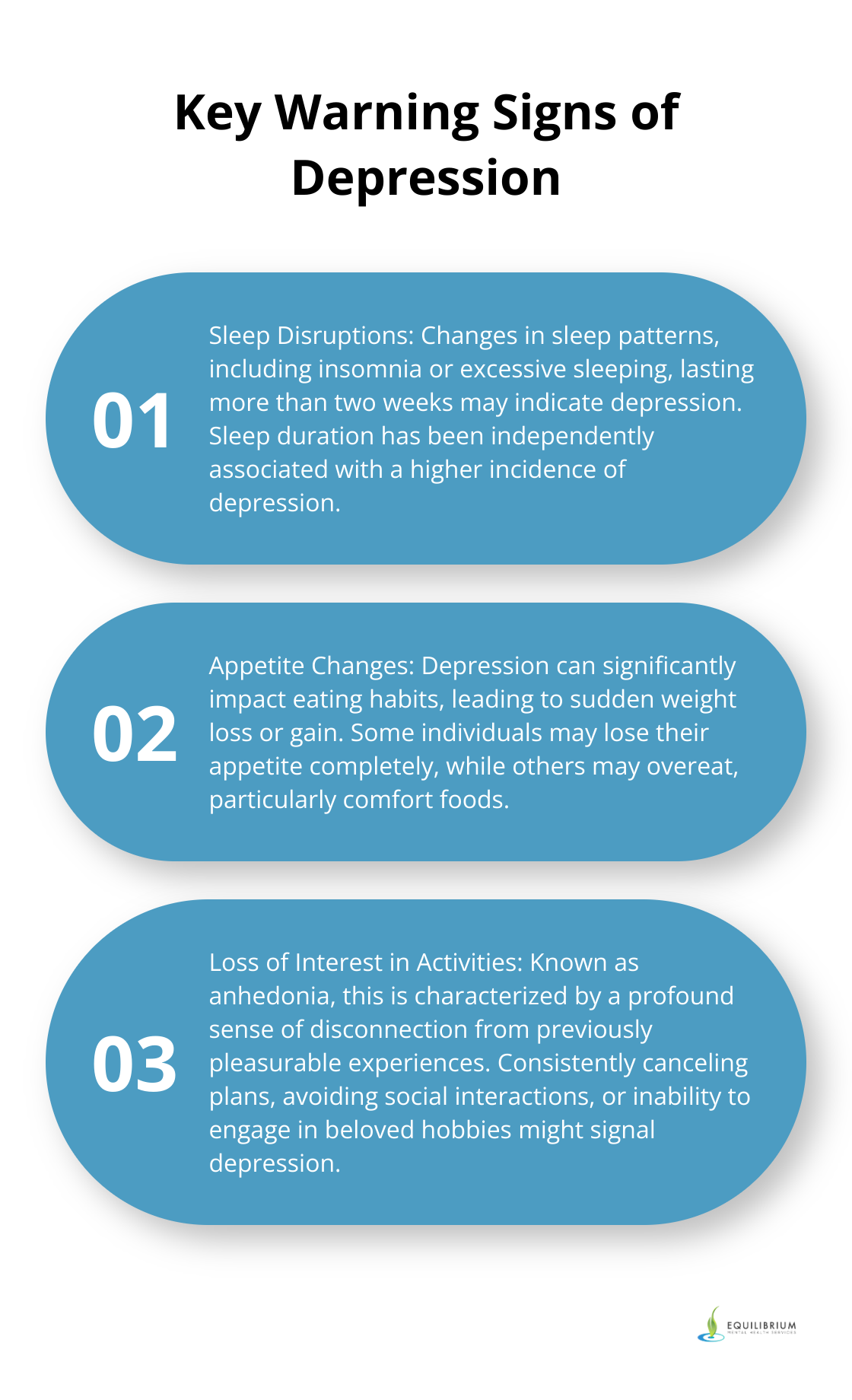
Sleep Disruptions: Beyond Insomnia
Sleep changes often signal the first noticeable symptom. This isn’t just about insomnia. Some people sleep excessively, while others struggle to fall asleep or wake up frequently. A study found that sleep duration was independently associated with a higher incidence of depression in a cross-sectional study based on the National Health and Nutrition Examination Survey.
Persistent changes in sleep patterns lasting more than two weeks warrant discussion with a mental health professional. Our team at Equilibrium can determine if these changes relate to depression or another underlying issue.
The Appetite Rollercoaster
Depression significantly impacts eating habits. Some individuals lose their appetite completely, while others overeat, particularly comfort foods. A recent study aimed to investigate how depressive symptoms affect bodyweight change (gain and loss), and how this association is intertwined with other factors.
Sudden weight loss or gain (especially when accompanied by other symptoms) can affect overall health and may indicate the need for professional intervention.
When Hobbies Lose Their Appeal
Loss of interest in once-enjoyed activities (known as anhedonia) characterizes depression. It’s not just about not enjoying things anymore; it’s a profound sense of disconnection from previously pleasurable experiences.
Consistently canceling plans, avoiding social interactions, or inability to engage in beloved hobbies might signal the need for help. At Equilibrium Mental Health Services in Coral Gables, we offer tailored approaches to help reconnect you with joy-bringing activities.
The Fog of Depression
Cognitive changes often go overlooked but can significantly impact daily functioning. Difficulty concentrating, making decisions, or remembering details are common cognitive symptoms of depression.
These symptoms can affect work performance and personal relationships. If you struggle with focus or memory, don’t hesitate to reach out to our team at Equilibrium. We can determine if these issues relate to depression and develop strategies to improve cognitive function.
The Physical Toll of Depression
Depression isn’t just a mental health condition; it can manifest physically too. Chronic fatigue, unexplained aches and pains, and a general feeling of heaviness are common.
Persistent physical symptoms alongside mood changes require a comprehensive evaluation. Our team at Equilibrium Mental Health Services can determine if these symptoms relate to depression and develop a holistic treatment plan.
Early recognition of these symptoms can lead to more effective treatment. If you or a loved one experience any of these signs, reach out to us at Equilibrium Mental Health Services (https://g.co/kgs/Toi7gBP). Our experienced team in Brickell provides compassionate, evidence-based care tailored to your unique needs.
Now that we’ve explored the warning signs of depression, let’s examine the various treatment options available for different stages of this condition.
DepressionSymptoms #MentalHealthAwareness #MiamiMentalHealth #HolisticCare #EquilibriumMHS
Tailoring Treatment to Your Depression Stage
Depression treatment requires a personalized approach. The most effective strategy depends on the stage and severity of your symptoms. At Equilibrium Mental Health Services in Coral Gables, we create individualized treatment plans that adapt to your needs.
Psychotherapy: The Foundation of Depression Treatment
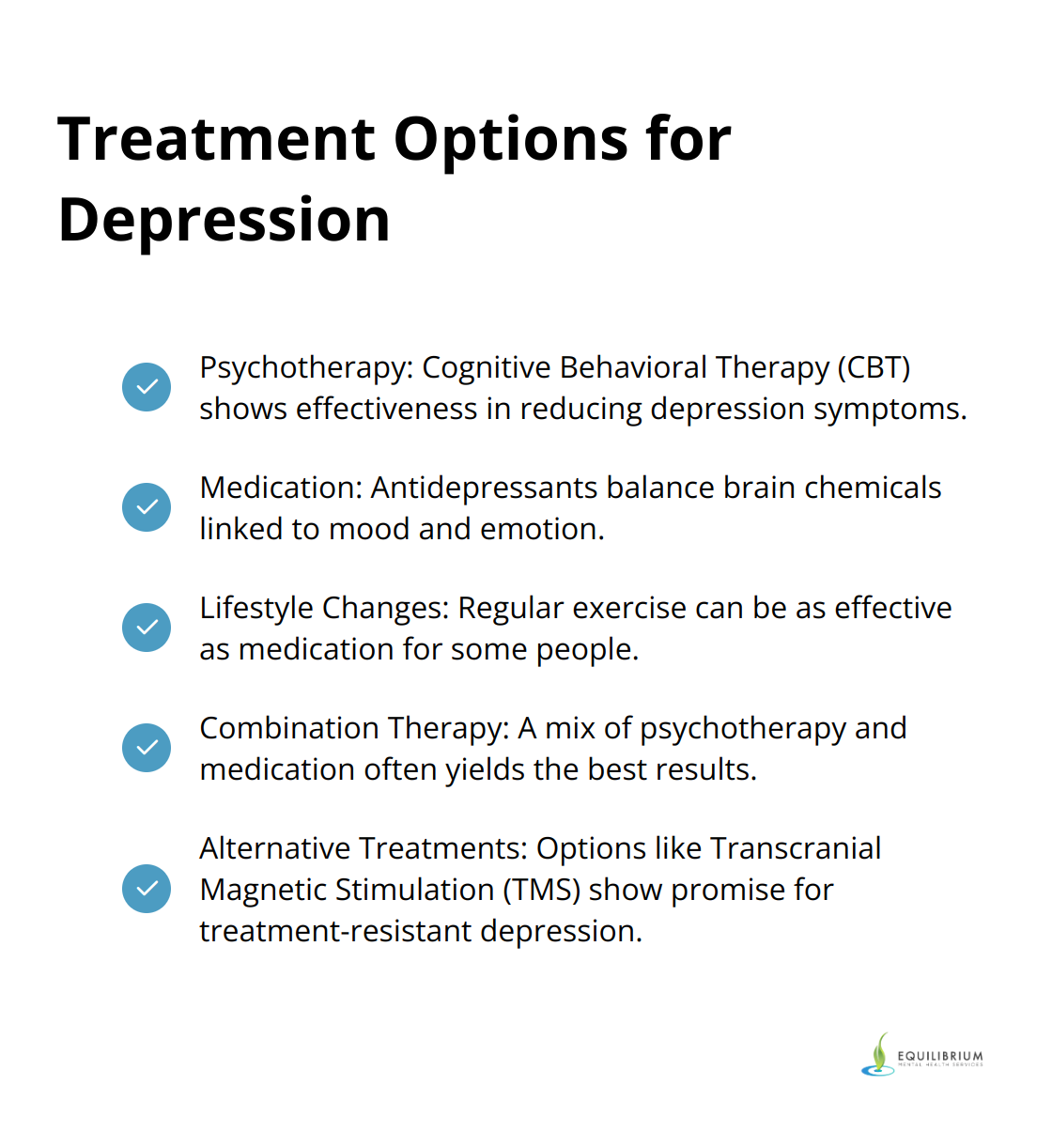
Psychotherapy forms the cornerstone of depression treatment. Cognitive Behavioral Therapy (CBT) shows particular effectiveness. A study found that significant reductions in depression and anxiety symptoms were reported by participants with depressive disorders who engaged in short-term CBT.
For mild to moderate depression, psychotherapy alone may suffice. Our therapists in Brickell use evidence-based techniques to help you identify negative thought patterns and develop coping strategies.
Medication: When Your Brain Needs a Boost
Moderate to severe depression often requires medication. Antidepressants work by balancing brain chemicals linked to mood and emotion.
Our psychiatrists carefully evaluate your symptoms and medical history to prescribe the most appropriate medication. We monitor your progress closely and adjust as needed.
Lifestyle Changes: Small Steps, Big Impact
The power of lifestyle changes in managing depression should not be underestimated. Regular exercise, for instance, can be as effective as medication for some people.
We help you identify and implement lifestyle changes that complement your treatment plan. This might include sleep hygiene improvements, dietary changes, or stress-reduction techniques.
Combination Therapy: A Powerful Approach
For many patients (especially those with severe or treatment-resistant depression), a combination of psychotherapy and medication yields the best results.
We offer seamless coordination between your therapist and psychiatrist to ensure your combination therapy is optimally effective.
Alternative Treatments: Expanding Your Options
Traditional treatments don’t always suffice. In these cases, we explore alternative options. Transcranial Magnetic Stimulation (TMS), for example, has shown promise for treatment-resistant depression. A study found that repetitive transcranial magnetic stimulation augmentation was more effective than switching antidepressants in treatment-resistant depression.
The journey through depression treatment is often non-linear. What works best may change over time. Ongoing communication with your mental health provider is essential. We’re committed to adjusting your treatment plan as your needs evolve, ensuring you receive the most effective care at every stage of your journey.
DepressionTreatment #MentalHealthCare #PersonalizedTherapy #MiamiMentalHealth #EquilibriumMHS
Final Thoughts
Depression manifests in various stages, each requiring a unique approach to treatment. Early recognition of symptoms and prompt intervention can lead to better outcomes for individuals struggling with this condition. At Equilibrium Mental Health Services, we witness the positive impact of timely support on our patients’ lives every day.
Our team understands that each person’s experience with depression is distinct. We offer personalized care tailored to individual needs, which may include psychotherapy, medication, lifestyle modifications, or a combination of these strategies. Our evidence-based treatments address a range of mental health conditions, including depression, anxiety, and bipolar disorder.
If you or a loved one face challenges with depression, don’t hesitate to seek help. Equilibrium Mental Health Services provides a supportive environment and customized treatment plans to help you find balance and work towards a healthier life. Our dedicated professionals stand ready to support you through every stage of your mental health journey.


