
Bipolar disorder can be a challenging mental health condition, affecting millions of people worldwide. At Equilibrium Mental Health Services, we’ve seen firsthand how psychotherapy plays a vital role in managing this complex disorder.
Psychotherapy and bipolar disorder treatment go hand in hand, offering powerful tools for symptom management and improved quality of life. In this post, we’ll explore the various psychotherapy approaches that can help individuals with bipolar disorder regain control and find stability.
Understanding Bipolar Disorder
Types of Bipolar Disorder
Bipolar disorder is a complex mental health condition that affects millions worldwide. There are two main types: Bipolar I and Bipolar II. Bipolar I involves manic episodes lasting at least seven days or severe manic symptoms requiring immediate hospital care. Depressive episodes typically last at least two weeks. Bipolar II includes a pattern of depressive episodes and hypomanic episodes, but not the full-blown manic episodes characteristic of Bipolar I.
Common Symptoms and Challenges
During manic episodes, individuals may experience increased energy, reduced need for sleep, and impulsive behavior. They might engage in risky activities or make poor financial decisions. Depressive episodes can lead to feelings of hopelessness, loss of interest in activities, and even thoughts of suicide.
One of the biggest challenges for people with bipolar disorder is the unpredictability of mood swings. These shifts can occur suddenly and without warning, making it difficult to maintain stable relationships or consistent work performance.
Impact on Daily Life
Bipolar disorder can significantly disrupt daily routines and relationships. During manic phases, a person might overspend, leading to financial troubles. In depressive phases, they might struggle to get out of bed, affecting their job performance.
Relationships often suffer as well. Friends and family may find it hard to understand the rapid mood changes, leading to misunderstandings and conflicts. This can result in isolation and loneliness for those with bipolar disorder.
The Importance of Early Diagnosis
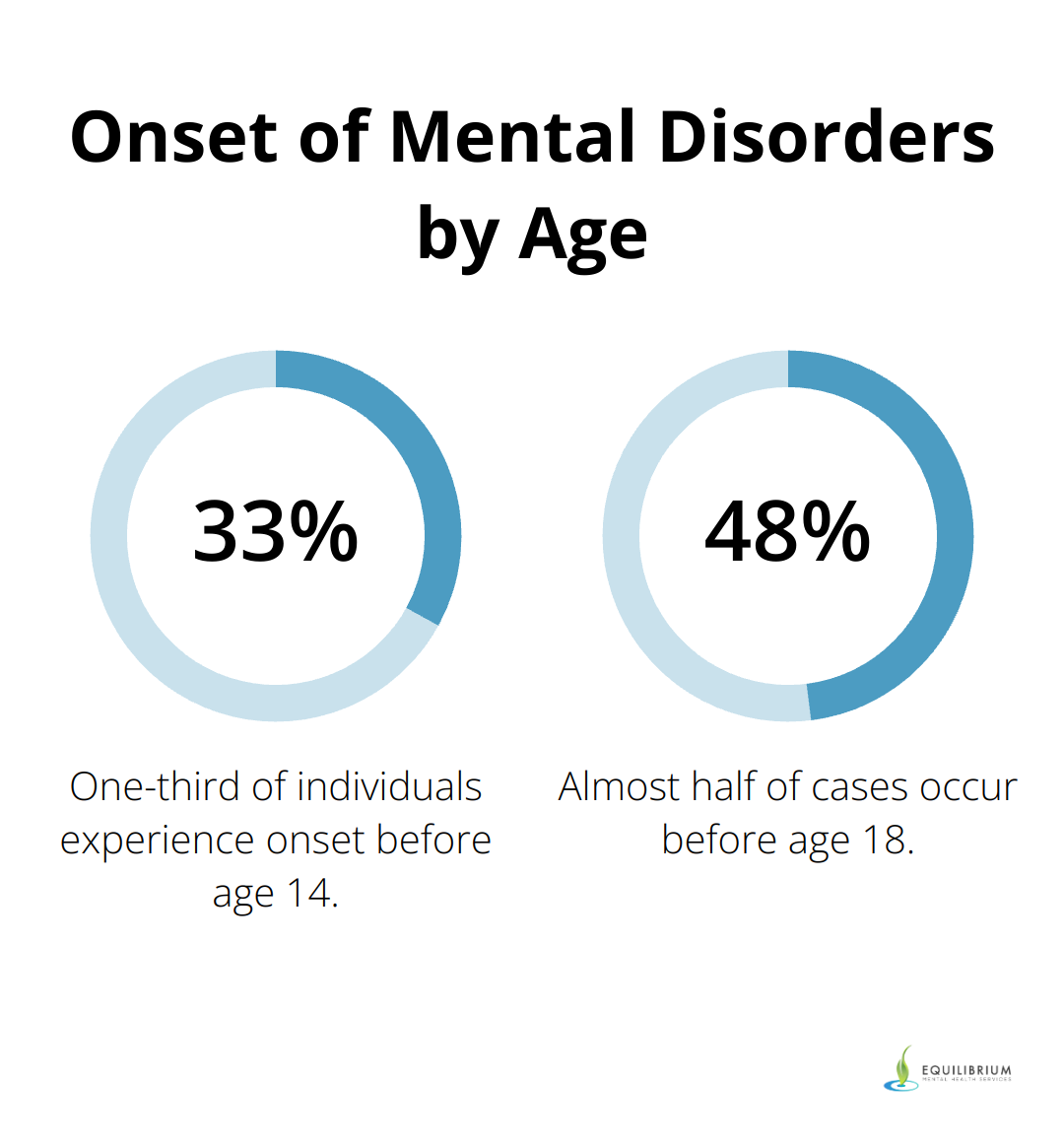
Early diagnosis and treatment are essential for managing bipolar disorder effectively. According to recent research, the onset of the first mental disorder occurs before age 14 in one-third of individuals, and before age 18 in almost half (48.4%) of cases. However, many people experience symptoms for years before receiving a proper diagnosis.
If you’re in the Miami area (including Coral Gables, Pinecrest, or Coconut Grove) and suspect you or a loved one might have bipolar disorder, don’t hesitate to seek professional help. A thorough evaluation can lead to a personalized treatment plan.
Bipolar disorder is a treatable condition. With the right combination of medication, therapy, and lifestyle changes, many people with bipolar disorder lead fulfilling, productive lives. In the next section, we’ll explore various psychotherapy approaches that can help manage this condition effectively.
Effective Psychotherapy Approaches for Bipolar Disorder
At Equilibrium Mental Health Services, we use several evidence-based psychotherapy approaches to help our patients manage bipolar disorder. These therapies are tailored to each individual’s needs and can be highly effective when combined with medication management.
Cognitive Behavioral Therapy (CBT)
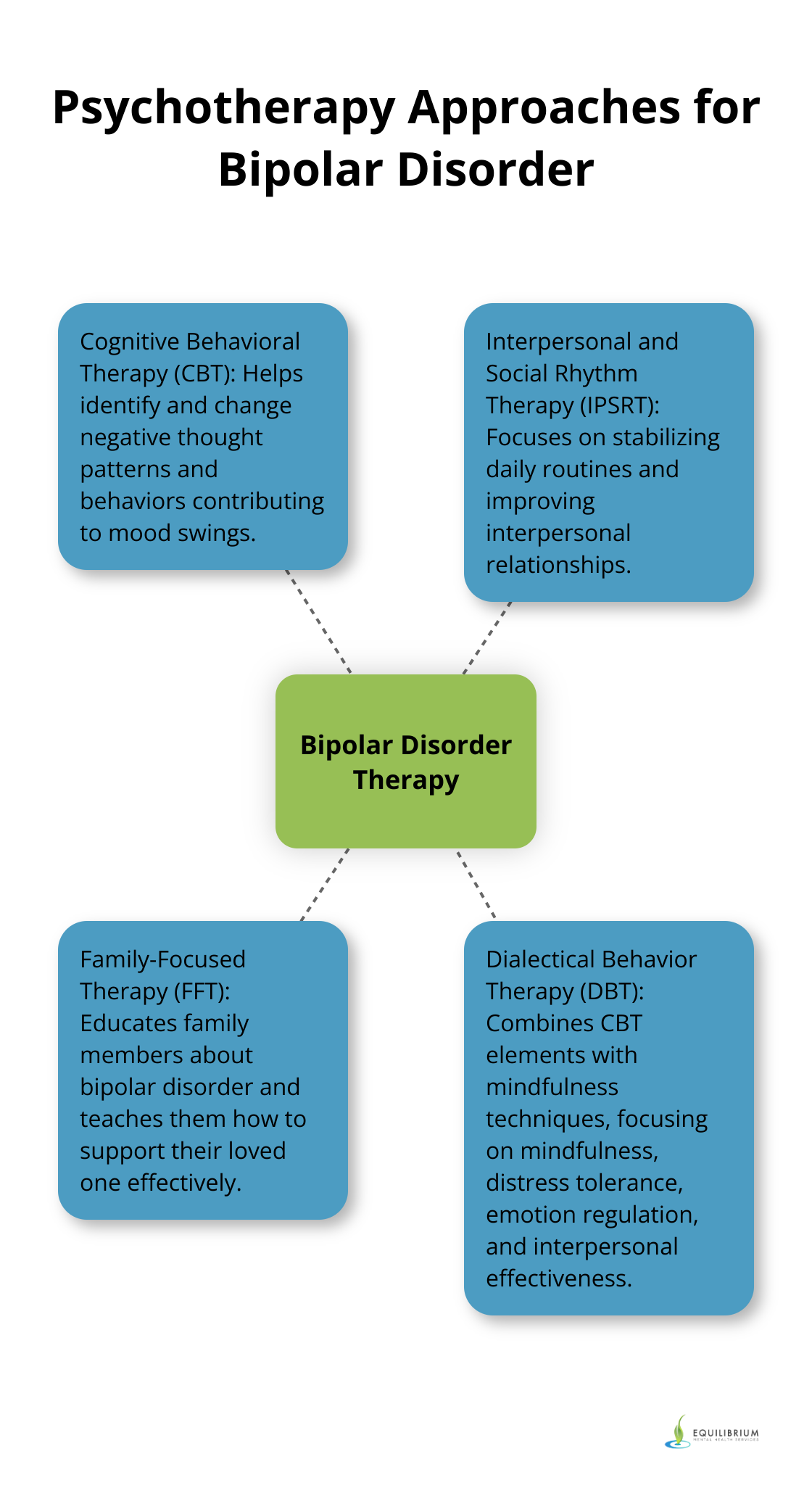
Cognitive Behavioral Therapy (CBT) is a powerful tool in treating bipolar disorder. Studies show variable results in improving the level of depression and the severity of mania, improving functionality, reducing relapses and recurrences. This approach helps patients identify and change negative thought patterns and behaviors that contribute to mood swings. In our Coral Gables office, we’ve seen patients make significant progress using CBT techniques.
A patient might learn to recognize early warning signs of a manic episode, such as decreased need for sleep or increased goal-directed activity. By identifying these signs early, they can take steps to prevent the episode from escalating.
CBT also teaches practical coping skills. Patients learn how to challenge unrealistic thoughts and replace them with more balanced ones. This can be particularly helpful during depressive episodes when negative self-talk is common.
Interpersonal and Social Rhythm Therapy (IPSRT)
IPSRT is another effective approach we use at Equilibrium Mental Health Services. This therapy focuses on stabilizing daily routines and improving interpersonal relationships, both of which can significantly impact mood stability in bipolar disorder.
One key aspect of IPSRT is maintaining a consistent sleep schedule. Research shows that disruptions in sleep patterns can trigger mood episodes in people with bipolar disorder. We work with patients to establish regular sleep-wake cycles and consistent daily routines.
IPSRT also addresses interpersonal conflicts that can arise due to bipolar symptoms. Patients learn communication skills to navigate these challenges more effectively. For instance, they might practice how to explain their condition to loved ones or how to set boundaries during manic episodes.
Family-Focused Therapy (FFT)
Family support is important in managing bipolar disorder, which is why we offer Family-Focused Therapy at our Pinecrest location. This approach involves educating family members about bipolar disorder and teaching them how to support their loved one effectively.
In FFT sessions, families learn to recognize early warning signs of mood episodes and how to respond appropriately. They also work on improving communication within the family unit. This can help reduce the stress and conflict that often accompany bipolar disorder.
Recent studies indicate that FFT significantly improved relapse prevention and enhanced social functioning.
Dialectical Behavior Therapy (DBT)
DBT (a therapy originally developed for borderline personality disorder) has shown promise in treating bipolar disorder. This approach combines elements of CBT with mindfulness techniques and focuses on four key areas: mindfulness, distress tolerance, emotion regulation, and interpersonal effectiveness.
Patients learn to accept their emotions without judgment while also working to change harmful behaviors. This balance between acceptance and change (the “dialectic” in DBT) can be particularly helpful for individuals with bipolar disorder who struggle with intense emotional experiences.
The skills taught in DBT can help patients manage impulsivity during manic episodes and cope with intense negative emotions during depressive phases. For example, patients might learn distress tolerance skills to help them resist urges to engage in risky behaviors during manic episodes.
These various psychotherapy approaches offer a range of tools for managing bipolar disorder. The next section will explore the specific benefits these therapies can provide in the treatment of this complex condition.
How Psychotherapy Transforms Bipolar Treatment
Psychotherapy revolutionizes bipolar disorder treatment. At Equilibrium Mental Health Services, we observe remarkable changes in our patients’ lives through targeted psychotherapy approaches.
Mastering Mood Stability
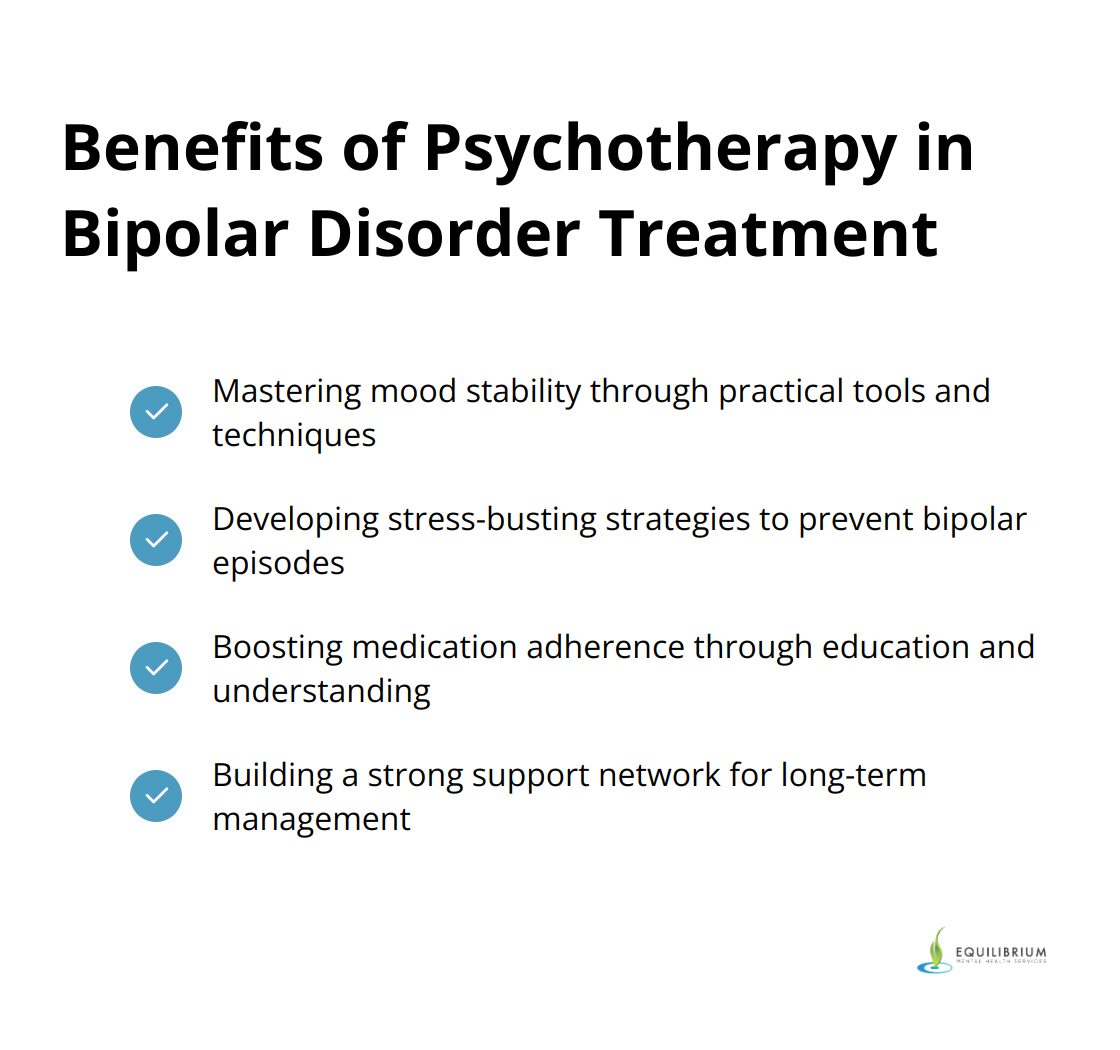
Psychotherapy provides patients with practical tools to manage mood swings. We teach patients to use mood tracking apps, which help identify patterns and triggers, allowing for early intervention. These digital tools can lead to improvements in managing bipolar disorder.
Cognitive restructuring techniques learned in therapy sessions help patients challenge negative thought patterns. This skill proves particularly useful during depressive episodes.
Stress-Busting Strategies
Stress often triggers bipolar episodes. We focus on teaching stress management techniques to combat this. Mindfulness meditation shows promising results. A qualitative study was conducted to inform a new mindfulness-based treatment approach for bipolar disorder and report the effects of mindfulness practice.
We emphasize the importance of routine. A consistent sleep schedule can significantly impact mood stability.
Boosting Medication Adherence
Psychotherapy plays a vital role in improving medication adherence. Patients who understand their medication’s importance through psychoeducation are more likely to stick to their treatment plan. This understanding often comes through therapy sessions where we discuss the biological aspects of bipolar disorder and how medications work.
We address concerns about side effects directly. Teaching patients to communicate effectively with their psychiatrists about medication issues can help prevent arbitrary medication discontinuation.
Building a Support Network
A strong support system proves vital for managing bipolar disorder. Family-focused therapy shows particular effectiveness in this regard. Patients whose families participate in therapy sessions may see improvements in relationship satisfaction and a decrease in conflict at home.
Support groups (both in-person and online) provide additional benefits. Patients who regularly attend support groups often report feeling less isolated and more confident in managing their condition.
If you’re in the Miami area (including Coral Gables, Pinecrest, or Coconut Grove) and struggle with bipolar disorder, consider reaching out to Equilibrium Mental Health Services. Our team combines evidence-based solutions that combine medication management and psychotherapy to help you achieve lasting stability and improved quality of life.
Final Thoughts
Psychotherapy transforms the treatment of bipolar disorder. It empowers individuals to achieve mood stability, develop coping strategies, and enhance their quality of life. Psychotherapy and bipolar disorder management work hand in hand to address symptoms and improve overall well-being.
Professional help marks a vital step towards recovery for those struggling with bipolar disorder. Early intervention and comprehensive treatment can significantly improve long-term outcomes. Bipolar disorder remains a manageable condition, and proper support enables individuals to lead fulfilling lives.
Equilibrium Mental Health Services offers expert care for adults with bipolar disorder and other mental health conditions. Our experienced professionals provide personalized treatment plans that combine medication management and psychotherapy. We invite you to contact our Coral Gables office today to start your journey towards better mental health and lasting stability.


