
At Equilibrium Mental Health Services, we understand the challenges faced by individuals with Bipolar 2 Disorder. This condition can significantly impact daily life and relationships, making effective treatment crucial.
Psychotherapy for Bipolar 2 offers hope and practical strategies for managing symptoms and improving overall well-being. In this post, we’ll explore various psychotherapy options that can help individuals with Bipolar 2 Disorder regain control and stability in their lives.
What is Bipolar 2 Disorder?
Understanding the Bipolar 2 Spectrum
Bipolar 2 disorder is a complex mental health condition that affects millions worldwide. Unlike its more widely known counterpart, Bipolar 1, Bipolar 2 involves cycles of hypomania and depression, rather than full-blown manic episodes. This disorder can significantly impact daily life and relationships, making accurate diagnosis and treatment essential.
Recognizing Bipolar 2 Symptoms
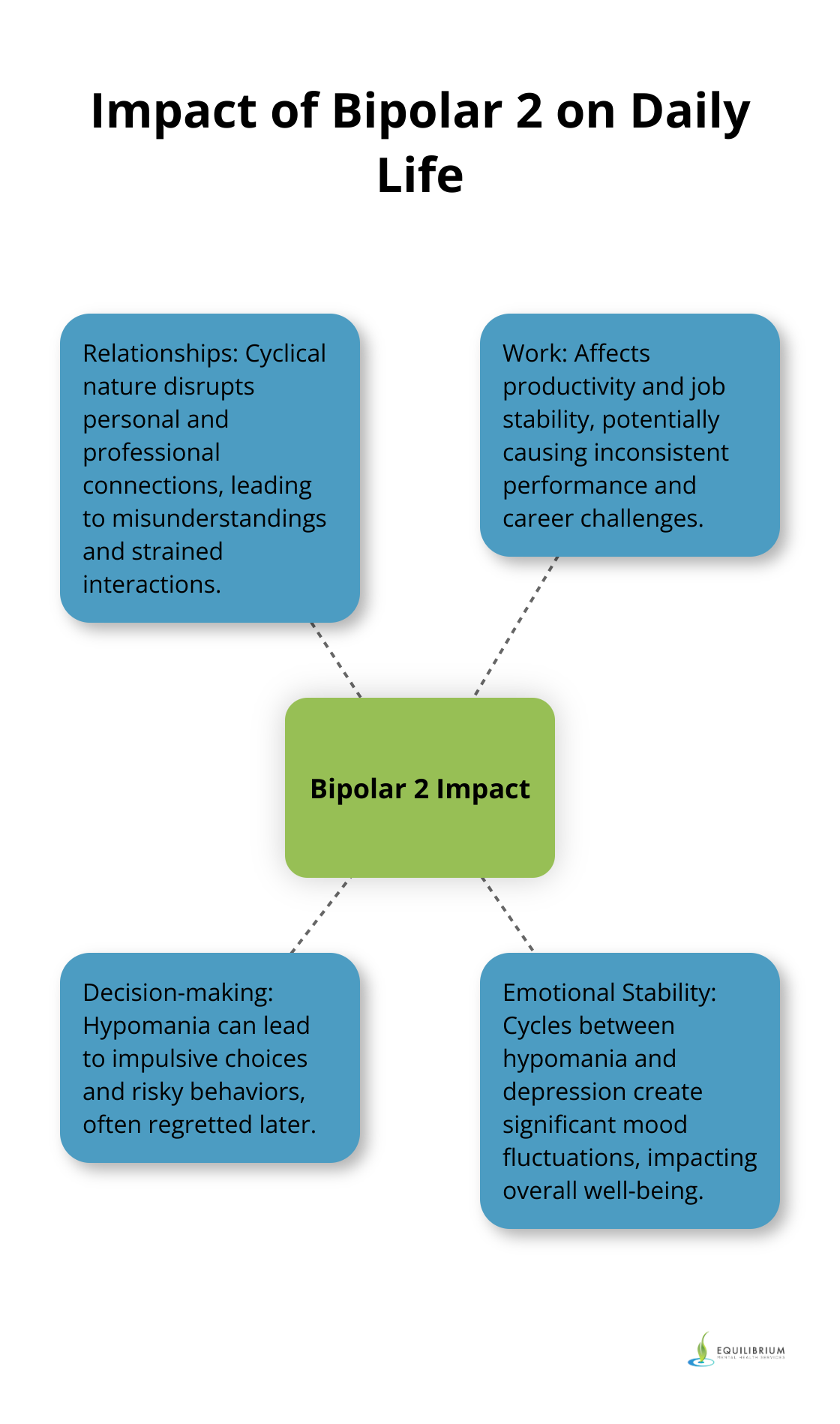
Hypomania, a hallmark of Bipolar 2, can be deceptive. Patients often report feeling more productive, creative, and energetic during these periods. However, these seemingly positive states can lead to impulsive decisions and risky behaviors. For example, a patient once shared how they spontaneously quit their job and maxed out credit cards during a hypomanic episode (decisions they deeply regretted later).
Depression in Bipolar 2 is typically more prolonged and frequent than hypomania. These depressive episodes can be severe, leading to significant impairment in daily functioning.
Impact on Daily Life and Relationships
The cyclical nature of Bipolar 2 can disrupt personal and professional relationships. During hypomanic phases, individuals might overpromise or overcommit, only to struggle with follow-through when depression sets in. This inconsistency can strain relationships and lead to misunderstandings.
In the workplace, Bipolar 2 can affect productivity and job stability.
Treatment Approaches
A comprehensive treatment approach for Bipolar 2 typically includes a combination of medication management and psychotherapy. Mood stabilizers like lamotrigine have shown particular efficacy for Bipolar 2.
Cognitive Behavioral Therapy (CBT) is another cornerstone of treatment. Benefits include reduced levels of depression and mania, fewer relapses and recurrences, and higher levels of psychosocial functioning.
Understanding Bipolar 2 is the first step towards effective management. If you’re in the Miami area (including Coral Gables, Pinecrest, or Palmetto Bay) and suspect you or a loved one might have Bipolar 2, professional help is available. Expert care can provide personalized treatment and support on your journey to stability and well-being.
As we explore treatment options further, let’s take a closer look at how Cognitive Behavioral Therapy specifically addresses the unique challenges of Bipolar 2 disorder.
How CBT Transforms Mood Regulation in Bipolar 2
Rewiring Thought Patterns
Cognitive Behavioral Therapy (CBT) stands as a powerful tool in managing Bipolar 2 disorder. This approach identifies and challenges negative thought patterns that contribute to mood instability. Recent neuroimaging studies have aimed to discuss CBT-based interventions in bipolar populations, providing insights into the therapy’s effects on brain function.
One technique used in CBT is cognitive restructuring. Patients maintain a thought record, documenting situations that trigger mood shifts, the automatic thoughts that follow, and the resulting emotions. This process uncovers recurring patterns and provides opportunities to develop more adaptive thinking styles.
Behavioral Strategies for Mood Stability
CBT also focuses on behavioral changes that can stabilize mood. Establishing consistent daily routines proves crucial for managing Bipolar 2. This might involve setting regular sleep and wake times, planning meals, and scheduling activities that provide a sense of accomplishment.
Activity scheduling is another key component. During depressive phases, patients often withdraw from activities they once enjoyed. CBT encourages gradual reengagement with these activities, which can help lift mood and prevent the cycle of depression from deepening.
Measuring CBT’s Impact
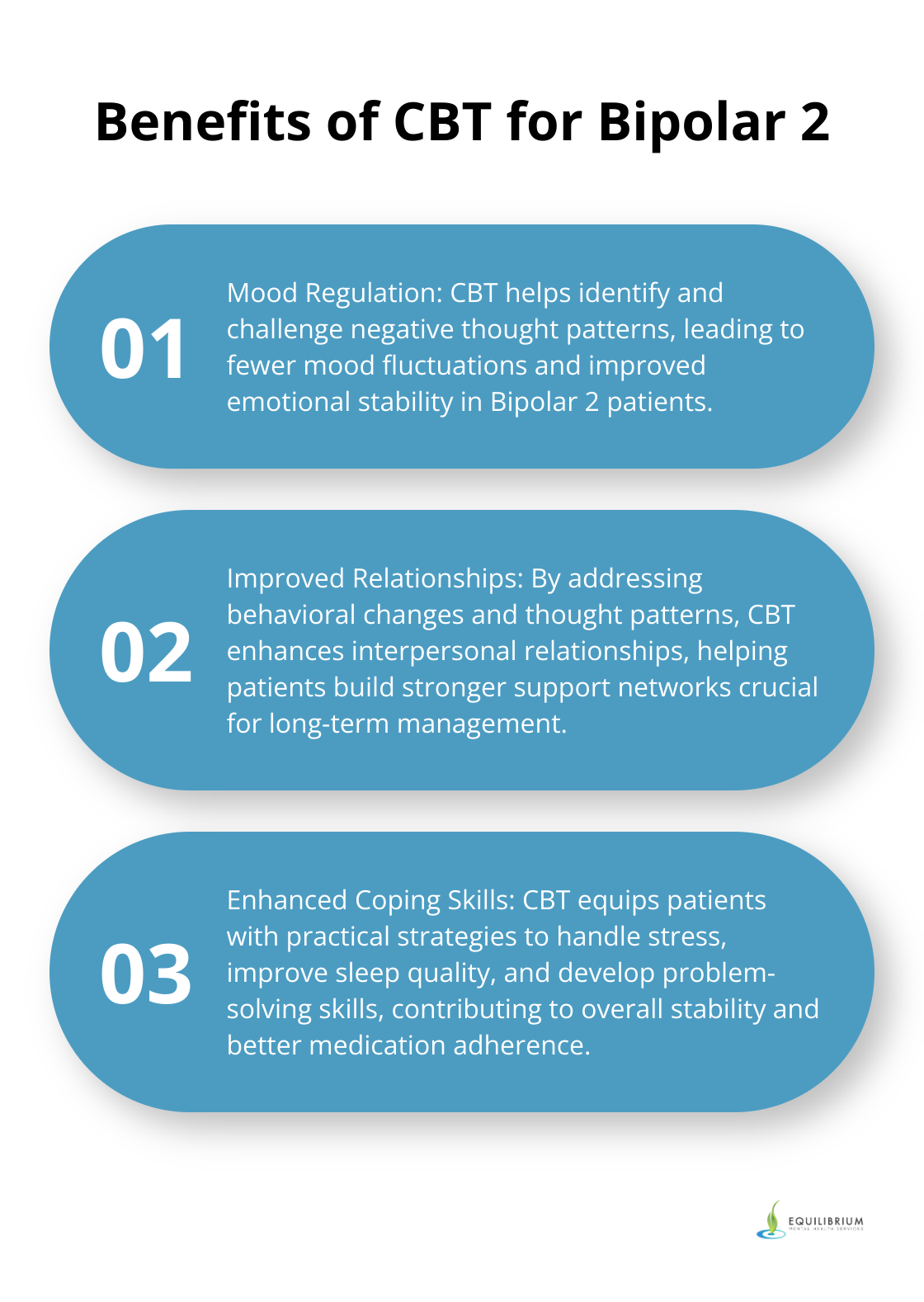
The effectiveness of CBT for Bipolar 2 is well-documented. Patients who consistently apply CBT techniques often report fewer mood fluctuations and improved interpersonal relationships. Many describe feeling more in control of their emotions and better equipped to handle stress.
Beyond Mood Regulation
CBT’s benefits extend beyond mood regulation. Patients often report improved sleep quality, reduced anxiety, and enhanced problem-solving skills. These improvements contribute to overall stability and can lead to better medication adherence (a critical factor in long-term management of Bipolar 2).
While CBT proves highly effective, it’s important to note that it’s not a one-size-fits-all solution. Mental health professionals often tailor their approach to each individual’s needs and may combine CBT with other therapies for optimal results.
As we explore further treatment options for Bipolar 2, let’s turn our attention to another effective approach: Interpersonal and Social Rhythm Therapy (IPSRT). This therapy builds on some of the principles we’ve discussed in CBT, with a specific focus on stabilizing daily routines and interpersonal relationships.
IPSRT: Balancing Life Rhythms for Bipolar 2
Understanding IPSRT
Interpersonal and Social Rhythm Therapy (IPSRT) focuses on stabilizing the daily and nightly routines of bipolar patients and resolving key interpersonal problems. This therapy offers a powerful approach to manage Bipolar 2 disorder. IPSRT has shown remarkable results for patients who incorporate it into their treatment plans.
The Importance of Consistent Routines
IPSRT emphasizes the maintenance of consistent daily routines. This includes regular sleep-wake cycles, meal times, and social interactions. Research indicates that disruptions in these rhythms can trigger mood episodes in individuals with Bipolar 2.
Enhancing Interpersonal Relationships
IPSRT also addresses interpersonal issues that impact mood stability. This involves improving communication skills, setting healthy boundaries, or resolving conflicts. Enhanced relationships help individuals with Bipolar 2 build a stronger support network (a key factor for long-term management of the disorder).
Practical Steps in IPSRT
IPSRT implementation in daily life involves several key steps:
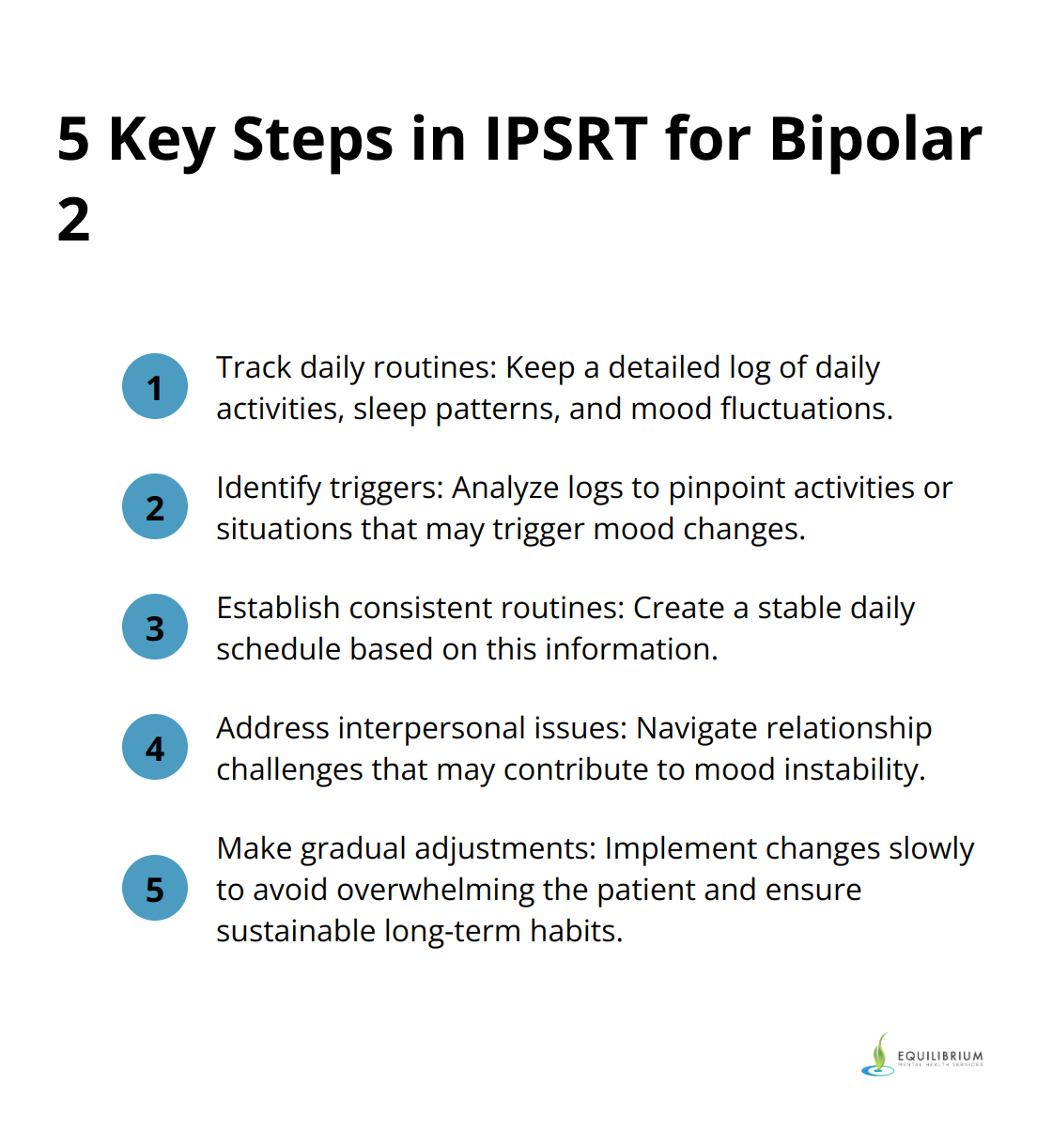
- Track daily routines: Keep a detailed log of daily activities, sleep patterns, and mood fluctuations.
- Identify triggers: Analyze these logs to pinpoint activities or situations that may trigger mood changes.
- Establish consistent routines: Create a stable daily schedule based on this information.
- Address interpersonal issues: Navigate relationship challenges that may contribute to mood instability.
- Make gradual adjustments: Implement changes slowly to avoid overwhelming the patient and ensure sustainable long-term habits.
In Miami (including areas like Coral Gables and Pinecrest), the fast-paced lifestyle can challenge the maintenance of consistent routines. However, with proper guidance and support, IPSRT can effectively manage Bipolar 2 disorder.
Combining IPSRT with Other Treatments
IPSRT often works best when combined with other treatments. Many mental health professionals integrate IPSRT with medication management and other forms of psychotherapy for a comprehensive approach to Bipolar 2 treatment.
IPSRT offers a structured yet flexible approach to managing Bipolar 2 disorder. It addresses key factors that influence mood stability by focusing on life rhythms and interpersonal relationships.
Final Thoughts
Psychotherapy for Bipolar 2 disorder provides effective tools to manage this complex condition. Cognitive Behavioral Therapy (CBT) and Interpersonal and Social Rhythm Therapy (IPSRT) offer strategies to regulate mood, establish routines, and improve relationships. These therapies have demonstrated significant benefits for individuals living with Bipolar 2 disorder.
Treatment plans should be tailored to each person’s unique experience with Bipolar 2. A combination of therapies, including medication management, often produces the best outcomes. Professional help plays a vital role in effectively managing Bipolar 2 disorder.
Equilibrium Mental Health Services supports individuals with Bipolar 2 disorder in Miami (including Coral Gables, Pinecrest, and Palmetto Bay). Our team creates personalized treatment plans that address specific needs. We offer both medication management and psychotherapy to ensure comprehensive mental health care.


