
Midlife depression in men is a serious issue that often goes unrecognized and untreated. At Equilibrium Mental Health Services, we’ve seen firsthand the impact this condition can have on individuals and their families.
Our comprehensive guide aims to shed light on the unique challenges men face during this phase of life and provide practical strategies for overcoming depression. From lifestyle changes to professional treatment options, we’ll explore effective ways to navigate this difficult period and emerge stronger.
What Is Midlife Depression in Men?
The Hidden Face of Male Depression
Midlife depression in men often hides behind a mask of irritability or withdrawal. Men aged 40-60 face particular vulnerability to this condition. Unlike the stereotypical midlife crisis (sports cars and affairs), true depression requires professional attention as a serious mental health issue.
Unique Symptoms in Men
Men express depression differently than women. Instead of sadness, they might display:
- Increased anger
- Engagement in risky behaviors
- Overcommitment to work
Physical symptoms also manifest, including:
- Headaches
- Digestive issues
- Chronic pain
Women are nearly twice as likely as men to be diagnosed with depression, which often delays treatment for men.

The Burden of Silence
Many men in Coral Gables and surrounding areas battle midlife depression silently. Shame prevents them from admitting their feelings, as they perceive emotional struggles as weakness. This stigma can lead to self-medication through alcohol or drugs, which compounds the problem. The American Psychological Association highlights a stark statistic: men die by suicide four times more often than women, underscoring the urgent need for awareness and intervention.
Factors That Fuel Depression
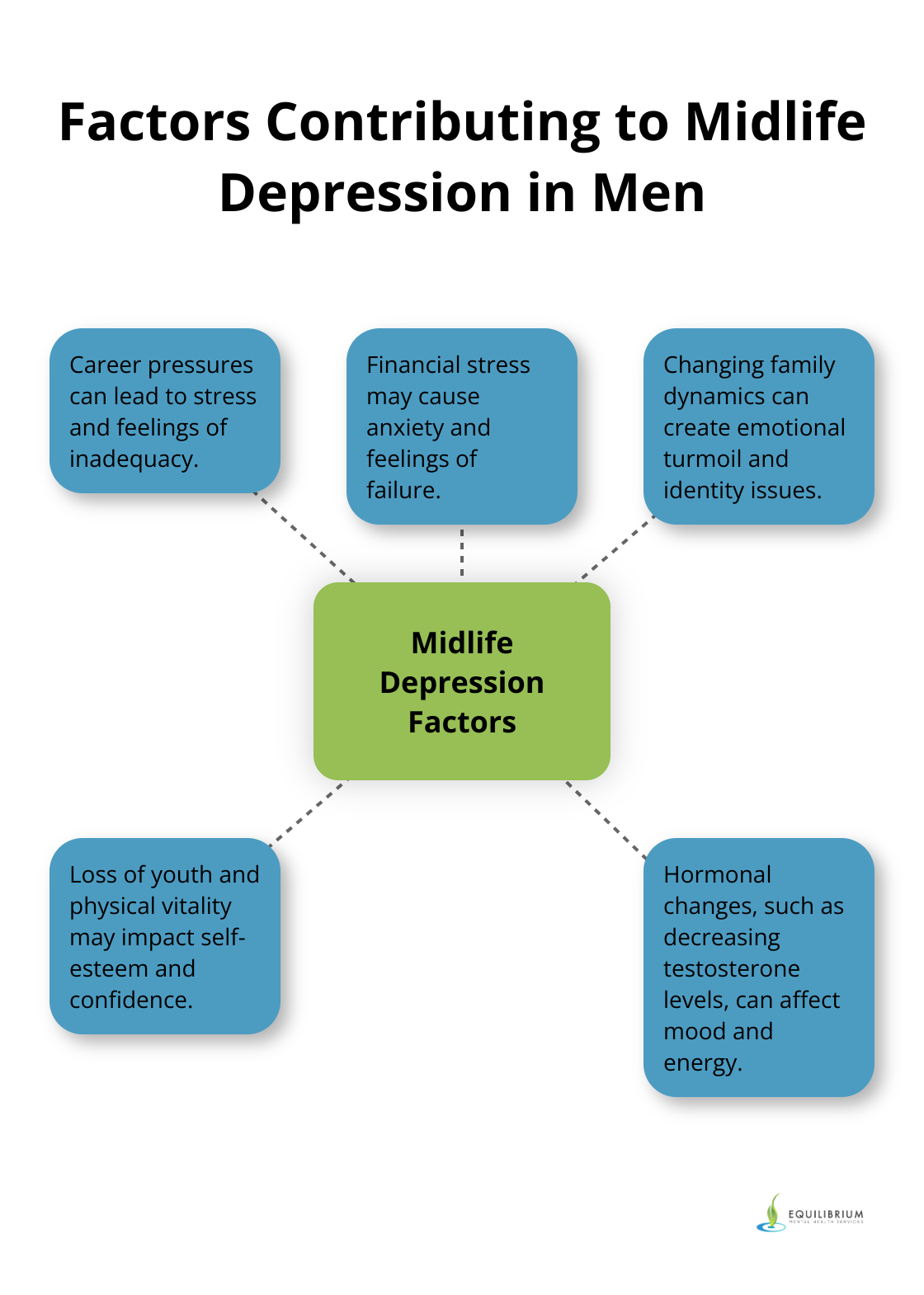
Several elements contribute to midlife depression in men:
- Career pressures
- Financial stress
- Changing family dynamics
- Loss of youth and physical vitality
- Hormonal changes (e.g., decreasing testosterone levels)
A study in the Journal of Affective Disorders found that some depressed older men may have state-dependent low testosterone levels and that some depressed men may improve with androgen treatment.
The Path Forward
Understanding midlife depression in men marks the first step toward effective treatment. The next crucial phase involves exploring strategies to manage and overcome this condition. From lifestyle modifications to professional interventions, a range of options exists to help men navigate this challenging period and emerge stronger.
How Men Can Tackle Midlife Depression
Revamp Your Daily Routine
Small changes in your daily life can significantly impact your mental health. Set a consistent sleep schedule. The National Sleep Foundation recommends 7-9 hours of sleep per night for adults. Establish a bedtime routine that includes winding down without screens for at least an hour before sleep.
Focus on your diet. A Mediterranean-style diet rich in fruits, vegetables, whole grains, and lean proteins can improve diet quality and depressive symptoms. Consider working with a nutritionist to develop a meal plan that supports your mental health.
Regular exercise is essential. The Mayo Clinic suggests that 30 minutes of moderate exercise five days a week can significantly improve mood. Find an activity you enjoy – jogging in Pinecrest, swimming at Key Biscayne, or joining a sports league in Miami.
Build Your Support Network
Men often struggle to reach out for help, but social connections are vital for mental health. Identify one or two trusted friends or family members you can open up to about your feelings. If you’re not comfortable talking to people you know, consider joining a support group. The Depression and Bipolar Support Alliance offers online and in-person support groups specifically for men.
Don’t underestimate the power of professional help. Tailored therapy sessions can address the unique challenges men face during midlife. Evidence-based approaches like Cognitive Behavioral Therapy (CBT) help you reframe negative thought patterns and develop coping strategies.
Master Stress Management
Stress significantly contributes to midlife depression. Learn to manage it effectively. Mindfulness meditation has shown promising results in reducing stress and depression symptoms. Apps like Headspace or Calm offer guided meditations designed for beginners.
Time management is another key skill. Use tools like the Eisenhower Matrix to prioritize tasks and reduce feelings of overwhelm. Break large projects into smaller, manageable steps to avoid procrastination and the stress it causes.
Take up a hobby that allows you to relax and express yourself. Painting, woodworking, or gardening can provide a much-needed outlet for stress and negative emotions.
Prioritize Personal Growth
Midlife presents an opportunity for self-reflection and growth. Set new goals for yourself, both personal and professional. These could range from learning a new skill to planning a trip you’ve always dreamed of. Working towards something meaningful can significantly boost your mood and sense of purpose.
Consider volunteering in your community. A study in the Journal of Happiness Studies found that volunteers were happier and healthier than non-volunteers. Look for opportunities in Coconut Grove or Kendall that align with your interests and values.
Don’t shy away from addressing underlying issues. If you struggle with unresolved trauma or relationship problems, now is the time to tackle them head-on. Professional support and guidance can help you work through these challenges and emerge stronger.
As we explore these strategies for managing midlife depression, it’s important to recognize that treatment options play a critical role in recovery. Let’s examine the various approaches available to men seeking professional help for midlife depression.
Effective Treatments for Midlife Depression
Psychotherapy: A Powerful Tool
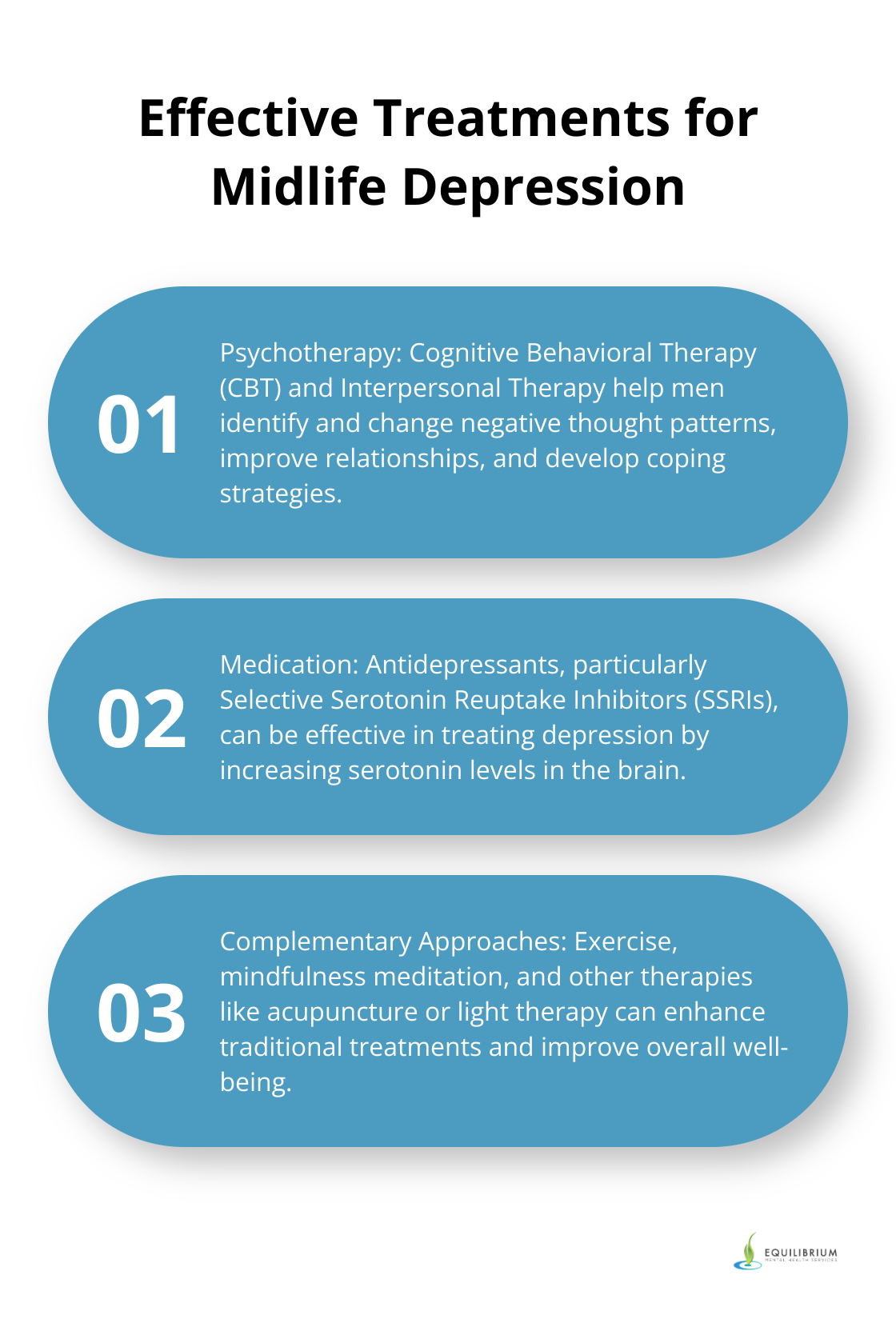
Cognitive Behavioral Therapy (CBT) stands out as a highly effective treatment for midlife depression. This approach helps men identify and change negative thought patterns and behaviors. CBT has been shown to result in significant improvements in depression and quality of life among patients.
Interpersonal therapy offers another valuable option. This method improves relationships and communication skills, which often suffer during midlife depression. It’s particularly helpful for men struggling with work-related stress or family conflicts in areas like Brickell or Coconut Grove.
Medication: When and How
Antidepressant medications can transform the lives of some men battling midlife depression. Selective Serotonin Reuptake Inhibitors (SSRIs) often serve as the first-line medication treatment. They increase serotonin levels in the brain, which can improve mood and reduce anxiety. However, it’s important to note that the efficacy of antidepressants may vary depending on age, with some studies suggesting they may be more effective in midlife compared to older adults.
However, medication isn’t a one-size-fits-all solution. Mental health professionals carefully assess each patient’s unique situation before recommending medication. They also monitor for side effects and adjust dosages as needed. Antidepressants typically take 4-6 weeks to show full effects, so patience is key.
Complementary Approaches
While traditional treatments form the backbone of depression care, complementary therapies can enhance recovery. Exercise, for instance, has shown remarkable benefits.
Mindfulness meditation is another powerful tool. Research has shown that mindfulness-based therapies can be effective in managing depression.
Some men find relief through acupuncture or light therapy (especially for seasonal affective disorder). While these methods shouldn’t replace traditional treatments, they can be valuable additions to a comprehensive care plan.
The Role of Miami psychiatry
Miami’s psychiatric community plays a key role in treating midlife depression. Local psychiatrists understand the unique stressors of Miami life, from the fast-paced business environment in Brickell to the family pressures in Pinecrest.
Equilibrium Mental Health Services offers personalized treatment plans that consider these local factors. We combine the latest research with a deep understanding of our community’s needs. Our team stays updated on the most recent advancements in depression treatment, ensuring our patients receive cutting-edge care.
Seeking help is a sign of strength. If you struggle with midlife depression, reach out to a mental health professional. With the right treatment and support, you can overcome this challenge and rediscover joy and purpose in your life.
Final Thoughts
Midlife depression in men affects many individuals in our community. We understand the unique challenges men face during this life stage, from Coral Gables to Brickell. Our guide explored the nature of midlife depression in men, its symptoms, and contributing factors.
Professional treatment options play a vital role in overcoming midlife depression. Psychotherapy approaches and medication (when appropriate) can effectively manage symptoms. Complementary therapies such as mindfulness meditation and exercise also enhance overall well-being.
If you struggle with midlife depression, you don’t have to face this challenge alone. At Equilibrium Mental Health Services, we specialize in treating various mental health conditions, including depression in midlife men. Take the first step towards healing today and contact us for support.


