
Obsessive-Compulsive Disorder (OCD) can be a debilitating condition, affecting millions of people worldwide. At Equilibrium Mental Health Services, we often hear the question: Is talk therapy good for OCD?
This blog post explores the effectiveness of various talk therapy approaches in treating OCD. We’ll examine the latest research findings and compare talk therapy to other treatment options, helping you make informed decisions about your mental health care.
What is OCD and How Does it Affect Daily Life?
Understanding OCD Symptoms
Obsessive-Compulsive Disorder (OCD) is a complex mental health condition that affects millions of people worldwide. OCD is characterized by persistent, intrusive thoughts (obsessions) and repetitive behaviors or mental acts (compulsions) that a person feels compelled to perform to alleviate anxiety. Common obsessions include fear of contamination, need for symmetry, or intrusive violent or sexual thoughts. Compulsions often involve excessive cleaning, checking, or counting.
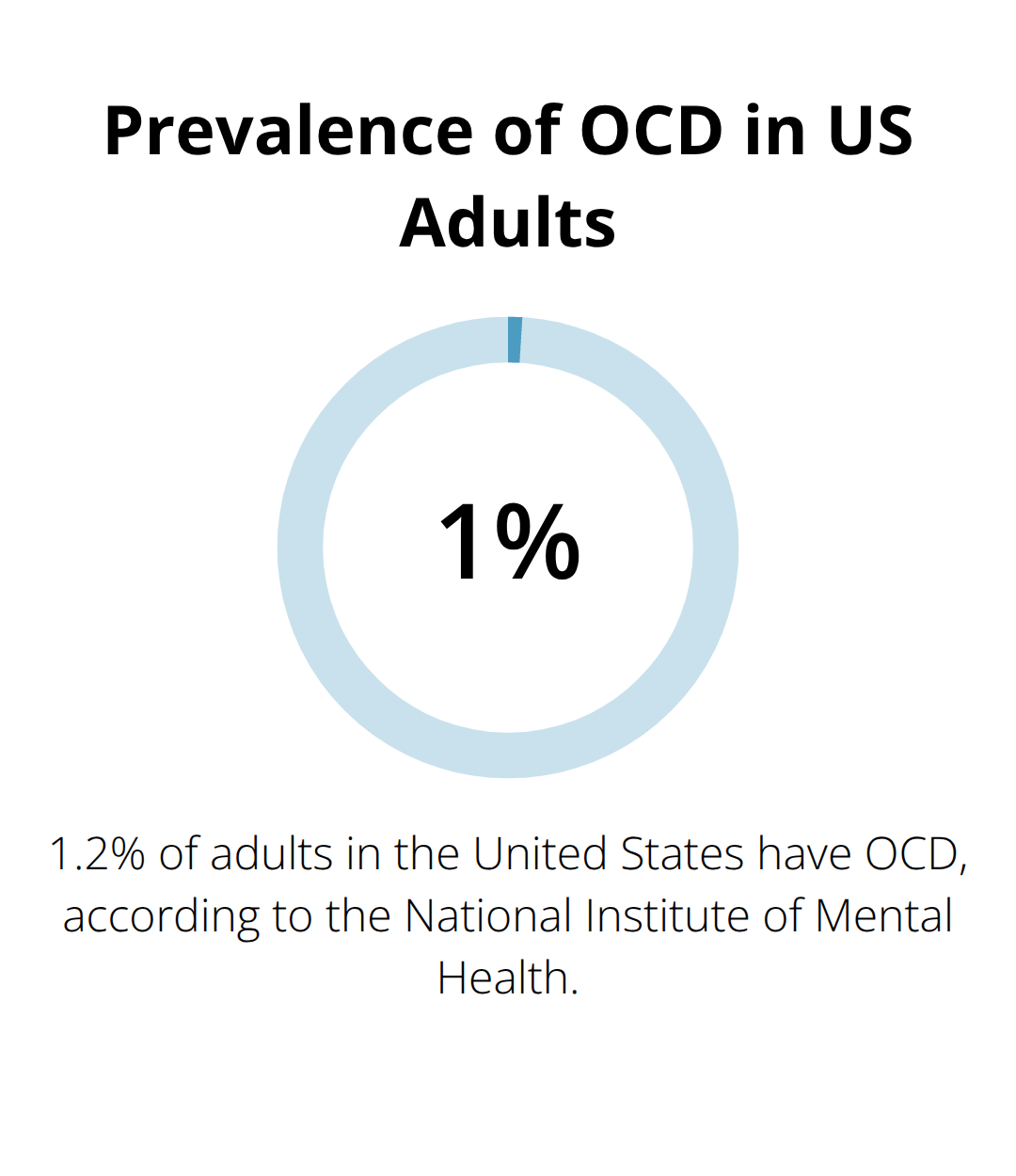
The National Institute of Mental Health estimates that 1.2% of adults in the United States have OCD. This statistic highlights the prevalence of this condition.
Impact on Daily Functioning
OCD can significantly impair a person’s ability to function in various aspects of life. For instance, someone with contamination fears might spend hours washing their hands, making it difficult to leave the house or maintain employment. Research suggests that OCD is associated with significant impairment in day-to-day functioning.
OCD and Relationships
The disorder often takes a toll on personal relationships. Family members and friends may struggle to understand the seemingly irrational behaviors associated with OCD. OCD can negatively affect romantic relationships.
Seeking Help for OCD
If you live in the Miami area (including Coral Gables, Pinecrest, or Palmetto Bay) and suspect you might have OCD, it’s important to seek professional help. Miami psychiatry services can provide expert evaluation and treatment. Early intervention is key – research shows that individuals who receive treatment within the first year of symptom onset have better long-term outcomes.
OCD is a treatable condition. With the right support and evidence-based treatments, many people with OCD can significantly reduce their symptoms and improve their quality of life. In the next section, we’ll explore the various talk therapy approaches used in treating OCD (including Cognitive Behavioral Therapy and Exposure and Response Prevention).
Effective Talk Therapy Approaches for OCD
At Equilibrium Mental Health Services, we use evidence-based talk therapy approaches to treat Obsessive-Compulsive Disorder (OCD). These methods have shown significant success in helping individuals manage their symptoms and improve their quality of life.
Cognitive Behavioral Therapy (CBT) for OCD
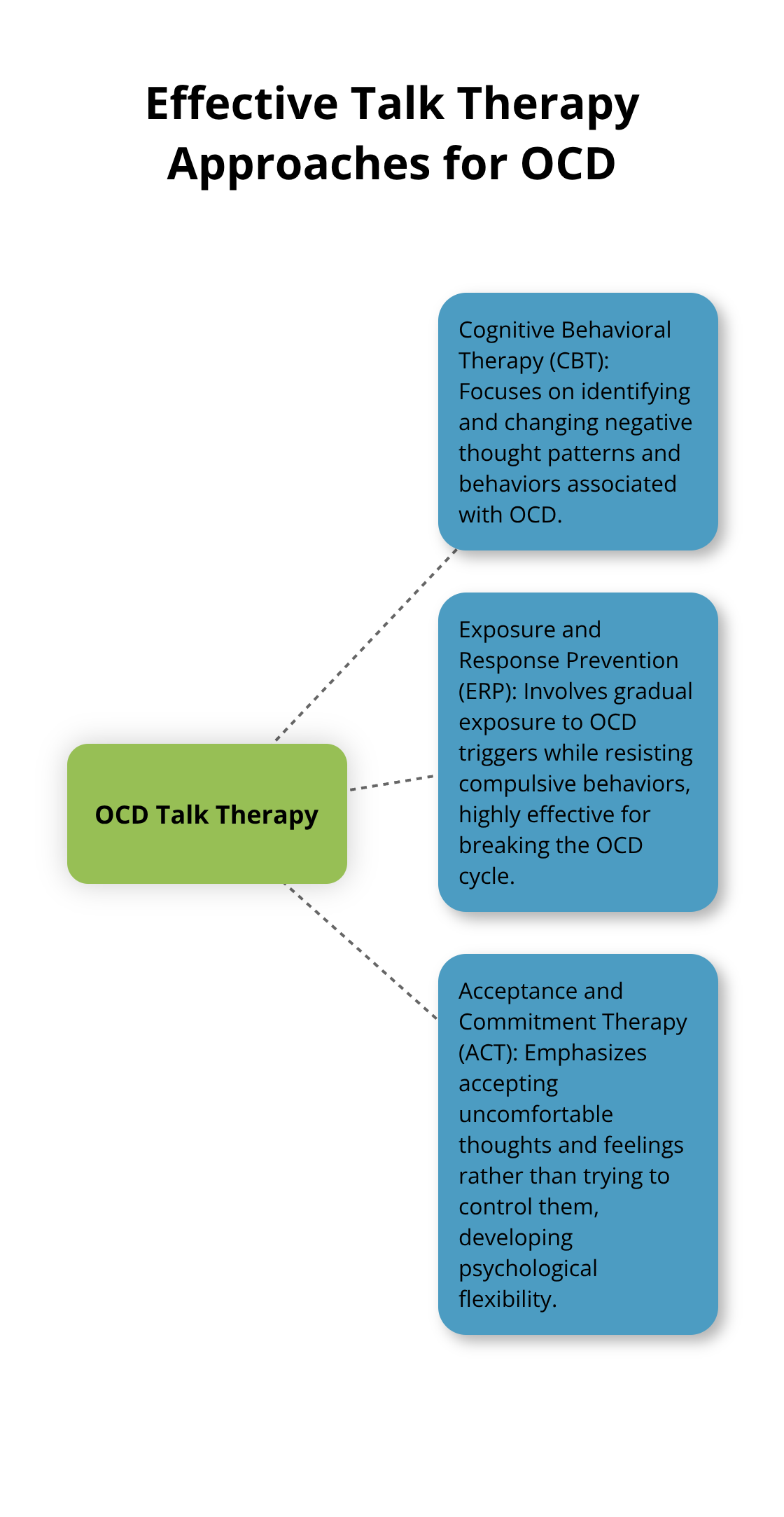
Cognitive Behavioral Therapy (CBT) stands as a cornerstone in OCD treatment. This approach focuses on identifying and changing negative thought patterns and behaviors associated with OCD. In CBT sessions, patients learn to recognize their obsessive thoughts and challenge them, rather than engaging in compulsive behaviors.
Exposure and Response Prevention (ERP)
Exposure and Response Prevention (ERP) is a specific type of CBT that’s particularly effective for OCD. In ERP, individuals gradually expose themselves to situations that trigger their obsessions while resisting the urge to perform compulsive behaviors.
For example, a person with contamination fears might touch a doorknob and then resist the urge to wash their hands immediately. Over time, this exposure helps reduce anxiety and breaks the cycle of obsessions and compulsions.
Acceptance and Commitment Therapy (ACT)
Acceptance and Commitment Therapy (ACT) is another effective approach for OCD treatment. ACT focuses on accepting uncomfortable thoughts and feelings rather than trying to control or eliminate them. This approach helps individuals develop psychological flexibility and commit to actions that align with their values, despite the presence of obsessive thoughts.
Tailored Treatment Approaches
We tailor these approaches to each individual’s needs. Whether you’re in Coral Gables, Pinecrest, or anywhere in the <a href=”https://g.co/kgs/Toi7gBP”>Miami psychiatry</a> area, we’re here to help you navigate your OCD treatment journey. Our team of experienced therapists can guide you through these evidence-based treatments, helping you regain control over your life and reduce the impact of OCD on your daily functioning.
Seeking help is a sign of strength. If you struggle with OCD, don’t hesitate to reach out to a mental health professional. With the right treatment approach, it’s possible to manage OCD symptoms effectively and lead a fulfilling life.
Now that we’ve explored the various talk therapy approaches for OCD, let’s examine their effectiveness in more detail and compare them to other treatment options.
How Effective is Talk Therapy for OCD?
Success Rates of Talk Therapy for OCD
Research consistently shows that Cognitive Behavioral Therapy (CBT) and Exposure and Response Prevention (ERP) are the most effective treatments for Obsessive-Compulsive Disorder (OCD). Exposure and response prevention has a significant role in treating obsessive-compulsive disorder when compared to placebo or drug treatments. These improvements often persist at follow-up assessments.
Talk Therapy vs. Medication for OCD
While both talk therapy and medication can effectively treat OCD, research suggests that talk therapy (especially ERP) may have longer-lasting effects. However, for some patients, a combination of talk therapy and medication may yield the best results. Mental health professionals assess each patient’s unique needs to determine the most effective treatment approach.
Factors Influencing Treatment Outcomes
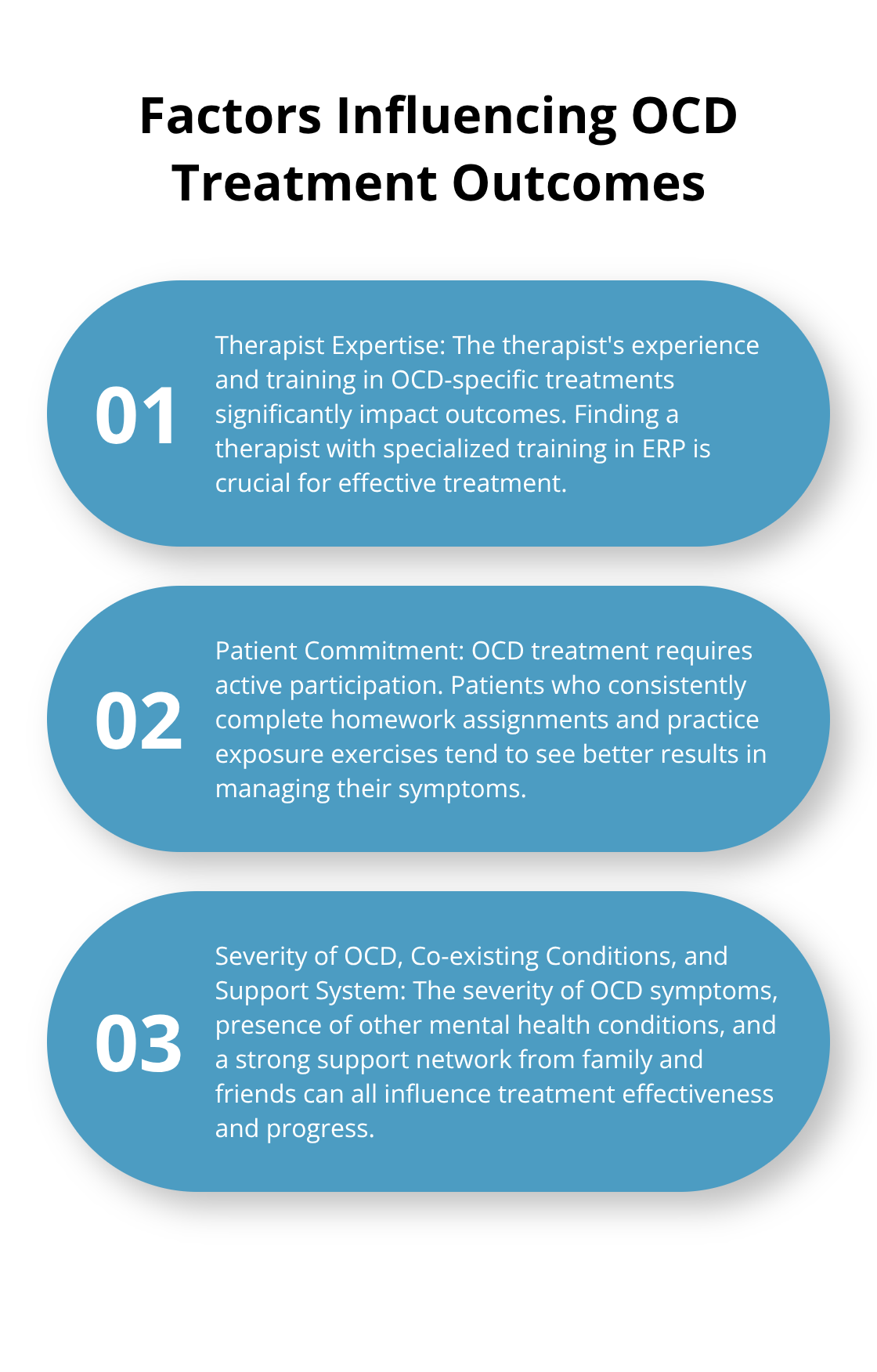
Several factors can influence the effectiveness of talk therapy for OCD:
- Therapist Expertise: The therapist’s experience and training in OCD-specific treatments significantly impact outcomes. In the Miami psychiatry area (including Coral Gables and Pinecrest), it’s important to find a therapist with specialized training in ERP.
- Patient Commitment: OCD treatment requires active participation. Patients who consistently complete homework assignments and practice exposure exercises tend to see better results.
- Severity of OCD: While even severe cases can improve with proper treatment, individuals with milder symptoms often see faster progress.
- Co-existing Conditions: The presence of other mental health conditions (such as depression or anxiety disorders) can complicate treatment. Addressing these conditions alongside OCD is often necessary for optimal results.
- Support System: Patients with supportive family members or friends often have better outcomes, as they have encouragement to face challenging exposures and maintain treatment gains.
Personalized Treatment Plans
Mental health professionals consider all these factors when developing personalized treatment plans for patients in Palmetto Bay, Coconut Grove, and surrounding areas. The goal is to provide the most effective, evidence-based treatment to help individuals overcome OCD and regain control of their lives.
Final Thoughts
Talk therapy, particularly Cognitive Behavioral Therapy (CBT) and Exposure and Response Prevention (ERP), proves highly effective for treating Obsessive-Compulsive Disorder (OCD). Research consistently shows these approaches can significantly reduce OCD symptoms and improve quality of life for many individuals. The success of talk therapy for OCD depends on various factors, including therapist expertise, patient commitment, and condition severity.
At Equilibrium Mental Health Services, we understand each person’s experience with OCD is unique. We tailor our approach to meet individual needs (based on the latest research and best practices). Our team has experience in treating OCD and other mental health conditions, providing personalized care for each patient.
If you wonder “Is talk therapy good for OCD?”, the answer is yes. We encourage residents in Coral Gables, Pinecrest, and the greater Miami area seeking expert psychiatric care to reach out to us. Don’t let OCD control your life – with the right support and evidence-based treatment, you can learn to manage your symptoms effectively.


