
At Equilibrium Mental Health Services, we understand the challenges of managing anxiety and panic attacks. Yoga poses for anxiety and panic attacks offer a powerful, natural approach to finding relief and regaining control.
In this blog post, we’ll explore effective yoga poses and breathing techniques that can help you navigate these difficult moments. We’ll also provide practical tips for incorporating these practices into your daily routine, empowering you to take charge of your mental well-being.
Understanding Anxiety and Panic Attacks
Defining Anxiety and Panic Attacks
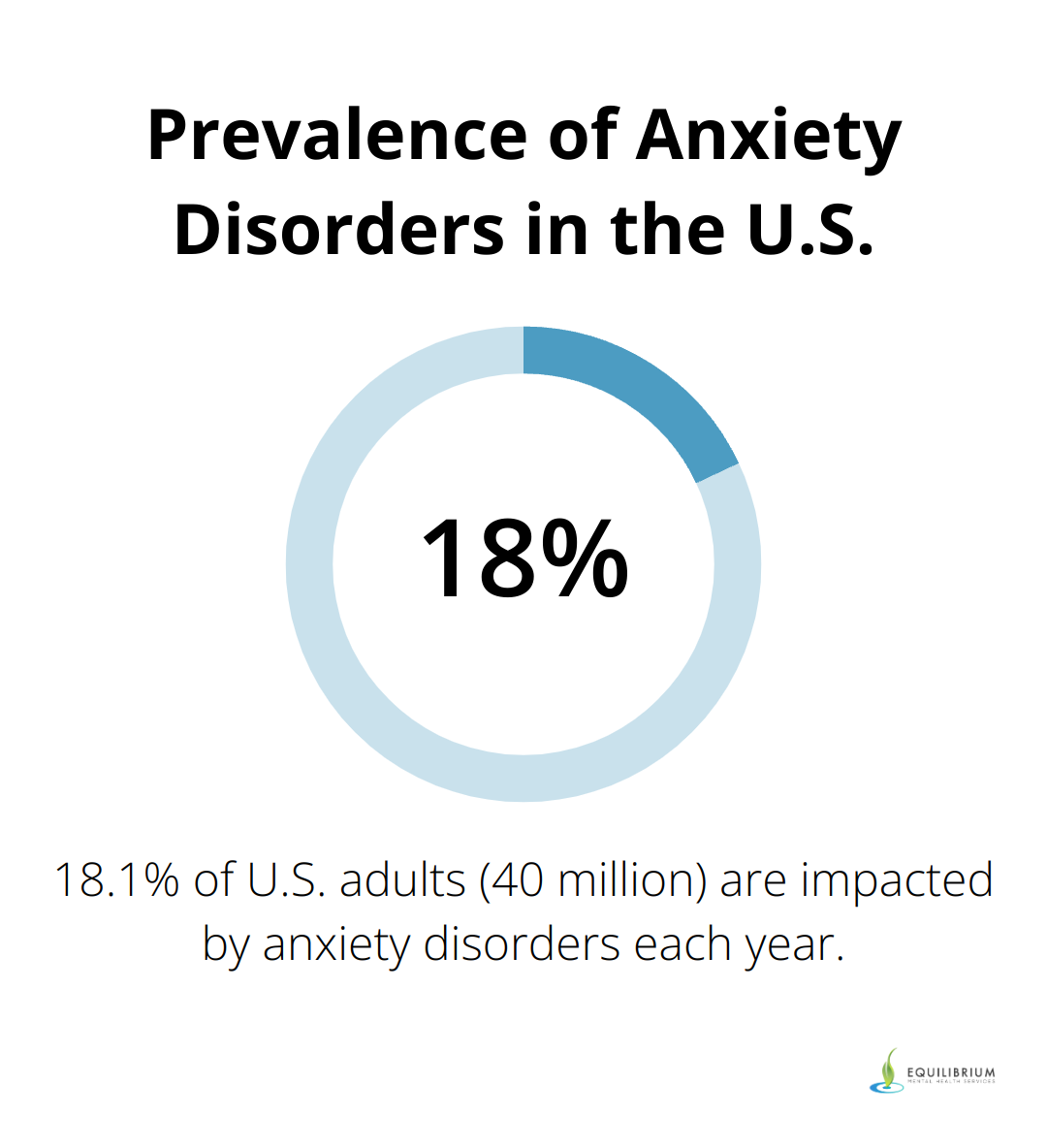
Anxiety and panic attacks affect millions worldwide. The Anxiety and Depression Association of America reports that anxiety disorders impact 40 million adults in the United States annually (18.1% of the population).
Anxiety manifests as a persistent feeling of worry, fear, or unease that disrupts daily life. It surpasses typical stress, creating a constant state of alertness that overwhelms individuals. Panic attacks, in contrast, occur as sudden, intense episodes of fear that peak within minutes. These attacks often include physical symptoms such as rapid heartbeat, sweating, and shortness of breath.
Common Triggers and Symptoms
Various factors trigger anxiety and panic attacks. Some individuals experience them due to specific phobias, while others face generalized anxiety unrelated to particular situations. Common triggers include public speaking, social interactions, or even routine tasks like grocery shopping.
Anxiety symptoms often include:
- Restlessness
- Difficulty concentrating
- Sleep problems
Panic attacks typically involve more intense physical symptoms, such as:
- Chest pain
- Dizziness
- A feeling of detachment from reality
The Power of Yoga in Managing Anxiety
Yoga shows promising results in managing anxiety and panic attacks. Several studies have demonstrated the clinical positive effects of yoga in different psychiatric disorders, such as anxiety, schizophrenia, and depression. Many mental health professionals in Miami (https://g.co/kgs/Toi7gBP) recommend yoga as part of a comprehensive treatment plan.
Yoga activates the parasympathetic nervous system, which counteracts the “fight or flight” response associated with anxiety. Regular practice lowers cortisol levels, reduces muscle tension, and improves overall mood.
Beneficial Yoga Poses
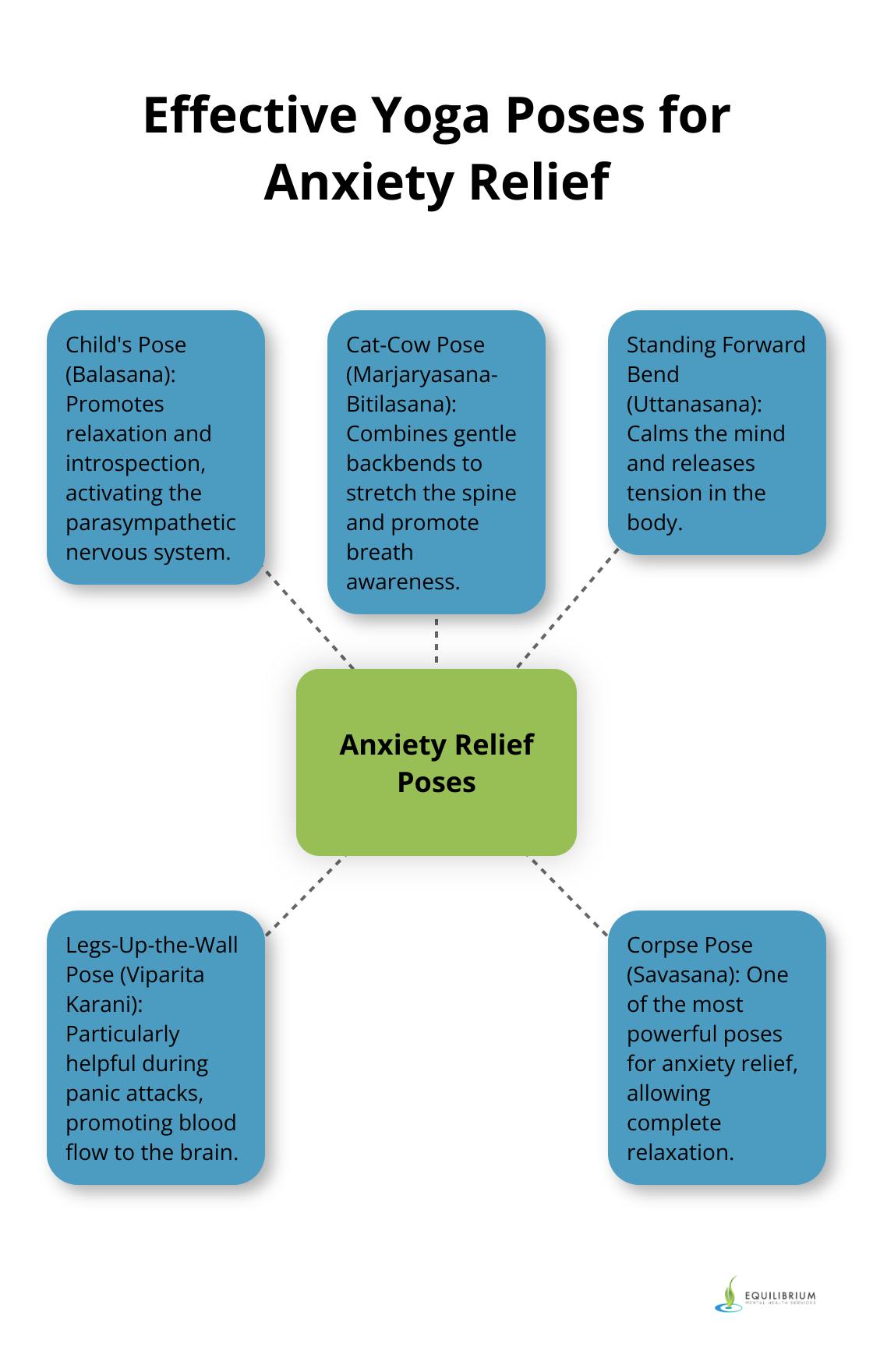
Specific yoga poses prove particularly beneficial for anxiety relief. These poses help ground the body, regulate breathing, and promote a sense of calm. Some effective poses include:
- Child’s Pose (Balasana)
- Cat-Cow Pose (Marjaryasana-Bitilasana)
- Standing Forward Bend (Uttanasana)
While yoga serves as a powerful tool, it works most effectively when combined with professional treatment. If you struggle with anxiety or panic attacks in Coral Gables or surrounding areas, consider reaching out to a mental health professional for comprehensive care.
In the next section, we’ll explore these yoga poses in detail and provide step-by-step instructions on how to perform them for maximum anxiety relief.
Yoga Poses to Ease Anxiety
Yoga offers powerful tools for managing anxiety and panic attacks. Let’s explore five effective yoga poses for anxiety relief.
Child’s Pose (Balasana)
Child’s Pose promotes relaxation and introspection. To practice:
- Kneel on the floor
- Sit back on your heels
- Fold forward, extending your arms in front of you
- Rest your forehead on the mat and breathe deeply
This pose activates the parasympathetic nervous system, reducing stress and anxiety. A study in the Journal of Evidence-Based Complementary & Alternative Medicine found that practicing Child’s Pose for just 5 minutes can significantly lower cortisol levels (the hormone associated with stress).
Cat-Cow Pose (Marjaryasana-Bitilasana)
Cat-Cow Pose combines two gentle backbends that stretch the spine and promote breath awareness. To perform:
- Start on your hands and knees
- Alternate between arching your back (Cow) and rounding it (Cat)
- Coordinate each movement with your breath
This dynamic pose helps release tension in the back and neck. Research from the International Journal of Yoga Therapy suggests that the rhythmic movement in Cat-Cow Pose can help regulate breathing patterns, which is crucial for managing anxiety symptoms.
Standing Forward Bend (Uttanasana)
Standing Forward Bend calms the mind and releases tension. To practice:
- Stand tall
- Hinge at your hips and fold forward
- Allow your upper body to hang heavy
Yoga for anxiety can help reduce feelings of stress and discomfort.
Legs-Up-the-Wall Pose (Viparita Karani)
Legs-Up-the-Wall is particularly helpful during panic attacks. To perform:
- Lie on your back
- Extend your legs up a wall, forming an L-shape with your body
This inverted position promotes blood flow to the brain and activates the relaxation response. A study in the Journal of Physical Therapy Science found that practicing Viparita Karani for 15 minutes can significantly lower blood pressure and heart rate (two physical symptoms often elevated during anxiety).
Corpse Pose (Savasana)
Corpse Pose is one of the most powerful poses for anxiety relief. To practice:
- Lie flat on your back
- Place your arms at your sides, palms facing up
- Close your eyes and focus on your breath
- Allow your body to completely relax
Studies indicate that savasana can significantly decrease cortisol levels, the hormone responsible for stress.
For residents in Coral Gables and surrounding areas struggling with anxiety, these yoga poses can be valuable tools for managing symptoms. However, it’s important to note that yoga should complement, not replace, professional mental health treatment. If you experience persistent anxiety or panic attacks, consider reaching out to a <a href=”https://g.co/kgs/Toi7gBP”>Miami psychiatry</a> professional for comprehensive care.
Now that we’ve explored effective yoga poses, let’s move on to breathing techniques that can enhance your yoga practice and further alleviate anxiety symptoms.
Breathing Techniques for Anxiety Relief
Diaphragmatic Breathing
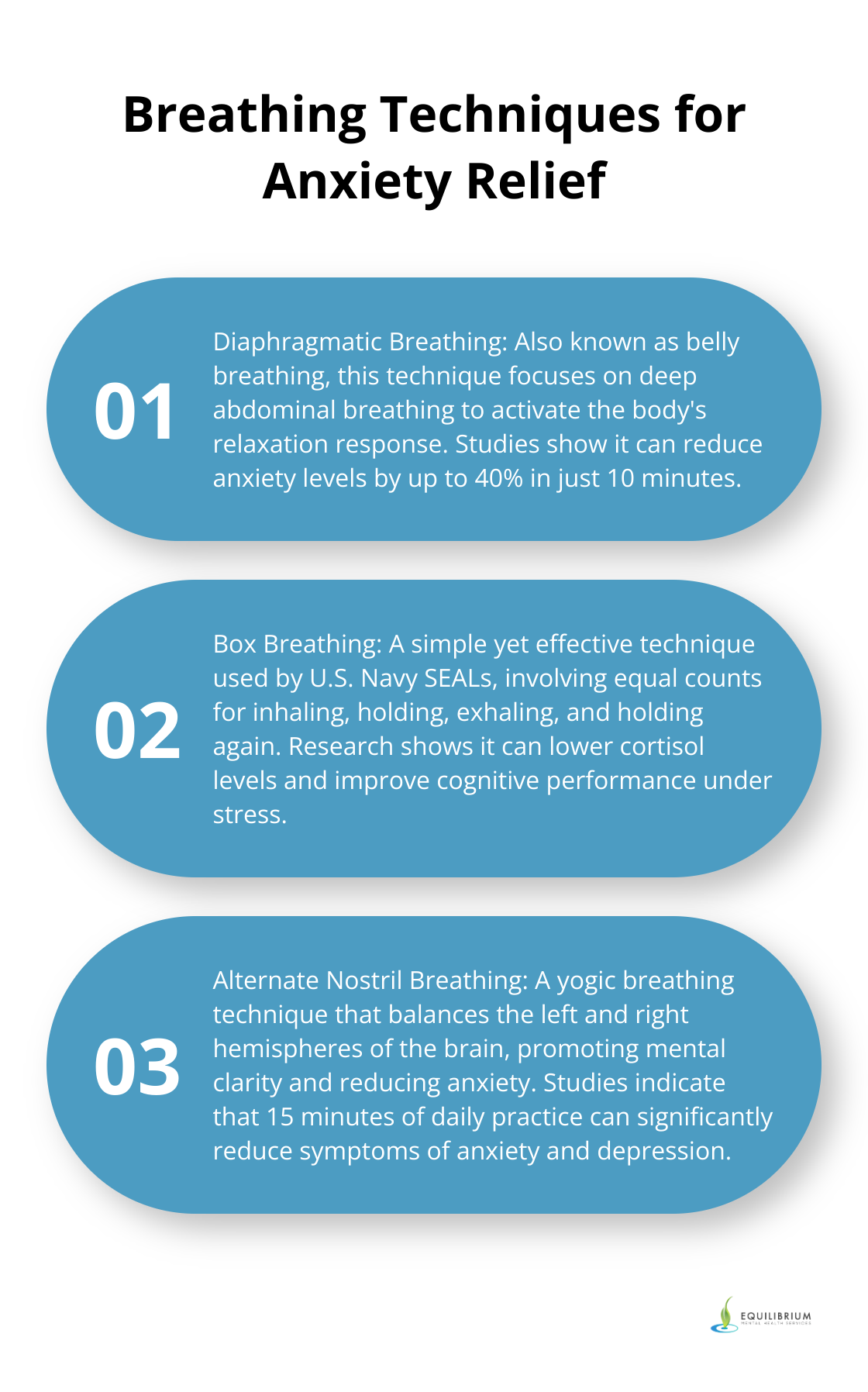
Diaphragmatic breathing (also known as belly breathing) is a fundamental technique for anxiety relief. This method focuses on deep abdominal breathing, which activates the body’s relaxation response. To practice:
- Lie down or sit comfortably
- Place one hand on your chest and the other on your belly
- Inhale slowly through your nose, feeling your belly rise
- Exhale slowly through your mouth, feeling your belly fall
A study published in the Journal of Clinical Psychology found that just 10 minutes of diaphragmatic breathing can reduce anxiety levels by up to 40%.
Box Breathing
Box breathing is a simple yet effective technique used by U.S. Navy SEALs to manage stress in high-pressure situations. This method involves equal counts for inhaling, holding, exhaling, and holding again. To practice:
- Inhale for a count of 4
- Hold your breath for a count of 4
- Exhale for a count of 4
- Hold your breath for a count of 4
- Repeat the cycle
Research from the Journal of Alternative and Complementary Medicine shows that box breathing can lower cortisol levels and improve cognitive performance under stress.
Alternate Nostril Breathing
Alternate nostril breathing (or Nadi Shodhana) is a yogic breathing technique that balances the left and right hemispheres of the brain. This practice promotes mental clarity and reduces anxiety. To perform:
- Use your right thumb to close your right nostril
- Inhale through your left nostril
- Close your left nostril with your ring finger
- Open and exhale through your right nostril
- Inhale through your right nostril
- Close the right nostril and exhale through the left
- Repeat the cycle
A study in the International Journal of Yoga found that practicing alternate nostril breathing for 15 minutes daily can significantly reduce symptoms of anxiety and depression.
Lion’s Breath
Lion’s Breath (Simha Pranayama) is a powerful technique that releases tension and stress. This breathing exercise can help alleviate anxiety symptoms, particularly in social situations. To practice:
- Sit comfortably with your hands on your knees
- Inhale deeply through your nose
- Open your mouth wide, stick out your tongue, and exhale forcefully with a “ha” sound
- Focus your gaze between your eyebrows or at the tip of your nose
- Repeat 3-5 times
Research published in the International Journal of Yoga Therapy suggests that Lion’s Breath can help reduce anxiety and improve overall mood (particularly when practiced regularly).
These breathing techniques can be powerful tools for managing anxiety and panic attacks in Coral Gables and surrounding areas. However, they work best when combined with professional guidance. If you experience persistent anxiety or panic attacks, consider reaching out to a Miami psychiatry professional for comprehensive care.
Final Thoughts
Yoga poses for anxiety and panic attacks provide a natural approach to manage these challenging conditions. Regular practice of specific poses and breathing techniques can reduce stress and build long-term resilience. This consistent practice empowers individuals to respond more effectively to anxiety triggers and potentially decrease the frequency of panic attacks.
Professional help remains essential for persistent anxiety or panic attacks that significantly impact daily life. Mental health experts can offer personalized strategies and additional support to complement yoga practice. Equilibrium Mental Health Services understands the complexities of anxiety and panic disorders, specializing in tailored treatment plans.
We encourage you to take the first step towards better mental health. Contact Equilibrium Mental Health Services to explore how we can help you manage your anxiety and panic attacks effectively. Our team of experienced professionals in Coral Gables and surrounding areas stands ready to support you on your journey towards improved well-being.


