
Panic attacks can be overwhelming, but there’s a powerful tool that can help: positive affirmations. At Equilibrium Mental Health Services, we’ve seen firsthand how these simple yet effective statements can transform the way people cope with anxiety.
Positive affirmations for panic attacks are more than just feel-good phrases; they’re a scientifically-backed method to rewire your thought patterns and build resilience. In this post, we’ll explore how to harness the power of affirmations to manage panic attacks and regain control of your mental well-being.
Understanding Panic Attacks and the Power of Positive Affirmations
The Nature of Panic Attacks
Panic attacks are sudden episodes of intense fear that trigger severe physical reactions when there is no real danger or apparent cause. At Equilibrium Mental Health Services in Coral Gables, patients often describe feeling overwhelmed by physical symptoms like rapid heartbeat, chest pain, shortness of breath, and dizziness. These attacks can terrify individuals, leaving them feeling out of control and fearing the next episode.
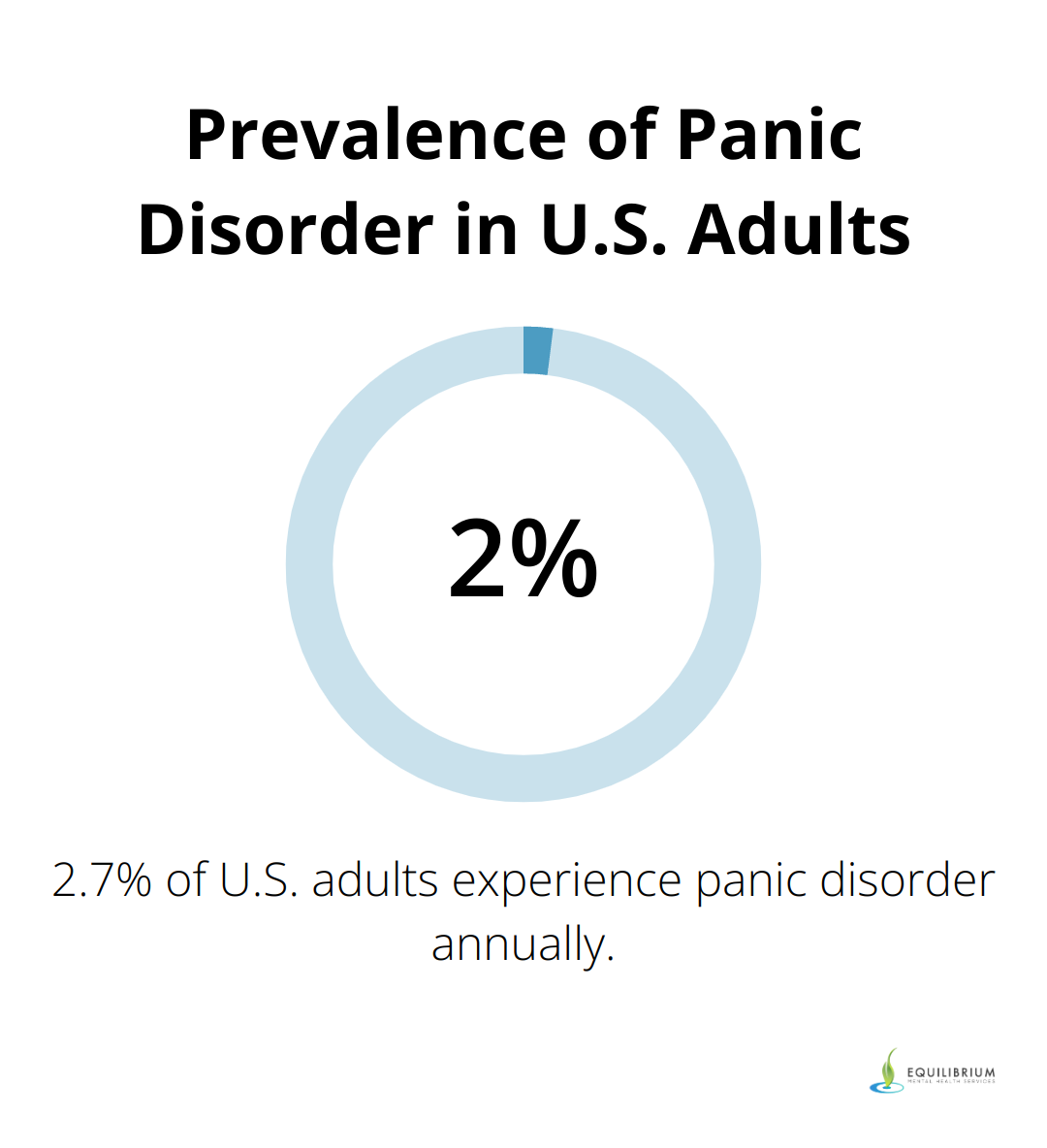
Research from the National Institute of Mental Health reveals that about 2.7% of U.S. adults experience panic disorder in a given year. Panic attacks are the hallmark of this condition, but they can also occur in other anxiety disorders. The sudden surge of adrenaline during an attack triggers the body’s fight-or-flight response, even when no real danger exists.
The Science of Positive Affirmations
Positive affirmations are short, powerful statements that challenge and overcome negative thoughts. They’re not just empty phrases; they’re a scientifically-backed method to rewire your brain. Research suggests that people are motivated to maintain a positive self-view and that threats to perceived self-competence are met with resistance.
How Affirmations Combat Panic
When panic strikes, negative thoughts flood your mind. Affirmations work by interrupting this cycle and replacing fear with empowering beliefs. For example, repeating “I am safe and in control” during the onset of panic symptoms can help ground you in reality and reduce the intensity of the attack.
Crafting Effective Affirmations
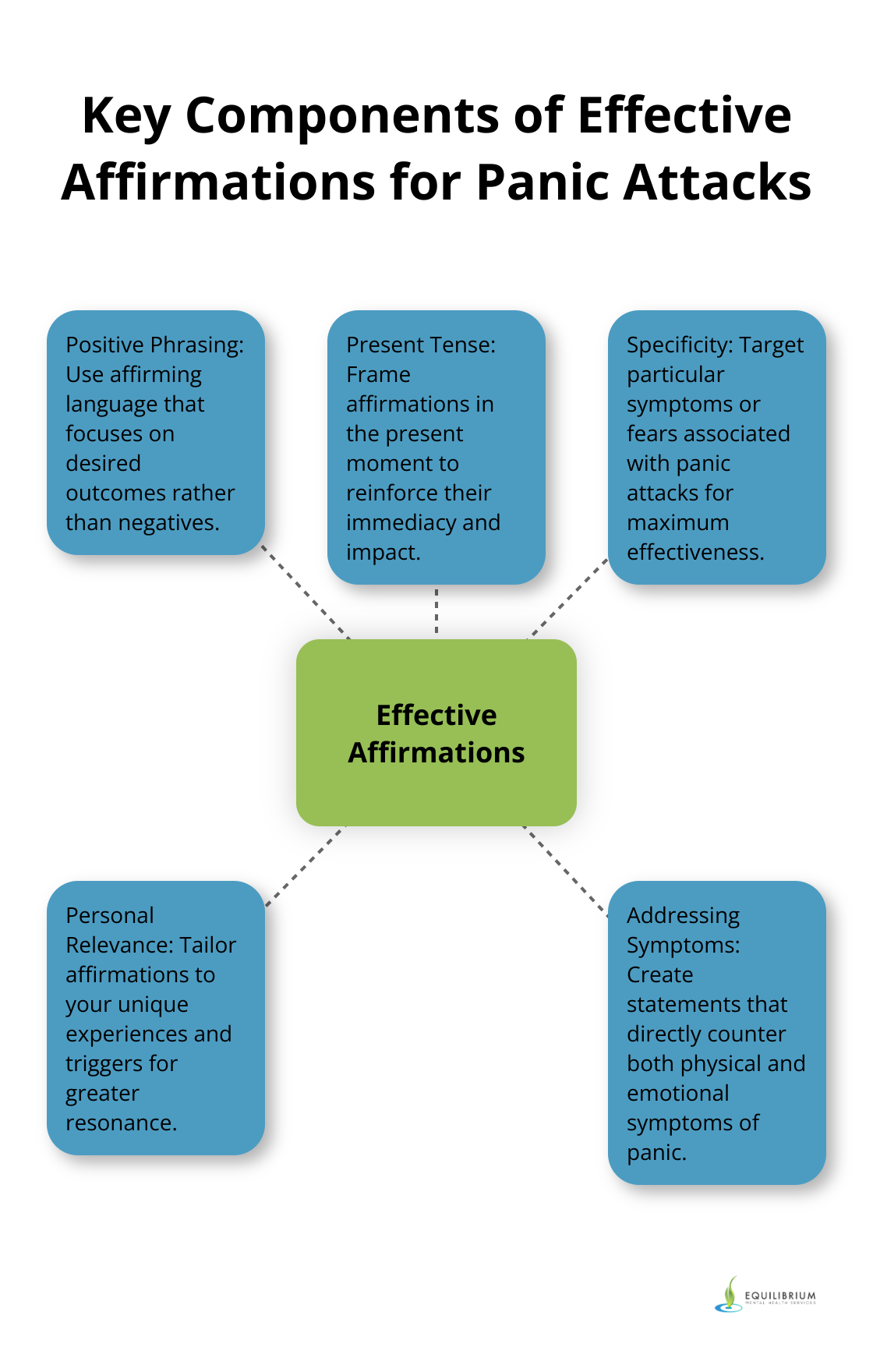
To create affirmations that work for you, focus on statements that directly counter your panic-related fears. If you fear losing control during an attack, an affirmation like “I have the power to manage my anxiety” can be particularly effective. Make your affirmations specific, present-tense, and positive.
Implementing Affirmations in Daily Life
Consistency is key when it comes to affirmations. Try to incorporate them into your daily routine (e.g., during your morning coffee, before bed, or as part of a meditation practice). Some people find it helpful to write their affirmations on sticky notes and place them around their home or office as visual reminders.
While affirmations are a powerful tool, they’re most effective when used as part of a comprehensive treatment plan. If you struggle with panic attacks in Miami or the surrounding areas, reaching out to a mental health professional can provide you with personalized strategies and support to manage your symptoms effectively.
In the next section, we’ll explore specific examples of affirmations tailored for panic attacks and provide tips on how to personalize them for maximum impact.
Crafting Powerful Affirmations for Panic Attacks
The Anatomy of an Effective Affirmation
Positive affirmations can transform your response to panic attacks. These powerful tools are short, specific, and present-tense statements that directly counter negative thoughts associated with panic. For example, if you often think, “I’m losing control,” your affirmation might be, “I am in control of my body and mind.”
Research indicates that self-affirmations can improve problem-solving performance in chronically stressed individuals. This finding holds particular relevance for individuals who experience panic attacks in high-stress situations (such as navigating Miami traffic).
Tailoring Affirmations to Panic Symptoms
When you create affirmations for panic attacks, address both the physical and emotional symptoms you experience. Here are some examples:
- For rapid heartbeat: “My heart is strong and beats at a healthy rhythm.”
- For shortness of breath: “I breathe deeply and easily.”
- For fear of losing control: “I am safe and in control of my reactions.”
- For fear of dying: “This feeling will pass, and I am perfectly safe.”
Phrase your affirmations positively. Instead of “I’m not panicking,” say “I am calm and centered.” This subtle shift can significantly impact how your brain processes the affirmation.
Personalizing Your Affirmations
To enhance the potency of your affirmations, tailor them to your specific experiences and needs. Start by identifying your most common panic triggers and symptoms. Then, create affirmations that directly address these concerns.
For instance, if you often experience panic attacks while driving in Coral Gables, you might create an affirmation like, “I am a capable driver, and I navigate through traffic with ease and confidence.”
It’s also helpful to incorporate your personal strengths into your affirmations. If you pride yourself on your resilience, you might say, “I am resilient and can handle any challenge that comes my way.”
The Power of Repetition
Consistency plays a key role in the effectiveness of affirmations. Try to repeat your chosen affirmations several times a day, especially during moments of calm. This practice can help reinforce positive thought patterns and make them more accessible during times of stress.
Consider using visual cues, such as sticky notes or digital reminders, to prompt affirmations throughout the day.
Combining Affirmations with Other Techniques
While affirmations are powerful on their own, they can be even more effective when combined with other anxiety management techniques. Deep breathing exercises, mindfulness meditation, and progressive muscle relaxation can all complement your affirmation practice.
For example, you might try repeating your chosen affirmation while practicing deep breathing exercises. This combination can help ground you in the present moment and reinforce your sense of control.
Now that we’ve explored how to craft and use affirmations effectively, let’s look at how to integrate these powerful tools into your daily routine for maximum benefit.
Making Affirmations Work for You
The Right Time and Frequency
Integrating positive affirmations into your daily routine can combat panic attacks effectively. Patients in Coral Gables and surrounding areas have reduced their anxiety symptoms through consistent affirmation practice.
Start your day with positive statements to set a calm tone. Many patients succeed by repeating affirmations during their morning commute or while preparing for work.
Dr. Sarah Johnson, a psychologist at the University of Miami, recommends using affirmations regularly. Her research shows that individuals who practice affirmations consistently experience a reduction in anxiety symptoms.
Don’t wait for panic to strike before using your affirmations. Regular practice during calm periods builds mental resilience, making it easier to recall and believe these statements during high-stress moments.
Practical Techniques for Daily Use
One effective method is the “mirror technique.” Stand in front of a mirror, make eye contact with yourself, and speak your affirmations out loud. This practice enhances self-belief and confidence.
Another approach is to create a “panic toolkit.” Write your affirmations on index cards and keep them in your wallet or purse. During moments of anxiety, pull out a card and focus on the affirming message.
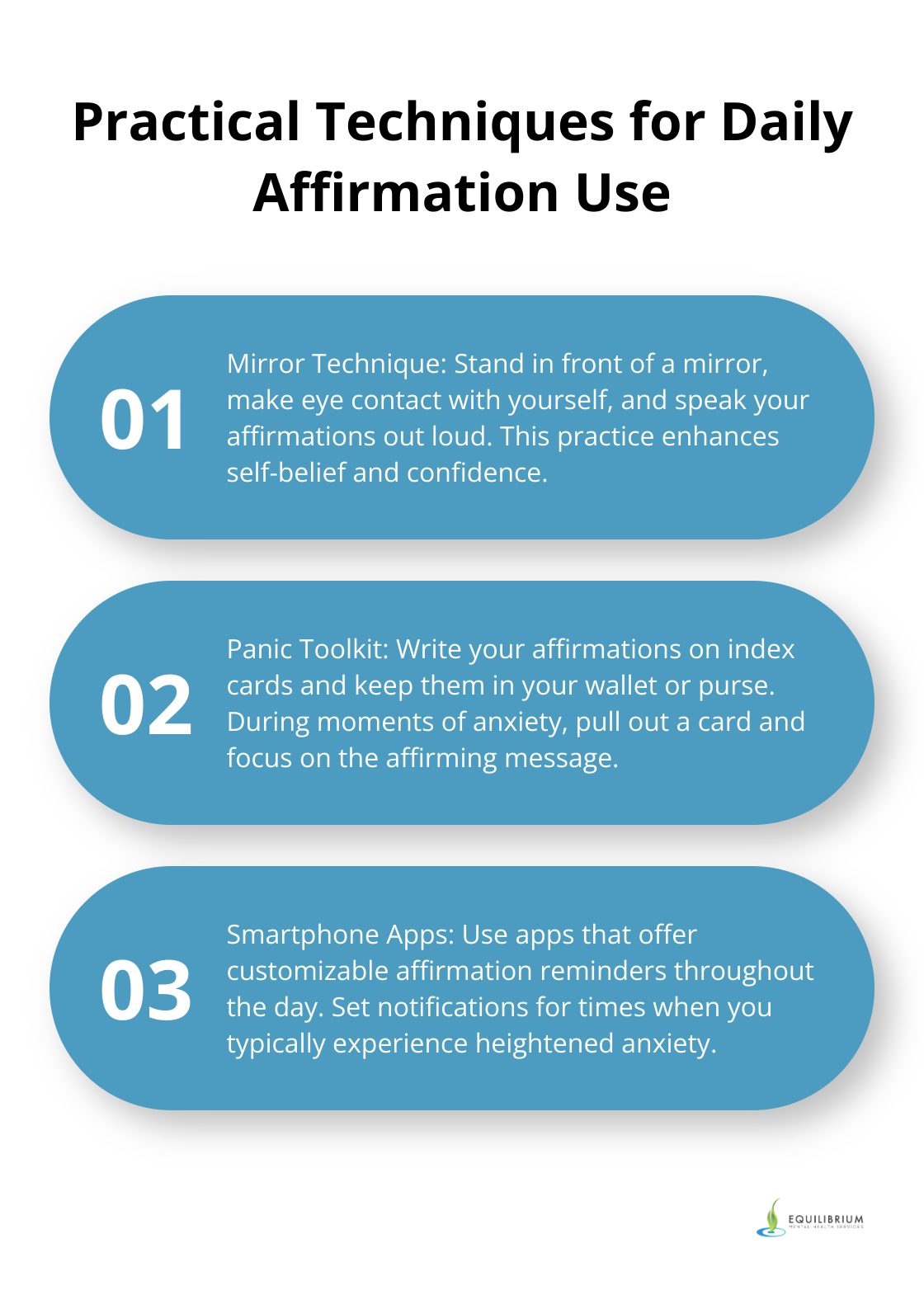
For tech-savvy individuals, smartphone apps offer customizable affirmation reminders throughout the day. Set notifications for times when you typically experience heightened anxiety (such as before important meetings or social events).
Synergizing Affirmations with Other Strategies
Affirmations work best when combined with other anxiety management techniques. Try pairing affirmations with deep breathing exercises.
Here’s a technique: Inhale deeply for 4 counts, hold for 4, then exhale for 4 while mentally repeating your chosen affirmation. This technique, known as “box breathing,” helps Navy SEALs maintain calm under pressure.
Progressive muscle relaxation complements affirmations well. As you tense and relax each muscle group, repeat a relevant affirmation. For example, when relaxing your shoulders, say, “I release tension and embrace calm.”
Incorporate affirmations into your exercise routine to amplify their impact. Whether you jog in Pinecrest or do yoga in Kendall, synchronize your affirmations with your movements for a mind-body connection that reinforces positive thinking.
The key to success with affirmations lies in consistency and personalization. What works for one person may not work for another. Experiment with different techniques and timings to find what resonates best with you. If you struggle to develop an effective affirmation practice, consider seeking professional guidance.
Final Thoughts
Positive affirmations for panic attacks empower individuals to manage anxiety and regain control during challenging moments. Regular practice of these personalized statements can rewire thought patterns and build resilience against panic symptoms. The effectiveness of affirmations increases when combined with other coping strategies (such as deep breathing exercises).
Professional help can make a significant difference when panic attacks impact daily life. Mental health experts offer personalized treatment plans that may include both medication management and psychotherapy. These plans address the unique needs and circumstances of each individual.
Equilibrium Mental Health Services specializes in treating a wide range of mental health conditions, including panic disorders and anxiety. Our team of dedicated professionals works to create a calmer, more balanced you. Take the first step towards reclaiming your peace of mind by incorporating positive affirmations into your daily routine and reaching out for additional support if needed.


