
At Equilibrium Mental Health Services, we often hear the question: “Can exercise help OCD?” The answer is a resounding yes.
Exercise is a powerful tool for managing Obsessive-Compulsive Disorder (OCD) symptoms, offering both physical and mental health benefits.
In this post, we’ll explore how different types of exercise can help alleviate OCD symptoms and provide practical tips for incorporating physical activity into your treatment plan.
How Exercise Impacts OCD Management
Understanding OCD and Its Symptoms
Obsessive-Compulsive Disorder (OCD) manifests through persistent, intrusive thoughts (obsessions) and repetitive behaviors or mental acts (compulsions). These symptoms can significantly disrupt daily life, causing distress and anxiety.
The Physical and Mental Benefits of Exercise for OCD
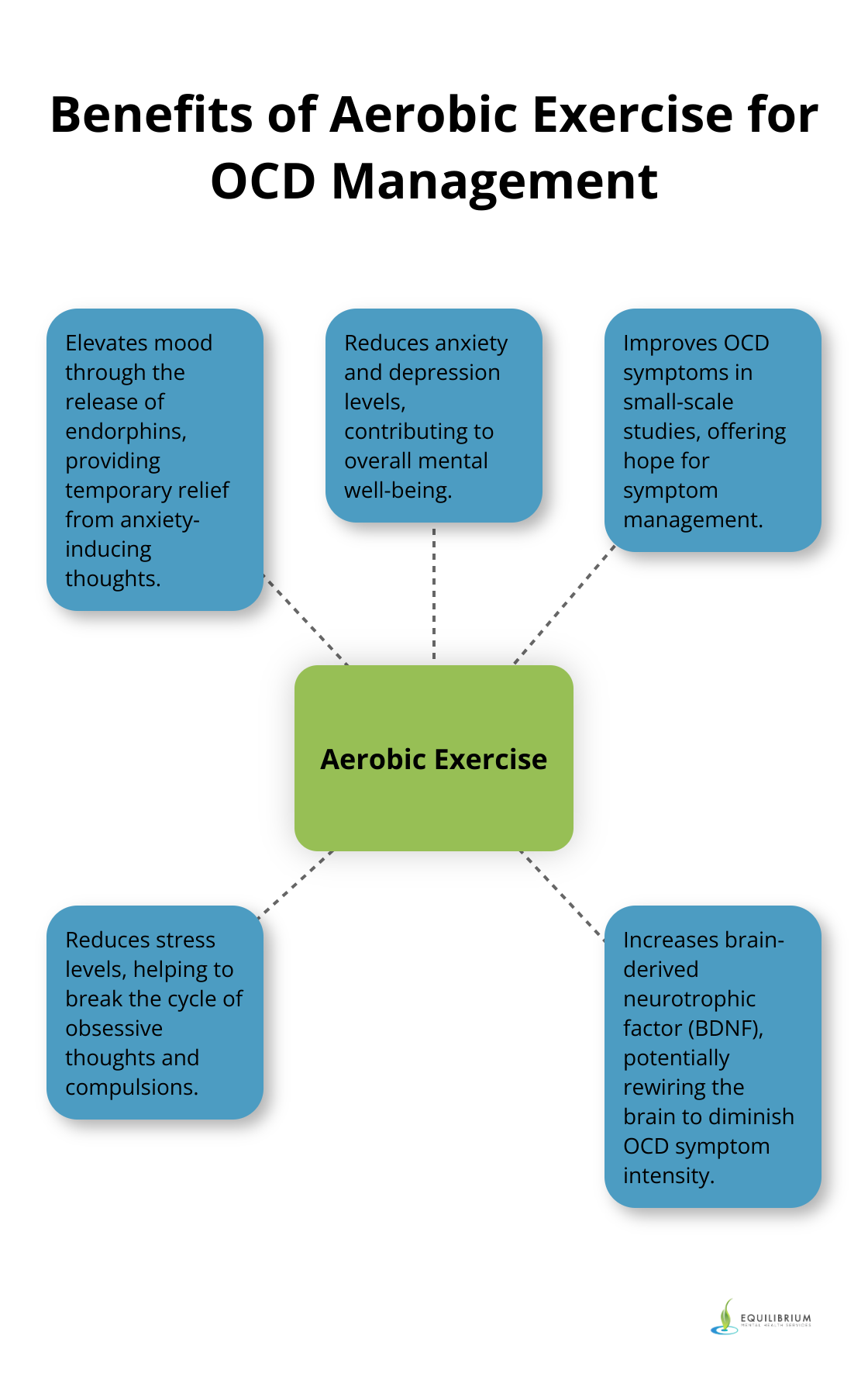
Physical activity profoundly impacts mental health. Exercise triggers the release of endorphins, natural chemicals that elevate mood and reduce stress. For individuals with OCD, this can provide temporary relief from anxiety-inducing thoughts and compulsions.
A study in the Journal of Anxiety Disorders revealed impressive results: aerobic exercise has been associated with decreases in anxiety and depression, as well as improvements in OCD symptoms in small-scale studies.
The Neurological Impact of Exercise on OCD
Recent research illuminates the neurological benefits of exercise for OCD management. Following 20 days of voluntary wheel running compared to non-wheel running rats, increases in brain-derived neurotrophic factor (BDNF) were observed. This BDNF boost may help rewire the brain, potentially diminishing the intensity of OCD symptoms.
Exercise as a Complementary Treatment
While exercise alone doesn’t cure OCD, it serves as an effective complementary treatment. Dr. Michael Jenike, a psychiatry professor at Harvard Medical School, suggests that exercise yields particular benefits when combined with cognitive-behavioral therapy (CBT) and medication.
Many mental health professionals recommend incorporating exercise into treatment plans. Patients who engage in regular physical activity often report improved mood, better sleep, and enhanced ability to manage their OCD symptoms.
Starting Your Exercise Journey
Initiating an exercise routine doesn’t require a drastic lifestyle change. Even small amounts of physical activity can make a difference. The key lies in consistency and finding enjoyable activities. A 15-minute walk in Coconut Grove or a yoga session in Brickell can serve as excellent starting points.
As we explore the types of exercises beneficial for OCD in the next section, you’ll discover a variety of options to incorporate into your routine. From aerobic activities to strength training and mindfulness-based exercises, there’s a form of physical activity suitable for everyone’s preferences and fitness levels.
Effective Exercises for OCD Management
At Equilibrium Mental Health Services, we observe how exercise transforms the lives of those managing OCD symptoms. Let’s explore some of the most effective types of physical activity that alleviate OCD-related stress and anxiety.
Aerobic Exercises: The Mood Boosters
Aerobic exercises benefit OCD management significantly. Activities like running, swimming, or cycling increase heart rate and promote endorphin release, which improves mood and reduces anxiety. Recent research suggests that aerobic exercise is an effective treatment for anxiety, with higher-intensity exercise showing more significant benefits.
For our patients in Miami, we recommend a 20-minute jog along Brickell Key or a swim at the Venetian Pool in Coral Gables. These activities provide physical benefits and offer a change of scenery that breaks the cycle of obsessive thoughts.
Strength Training: Building Mental Resilience
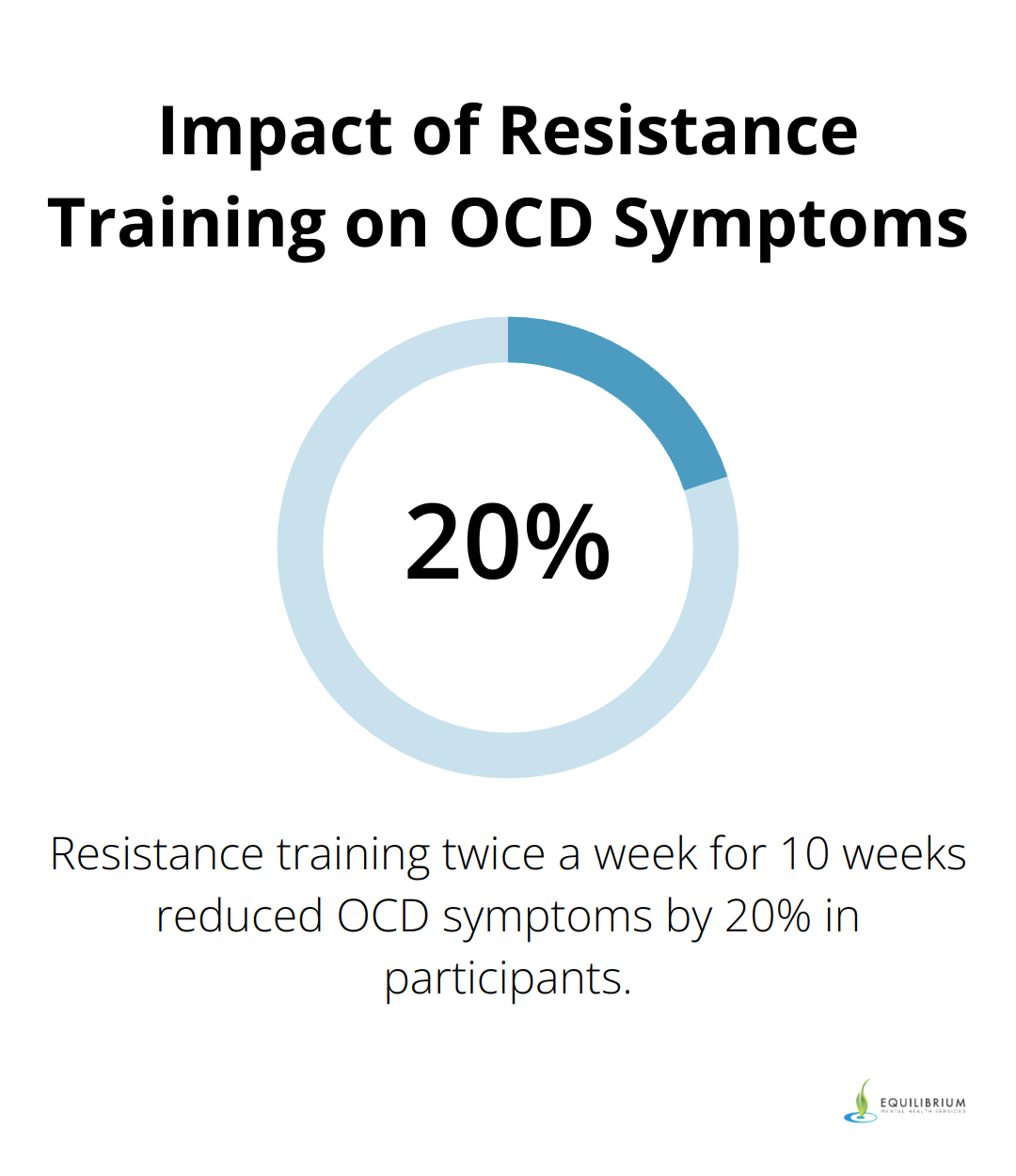
Strength training and weightlifting build muscle and mental resilience. A 2015 study in Frontiers in Psychology revealed that resistance training twice a week for 10 weeks reduced OCD symptoms by 20% in participants.
We suggest incorporating simple strength exercises into your routine. Start with bodyweight exercises like push-ups, squats, and lunges. As you progress, consider joining a gym in Pinecrest or Kendall for guided weightlifting sessions. The focus required during strength training distracts from intrusive thoughts powerfully.
Mindfulness-Based Exercises: Calming the Mind
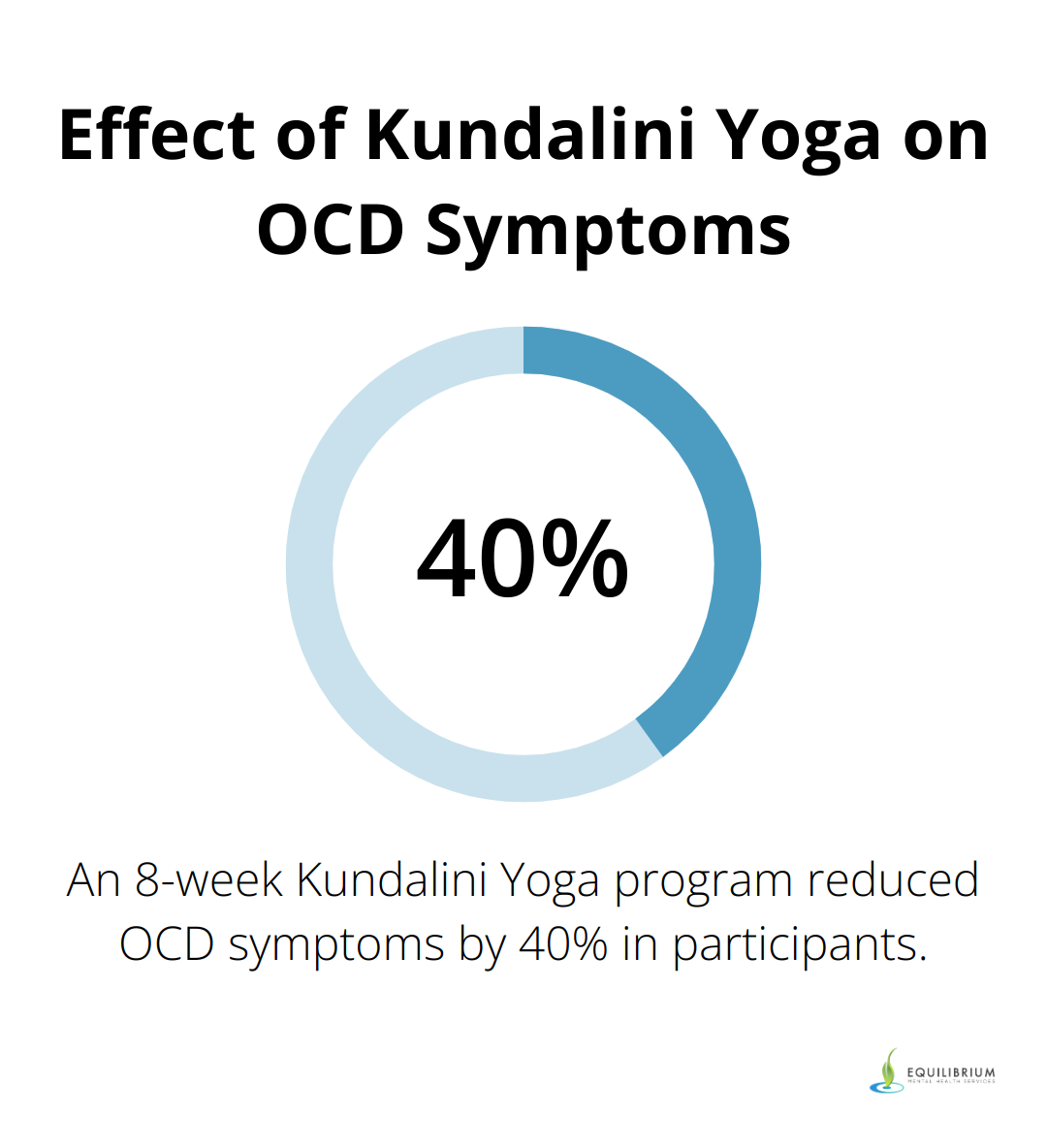
Yoga and other mindfulness-based exercises effectively manage OCD symptoms. These practices combine physical movement with mental focus, which calms racing thoughts and reduces anxiety. A 2016 study in the Journal of Psychiatric Research found that an 8-week Kundalini Yoga program reduced OCD symptoms by 40%.
We recommend our patients in Coconut Grove try yoga classes at local studios or practice at home using online resources. The combination of controlled breathing, physical postures, and meditation in yoga provides a holistic approach to managing OCD symptoms.
The key to using exercise for OCD management is consistency. Start with small, achievable goals and gradually increase the duration and intensity of your workouts. Always consult with your mental health professional before making significant changes to your treatment plan.
Now that we’ve explored effective exercises for OCD management, let’s discuss how to implement these strategies into your daily routine for maximum benefit.
How to Build an Effective Exercise Routine for OCD
Start Small and Build Gradually
Begin with short, manageable sessions. A 10-minute walk around Coconut Grove or a quick yoga stretch in your living room provides a great start. Increase duration and intensity as you build confidence and stamina.
Choose Activities You Enjoy
Enjoyment ensures consistency. If you dislike your workouts, you won’t stick with them. Experiment with different activities. A dance class in Brickell, a bike ride through Pinecrest, or a swim at Key Biscayne Beach might bring you joy. Try to find exercises that you anticipate with excitement.
Schedule Exercise as a Priority
Treat your exercise time as non-negotiable. Add it to your calendar and commit to it. Many patients in Miami succeed by exercising at the same time each day, creating a routine that incorporates stress-management techniques.
Integrate Exercise with Other OCD Treatments
Exercise works best when combined with other evidence-based treatments. CBT combined with exercise has been associated with significantly greater OCD symptom reduction than exercise alone or control groups. If you undergo Exposure and Response Prevention (ERP) therapy, incorporate physical activity into your exposures. For example, challenge yourself to use gym equipment without excessive cleaning afterwards if you have contamination fears.
Use Exercise as a Coping Tool
When intrusive thoughts occur, a go-to physical activity proves invaluable. A quick set of jumping jacks or a brisk walk around Palmetto Bay can interrupt the cycle of obsessive thoughts. However, avoid using exercise as a compulsion itself.
Monitor Your Progress
Keep a record of your workouts and your feelings before and after. This practice helps you identify patterns and motivates you to continue. Many patients in Kendall use fitness apps or simple journals (paper or digital) to track their progress.
Practice Self-Compassion During Setbacks
Some days, you won’t feel like exercising or OCD symptoms might overwhelm you. That’s okay. Show yourself kindness and resume your routine as soon as possible. Consistency over time matters more than perfection.
Seek Support When Necessary
Don’t hesitate to ask for help. Join a running group in Coral Gables or work with a personal trainer familiar with mental health concerns. Support makes a significant difference. Our team at Equilibrium Mental Health Services stands ready to help you integrate multiple evidence-based therapeutic approaches into your overall OCD management plan.
Final Thoughts
Exercise proves to be a powerful tool in the management of OCD symptoms. Regular physical activity releases endorphins, reduces stress, and improves overall mental well-being. We at Equilibrium Mental Health Services understand the question “Can exercise help OCD?” and confidently answer: yes, it can.
Exercise works best when combined with other evidence-based treatments. It’s not a standalone solution, but rather an important component of a comprehensive treatment plan. We recommend working with mental health professionals who can guide you in creating a personalized approach tailored to your specific needs.
Equilibrium Mental Health Services offers expert support to help you manage your OCD symptoms effectively. Our team can help you integrate exercise into your treatment plan, alongside other proven therapies (such as CBT and medication management). Don’t let OCD control your life – reach out to us today to start your journey towards better mental health.


