
At Equilibrium Mental Health Services, we understand the challenges of managing ADHD. Behavior therapy for ADHD is a powerful tool that can help individuals develop essential skills and strategies.
This approach focuses on practical techniques to improve daily functioning and reduce ADHD symptoms. In this post, we’ll explore how to effectively use behavior therapy for ADHD management, providing you with actionable insights and tips.
What is Behavior Therapy for ADHD?
The Foundation of Behavior Therapy
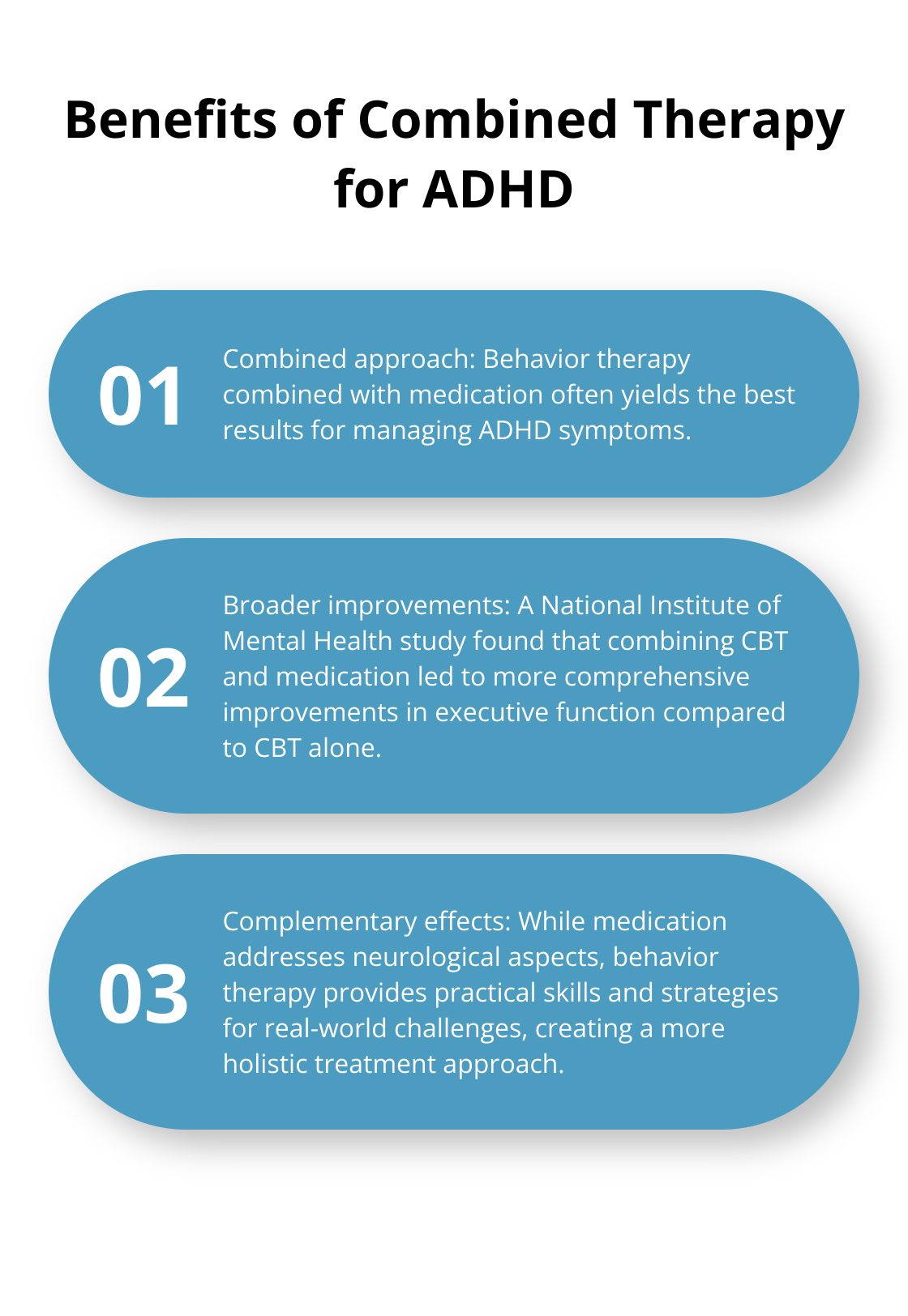
Behavior therapy for ADHD is a structured approach that changes specific behaviors to improve daily functioning. This method transforms lives by equipping individuals with practical skills to manage their symptoms effectively. Unlike medication, which targets neurological aspects, behavior therapy focuses on developing strategies for real-world challenges.
Core Components
The process involves identifying problematic behaviors and replacing them with positive ones. It includes setting clear goals, establishing routines, and using reward systems. For instance, a child struggling with homework might work with a therapist to break tasks into smaller, manageable chunks and receive rewards for completing each section.
Distinguishing Features
While medication reduces ADHD symptoms, behavior therapy provides long-lasting tools for managing daily challenges. It’s not a quick fix but a method for building lifelong skills. In Coral Gables, combining behavior therapy with medication often yields the best results. A National Institute of Mental Health study found that a combination of CBT and medication presented broader improvements in executive function than CBT alone.
Advantages of Behavior Therapy
One significant benefit of behavior therapy is its focus on practical, real-world solutions. Patients learn strategies they can apply immediately in their daily lives. For example:
- Adults with ADHD might learn time management techniques to meet work deadlines
- Children might develop organizational skills to improve school performance
Moreover, behavior therapy can boost self-esteem and reduce family stress. Research indicates that ABA techniques can effectively decrease impulsivity and hyperactivity while improving task completion and maintaining on-task behavior.
Personalized Approach
Every person with ADHD is unique. That’s why behavior therapy approaches should be tailored to each individual’s specific challenges and strengths. Whether you’re in Miami psychiatry or surrounding areas like Pinecrest, personalized, evidence-based care that addresses your specific ADHD management needs is essential.
As we move forward, let’s explore the key techniques used in behavior therapy for ADHD and how they can be effectively implemented in various settings.
Effective Techniques for ADHD Behavior Therapy
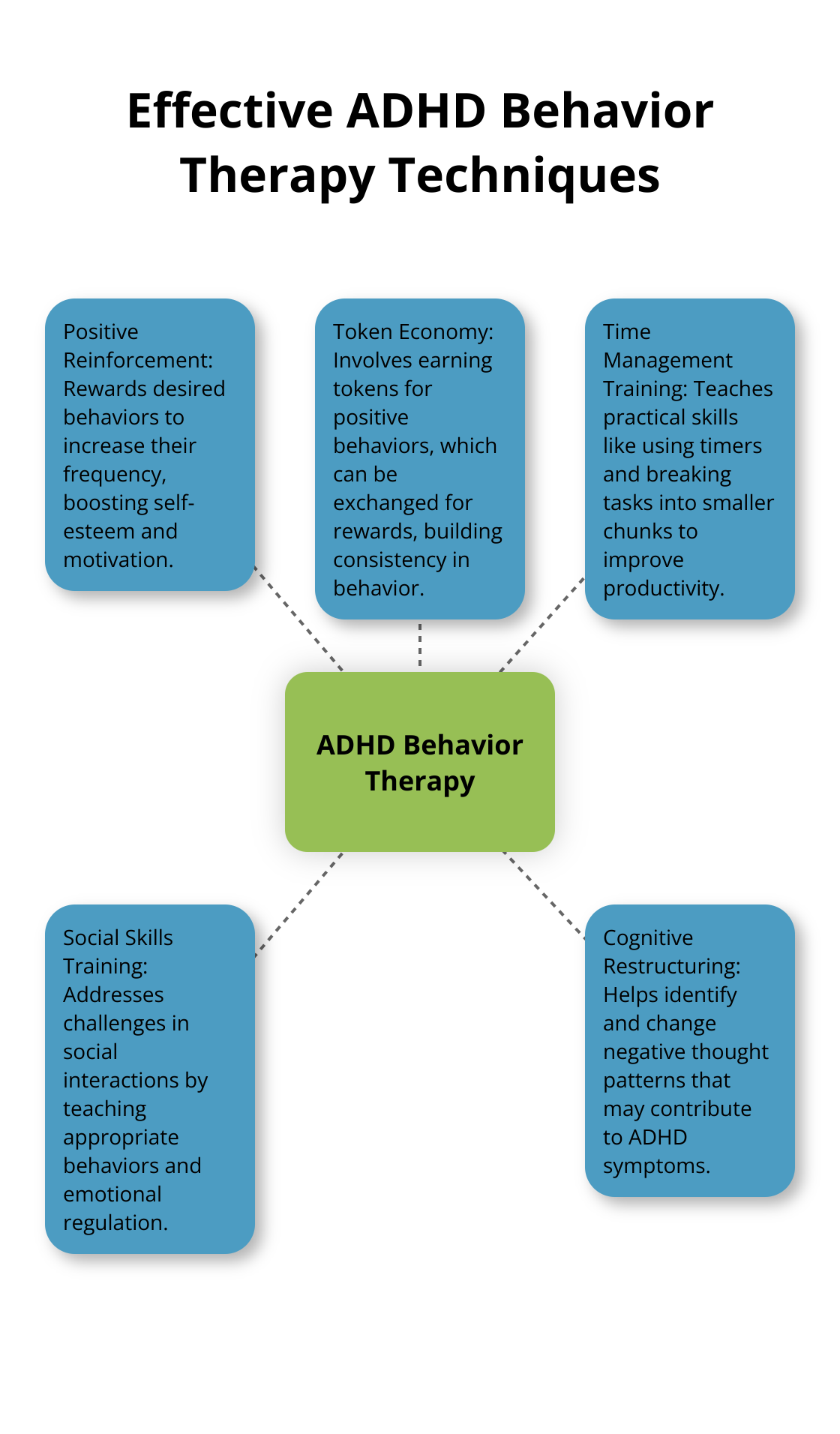
Positive Reinforcement: The Power of Praise
Positive reinforcement stands as a cornerstone of ADHD behavior therapy. This technique rewards desired behaviors to increase their frequency. For example, a child with ADHD who completes homework without prompting might receive extra screen time or a favorite snack. Adults might treat themselves to a coffee break after finishing a challenging task at work.
Research indicates that reinforcement contingencies have a positive impact on task performance and levels of motivation for both children with ADHD and normal controls. This approach not only encourages good habits but also boosts self-esteem and motivation.
Token Economy: Building Consistency
Token economy systems prove highly effective for both children and adults with ADHD. This method involves earning tokens for positive behaviors, which can later be exchanged for rewards. For instance, a child might earn stickers for staying seated during dinner, which they can trade for a trip to the park at the end of the week.
Studies show that token economy programs have been effective in improving ADHD-related symptoms. In Coral Gables, patients using this technique (especially when combined with other behavioral strategies) have shown remarkable improvements.
Time Management Training: Mastering the Clock
Time management often presents a significant challenge for individuals with ADHD. Behavior therapy sessions focus on teaching practical skills like using timers, breaking tasks into smaller chunks, and prioritizing activities. Patients might benefit from apps like RescueTime or Forest to help track and manage their time more effectively.
These skills prove particularly crucial for adults in professional settings, helping them meet deadlines and improve overall productivity.
Social Skills Training: Enhancing Interpersonal Relationships
Many individuals with ADHD struggle with social interactions due to impulsivity or inattention. Social skills training helps address these challenges by teaching appropriate social behaviors, active listening, and emotional regulation. Role-playing exercises and group therapy sessions can provide safe environments to practice these skills.
Cognitive Restructuring: Changing Negative Thought Patterns
Cognitive restructuring helps individuals with ADHD identify and change negative thought patterns that may contribute to their symptoms. This technique involves recognizing distorted thoughts, challenging them, and replacing them with more realistic and positive ones.
In Miami psychiatry and surrounding areas like Pinecrest, this technique has proven particularly effective when combined with other behavioral strategies.
As we move forward, let’s explore how these powerful techniques can be implemented effectively in various settings, including home and school environments.
How to Implement Behavior Therapy at Home and School
Create a Structured Environment
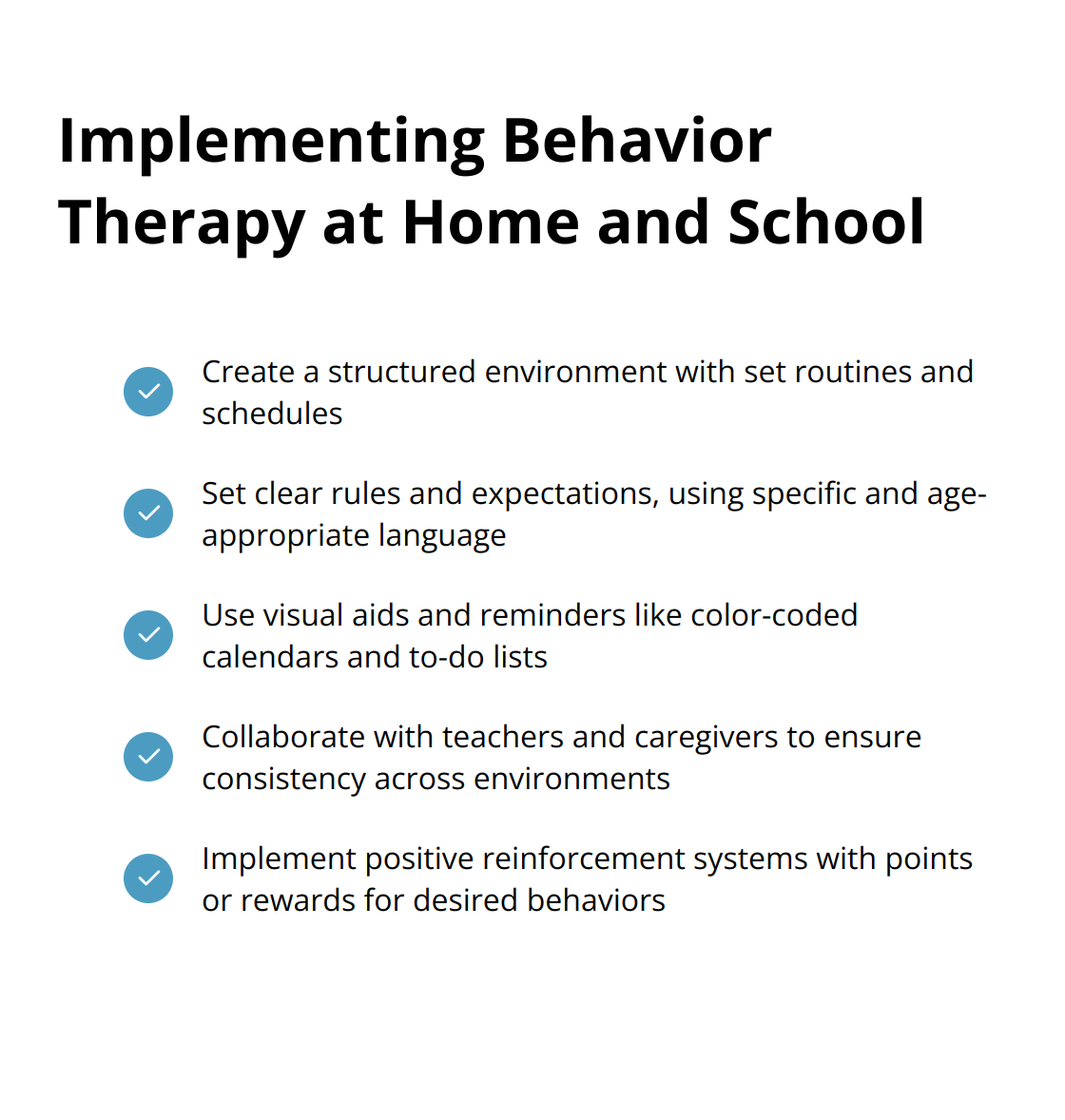
Structure forms the foundation of effective ADHD management. At home, establish a daily routine with set times for meals, homework, chores, and bedtime. Use timers or apps (like Time Timer) to help with activity transitions. In the classroom, teachers should create a predictable schedule with visual cues for different subjects or activities.
Set Clear Rules and Expectations
Clarity is essential when managing ADHD. At home, create a family contract that outlines expectations, rules, and consequences. Make these age-appropriate and specific. For example, replace “Be good” with “Complete homework before dinner.” In school, teachers should post classroom rules visibly and review them regularly.
A randomized, controlled trial of integrated home-school treatment for ADHD, primarily inattentive type, has shown promising results in improving symptoms through clear rules and expectations.
Use Visual Aids and Reminders
Visual cues can significantly improve task completion and time management for individuals with ADHD. Use color-coded calendars, to-do lists, or apps (such as Trello) for organizing tasks. For younger children, picture schedules can be incredibly effective. In Pinecrest schools, students have shown great success using visual schedules on their desks.
Collaborate with Teachers and Caregivers
Consistency across environments is important. Regular communication between parents, teachers, and therapists ensures uniform application of behavior therapy techniques. Consider using a daily report card system where teachers provide feedback on specific behaviors, which parents can then reinforce at home.
Implement Positive Reinforcement
Create a point system at home and school where children earn points for desired behaviors. Exchange these points for privileges or rewards. For example, completing homework without reminders might earn points, while staying seated during dinner earns points. At the end of the week, trade points for extra screen time or a special outing.
Recent research has explored whether individual differences in reward sensitivity can predict which children with ADHD respond best to positive reinforcement strategies.
Miami psychiatry professionals can provide further guidance on implementing these behavior therapy techniques effectively.
Final Thoughts
Behavior therapy for ADHD provides effective tools to manage symptoms and improve daily life. This approach focuses on practical strategies and skill-building, which help individuals with ADHD navigate challenges at home, school, and work. Techniques such as positive reinforcement and time management training offer a comprehensive toolkit for ADHD management.
Consistency plays a vital role when you implement behavior therapy strategies. It takes time to see significant changes, but the long-term benefits outweigh the initial effort. As you incorporate these techniques into your daily routine, celebrate small victories and maintain patience with the process.
ADHD management often requires a multifaceted approach. At Equilibrium Mental Health Services, we create personalized treatment plans that combine behavior therapy with other evidence-based interventions. Our team of experts in Coral Gables and Pinecrest (Miami area) stands ready to help you find the right balance of strategies for effective ADHD management. Contact us today to take the first step towards positive change.


