
ADHD affects 6.1 million children and 4.4% of adults in the United States, creating significant challenges in daily functioning. While medication remains a common treatment approach, ADHD treatment behavioral therapy offers powerful alternatives that address core symptoms through skill-building and environmental modifications.
At Equilibrium Mental Health Services, we see remarkable results when clients learn practical strategies to manage attention, hyperactivity, and impulsivity. Behavioral interventions provide lasting tools that work alongside or instead of medication, helping individuals build sustainable coping mechanisms for long-term success.
What Makes Behavioral Therapy Different for ADHD
The Real Impact of ADHD on Daily Function
ADHD disrupts executive function in ways that traditional approaches often miss. Adults with ADHD lose an average of 22 days of productivity annually (according to Harvard Medical School research), while children struggle with academic performance despite normal intelligence levels. The condition affects memory, task initiation, and emotional regulation-this creates a cascade of challenges that medication alone cannot address.
How Behavioral Therapy Targets Root Causes
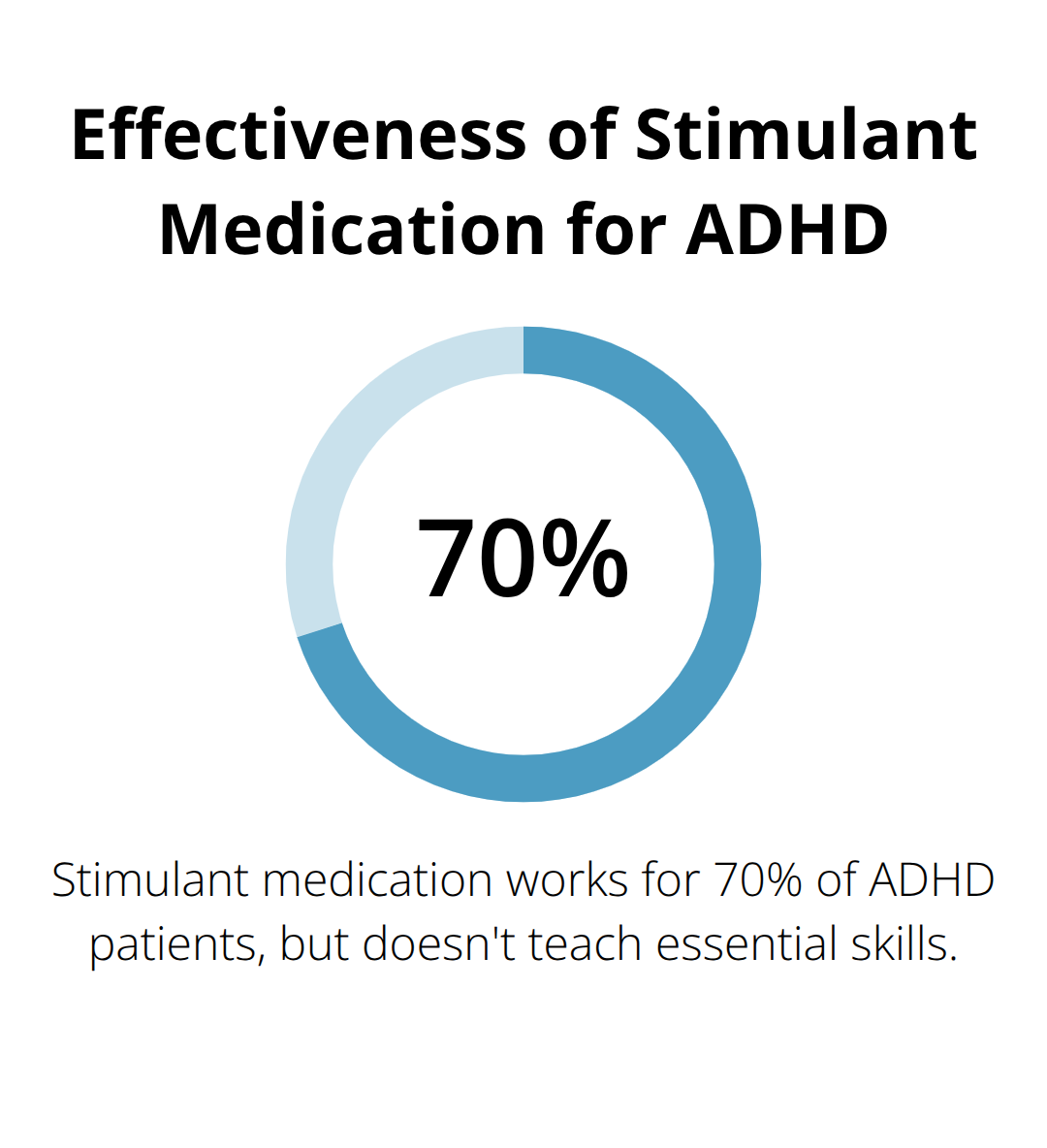
Medication manages neurotransmitter imbalances but behavioral therapy builds actual skills. While stimulants work for 70% of patients, they don’t teach time management, organizational strategies, or emotional regulation techniques. Behavioral interventions focus on environmental modifications and skill development that create permanent change. Studies from the University of Kagoshima show that CBT combined with organizational strategies produces superior results compared to medication-only approaches.
Why Skills Development Creates Permanent Results
Behavioral therapy addresses the functional impairments that persist even when medication controls core symptoms. Research published in the Journal of Attention Disorders demonstrates that adults who receive CBT show significant improvements in organizational skills and self-esteem that continue months after treatment ends. These interventions teach practical problem-solving techniques, attention control strategies, and emotional regulation skills that become automatic over time.
The Science Behind Behavioral Change
Modern CBT for ADHD combines third-wave techniques like mindfulness and ACT with digital tools to bolster executive functioning. These approaches fine-tune attention control and promote adaptive behaviors in ADHD patients. Meta-analysis reviews of multiple randomized controlled trials assess the impact of therapeutic approaches on ADHD symptoms, which showcases the reliability of these methods.
The next step involves understanding the specific types of behavioral therapy available and how each approach targets different aspects of ADHD symptoms. For comprehensive treatment options, consider consulting with Miami psychiatry professionals who specialize in ADHD management.
Which Behavioral Therapy Works Best
Cognitive Behavioral Therapy Transforms ADHD Management
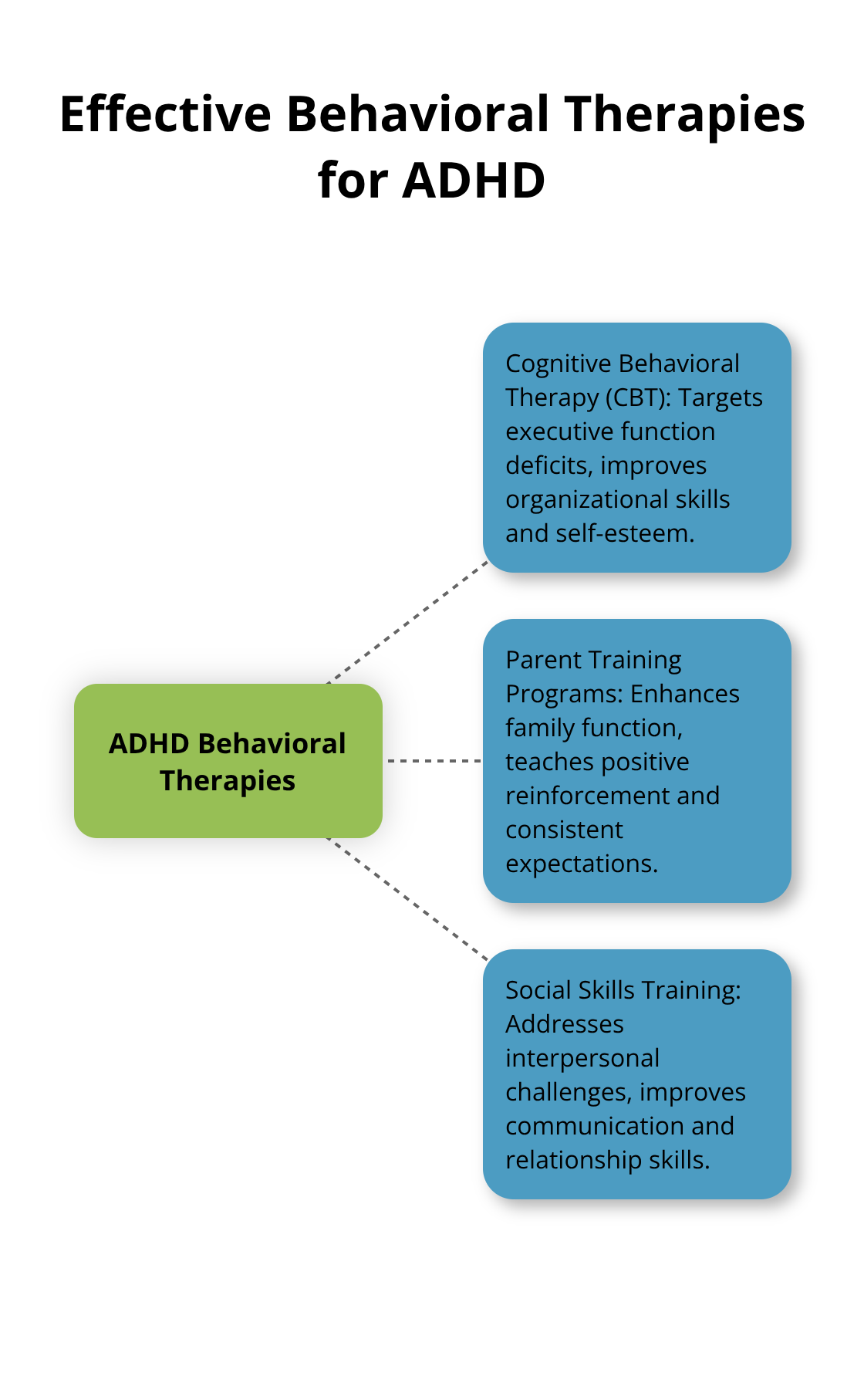
CBT for ADHD targets specific executive function deficits through structured skill modules. Research from the Journal of Attention Disorders shows that adults who received 12 manualized group CBT sessions experienced significant improvements in organizational skills and self-esteem. The approach teaches time management techniques, breaks overwhelming tasks into manageable steps, and restructures negative thought patterns that fuel procrastination.
Adults who complete CBT programs report higher productivity and increased happiness. The technique works when patients track their behaviors, emotions, and triggers throughout the day. CBT also incorporates mindfulness-based cognitive therapy to enhance attention regulation and improve the brain’s default mode network function.
Parent Training Programs Create Home Structure
Behavioral parent training produces measurable improvements in family function for children with ADHD. The American Academy of Pediatrics confirms that parents who complete these programs see significant enhancements in their child’s daily function and quality of life. These programs teach positive reinforcement techniques through praise rather than punishment, establish consistent expectations with clear consequences, and create predictable daily routines that reduce frustration.
Parents learn to implement behavior contracts that clarify expectations and improve accountability. The Positive Parenting Program shows parents how to use reward systems effectively, manage big emotions through deep breathing techniques, and coordinate with schools to maintain consistency across environments.
Social Skills Training Builds Relationship Success
Social skills training addresses the interpersonal challenges that affect over half of children with ADHD. Group therapy settings provide collaborative environments where participants share practical strategies and receive peer support from others who face similar challenges. These programs teach conflict resolution techniques, emotional regulation strategies, and communication skills that improve relationships at home and school.
The next phase involves practical implementation of these therapeutic approaches in daily environments where ADHD symptoms create the most disruption.
How Do You Build ADHD-Friendly Environments
Transform Your Physical Space for Better Focus
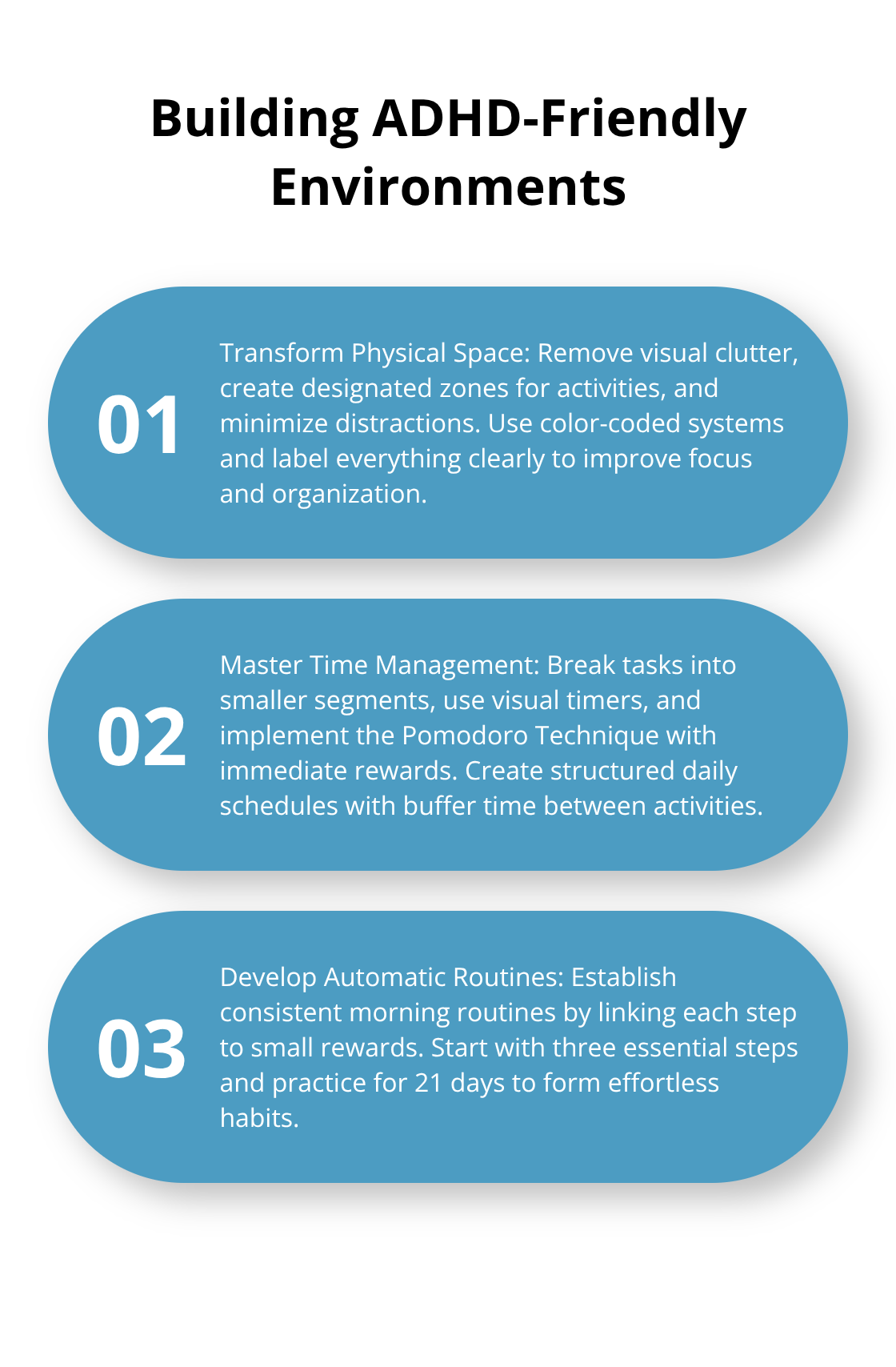
Adults with ADHD face significant productivity challenges because their environments work against them. The solution starts with ruthless organization. Remove visual clutter from work surfaces and create designated zones for specific activities. Use color-coded systems and label everything clearly. Research shows that adults with ADHD perform better when they work in spaces with minimal visual distractions.
Install noise-canceling headphones or white noise machines to block auditory interruptions. Position your workspace away from high-traffic areas and face walls instead of windows or doorways. Keep only essential items within arm’s reach and store everything else in closed drawers or cabinets.
Master Time Management Through Structured Rewards
Time perception challenges affect many adults with ADHD, which makes traditional schedules ineffective. Break large tasks into 15-minute segments and use visual timers to track progress. The Pomodoro Technique works exceptionally well for ADHD brains when you pair it with immediate rewards. Complete three 25-minute focused work sessions and earn a 10-minute break that involves something enjoyable.
Create daily schedules with specific time blocks and build in buffer time between activities. Use smartphone apps like Forest or Focus Keeper to gamify productivity. Set up accountability systems with colleagues or family members who check your progress weekly.
Develop Automatic Morning Routines
Research shows that consistent reward systems improve task completion rates in adults with ADHD. Morning routines become automatic when you link each step to a small reward (like listening to favorite music while getting dressed or enjoying coffee only after completing morning tasks).
Write down your morning sequence and practice it for 21 days straight. Start with just three essential steps: wake up at the same time, complete one hygiene task, and eat something nutritious. Add complexity only after these basics become effortless habits that require no mental energy to execute. For professional support with ADHD management, consider consulting Miami psychiatry specialists.
Final Thoughts
ADHD treatment behavioral therapy provides lasting solutions that medication alone cannot achieve. Research consistently shows that adults who complete structured behavioral programs experience significant improvements in organizational skills, time management, and emotional regulation that persist months after treatment ends. Children benefit from parent training programs that create consistent home environments and teach families effective communication strategies.
Professional guidance and personalized treatment plans determine success rates. We at Equilibrium Mental Health Services understand that every individual with ADHD faces unique challenges. Our team creates comprehensive treatment approaches that combine evidence-based behavioral interventions with medication management when appropriate (we also treat ADHD alongside other conditions like anxiety and depression that often co-occur).
Professional evaluation marks the first step toward better ADHD management. If you or a loved one struggles with attention, hyperactivity, or impulsivity symptoms that disrupt daily life, Equilibrium Mental Health Services offers expert psychiatric care in Miami and surrounding areas. Contact our professionals to begin your journey toward improved focus, better relationships, and enhanced quality of life through personalized behavioral therapy approaches.


