
At Equilibrium Mental Health Services, we understand the distress of waking up in the middle of the night gripped by panic. Nocturnal panic attacks can be particularly frightening, disrupting your sleep and leaving you feeling exhausted and anxious.
In this post, we’ll explore effective strategies on how to stop panic attacks in sleep, helping you regain control and enjoy restful nights. Our expert tips will cover prevention techniques, immediate actions during an attack, and long-term management approaches.
What Are Nocturnal Panic Attacks?
The Nature of Nighttime Panic
Nocturnal panic attacks are episodes of intense fear that occur unexpectedly during sleep. These sudden awakenings can leave you feeling disoriented, scared, and physically uncomfortable. Many patients in Coral Gables and surrounding areas struggle with this distressing experience.
Nocturnal panic attacks share many similarities with their daytime counterparts. Both involve a surge of adrenaline, rapid heartbeat, sweating, and a sense of impending doom. However, the nighttime variety can be particularly jarring as they interrupt your sleep cycle, potentially leading to insomnia and daytime fatigue.
Causes and Triggers
The exact cause of nocturnal panic attacks isn’t fully understood, but several factors can contribute:
- Stress: High levels of stress during the day can manifest as anxiety during sleep. Many patients in Pinecrest report increased nocturnal panic attacks during periods of heightened stress.
- Sleep Disorders: Conditions like sleep apnea can trigger panic attacks.
- Genetics: Family history plays a role.
- Caffeine and Alcohol: These substances can disrupt sleep patterns and increase anxiety. It’s advisable to limit intake, especially in the evening hours (this is particularly relevant for our patients in Brickell).
Recognizing the Signs
Identifying nocturnal panic attacks is essential for effective management. Common symptoms include:
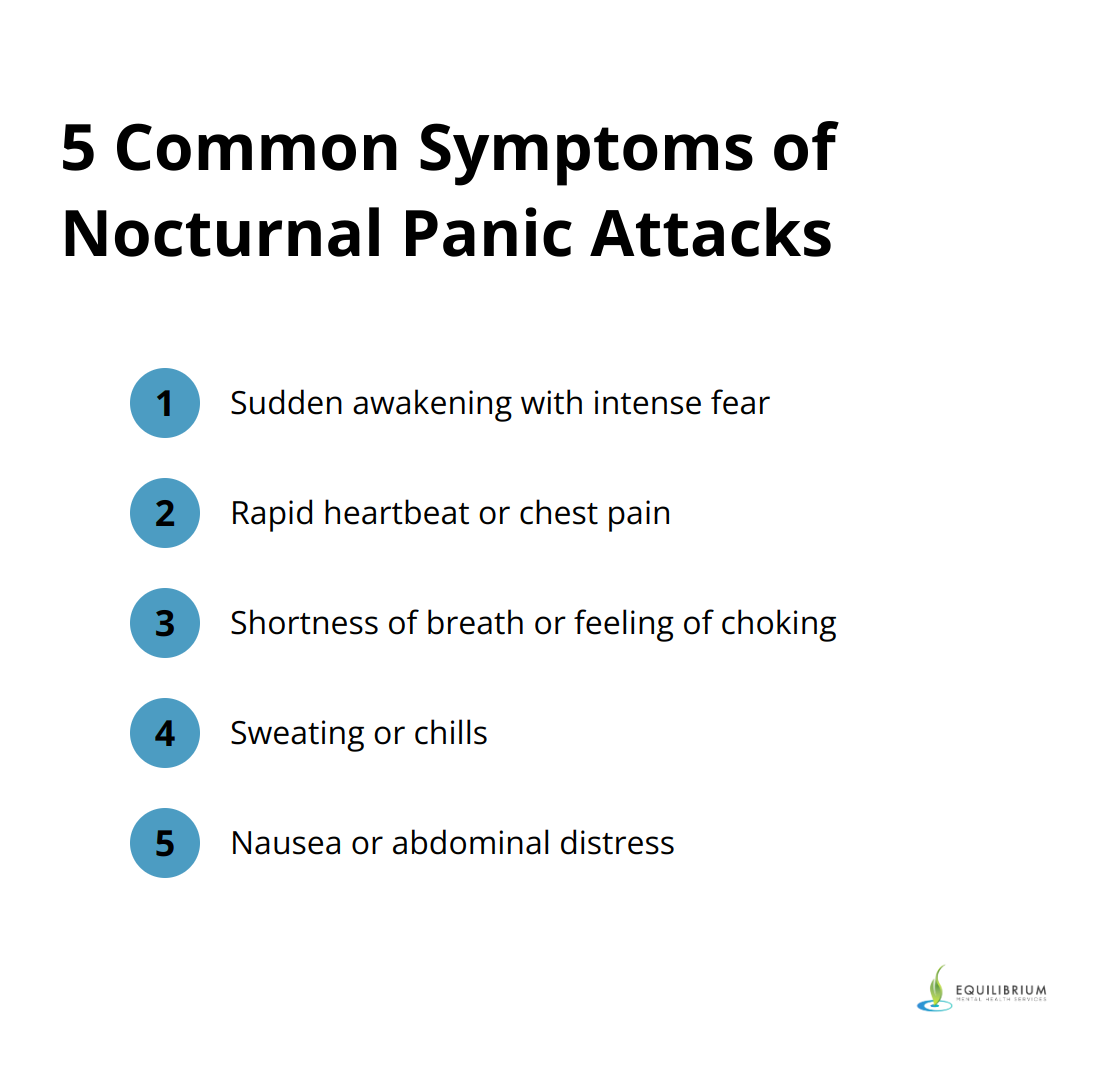
If you experience these symptoms regularly, it’s important to seek professional help. A comprehensive evaluation can determine the underlying causes and help develop personalized treatment plans.
The Impact on Daily Life
Nocturnal panic attacks can have far-reaching effects beyond disrupted sleep. They (particularly those in Miami) report:
- Increased anxiety about going to sleep
- Daytime fatigue and difficulty concentrating
- Strained relationships due to sleep disturbances
- Reduced overall quality of life
Understanding these impacts is the first step towards effective management. In the next section, we’ll explore strategies to prevent nocturnal panic attacks and improve your sleep quality.
Preventing Nighttime Panic Attacks
Create a Sleep-Friendly Environment
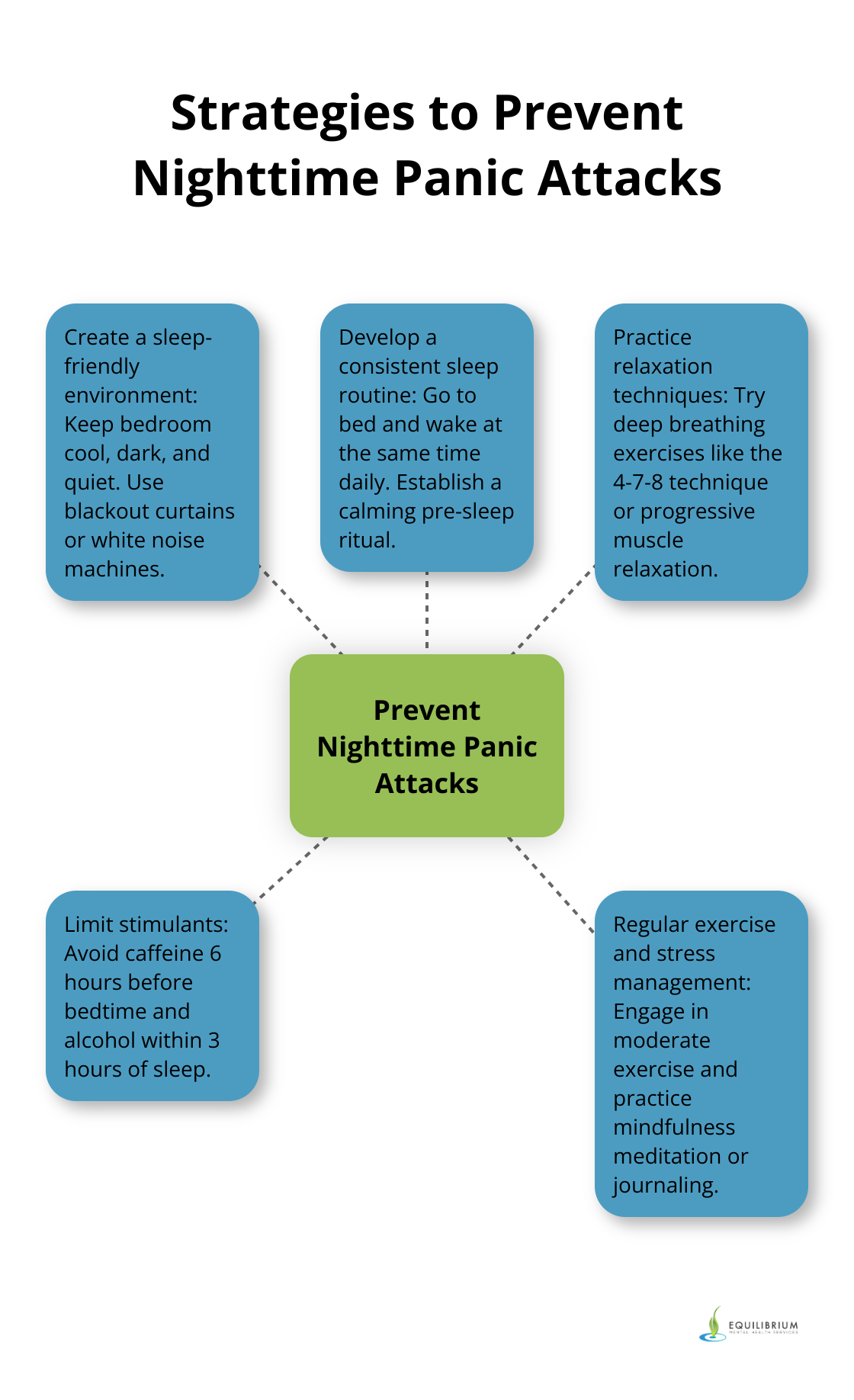
Your bedroom should be a sanctuary for rest. Keep it cool, dark, and quiet. Use blackout curtains or an eye mask to block out light. White noise machines can mask disruptive sounds. Many patients (especially in Coral Gables) find that lavender-scented pillows or essential oils promote relaxation.
Develop a Consistent Sleep Routine
Go to bed and wake at the same time every day, even on weekends. This helps regulate your body’s internal clock. A calming pre-sleep ritual signals your brain it’s time to wind down. Read a book, listen to soft music, or practice gentle stretches.
Practice Relaxation Techniques
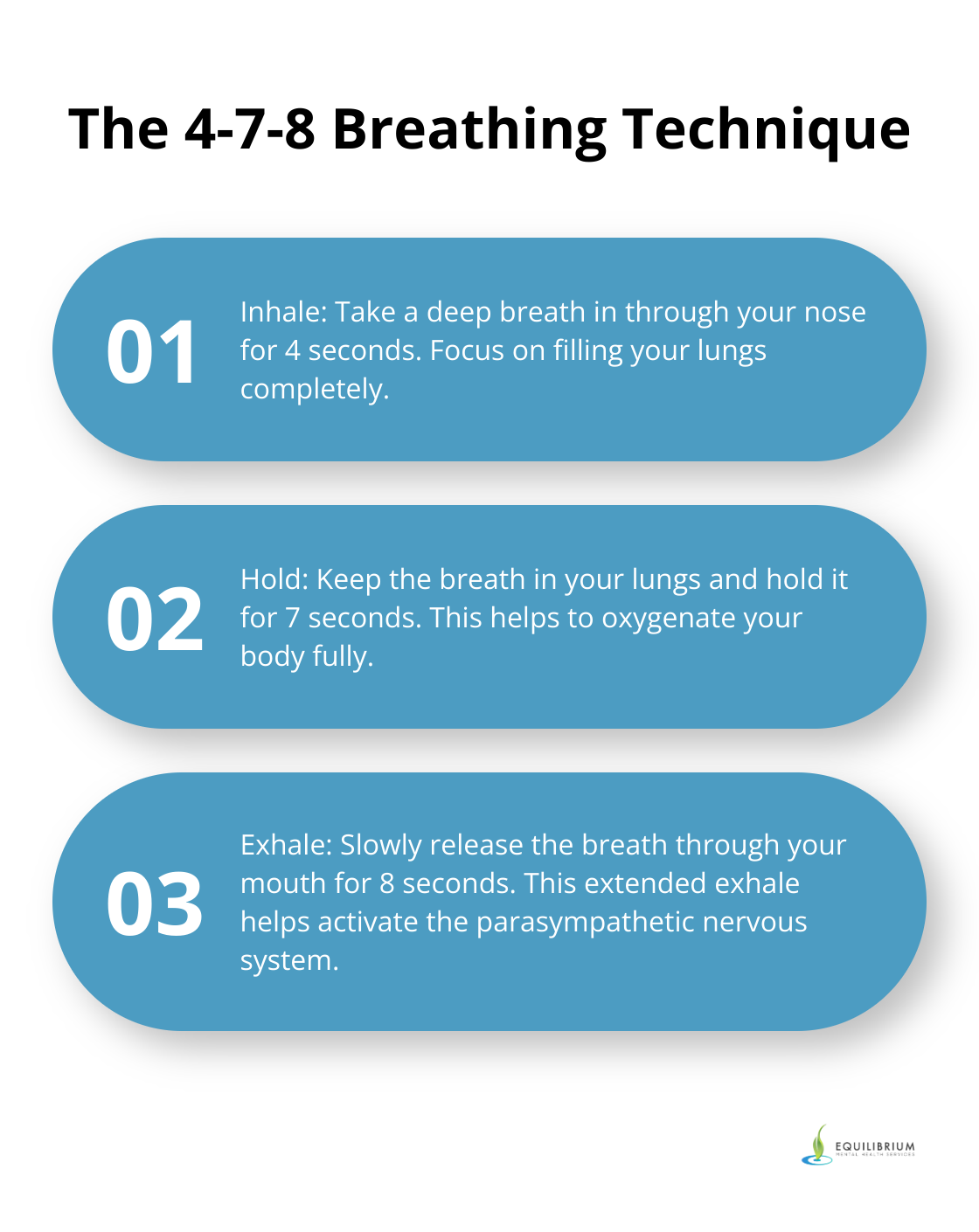
Deep breathing exercises are powerful tools against anxiety. Try the 4-7-8 technique: inhale for 4 seconds, hold for 7, exhale for 8. Progressive muscle relaxation is another effective method. This technique involves focusing on slowly tensing and then relaxing each muscle group, which can help you focus on the difference between muscle tension and relaxation.
Limit Stimulants
Stop caffeine intake at least 6 hours before bedtime. This includes coffee, tea, chocolate, and some medications. Alcohol might help you fall asleep initially, but it disrupts sleep cycles and can increase anxiety. Avoid alcohol within 3 hours of bedtime (this is particularly relevant for our patients in Brickell).
Regular Exercise and Stress Management
Physical activity is a natural stress-buster. Try 30 minutes of moderate exercise most days. However, avoid vigorous workouts close to bedtime as they can be stimulating. Instead, try gentle yoga or stretching in the evening.
Stress management techniques like mindfulness meditation can significantly reduce anxiety. Many patients in Miami find it helpful to keep a worry journal, writing down concerns before bed to clear their minds.
These strategies form a solid foundation for managing nocturnal panic attacks. It’s not known what causes panic attacks, but underlying factors may include genetics, stress, and certain changes in the way parts of your brain work. However, if you continue to struggle, professional help can provide additional support and tailored treatment options. The next section will explore immediate actions you can take when a nocturnal panic attack strikes.
Stopping Nocturnal Panic Attacks in Their Tracks
Focus on Controlled Breathing
When a nocturnal panic attack strikes, focus on your breathing. The 4-7-8 technique is particularly effective for reducing stress and anxiety. Inhale for 4 seconds, hold for 7 seconds, and exhale for 8 seconds. Repeat this cycle several times. This method activates your parasympathetic nervous system, countering the fight-or-flight response triggered by panic.
Use Grounding Techniques
Grounding techniques help you reconnect with your surroundings and break the panic cycle. The 5-4-3-2-1 method is a powerful tool. Identify 5 things you can see, 4 things you can touch, 3 things you can hear, 2 things you can smell, and 1 thing you can taste. This exercise engages your senses and shifts your focus away from panic symptoms.
Practice Positive Self-Talk
Positive self-talk changes the game during a nocturnal panic attack. Replace catastrophic thoughts with realistic, calming statements. Instead of thinking “I’m having a heart attack,” tell yourself “This is a panic attack. It’s uncomfortable, but it will pass.” Many patients in Pinecrest find this cognitive reframing technique highly effective.
Engage in Light Physical Activity
Light physical activity helps dispel excess adrenaline during a panic attack. Simple exercises like shoulder rolls, gentle stretches, or walking in place can benefit you. However, avoid vigorous exercise as it may initially intensify symptoms.
Seek Support from Others
Don’t hesitate to wake your partner or nearby family members for support. Sometimes, having someone present provides comfort and helps you feel safer. They can assist with grounding techniques or offer reassurance (this is particularly helpful for our patients in Coral Gables).
Nocturnal panic attacks often feel isolating and frightening. If you struggle with frequent nighttime panic attacks, reaching out for professional help is an important step towards reclaiming peaceful nights. (At Equilibrium Mental Health Services, our team provides expert guidance and support for those dealing with nocturnal panic attacks.)
Remember, quality sleep is crucial for managing panic attacks. Try to get 7-9 hours of sleep each night and maintain a consistent sleep schedule, even on weekends.
Final Thoughts
Nocturnal panic attacks can overwhelm you, but you can regain control and enjoy peaceful nights with the right strategies. You can reduce these episodes significantly when you create a sleep-friendly environment, develop a consistent routine, and practice relaxation techniques. These methods will help you stop panic attacks in sleep and improve your overall well-being.
When an attack occurs, focus on controlled breathing, use grounding techniques, and engage in positive self-talk. These immediate actions will help you navigate through the panic and return to restful sleep more quickly. Light physical activity and support from loved ones can also provide relief during these challenging moments.
Professional help can make a world of difference if nocturnal panic attacks persist or significantly impact your daily life. At Equilibrium Mental Health Services, we offer treatment for anxiety disorders and can provide personalized plans to address your specific needs (This applies to those in Coral Gables, Pinecrest, and the greater Miami area struggling with panic attacks during sleep.) Take the first step towards better sleep and improved mental health by reaching out to a mental health professional today.


