
Panic attacks while trying to fall asleep can be a terrifying experience, robbing you of much-needed rest and peace of mind.
At Equilibrium Mental Health Services, we understand the impact these nocturnal episodes can have on your overall well-being.
This guide offers practical strategies to help you manage and overcome panic attacks at bedtime, empowering you to reclaim your nights and improve your sleep quality.
What Are Nighttime Panic Attacks?
The Sudden Onset of Nocturnal Fear
Nocturnal panic refers to waking in a state of panic without obvious triggers, experiencing the same symptoms as panic attacks that occur while awake. These unsettling experiences can leave you feeling powerless and afraid to close your eyes. Many patients in our Miami psychiatry practice (particularly those from bustling areas like Brickell or Coconut Grove) report struggling with this issue.
Physical and Emotional Symptoms
When panic hits at bedtime, your body activates its fight-or-flight response. Your heart pounds, breathing becomes labored, and an overwhelming sense of doom may engulf you. Some individuals report feeling detached from reality or fearing loss of control. These symptoms typically reach their peak within 10 minutes but can keep you wide awake and anxious for hours.
Factors Contributing to Nighttime Panic
Several elements can trigger nighttime panic attacks:
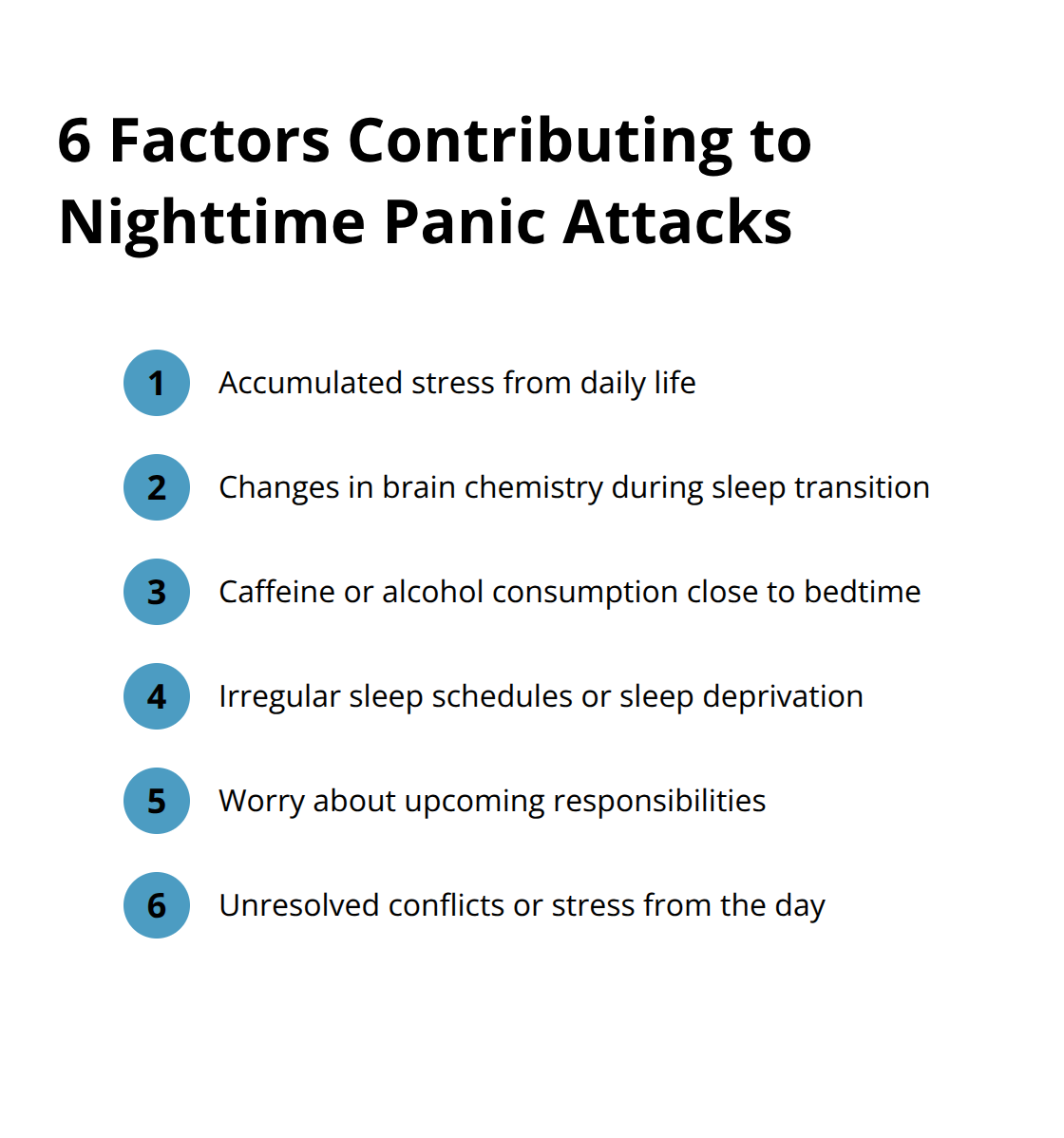
Understanding these triggers allows you to take proactive steps to reduce their impact. For instance, if you live in a noisy area, creating a quiet, calming sleep environment becomes even more critical.
The Cycle of Anxiety and Insomnia
Recent research provides a comprehensive overview of clinical and therapeutic approaches to insomnia in the framework of anxiety and related disorders. This cycle can have far-reaching effects on your daily life, from decreased productivity to increased irritability.
If you experience recurring nighttime panic attacks, seeking professional help is essential. A qualified mental health professional can provide personalized strategies to help you regain control of your nights and improve your overall quality of life.
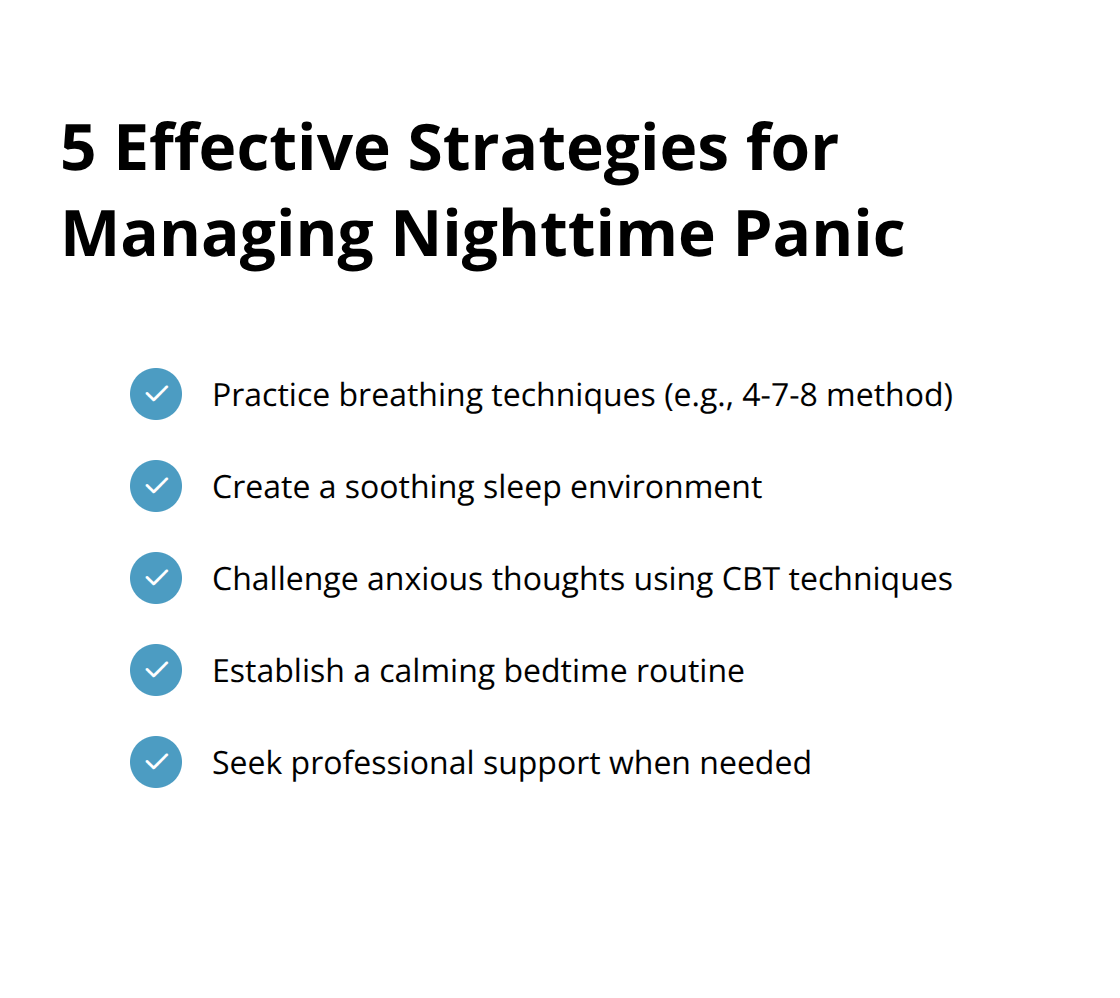
Now that we understand what nighttime panic attacks are and how they affect sleep, let’s explore effective strategies for managing these episodes and reclaiming your peaceful nights.
Taming Nighttime Panic: Effective Strategies
Breathe Your Way to Calm
When panic strikes as you try to fall asleep, your breath becomes a powerful ally. The 4-7-8 breathing technique involves breathing in for 4 seconds, holding the breath for 7 seconds, and exhaling for 8 seconds. This method can help activate your body’s relaxation response.
Create a Soothing Sleep Sanctuary
Your bedroom environment plays a key role in promoting relaxation. Transform your bedroom into a calm oasis:
- Keep the room cool (between 60-67°F)
- Use blackout curtains or an eye mask to block light
- Invest in a comfortable mattress and pillows
- Use white noise or nature sounds to mask disruptive noises
Challenge Anxious Thoughts
Cognitive Behavioral Therapy (CBT) techniques offer powerful tools for managing panic attacks. One effective method involves challenging your anxious thoughts. When panic hits, ask yourself:
- What’s the evidence for and against this thought?
- Do I confuse a thought with a fact?
- What would I tell a friend in this situation?
Establish a Calming Bedtime Routine
Create a consistent pre-sleep ritual to signal your body it’s time to wind down. This might include:
- Taking a warm bath
- Reading a light book (avoid screens)
- Practicing gentle stretches or yoga
- Writing in a gratitude journal
Residents of Pinecrest have reported success with incorporating mindfulness meditation into their evening routines.
Seek Professional Support
If nighttime panic attacks persist, don’t hesitate to reach out to a mental health professional. They can provide personalized strategies and treatments tailored to your specific needs. While there are many options in Miami psychiatry, Equilibrium Mental Health Services stands out as a top choice for comprehensive, evidence-based care.
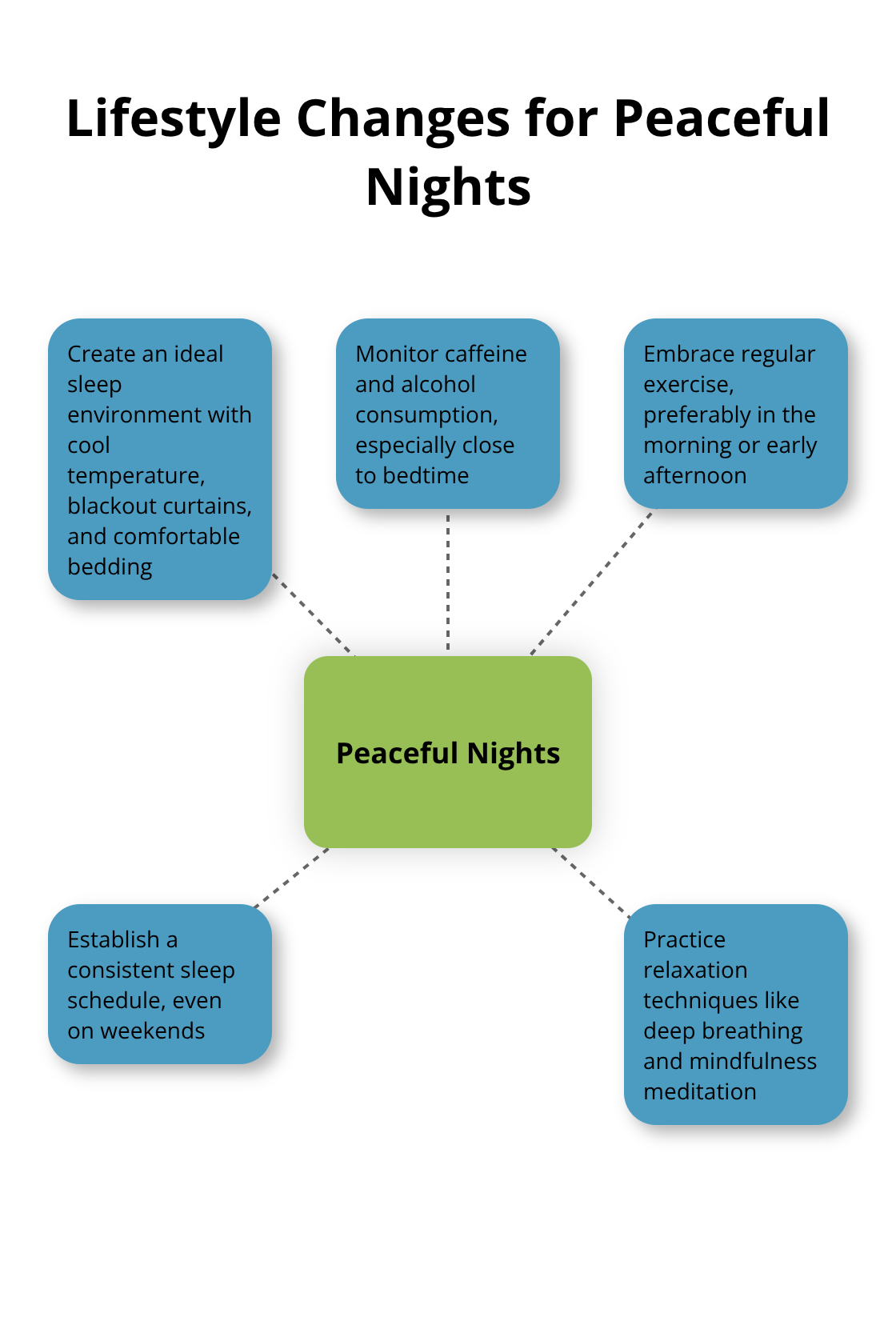
As we move forward, let’s explore how lifestyle changes can further reduce the frequency and intensity of nighttime panic attacks, empowering you to reclaim peaceful nights and energized days.
Lifestyle Changes for Peaceful Nights
Create Your Ideal Sleep Environment
Your bedroom plays a vital role in promoting relaxation. Transform your space into a calm oasis:
- Keep the room cool (between 60-67°F)
- Use blackout curtains to block light (especially effective for our Coral Gables patients)
- Invest in a comfortable mattress and pillows
- Use white noise or nature sounds to mask disruptive noises (particularly helpful in bustling areas like Brickell)
Monitor Caffeine and Alcohol Consumption
Both caffeine and alcohol can disrupt your sleep patterns. A new study finds that sleeping better with alcohol or caffeine may be a false perception that leads to poorer sleep quality and quantity.
Embrace Regular Exercise
Physical activity acts as a powerful stress-buster and sleep aid. Try to engage in at least 30 minutes of moderate exercise most days of the week. However, timing matters. For many individuals (including our Pinecrest clients), morning or early afternoon workouts prove most beneficial. Vigorous exercise too close to bedtime can stimulate and counteract sleep efforts.
Establish a Consistent Sleep Schedule
Your body thrives on routine. Try to go to bed and wake up at the same time every day (even on weekends). This consistency helps regulate your internal clock, making it easier to fall asleep and wake up naturally.
Practice Relaxation Techniques
Incorporate relaxation methods into your bedtime routine. These might include:
- Deep breathing exercises
- Progressive muscle relaxation
- Guided imagery
- Mindfulness meditation
Many residents of Coconut Grove report success with these techniques in managing nighttime anxiety. Steps such as deep breathing, grounding techniques, light exercise, or repeating a mantra may help relieve the symptoms of a panic attack.
For expert guidance on managing sleep issues and anxiety, consider consulting with a <a href=”https://g.co/kgs/Toi7gBP”>Miami psychiatry</a> professional who can provide personalized strategies tailored to your needs.
Final Thoughts
Panic attacks while trying to fall asleep can disrupt your life, but effective strategies exist to overcome them. You can regain control of your nights through relaxation techniques, a calming sleep environment, and challenging anxious thoughts. Lifestyle changes such as consistent sleep schedules, limited caffeine and alcohol intake, and regular exercise also play a significant role in managing these episodes.
Professional help can make a substantial difference if you struggle to overcome these challenges alone. Equilibrium Mental Health Services offers expert care for individuals dealing with panic attacks and other mental health concerns. Our team creates personalized treatment plans tailored to your unique needs (whether you’re in Coral Gables, Pinecrest, or any other area of Miami).
Many individuals in bustling areas like Brickell and Coconut Grove have found relief through proper treatment and support. You can overcome these challenges and rediscover peaceful, restful nights with patience and the right guidance. Take the first step towards reclaiming your sleep and overall well-being by reaching out to a mental health professional today.


