
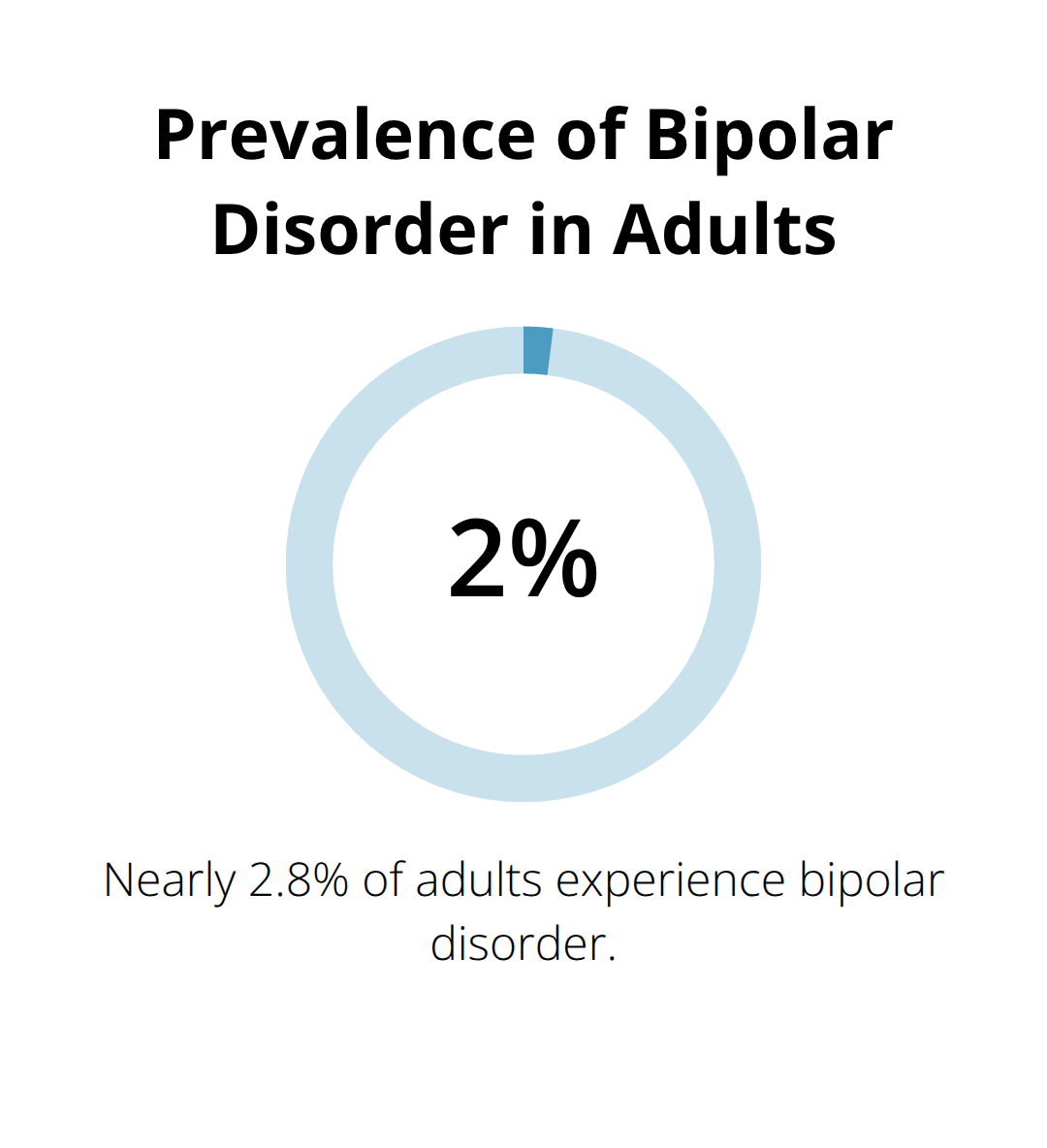
Bipolar depression in young adults often goes unrecognized, leading to years of misdiagnosis and inadequate treatment. Nearly 2.8% of adults experience bipolar disorder, with symptoms typically emerging between ages 18-25.
At Equilibrium Mental Health Services, we see firsthand how early identification can transform lives. The sooner we spot the warning signs, the better the outcomes for young people navigating this complex condition.
Understanding Bipolar Depression in Young Adults
Young adults face a diagnostic maze when they experience their first depressive episode. Almost half of bipolar disorder cases initially present as depression, which makes accurate identification challenging.
The key difference lies in the severity and specific patterns. Bipolar depression typically involves more intense symptoms, reversal of normal sleep-wake cycles, and a family history of mood disorders. The National Institute of Mental Health reports that the median onset age falls between 15-24 years, precisely when young adults navigate college transitions, career changes, and relationship milestones.
Age and Vulnerability Factors
Young adults between 18-25 experience heightened vulnerability due to brain development that still occurs in the prefrontal cortex. Life transitions create perfect storms for mood episodes to emerge. College stress, financial independence, and social pressures can trigger the first manic or depressive episode.
Research shows that a significant portion of bipolar type II cases begin with depression, often leading to years of misdiagnosis as unipolar depression. Miami psychiatry specialists recognize these patterns early, which prevents the average 10-year delay between symptom onset and proper diagnosis.
Diagnostic Challenges in Practice
The biggest obstacle remains that young adults rarely report manic symptoms during depressive episodes. They focus on feeling terrible, not remembering times they felt unusually energetic or euphoric (which may have occurred months earlier).
Clinicians must actively screen for hypomanic episodes, which can be subtle – needing less sleep for days, being unusually productive, or making impulsive decisions. Family history becomes important, as genetic factors play a significant role. Studies indicate that individuals with bipolar depression report more childhood trauma and multiple previous depressive episodes compared to those with unipolar depression.
Physical and Behavioral Patterns
Bipolar depression often presents with distinct physical markers that set it apart from unipolar depression. Day/night reversal occurs frequently, where young adults sleep during the day and stay awake at night. This pattern differs from typical depression where early morning awakening is more common.
Energy fluctuations also follow unique patterns. While unipolar depression typically shows consistent low energy, bipolar depression may include periods of restless agitation mixed with profound fatigue. These warning signs become more apparent when we examine the specific symptoms that emerge in daily life.
Warning Signs and Symptoms to Watch For
Emotional Red Flags That Signal Trouble
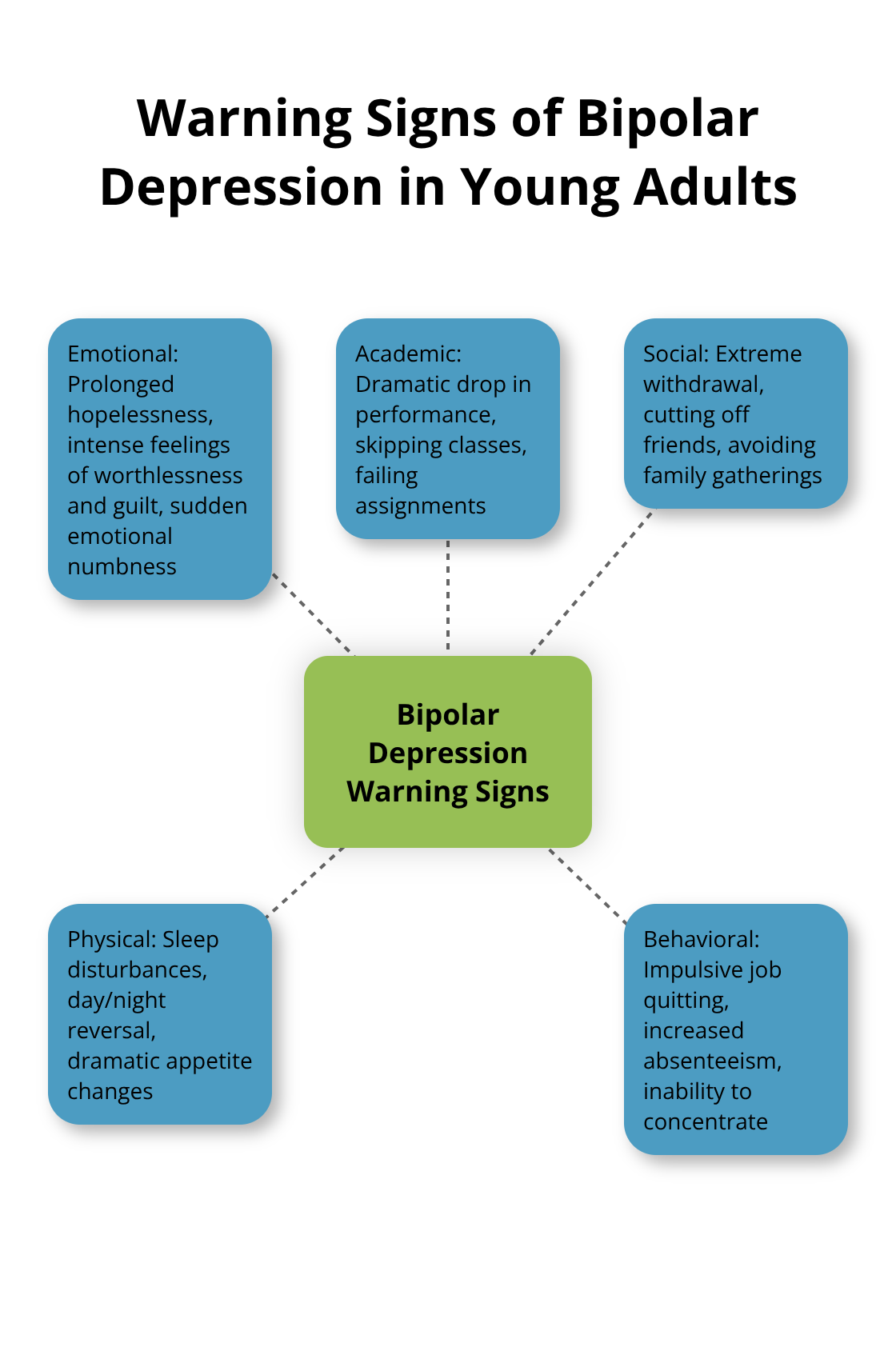
The emotional symptoms of bipolar depression extend far beyond typical sadness. Young adults experience prolonged hopelessness that persists for weeks or months, accompanied by intense feelings of worthlessness and guilt. According to the National Institute of Mental Health, these episodes show more severity than unipolar depression, with bipolar disorder being an important factor in suicide, job loss, and family discord.
Watch for sudden emotional numbness where the person stops caring about activities they once enjoyed. Irritability often accompanies the sadness and creates explosive reactions to minor frustrations. The emotional intensity fluctuates unpredictably-one day brings crushing despair, the next complete emotional emptiness.
Academic and Social Collapse Patterns
Academic performance plummets dramatically during bipolar depressive episodes. Students who previously maintained good grades suddenly fail classes, skip assignments, or stop attending altogether. Social withdrawal becomes extreme as young adults cut off friends, avoid family gatherings, and isolate in their rooms for days.
Work performance deteriorates as concentration becomes impossible and decision-making feels overwhelming. The person may quit jobs impulsively or get fired for absenteeism. These behavioral changes happen rapidly, within weeks rather than through gradual decline (particularly noticeable in college towns like Coral Gables where academic pressure runs high).
Physical Symptoms That Demand Attention
Sleep disturbances create the most telling physical signs, as most episodes of bipolar patients are associated with sleep rhythm abnormalities. Young adults with bipolar depression often reverse their sleep cycle completely-they stay awake until dawn and sleep through the afternoon. Energy levels swing wildly between periods of restless agitation and complete physical exhaustion.
Appetite changes dramatically as individuals either eat nothing for days or binge eat uncontrollably. Physical complaints increase, including headaches, stomach problems, and unexplained aches. These symptoms cluster together and persist for weeks, which distinguishes them from temporary stress responses that resolve quickly.
These warning signs often overlap and intensify over time, making professional evaluation essential for accurate diagnosis and appropriate treatment planning. For comprehensive care, consider consulting with Miami psychiatry specialists who understand the unique challenges young adults face.
When to Seek Professional Help
Crisis Situations That Demand Immediate Action
Certain warning signs require emergency intervention within 24 hours. Suicidal thoughts, plans, or attempts need immediate contact with the 988 Suicide & Crisis Lifeline or emergency services. Self-harm behaviors, complete inability to function for more than 48 hours, or psychotic symptoms like hallucinations and delusions signal psychiatric emergencies.
Research shows that patients with bipolar disorder have high rates of suicide attempt (30–50%) and death (15–20%), which makes rapid response vital. Sleep deprivation that lasts more than 72 hours combined with manic symptoms creates medical emergencies that can lead to hospitalization.
How to Start Difficult Conversations About Mental Health
You need direct honesty without accusations when you approach a young adult about bipolar depression. Choose a calm moment and state specific observations: “I noticed you haven’t been sleeping and missed three work shifts this week. What’s happening?” Avoid phrases like “you seem depressed” or “you need help,” which create defensiveness.
Focus on behaviors and express genuine concern instead. Offer to accompany them to appointments and research treatment options together. Family support significantly increases treatment compliance and recovery outcomes. Set clear boundaries about dangerous behaviors while you maintain emotional connection.
What Happens During Professional Evaluation
A comprehensive bipolar assessment takes 2-3 appointments and includes detailed mood charts over several weeks. Psychiatrists use structured interviews, family history assessments, and tools like the Mood Disorder Questionnaire (which helps identify potential bipolar patterns). The evaluation examines sleep patterns, energy cycles, and previous episodes that may have been dismissed as stress reactions.
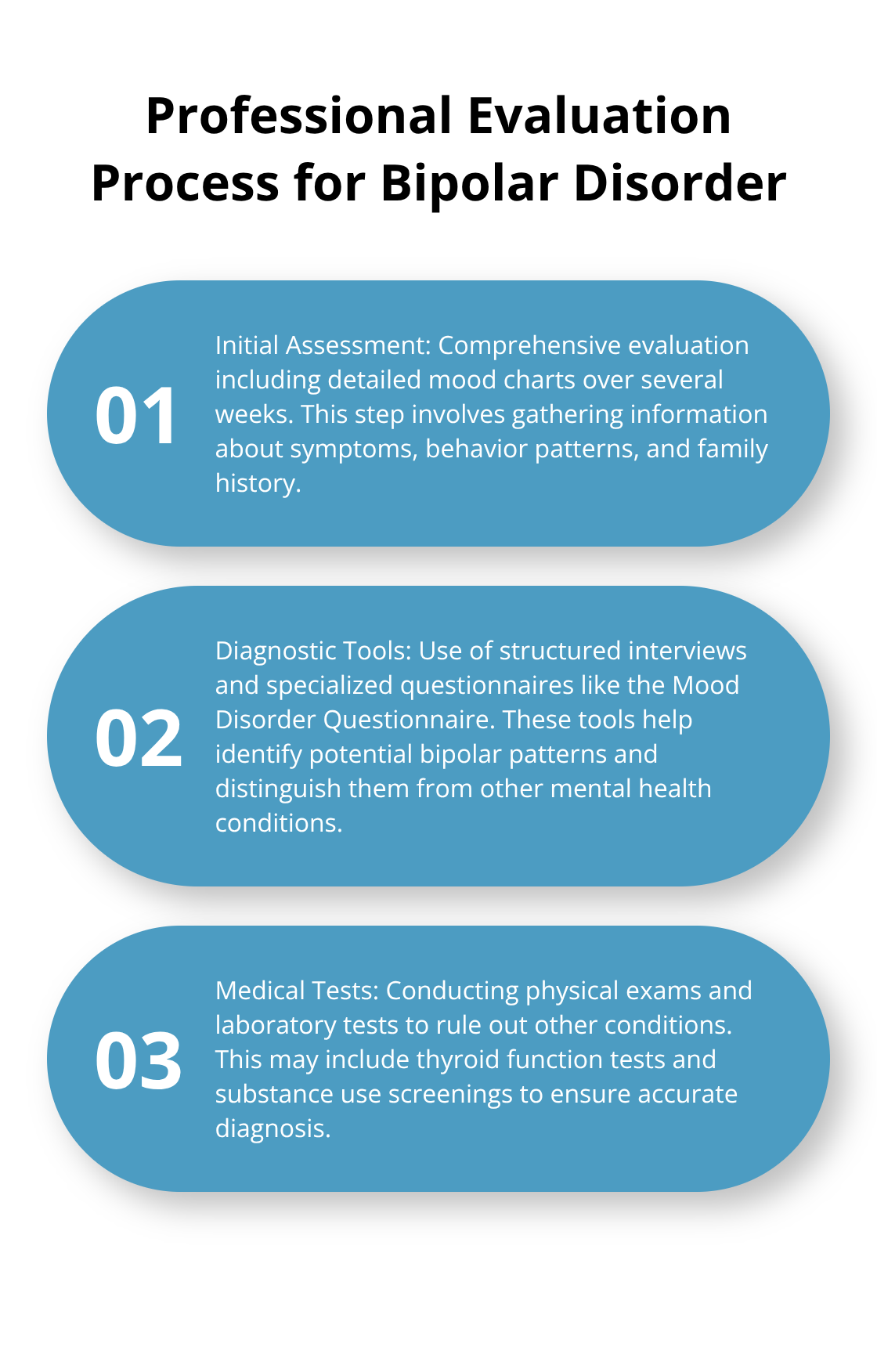
Medical tests rule out thyroid disorders and substance use that mimic bipolar symptoms. Mental health professionals conduct thorough evaluations that typically identify accurate diagnoses within the first month, which prevents years of misdiagnosis. The process includes collaboration with family members when appropriate and development of personalized treatment strategies that combine medication management with psychotherapy approaches tailored to young adult needs. For comprehensive care, consider consulting with Miami psychiatry specialists who understand the unique challenges facing young adults.
Final Thoughts
Early recognition of bipolar depression in young adults saves lives and prevents years of unnecessary suffering. The statistics speak clearly: proper diagnosis within the first year of symptoms leads to significantly better long-term outcomes compared to the average 10-year diagnostic delay many patients experience. Young adults who receive accurate diagnosis and treatment show dramatic improvements in academic performance, relationships, and overall quality of life.
We at Equilibrium Mental Health Services understand the unique challenges that affect young adults in Miami and surrounding areas. Our team provides comprehensive psychiatric care that combines evidence-based medication management with personalized psychotherapy approaches. We specialize in treatment of mood disorders through individualized treatment plans that address each person’s specific needs (including bipolar disorder, depression, anxiety, and PTSD).
The path forward starts with a single phone call. Young adults who experience mood episodes deserve immediate professional support, not years of misdiagnosis or inadequate treatment. If you recognize these warning signs in yourself or a loved one, contact Equilibrium Mental Health Services today for comprehensive evaluation and treatment options.


