
Traditional meditation often feels impossible when your mind races at lightning speed. People with ADHD face unique challenges that make standard mindfulness practices frustrating rather than helpful.
At Equilibrium Mental Health Services, we understand that mindfulness and ADHD require a different approach. The right techniques can transform scattered attention into focused awareness, reducing symptoms and improving daily life.
Why Does ADHD Make Mindfulness So Hard?
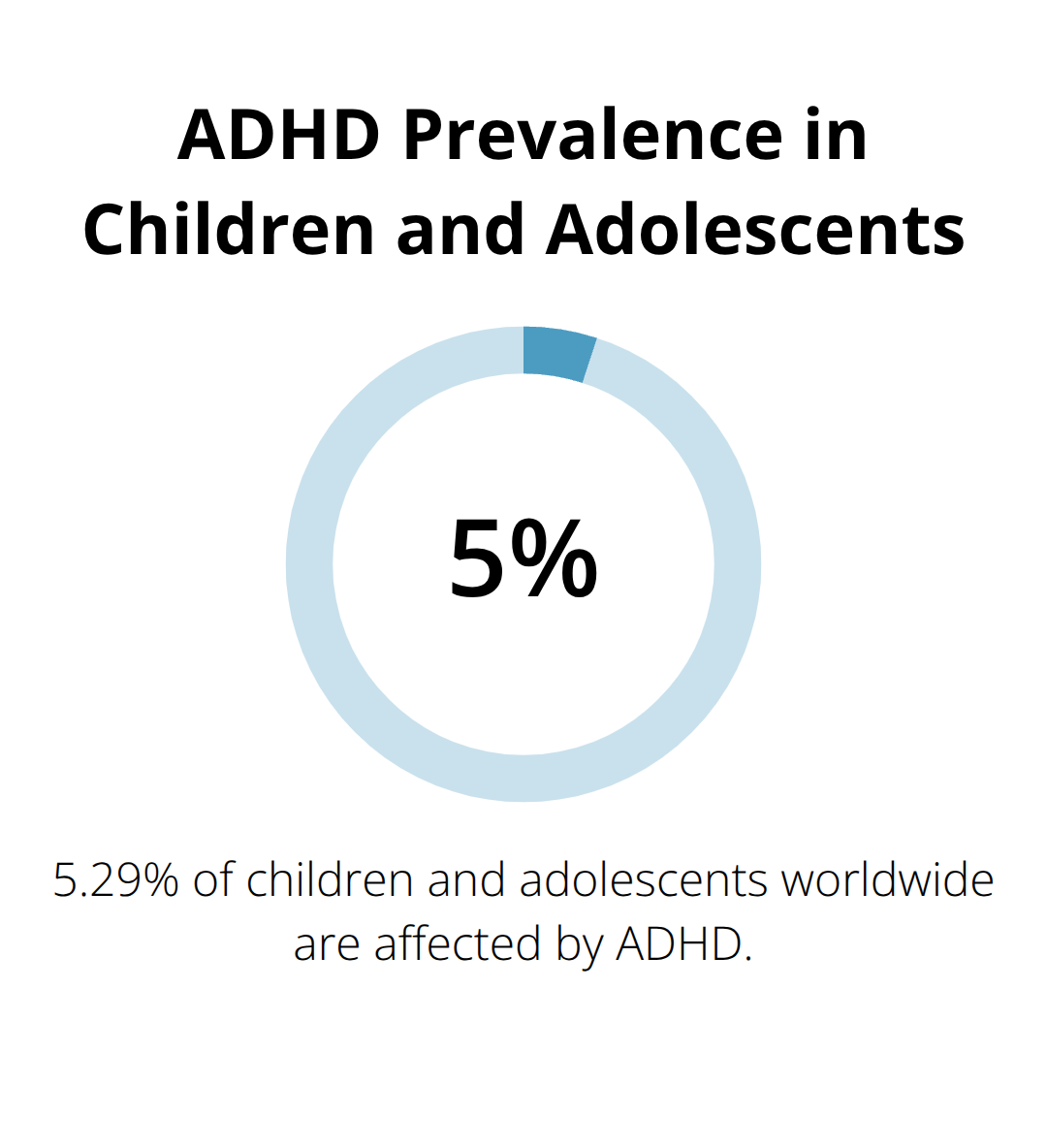
ADHD fundamentally changes how the brain processes attention and information. The condition affects approximately 5.29% of children and adolescents worldwide according to research by Polanczyk and colleagues. This creates specific neurological patterns that make traditional mindfulness practices counterproductive. People with ADHD have lower dopamine levels, which directly impacts their ability to sustain attention on single-focus activities like breath meditation.
Their brains seek stimulation constantly. The quiet, still nature of conventional meditation feels torturous rather than calming for most people with ADHD.
The Dopamine Challenge
Standard meditation techniques fail because they fight against ADHD brain chemistry. Research from UCLA shows that long-term meditators have different EEG and MRI patterns in brain regions associated with ADHD. However, people with ADHD need approaches that work with their brains rather than against them.
Traditional 20-minute seated meditations demand sustained attention that ADHD brains simply cannot provide without significant struggle. The constant mind-wandering that occurs isn’t a failure of willpower-it’s neurological reality. Mindfulness practices must raise dopamine levels through movement, variety, and sensory engagement to be effective for people with ADHD.
Movement Beats Stillness
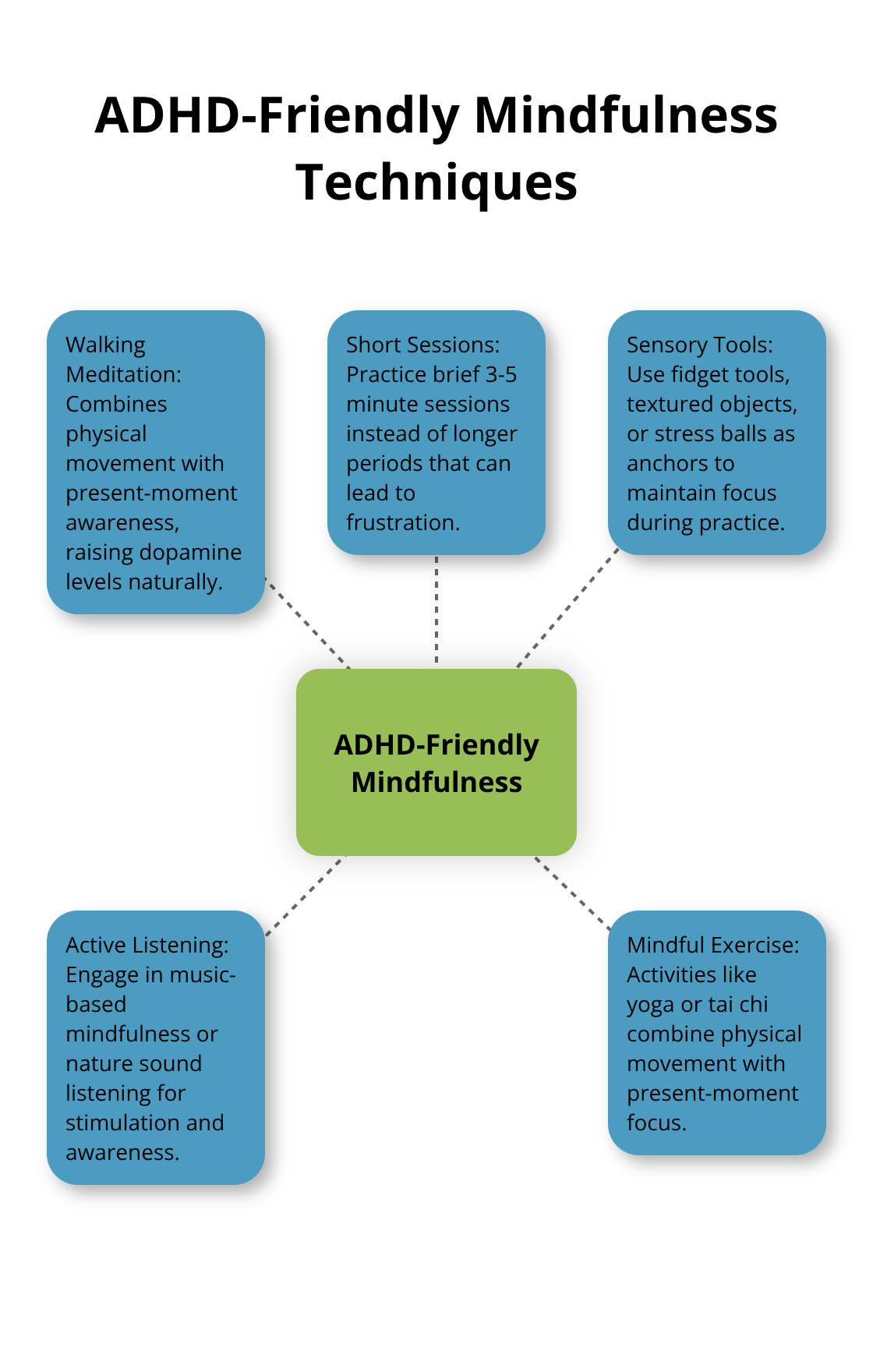
The most effective mindfulness approaches for ADHD involve active engagement rather than passive observation. Walking meditation, mindful exercise, and sensory-based practices work because they provide the stimulation ADHD brains need while they build awareness skills.
Mindfulness improves your ability to control your attention by helping to strengthen your ability to self-observe, to train attention, and to develop different skills. The key lies in matching the practice to the brain’s need for variety and stimulation rather than forcing stillness that creates internal chaos.
Why Traditional Methods Backfire
Conventional mindfulness instruction tells people to “just focus on your breath” or “notice when your mind wanders and gently return.” For ADHD brains, this creates a cycle of failure and frustration. The mind wanders every few seconds (not minutes), and the constant redirection feels like punishment rather than practice.
Standard meditation apps and classes assume neurotypical attention spans. They don’t account for the hyperactive internal dialogue, physical restlessness, and need for novelty that define ADHD experience. This mismatch explains why so many people with ADHD abandon mindfulness after initial attempts.
These challenges point to a clear solution: ADHD-friendly techniques that work with the brain’s natural patterns rather than against them.
Which Techniques Actually Work for ADHD Minds
Movement transforms mindfulness from torture into therapy for ADHD brains. Walking meditation works where sitting fails because it provides the stimulation these brains crave while building awareness skills. Mindful walking raises dopamine levels naturally, addressing the core neurochemical challenge of ADHD.
Start with Movement-Based Practices
Begin with five-minute walks where you focus on each footstep, the feeling of air on your skin, or sounds around you. The physical movement prevents the restless energy that sabotages traditional meditation while training attention through sensory engagement. Mindful exercise like yoga or tai chi also works well because these activities combine physical movement with present-moment awareness.
Practice Short Sessions Instead of Marathon Attempts
Five-minute sessions work better than 20-minute struggles. Studies indicate that ADHD brains benefit from frequent, brief practices rather than extended periods that lead to frustration and abandonment. Set a timer for three to five minutes and focus on box breathing (inhale for four counts, hold for four, exhale for four, hold for four). This technique provides structure and counting that engages the ADHD mind while building concentration skills. Practice twice daily rather than attempting longer sessions that become overwhelming.
Use Sensory Tools as Essential Anchors
Fidget tools and sensory anchors work with ADHD neurology rather than against it. Hold a textured object, stress ball, or smooth stone during meditation to give your hands something to do while your mind focuses. Essential oils, background music, or nature sounds provide additional sensory input that helps maintain attention. Mindfulness programs incorporate visual aids and sensory elements specifically because they help ADHD participants stay engaged.
Try Active Listening Techniques
Music-based mindfulness works exceptionally well for ADHD minds. Listen to instrumental music and focus on individual instruments, or practice mindful listening to nature sounds. This approach provides enough stimulation to hold attention while developing awareness skills. The key lies in choosing sounds that engage without overwhelming the already busy ADHD brain.
These techniques address the fundamental mismatch between ADHD neurology and traditional mindfulness approaches. The next step involves creating a sustainable routine that fits into your daily life without adding stress or unrealistic expectations.
How Do You Make ADHD Mindfulness Stick
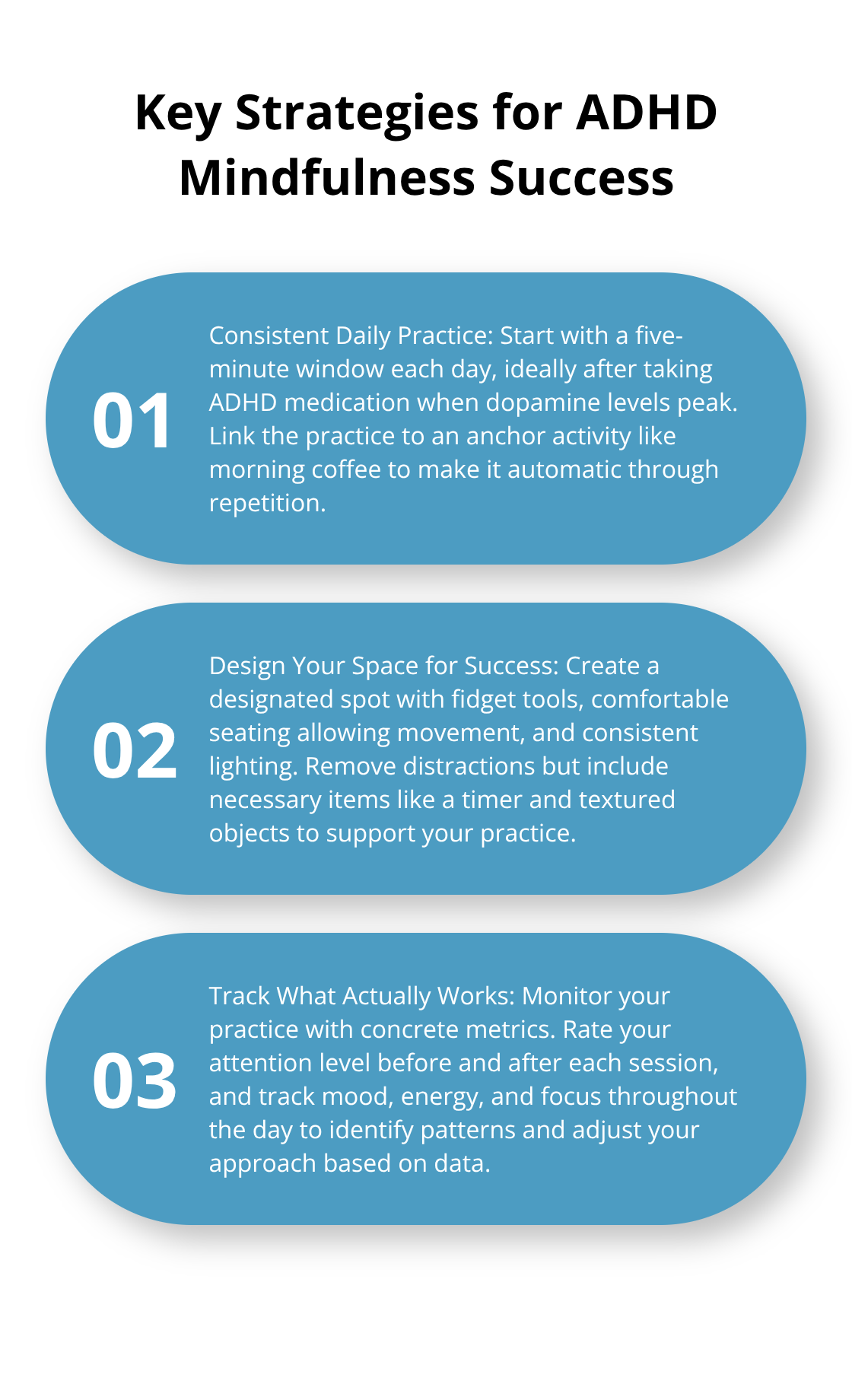
Success with ADHD mindfulness requires rigid structure combined with flexible timing. Research from UCLA’s eight-week mindfulness program shows participants need consistent daily practice, but traditional schedules fail ADHD brains. Start with the same five-minute window each day immediately after you take ADHD medication when dopamine levels peak.
This timing maximizes focus while your brain chemistry supports attention. Choose one anchor activity like morning coffee or evening tooth brushing to link your practice. The routine becomes automatic through repetition, not willpower.
Design Your Space for Success
Your meditation environment must work with ADHD sensory needs rather than against them. Create a designated spot with fidget tools within reach, comfortable seating that allows movement, and consistent lighting that reduces visual distractions.
Studies show ADHD brains process sensory information differently, which makes environmental control essential for sustained practice. Remove phones and screens from your space but include a simple timer, textured objects, and perhaps soft background music.
The space should feel stimulating enough to hold attention without overwhelming your already busy mind. Keep supplies organized and visible because ADHD brains abandon practices that require setup time.
Track What Actually Works
Monitor your practice with concrete metrics instead of subjective feelings. Rate your attention level from one to ten before and after each session, noting which techniques produce the biggest improvements. Track your mood, energy, and focus throughout the day to identify patterns between mindfulness practice and daily functioning.
Research indicates that mindfulness interventions may improve ADHD symptoms, executive function, problematic behaviours, and emotional dysregulation. Adjust your approach based on data, not assumptions. If walking meditation consistently rates higher than breathing exercises, prioritize movement-based practices.
Build Flexibility Into Your Routine
ADHD brains thrive on novelty (even within structure), so rotate between three different techniques weekly. Monday might focus on walking meditation, Wednesday on box breathing, and Friday on mindful listening to music. This variety prevents boredom while maintaining consistency.
Set realistic expectations that account for ADHD challenges. Some days your practice will feel scattered or difficult – this reflects your neurology, not your failure. Track these patterns to identify optimal times and conditions for your mindfulness sessions.
Final Thoughts
Mindfulness and ADHD create a powerful combination when you approach them correctly. Research shows that ADHD-friendly techniques can reduce hyperactivity, improve attention, and decrease anxiety symptoms. Movement-based practices, short sessions, and sensory tools work with your brain rather than against it.
The key strategies that make the difference include five-minute walks, fidget tools as anchors, and practice sessions immediately after you take medication when dopamine levels peak. You can build flexible routines with consistent times that help create sustainable habits without overwhelming your already busy mind. These approaches address the fundamental neurological differences that make traditional meditation ineffective for ADHD brains (studies from UCLA demonstrate significant improvements in focus and reductions in hyperactivity among participants who use adapted mindfulness techniques).
If you struggle to manage ADHD symptoms or want professional guidance on mindfulness strategies, we at Equilibrium Mental Health Services provide expert psychiatric care throughout Miami and surrounding areas. Our team can help you develop personalized approaches that work with your unique brain chemistry. We understand the specific challenges that come with ADHD and can guide you toward effective solutions.


