
ADHD can significantly impact relationships, presenting unique challenges for couples. At Equilibrium Mental Health Services, we’ve seen how understanding and managing ADHD symptoms can transform partnerships.
This guide offers practical strategies for navigating ADHD relationships, whether you have ADHD or are supporting a partner who does. We’ll explore effective communication techniques, time management skills, and ways to harness the strengths that individuals with ADHD bring to their relationships.
ADHD in Relationships: Challenges and Opportunities
Communication Hurdles
ADHD impacts relationships in ways that aren’t always obvious. At Equilibrium Mental Health Services, we observe how symptoms like distractibility, impulsivity, and forgetfulness create misunderstandings between partners.
Communication often suffers. ADHD can cause you to easily get distracted or be forgetful. It can be easy to “zone out” when you’re talking to someone. This leaves the other partner feeling unheard or unimportant. We suggest setting aside dedicated “talk time” free from distractions (e.g., phones or TV). Some couples find success with physical touch, like holding hands, to maintain focus during important discussions.
Emotional Rollercoasters
Emotional dysregulation impacts functional outcomes among individuals with attention-deficit hyperactivity disorder (ADHD). Stress-reduction techniques like regular exercise or mindfulness practices help stabilize moods. Open discussions about emotional triggers and coping strategies foster understanding and patience between partners.
Unexpected Strengths
ADHD brings unique strengths to relationships. Many individuals with ADHD exhibit incredible creativity, spontaneity, and passion. These traits lead to exciting shared experiences and vibrant partnerships. We encourage couples to identify and celebrate these positive attributes.
For instance, a couple in Coral Gables found that the ADHD partner’s spontaneity led to wonderful, unplanned adventures that enriched their relationship. Another client in Brickell used their hyperfocus to plan elaborate, thoughtful surprises for their partner.
Time Management Challenges
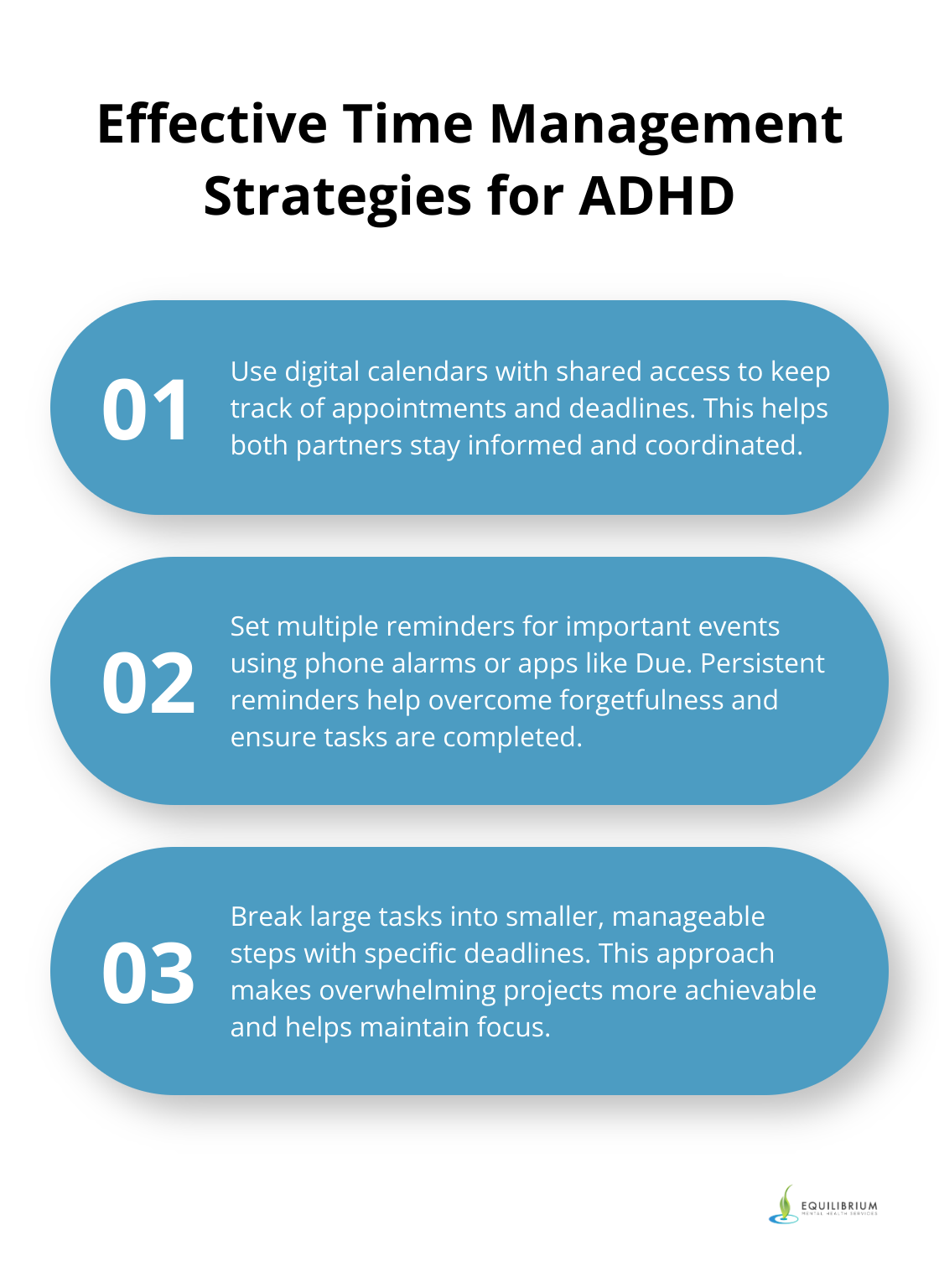
Time management issues often cause friction in ADHD-affected relationships. Chronic lateness, missed deadlines, and forgotten commitments frustrate non-ADHD partners. To address this, we recommend:
- Using digital calendars with shared access
- Setting multiple reminders for important events
- Breaking large tasks into smaller, manageable steps
Hyperfocus and Relationship Balance
While hyperfocus can be a superpower, it sometimes leads to neglect of relationship needs. A partner might become so engrossed in a project or hobby that they inadvertently ignore their significant other. We suggest:
- Scheduling regular “couple time”
- Using timers to limit hyperfocus sessions
- Communicating openly about the impact of hyperfocus on the relationship
ADHD presents unique challenges in relationships, but it doesn’t define them. With understanding, patience, and effective strategies, couples navigate these waters successfully. If ADHD affects your relationship, professional support can make a significant difference. Let’s explore strategies for partners with ADHD in our next section.
Mastering ADHD in Relationships
Effective Time Management
Time management often challenges individuals with ADHD. Digital tools like shared calendars and task management apps prove invaluable. For example, couples in Pinecrest have found success using the Todoist app to manage household tasks together.
Set multiple reminders for important events and deadlines. Use your phone’s alarm function or apps like Due, which remind you persistently until you complete a task. Break larger projects into smaller, manageable steps with specific deadlines for each.
Improving Focus During Conversations
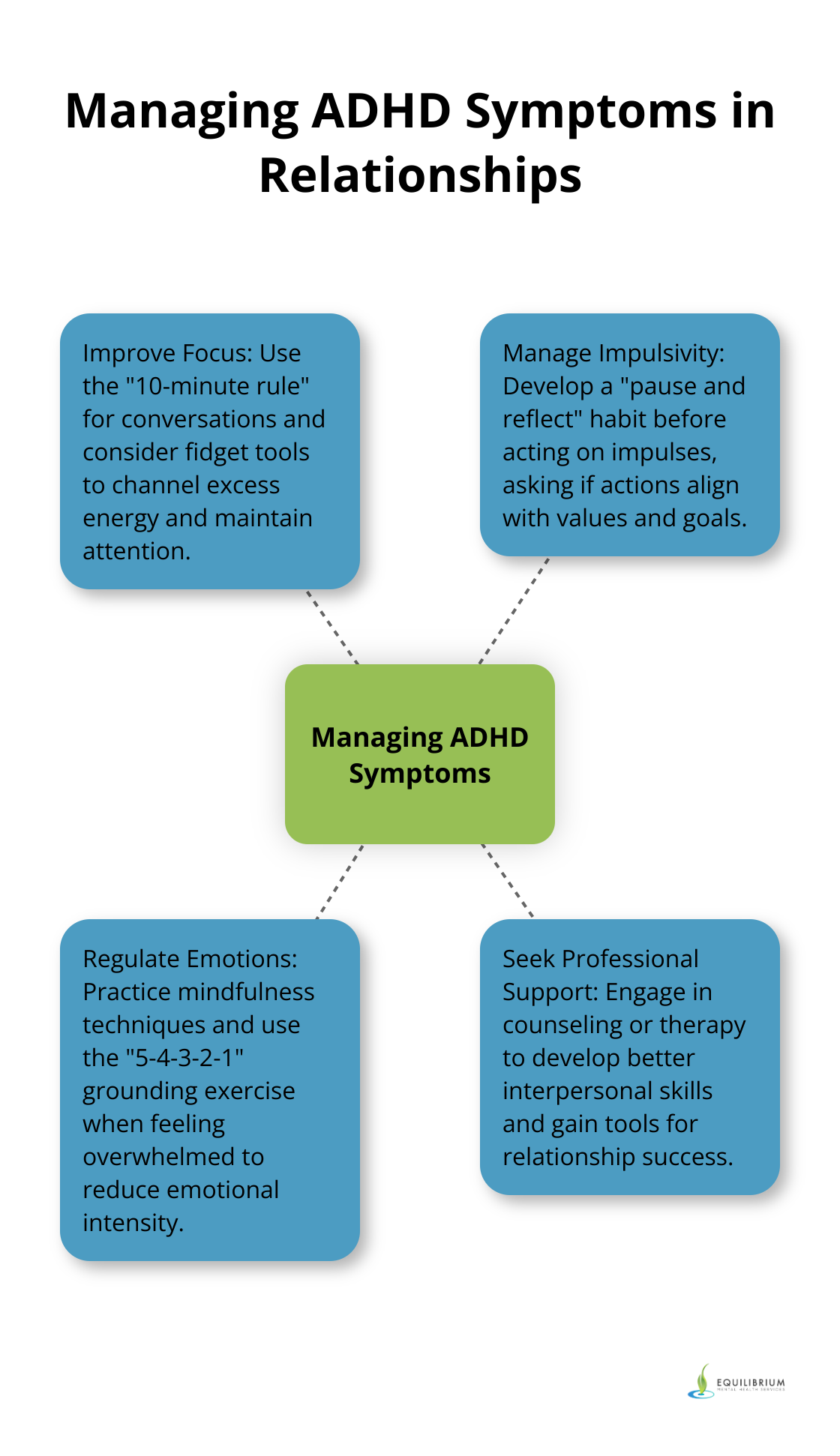
Maintaining focus during conversations can challenge those with ADHD. We suggest implementing the “10-minute rule” – commit to giving your full attention for just 10 minutes, then take a short break if needed. This technique has helped many improve their listening skills in Coconut Grove.
Consider using fidget tools during conversations (these can help channel excess energy and improve focus). One patient in Key Biscayne found that using a stress ball during discussions significantly improved his ability to stay engaged.
Managing Impulsivity and Emotions
Impulsivity and emotional dysregulation can strain relationships. We recommend practicing mindfulness techniques. Apps like Headspace or Calm offer guided meditations specifically designed for ADHD. Regular practice can improve emotional regulation and reduce impulsive behaviors.
Develop a “pause and reflect” habit before acting on impulses. Ask yourself: “Does this action align with my values and goals?” This simple question can prevent many impulsive decisions that might negatively impact your relationship.
For emotional regulation, try the “5-4-3-2-1” grounding technique when feeling overwhelmed. Name 5 things you see, 4 things you touch, 3 things you hear, 2 things you smell, and 1 thing you taste. This exercise can quickly bring you back to the present moment and reduce emotional intensity.
Professional Support
Implementing these strategies takes time and patience. Early diagnosis and intervention can empower anyone with ADHD to have a healthy, long-term romantic relationship. If you struggle with ADHD in your relationship, professional support can make a significant difference. Counseling can help individuals develop better interpersonal skills and provide tools and guidance necessary for success.
As we move forward, let’s explore how partners without ADHD can effectively support their loved ones and foster a stronger, more understanding relationship.
How to Support a Partner with ADHD
Educate Yourself About ADHD
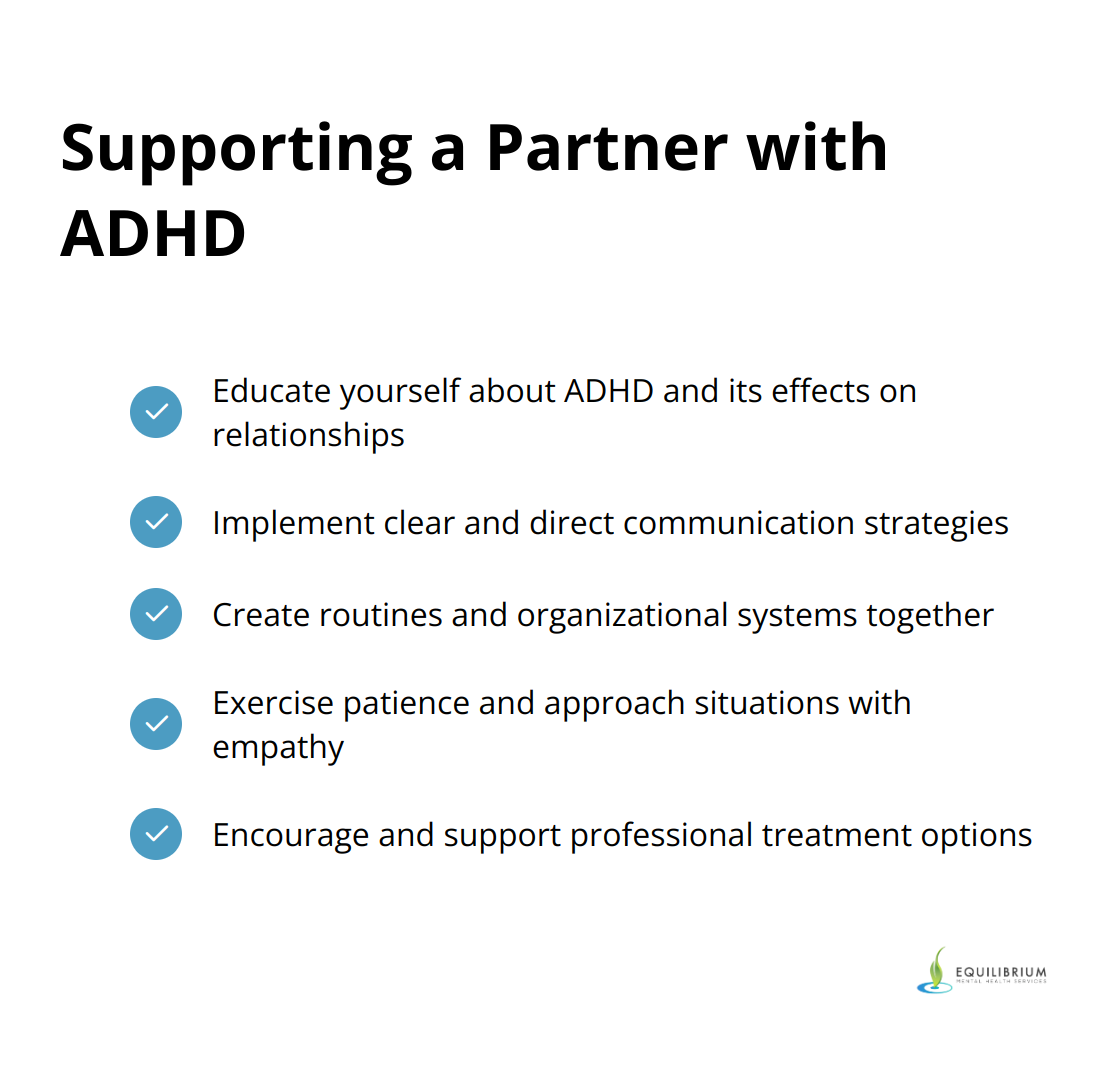
Knowledge empowers you to support your partner effectively. Read reputable sources, attend workshops, or join support groups. The National Institute of Mental Health offers comprehensive resources on ADHD. Understanding the neurobiology behind ADHD symptoms fosters empathy and reduces frustration.
Learning about executive function deficits explains why your partner might struggle with time management or organization. Adults with ADHD often face significant EF challenges that disrupt their ability to stay organized, focused, and on task. This knowledge shifts your perspective from seeing these challenges as character flaws to recognizing them as symptoms of a real condition.
Implement Effective Communication Strategies
Clear, direct communication is essential. Avoid vague requests or hints – be specific about your needs and expectations. Instead of saying, “Can you help around the house more?” try “Could you please take out the trash every Tuesday and Thursday?”
Active listening techniques improve communication. Repeat back what your partner has said to ensure you’ve understood correctly. This practice helps many couples reduce misunderstandings and conflicts.
Create Routines and Systems
Structure benefits individuals with ADHD significantly. Work together to establish daily routines and organizational systems. A couple found success by creating a shared digital calendar for appointments, chores, and important dates.
Use visual aids like color-coded charts or sticky notes for reminders. These tangible cues help your partner stay on track without feeling nagged.
Exercise Patience and Empathy
ADHD is a neurological condition, not a choice. When frustrations arise, take a deep breath and approach the situation with empathy. Partners who practiced empathy reported higher relationship satisfaction.
If you struggle with patience, seek support for yourself. Therapists can provide strategies for managing your own emotions and stress in the relationship.
Promote Professional Treatment
While your support is invaluable, professional treatment makes a significant difference. Encourage your partner to seek evaluation and treatment from a qualified mental health professional. Medication, therapy, or a combination of both can dramatically improve ADHD symptoms and overall quality of life.
Many couples find that joint therapy sessions help address relationship dynamics affected by ADHD. Couples therapy can improve communication and problem-solving, while individual ADHD coaching can provide tailored coping mechanisms. These sessions provide a safe space to discuss challenges and learn coping strategies together.
Final Thoughts
ADHD relationships require patience, understanding, and adaptability. Partners must communicate openly, express needs clearly, and work together to find solutions that accommodate both individuals. Establishing routines, using organizational tools, and creating a structured environment will improve daily life for couples managing ADHD.
Every relationship is unique, and what works for one couple may not work for another. Couples should approach ADHD relationships with flexibility and willingness to try different strategies until they find what suits them best. They should celebrate the strengths that individuals with ADHD bring to the relationship, such as creativity, spontaneity, and passion.
Professional help can make a significant difference for those struggling to navigate ADHD in their relationship. At Equilibrium Mental Health Services, we offer expert guidance and support for individuals and couples affected by ADHD (including personalized strategies, therapy, and medication management). Don’t hesitate to reach out and take the first step towards a healthier partnership today.


