
At Equilibrium Mental Health Services, we understand the unique challenges that ADHD can bring to relationships. Many couples struggle to navigate the complexities of ADHD and its impact on communication, emotional regulation, and daily life.
In this post, we’ll explore practical strategies for managing ADHD in relationships, helping both partners thrive. Whether you’re dealing with ADHD yourself or supporting a partner, these insights can strengthen your bond and improve your overall relationship satisfaction.
ADHD’s Impact on Relationships
ADHD significantly affects relationships, often in ways that both partners might not immediately recognize. At Equilibrium Mental Health Services, we often see couples who struggle with the unique challenges ADHD brings to their dynamic.
The ADHD Relationship Dance
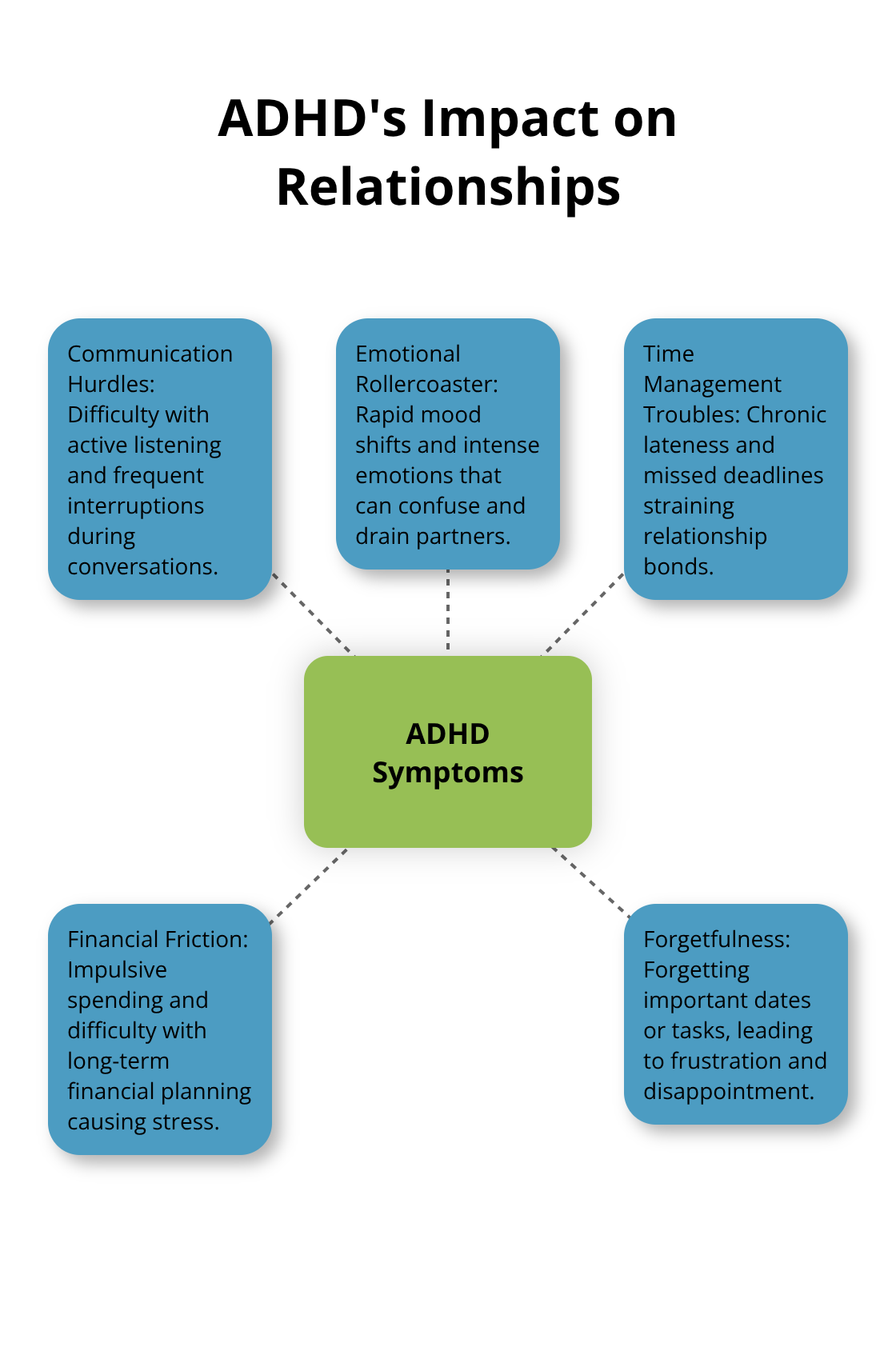
ADHD symptoms like inattention, impulsivity, and hyperactivity create a complex dance in relationships. For instance, a partner with ADHD might often forget important dates or tasks, which leads to frustration and disappointment. A study found that increased severity of ADHD symptoms in adults is associated with functional impairment in interpersonal relationships.
Communication Hurdles
Communication often presents a significant challenge in ADHD-affected relationships. The ADHD partner may struggle with active listening, frequently interrupting or becoming distracted during conversations. This can leave the non-ADHD partner feeling unheard or undervalued.
To address this, we suggest setting aside dedicated “talk time” free from distractions. This structured approach can help both partners feel more connected and understood. (For couples in <a href=”https://g.co/kgs/Toi7gBP”>Miami psychiatry</a> services can provide tailored strategies to improve communication.)
Emotional Rollercoaster
Emotional dysregulation is a lesser-known but impactful aspect of ADHD. Many ADHDers are prone to rapidly shifting moods, quick and intense emotions, and difficulty filtering what is on their mind, especially when passionate.
For the non-ADHD partner, this emotional volatility can confuse and drain. It’s important to develop strategies for emotional regulation, such as mindfulness techniques or taking short breaks during heated moments. (These skills can be developed with professional guidance, which we offer at Equilibrium Mental Health Services in Coral Gables.)
Time Management Troubles
Time management issues often plague relationships where one partner has ADHD. Chronic lateness, missed deadlines, and poor planning can strain even the strongest bonds. The non-ADHD partner might feel they must constantly remind or “parent” their ADHD partner, leading to resentment on both sides.
Try to establish routines and use tools like shared calendars or reminder apps to manage time more effectively. (This approach can help reduce friction and create a more balanced partnership.)
Financial Friction
ADHD can impact financial management, leading to impulsive spending, forgotten bills, or difficulty with long-term financial planning. These issues can create significant stress in relationships, especially when finances are shared.
Open communication about finances, creating a budget together, and possibly seeking financial counseling can help address these challenges. Many couples find that working with a financial advisor who understands ADHD can provide valuable strategies for managing money more effectively.
ADHD in relationships presents unique challenges, but with understanding, patience, and the right support, couples can navigate these waters successfully. In the next section, we’ll explore effective communication strategies tailored for ADHD-affected relationships, providing practical tools to enhance connection and understanding between partners.
How to Communicate Better in ADHD Relationships
The Power of Active Listening
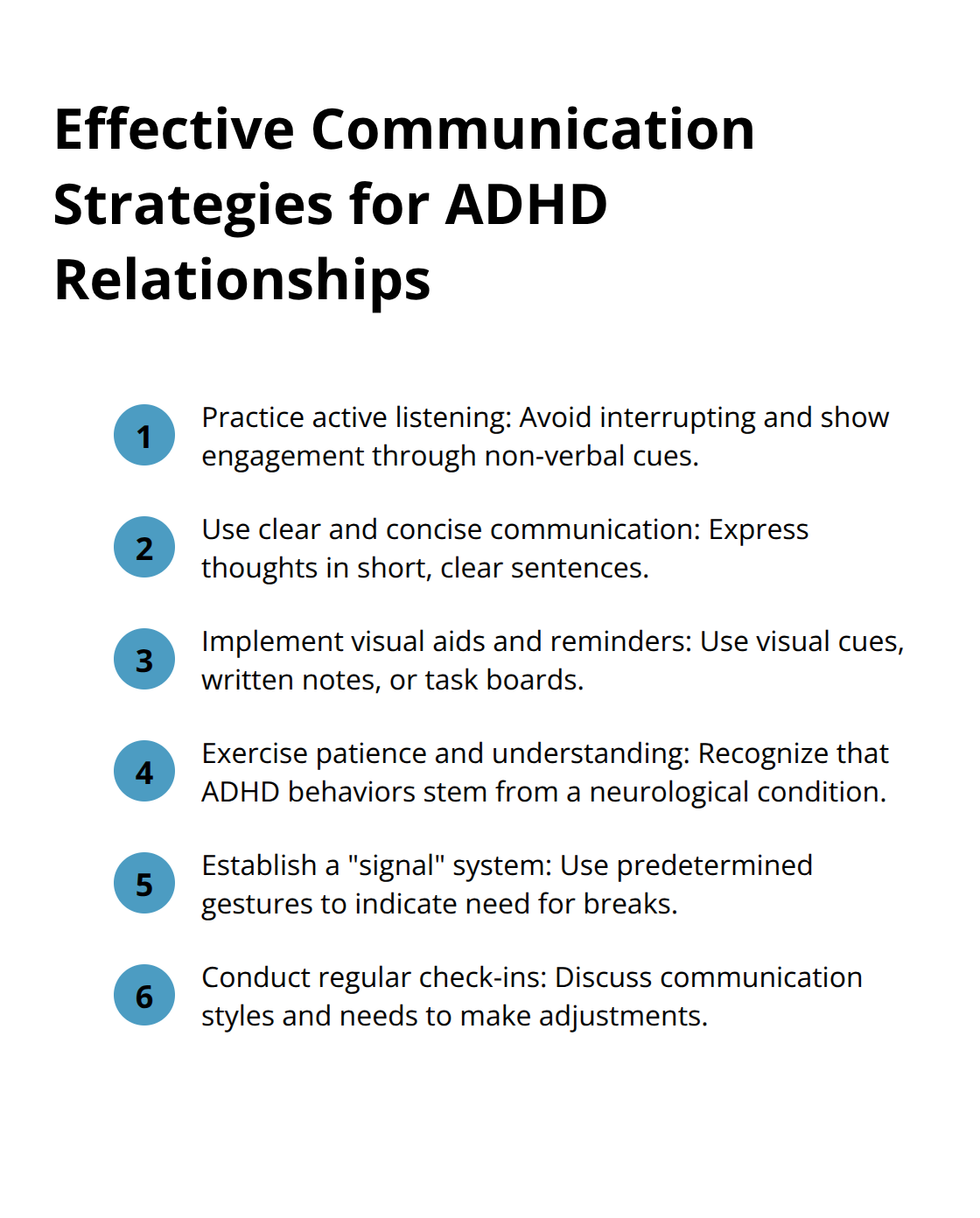
Active listening challenges partners with ADHD due to distractibility. However, this skill improves with practice. Avoid interrupting and show that you’re listening through non-verbal cues like nodding and maintaining eye contact. Reflect and paraphrase by repeating back what you heard in your own words. This technique ensures correct understanding and shows engagement in the conversation.
Removing distractions like phones or tablets during important conversations also helps. If your mind wanders, gently redirect your focus back to your partner. (It’s okay to request breaks if you feel overwhelmed or unable to concentrate.)
Clear and Concise Communication
When communicating with an ADHD partner, brevity is key. Long explanations often lead to lost focus and misunderstandings. Express your thoughts in short, clear sentences. For multiple discussion points, write them down beforehand and address them one at a time.
Establish a “signal” system. For example, the ADHD partner can use a predetermined hand gesture if they feel overwhelmed or need a break. This allows for a pause without causing frustration or misinterpretation.
Visual Aids and Reminders
Visual cues benefit individuals with ADHD. Use visual aids or written notes to help stay on track. Taking breaks during conversations to process information can also be helpful. For household chores or shared responsibilities, a visual task board proves invaluable. Use sticky notes or a whiteboard to list tasks, and allow the ADHD partner to choose which ones they’ll tackle. This provides a sense of control and makes the tasks feel less overwhelming.
Some couples find success with apps designed for ADHD management. These tools help with everything from medication reminders to task prioritization. (While technology can be helpful, it’s important to find a balance and not rely solely on digital solutions.)
Patience and Understanding
Communication in ADHD relationships requires patience and understanding from both partners. The non-ADHD partner should recognize that their partner’s behaviors stem from a neurological condition, not laziness or lack of care. Similarly, the ADHD partner should acknowledge the impact of their symptoms on the relationship and actively work on strategies to manage them.
Regular check-ins about communication styles and needs can help both partners feel heard and supported. These conversations allow for adjustments and improvements in your communication methods over time.
As we move forward, let’s explore how to build a supportive partnership that goes beyond communication strategies. The next section will discuss ways to create a relationship environment that nurtures both partners’ needs and strengths, despite the challenges ADHD may present.
Miami psychiatry can provide additional support and resources for couples navigating ADHD in their relationship.
Building a Strong ADHD Partnership
Embrace Empathy and Understanding
Empathy plays a vital role in ADHD relationships. In heterosexual couples, research suggests that which partner has ADHD can affect both relationship and sexual satisfaction. Non-ADHD partners should understand that their partner’s behaviors are not intentional. Forgetting important dates or interrupting conversations are symptoms of the condition, not deliberate actions.
ADHD partners need to recognize how their symptoms affect their loved ones. Acknowledge frustrations and work together to find solutions.
Try the “empathy exercise.” Set aside 10 minutes daily for each partner to share their experiences without interruption. This technique fosters understanding and strengthens emotional connections.
Establish Routines and Structure
Structure benefits ADHD relationships. Create a shared calendar for important dates, appointments, and tasks. Use color-coding to make it visually appealing and easy to follow.
Implement a “launch pad” system near your front door. This designated area keeps essentials like keys, wallets, and important documents. It reduces stress and time spent searching for misplaced items.
(For Coral Gables residents, consider using location-based reminders on your smartphone. Set an alert to pick up groceries when you’re near your favorite store on Miracle Mile.)
Celebrate Strengths and Achievements
ADHD often comes with unique strengths like creativity, enthusiasm, and the ability to hyperfocus. Recognize and celebrate these qualities in your partner.
Create a “win jar” where you both write down small daily accomplishments and read them together weekly. This practice shifts focus from challenges to successes and boosts overall positivity in your relationship.
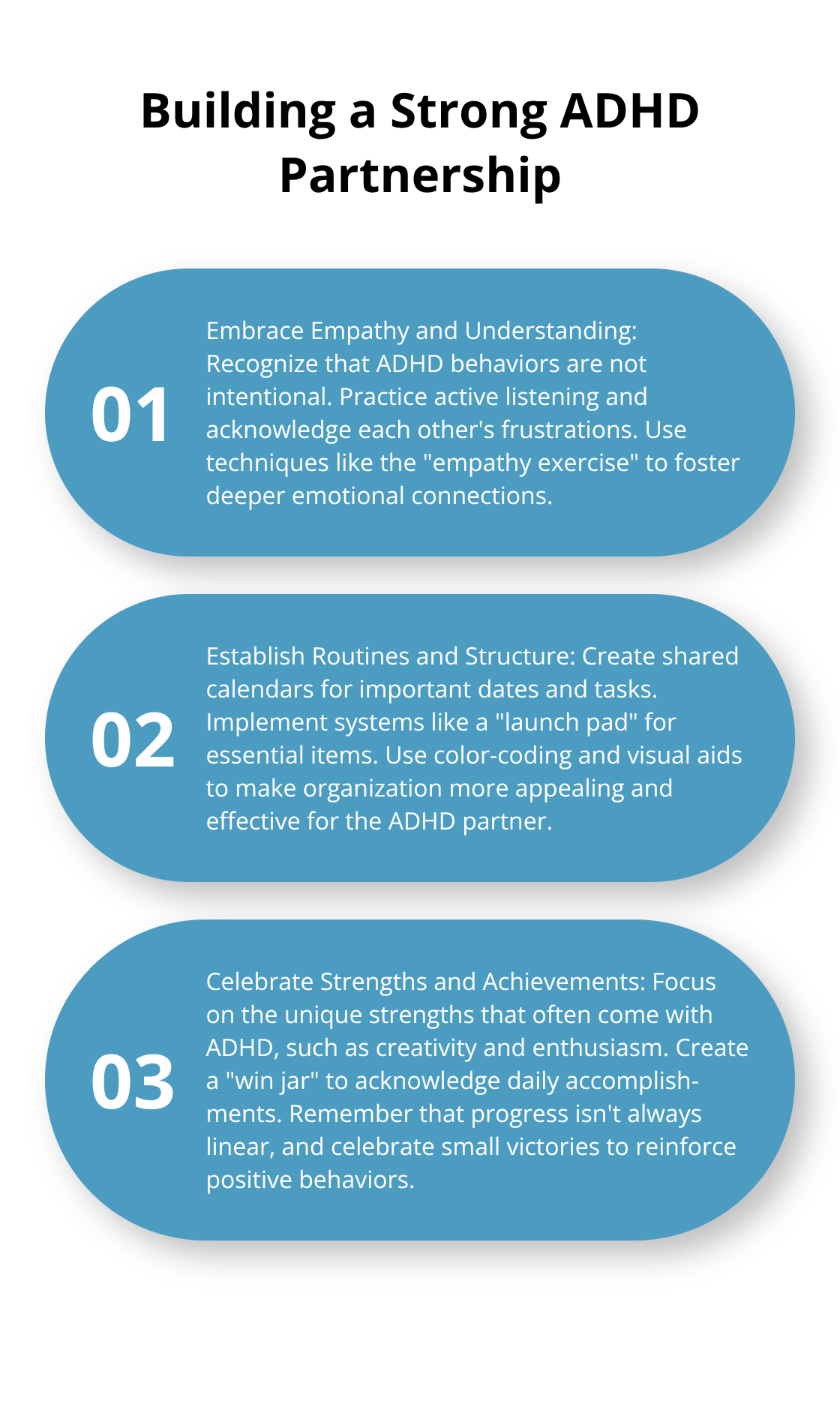
Progress isn’t always linear. Celebrate small victories, like remembering to pay a bill on time or completing a task without reminders. These acknowledgments reinforce positive behaviors and strengthen your bond.
Develop Effective Communication Strategies
Clear communication is essential in ADHD relationships. Use “I” statements to express feelings without blame. For example, say “I feel frustrated when tasks are left unfinished” instead of “You never complete anything.”
Establish a “timeout” signal for when discussions become overwhelming. This allows both partners to regroup and approach the conversation with a clearer mind.
(Miami psychiatry professionals recommend regular check-ins to discuss relationship dynamics and adjust strategies as needed.)
Seek Professional Support
If you find it challenging to navigate ADHD in your relationship, consider seeking professional help. A therapist experienced in ADHD can provide valuable tools and strategies tailored to your specific situation.
Couples therapy can help improve communication, resolve conflicts, and strengthen emotional bonds. It’s not a sign of failure, but a proactive step towards a healthier relationship.
Final Thoughts
ADHD and relationships present unique challenges, but they also offer opportunities for growth and deeper connection. Patience, understanding, and adaptability form the foundation for a strong partnership. Professional help can provide valuable insights and tools tailored to your specific situation when you struggle to implement strategies or feel overwhelmed.
We at Equilibrium Mental Health specialize in expert, evidence-based care for adults dealing with ADHD and other mental health conditions. Our team offers personalized treatment plans that may include medication management and psychotherapy. We design these plans to address the unique challenges you face in your relationship. (Our services extend to Coral Gables, Pinecrest, and the entire Miami area.)
Take the first step towards improving your relationship today by contacting Equilibrium Mental Health Services. With the right strategies and professional guidance, you can create a thriving relationship that embraces the strengths and manages the challenges of ADHD. Our support can help you navigate the complexities of ADHD in your relationship and build a more fulfilling partnership.


