
Anxiety and panic attacks can be overwhelming, but there’s hope. At Equilibrium Mental Health Services, we’ve seen firsthand how meditation can provide relief from these challenging conditions.
Meditation for anxiety and panic attacks is a powerful tool that can help you regain control and find inner peace. In this post, we’ll explore effective meditation techniques and practical tips to incorporate them into your daily life.
Understanding Anxiety and Panic Attacks
Defining Anxiety and Panic Attacks
Anxiety and panic attacks are common mental health challenges that many people face. Anxiety manifests as a persistent feeling of worry or fear, often about future events. Panic attacks, in contrast, are sudden, intense episodes of fear that can cause physical symptoms like rapid heartbeat, sweating, and shortness of breath.
Recognizing the Signs
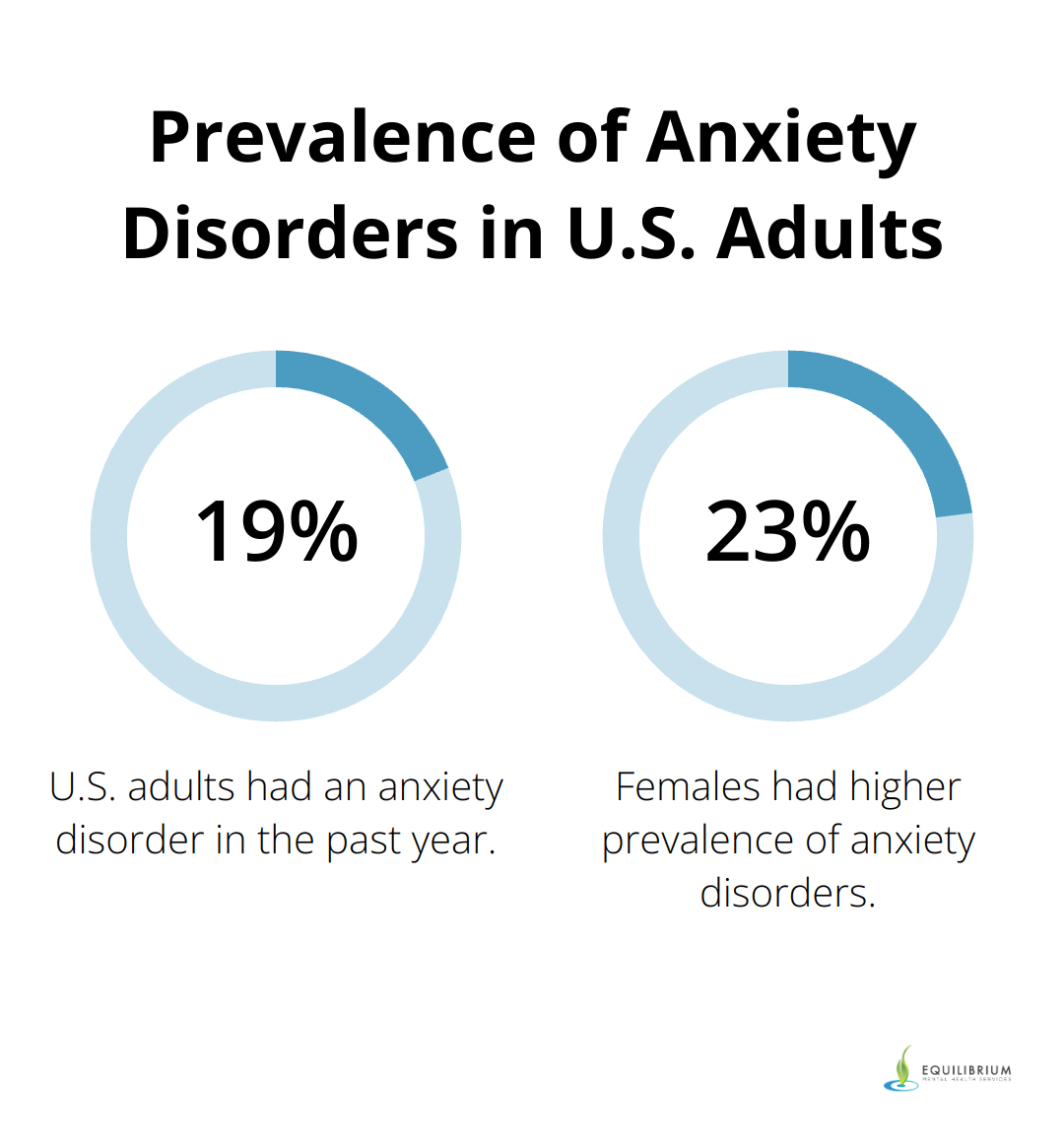
Anxiety symptoms can vary but often include restlessness, difficulty concentrating, and sleep problems. Panic attacks typically last for several minutes and can be triggered by specific situations or occur unexpectedly. An estimated 19.1% of U.S. adults had any anxiety disorder in the past year, with prevalence being higher for females (23.4%) than males.
Common Triggers
Identifying triggers is essential for managing anxiety and panic attacks. Some common triggers include:
- Work-related stress
- Financial worries
- Health concerns
- Major life changes
- Traumatic experiences
Many patients from Pinecrest and surrounding areas often report work-related stress as a significant trigger for their anxiety.
The Power of Meditation
Meditation proves to be an effective tool for managing anxiety and panic attacks. A recent study published in JAMA Psychiatry found that mindfulness-based stress reduction can be as effective as escitalopram in treating anxiety disorders.
Meditation works by helping you focus on the present moment, which reduces the spiral of anxious thoughts. It also activates the body’s relaxation response, countering the physiological effects of stress and anxiety. Regular practice can even change brain structure, enhancing areas associated with emotional regulation and reducing activity in the amygdala (the brain’s fear center).
Seeking Professional Help
While meditation is a powerful tool, it’s most effective when combined with professional treatment. If you experience severe anxiety or frequent panic attacks, we recommend seeking help from a mental health professional. Personalized treatment plans may include therapy, medication management, and mindfulness techniques to help you regain control and find peace.
As we explore effective meditation techniques in the next section, you’ll discover practical ways to incorporate these powerful tools into your daily life, providing relief from anxiety and panic attacks.
Effective Meditation Techniques for Anxiety
Deep Breathing for Instant Calm
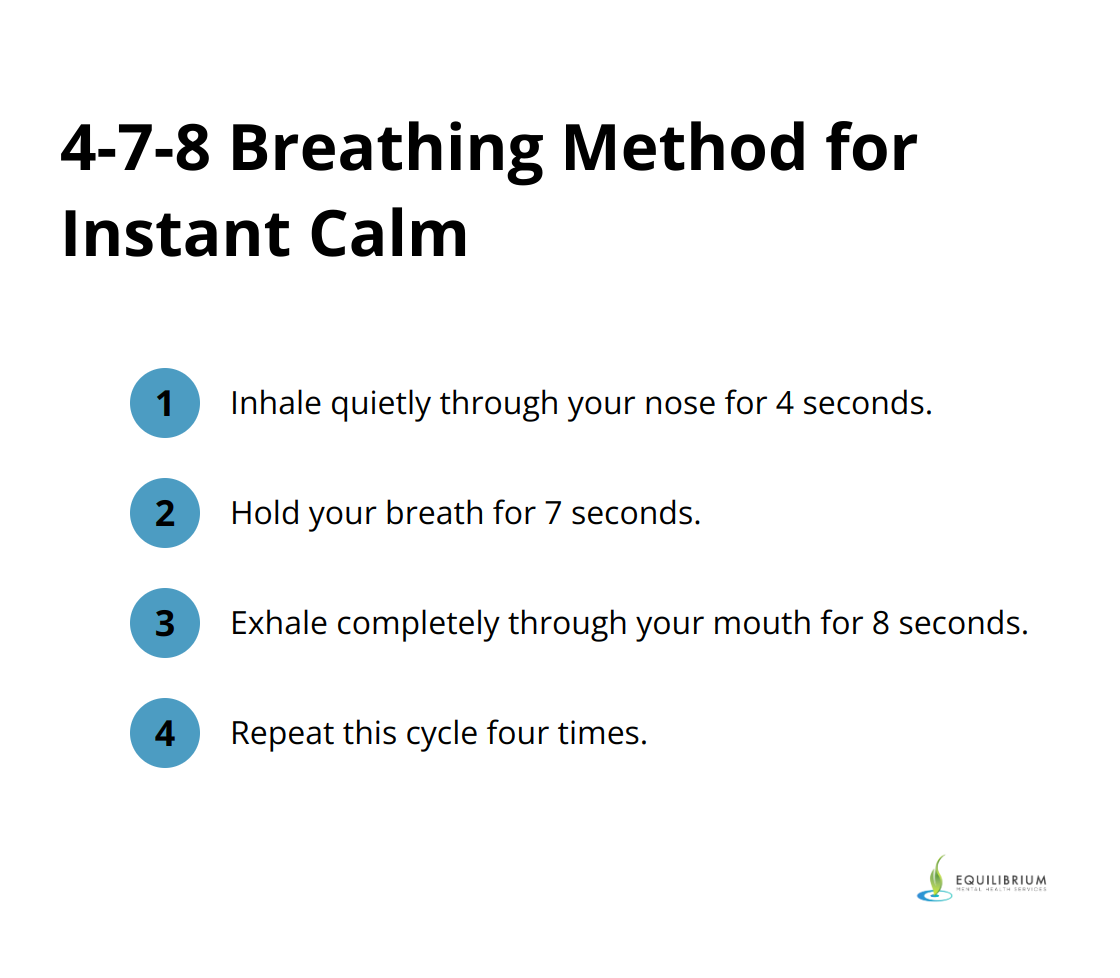
The 4-7-8 breathing method, developed by Dr. Andrew Weil, offers quick relief from anxiety. Here’s how to practice it:
- Inhale quietly through your nose for 4 seconds.
- Hold your breath for 7 seconds.
- Exhale completely through your mouth for 8 seconds.
- Repeat this cycle four times.
This technique activates your parasympathetic nervous system, which promotes relaxation and reduces anxiety symptoms. Breathing exercises seem to reduce anxiety and increase parasympathetic activity assessed by HRV indexes. Many individuals report feeling calmer after just one cycle.
Body Scan Meditation for Physical Awareness
Body scan meditation helps you focus on physical sensations, redirecting your attention away from anxious thoughts. Follow these steps:
- Lie down or sit comfortably.
- Close your eyes and focus on your breath.
- Shift your attention from your toes to your head, noticing any sensations without judgment.
- If you notice tension, relax that area consciously.
This practice not only reduces anxiety but also improves sleep quality. A study investigated whether the use of a body scan mindfulness meditation influenced the effectiveness of CBTI for adolescents.
Mindfulness Meditation for Present-Moment Focus
Mindfulness meditation trains your mind to focus on the present moment, reducing worry about the future (a common trait in anxiety disorders). Try this simple mindfulness exercise:
- Sit comfortably and focus on your breath.
- When your mind wanders, bring your attention back to your breath gently.
- Start with 5 minutes and increase the duration gradually.
Loving-Kindness Meditation for Self-Compassion
Anxiety often comes with self-criticism. Loving-kindness meditation cultivates self-compassion and positive emotions. Practice it this way:
- Sit comfortably and close your eyes.
- Repeat phrases like “May I be happy, may I be healthy, may I be safe” to yourself.
- Extend these wishes to loved ones, acquaintances, and even difficult people.
These techniques provide powerful tools for managing anxiety and panic attacks. However, it’s important to note that while meditation can be incredibly beneficial, it’s most effective when combined with professional treatment. If you’re struggling with severe anxiety or frequent panic attacks, consider reaching out to a mental health professional. Many residents in Coral Gables and surrounding areas have found relief through a combination of meditation and personalized care. In the next section, we’ll explore how to implement these techniques into your daily routine for maximum benefit.
Making Meditation a Daily Habit
Create Your Meditation Sanctuary
Your environment plays a significant role in your meditation practice. Choose a quiet corner in your home where you won’t face disturbances. This doesn’t require a large space – even a small nook will suffice. Add elements that calm you: a comfortable cushion, a soft blanket, or a plant. Some patients in Coconut Grove have found success in creating outdoor meditation spaces in their gardens.
Keep the space simple and clutter-free. The goal is to create an area that signals to your brain it’s time to relax and meditate. Avoid using this space for other activities to maintain its association with meditation.
Set a Consistent Schedule
Consistency proves essential when developing a meditation habit. Choose a time that works best for you and adhere to it. Many find early morning meditation sets a positive tone for the day. Others prefer evening sessions to unwind.
Start small – even 5 minutes a day provides benefits. Increase your time gradually as you become more comfortable. A study published in the Journal of Positive Psychology found that meditating for just 13 minutes a day for 8 weeks significantly improved attention, working memory, and recognition memory.
Use Technology to Your Advantage
In today’s digital age, numerous apps and online resources can support your meditation journey. Popular apps like Headspace and Calm offer guided meditations specifically designed for anxiety relief. These can help particularly when you’re just starting out or during high-stress periods.
However, be mindful of screen time before bed. If you use apps for evening meditation, consider enabling blue light filters on your devices to minimize sleep disruption.
Overcome Common Obstacles
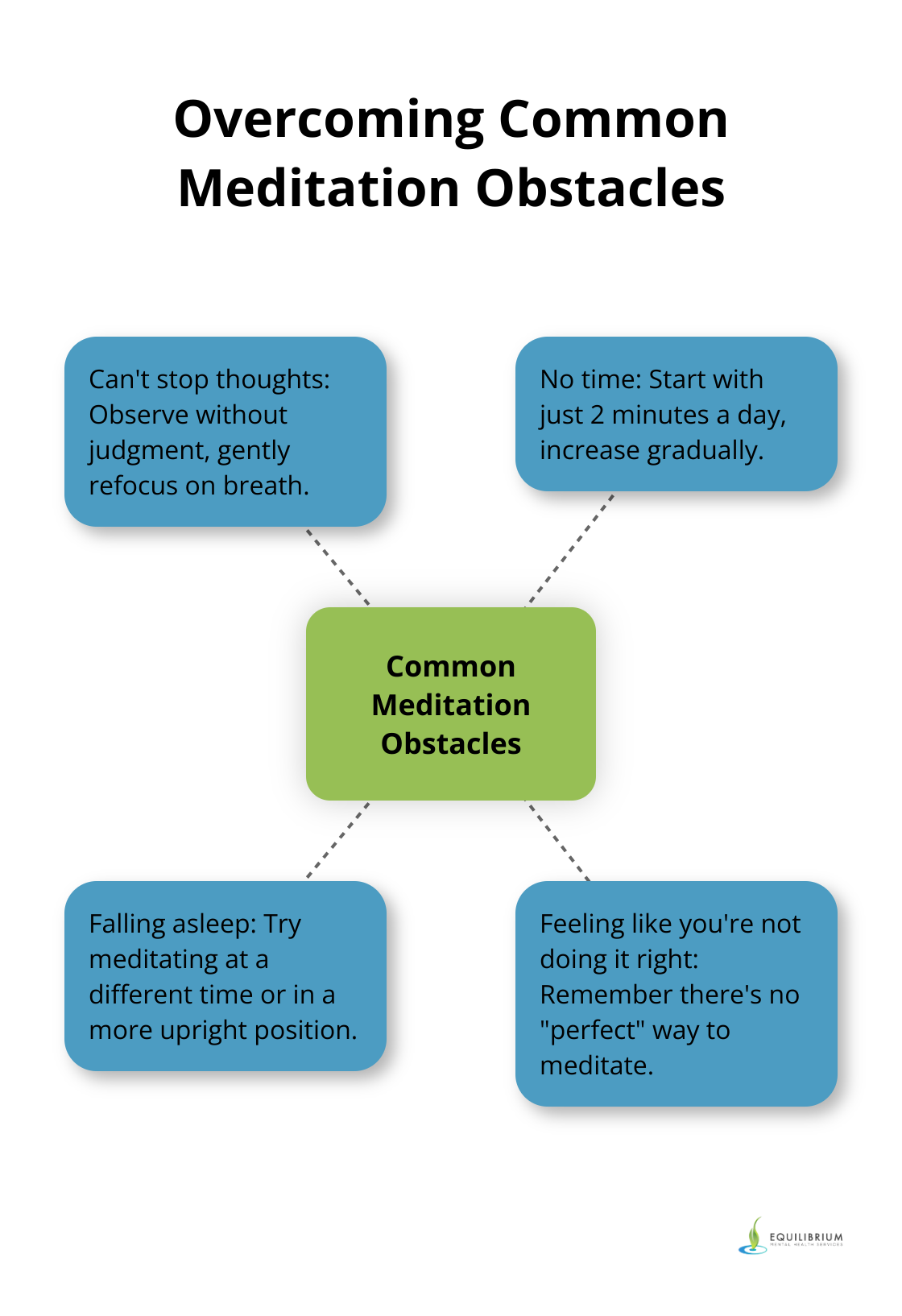
It’s normal to face challenges when establishing a meditation practice. Here are some common obstacles and how to address them:
Meditation is a skill that improves with practice. Be patient with yourself. If you struggle to establish a consistent practice or find that your anxiety persists despite your efforts, don’t hesitate to reach out for professional support. (At Equilibrium Mental Health Services, we’re here to guide you on your journey to better mental health.)
Final Thoughts
Meditation for anxiety and panic attacks provides a powerful tool to manage these challenging conditions. Regular practice of techniques like deep breathing, body scan meditation, and mindfulness can cultivate calm and resilience. These practices offer immediate relief during distress and contribute to long-term emotional well-being.
Consistency plays a key role when you develop a meditation habit. You should start small, create a dedicated space, and use available resources to support your practice. As you progress, you might notice improvements in your ability to manage stress, regulate emotions, and maintain a balanced perspective on life’s challenges.
Professional support becomes necessary for severe anxiety or frequent panic attacks. If your symptoms persist or significantly interfere with your daily life, you should seek help from a mental health professional. Equilibrium Mental Health Services offers expert care for individuals struggling with anxiety, panic attacks, and other mental health concerns (our team provides personalized treatment plans that may include therapy, medication management, and mindfulness techniques).


