
At Equilibrium Mental Health Services, we often hear from clients struggling with trouble sleeping and ADHD. The connection between these two issues is significant and can create a challenging cycle.
Sleep problems can worsen ADHD symptoms, while ADHD symptoms can make it harder to get quality rest. In this post, we’ll explore effective strategies to manage sleep issues associated with ADHD and improve overall well-being.
Why ADHD and Sleep Issues Often Coexist
The ADHD-Sleep Connection
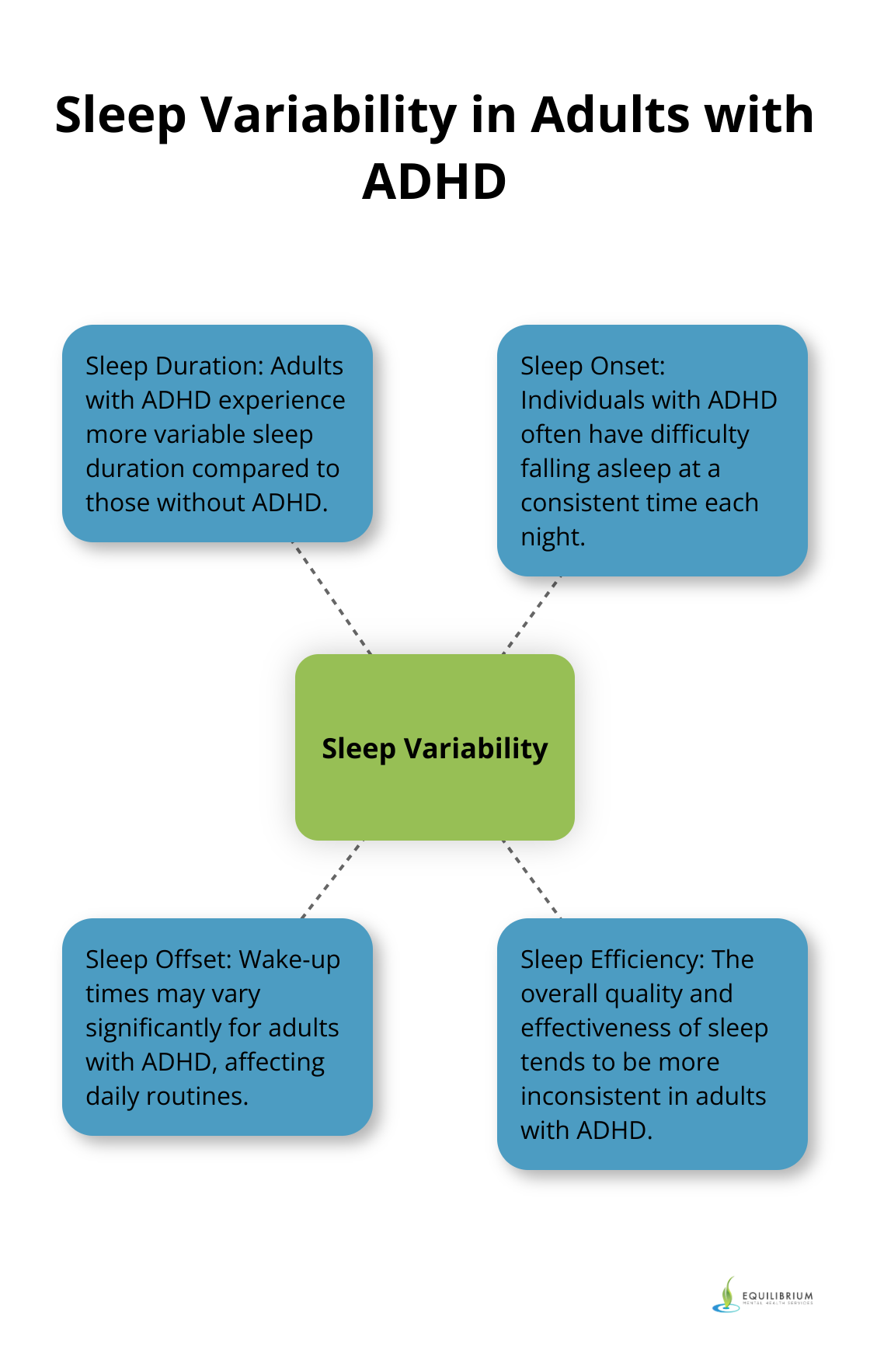
Adults with ADHD frequently experience difficulties with sleep onset, maintenance, and morning awakening. Research indicates that adults with ADHD have more variable sleep duration, sleep onset and offset, and sleep efficiency compared to those without ADHD. This variability in sleep patterns often results in chronic sleep deprivation, which exacerbates ADHD symptoms during daytime hours.
ADHD Symptoms Disrupt Sleep
The core symptoms of ADHD (inattention, hyperactivity, and impulsivity) significantly impact sleep quality. Many individuals report racing thoughts at bedtime, making it difficult to wind down. Hyperactivity manifests as restlessness in bed, leading to frequent tossing and turning. Impulsivity might result in engaging in stimulating activities close to bedtime, further delaying sleep onset.
The Feedback Loop of Poor Sleep and ADHD
Poor sleep doesn’t just result from ADHD; it also worsens ADHD symptoms. This creates a feedback loop where ADHD symptoms disrupt sleep, and poor sleep intensifies ADHD symptoms.
Circadian Rhythm Disruptions
Research indicates that many individuals with ADHD have a delayed circadian rhythm, often referred to as “night owl” syndrome. A study found that adults with ADHD and sleep onset insomnia showed a delayed start and end of their sleep period and a delayed melatonin onset compared with adults with ADHD without sleep onset insomnia. This delay makes it challenging to adhere to typical sleep schedules, especially in places like Brickell where early work start times prevail.
Sleep Disorders and ADHD
Individuals with ADHD are more likely to experience certain sleep disorders. (It’s important to screen for co-occurring issues when treating ADHD to ensure comprehensive care.)
Understanding the complex relationship between ADHD and sleep issues forms the foundation for effective management. The next section will explore practical strategies to improve sleep quality for individuals with ADHD, focusing on techniques that have shown promise in places like Coral Gables and surrounding areas.
Practical Sleep Strategies for ADHD
Establish a Consistent Sleep Schedule
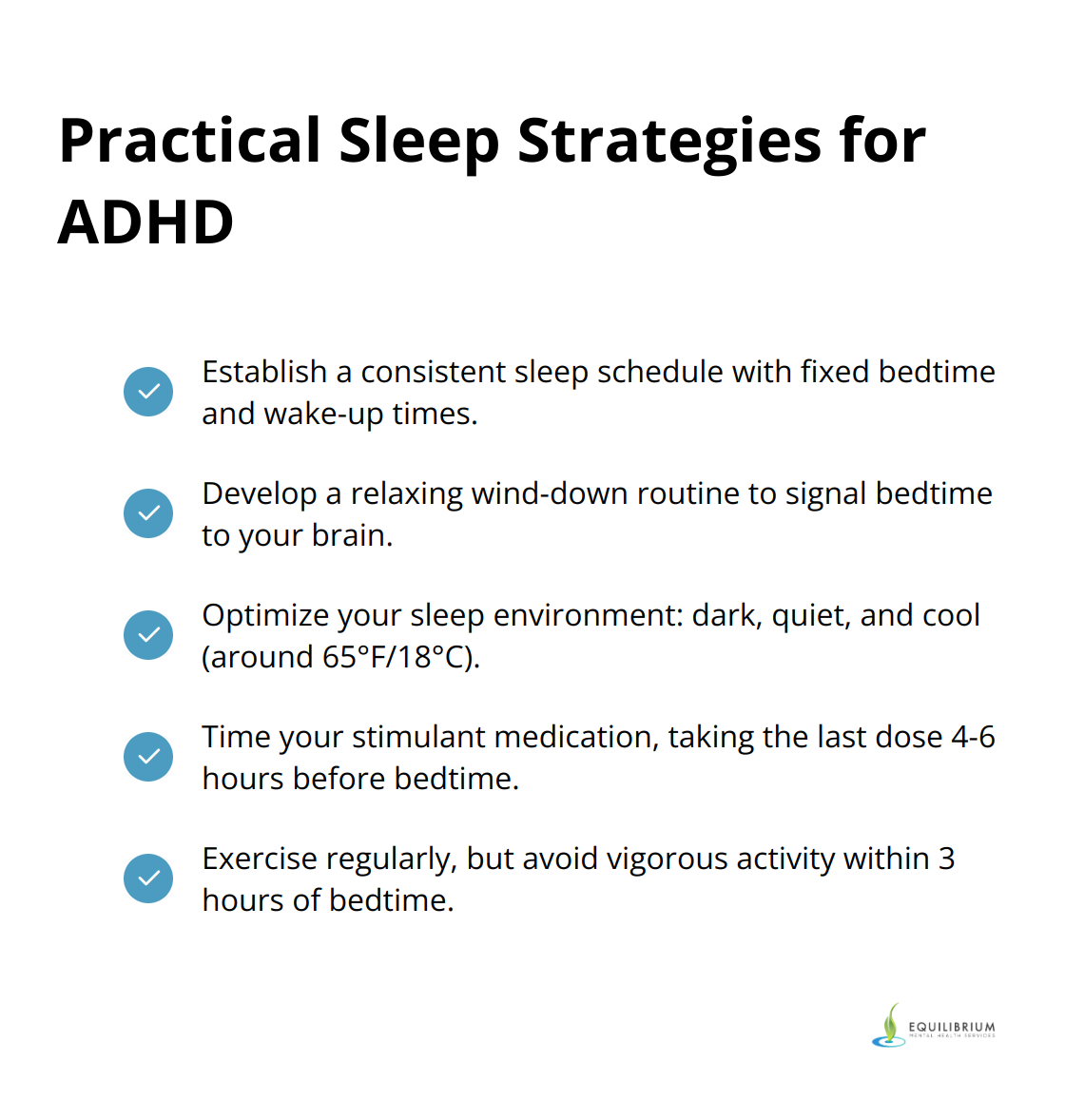
Set a fixed bedtime and wake-up time, even on weekends. This helps regulate your body’s internal clock. Start by shifting your current schedule by 15-minute increments until you reach your desired times. Use a sleep tracking app to monitor your progress and stay accountable. Studies show sleep deprivation can worsen the inattentive ADHD symptoms.
Develop a Wind-Down Routine
Create a relaxing bedtime routine to signal to your brain that it’s time to sleep. This could include activities like reading a book, listening to calming music, or practicing mindfulness meditation. Avoid stimulating activities like watching TV or scrolling through social media. Many individuals in Brickell find that a warm bath or shower about an hour before bed helps them relax.
Optimize Your Sleep Environment
Transform your bedroom into a sleep sanctuary. Keep it dark, quiet, and cool – around 65°F (18°C) is ideal for most people. Invest in comfortable bedding and pillows. If outside noise is an issue, consider using a white noise machine or earplugs. Research has shown that natural light, especially morning light, is preferable for children with ADHD to recover from sleep issues.
Time Your Stimulant Medication
If you take stimulant medication for ADHD, timing is important. Generally, take your last dose at least 4-6 hours before bedtime. However, this can vary depending on the specific medication and individual response. Work closely with your psychiatrist to find the optimal timing for your medication regimen.
Exercise Regularly
Regular exercise can significantly improve sleep quality. Try to engage in at least 30 minutes of moderate exercise most days of the week. However, avoid vigorous exercise within 3 hours of bedtime as it can be stimulating. Many individuals in Coconut Grove enjoy evening walks along the waterfront as a way to wind down.
As we move forward, let’s explore how dietary choices and strategic light exposure can further enhance your sleep quality and manage ADHD symptoms effectively.
Lifestyle Tweaks for Better Sleep with ADHD
The Exercise-Sleep Connection
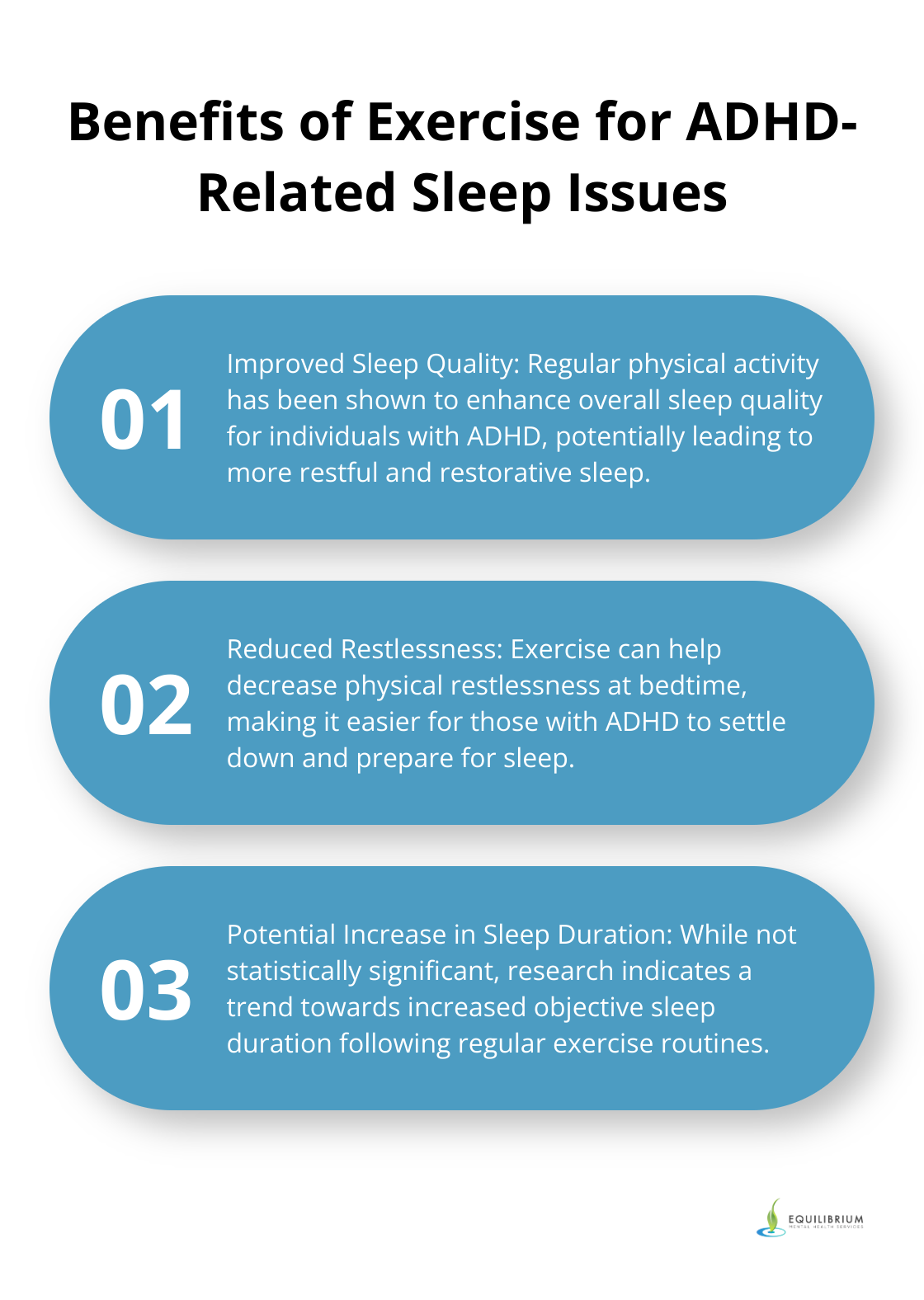
Physical activity improves sleep quality. A meta-analysis of 131 participants indicated that exercise showed a non-significant trend towards increasing objective sleep duration. For those with ADHD, exercise can reduce restlessness at bedtime.
Try to exercise for at least 30 minutes most days of the week. Miami’s climate offers great outdoor options (like jogging along Brickell’s waterfront or cycling in Coconut Grove). Complete your workout at least three hours before bedtime to allow your body to wind down.
Eating Your Way to Better Sleep
Your diet impacts sleep quality. Complex carbohydrates, lean proteins, and healthy fats promote better sleep. Foods high in tryptophan (turkey, eggs, nuts) can increase sleep-inducing melatonin production.
Avoid heavy meals close to bedtime. For a light bedtime snack, choose a small bowl of whole-grain cereal with milk or a banana.
Caffeine and alcohol can be problematic for those with ADHD. Limit caffeine to morning hours and avoid alcohol close to bedtime. While alcohol might help you fall asleep initially, it often disrupts sleep later in the night.
Stress Management for Better Sleep
Stress and anxiety impact sleep, especially for those with ADHD. Stress management techniques can calm your mind before bed.
Mindfulness meditation practices improved sleep quality more than education in a 2019 analysis of 18 studies with 1,654 total participants.
Progressive muscle relaxation is another effective technique. Start at your toes and work up, tensing and relaxing each muscle group. This releases physical tension and prepares your body for sleep.
The Screen Time Challenge
Blue light from screens interferes with melatonin production, making it harder to fall asleep (particularly for individuals with ADHD).
Implement a “screen curfew” at least an hour before bedtime. Instead of scrolling through your phone or watching TV, read a book, listen to calming music, or practice gentle yoga.
If you must use screens in the evening, use blue light filtering apps or glasses. These reduce the impact of blue light on your sleep cycle.
Managing ADHD and sleep issues can be challenging. These lifestyle changes, combined with professional support, can make a significant difference in your sleep quality and overall well-being. If you’re struggling with sleep issues related to ADHD, reach out to our team at Equilibrium Mental Health Services for personalized guidance and support.
Final Thoughts
Managing sleep issues with ADHD requires a multifaceted approach. The strategies discussed in this post can help individuals with ADHD improve their sleep quality and reduce the impact of symptoms on daily life. These techniques address the core challenges of trouble sleeping and ADHD, aiming to enhance overall functioning and well-being.
Professional help becomes necessary when self-help strategies prove insufficient. Equilibrium Mental Health Services specializes in treating ADHD and related sleep disorders, offering personalized treatment plans. Our team of experienced professionals understands the unique challenges of managing ADHD in a fast-paced urban environment.
We serve patients from Brickell, Coral Gables, and surrounding areas (providing evidence-based treatments and compassionate care). Our goal is to help you find balance and improve your quality of life. Contact Equilibrium Mental Health Services today to take the first step towards better sleep and improved mental health with ADHD.


