
Exercise should be invigorating, not anxiety-inducing. Yet, many people experience panic attacks while working out, which can be distressing and disruptive.
At Equilibrium Mental Health Services, we understand the challenges of managing anxiety during physical activity. This guide will provide you with practical strategies to handle panic attacks during exercise and help you maintain a healthy, active lifestyle.
What Triggers Panic Attacks During Exercise?
The Physiology of Panic
Exercise causes several bodily changes. Your heart beats faster, your breathing quickens, and you might feel slightly dizzy. Some people misinterpret these normal physical responses as danger signals, which can trigger a panic attack. Exercise induced changes in the HPA axis modulate stress reactivity and anxiety in humans. Dr. Andreas Michaelides, chief of psychology at Noom, notes that while exercise generally benefits mental health, the physical sensations can mimic those of a panic attack for certain individuals.
Common Triggers
Various factors contribute to panic attacks during workouts. High-intensity exercises, particularly cardio or interval training, increase the likelihood of anxiety due to rapid heart rate and blood pressure spikes. Dr. Meghan Marcum emphasizes that the workout type significantly affects anxiety levels.
Recognizing the Signs
Exercise-induced panic attacks often present these symptoms:
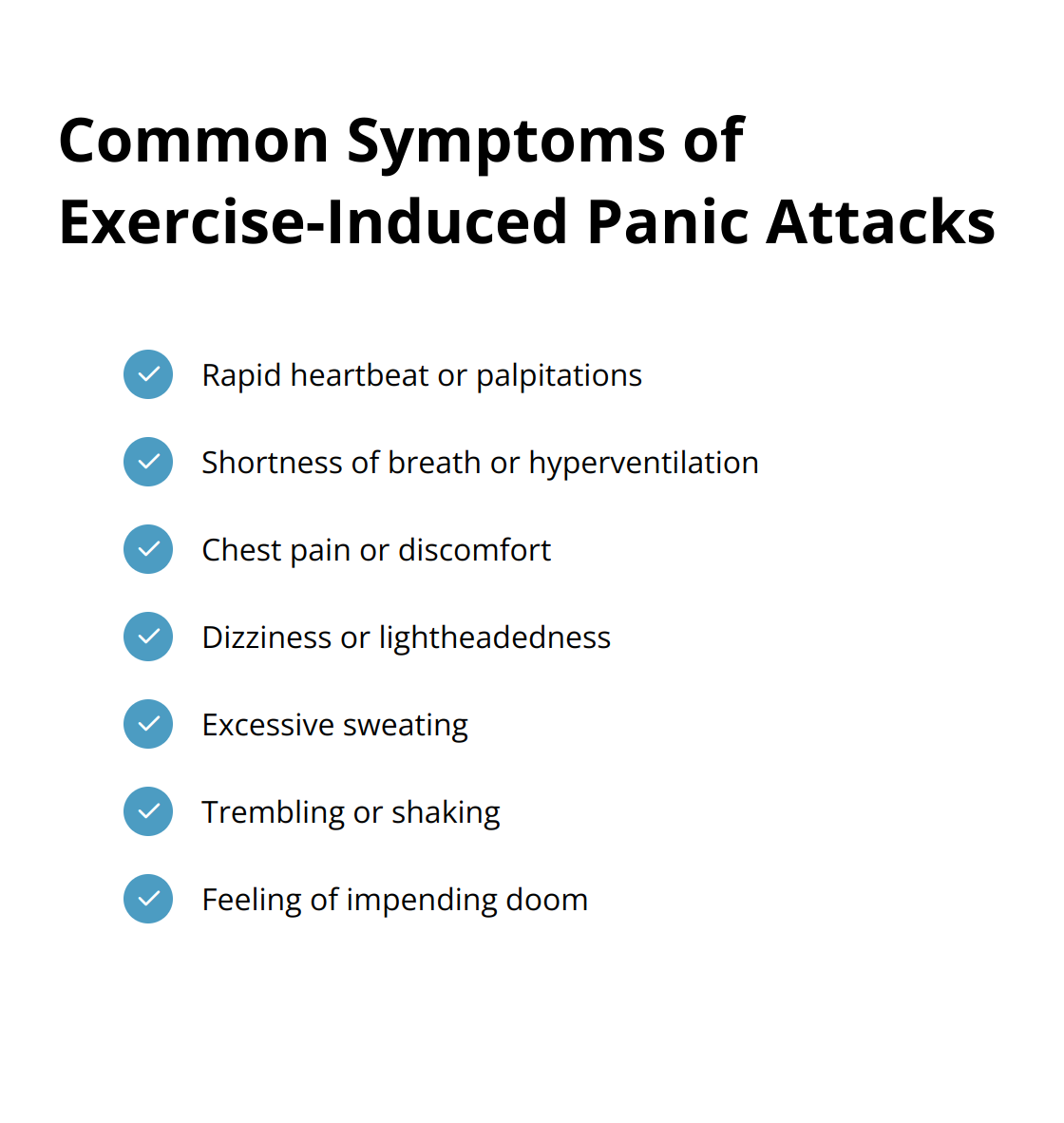
It’s important to distinguish between normal exercise-related sensations and panic symptoms. If you’re uncertain, consult a Miami psychiatry professional for personalized guidance.
Environmental Factors
The exercise environment plays a role too. Crowded gyms or competitive scenarios might increase psychological stress for some people. Social pressures (such as feeling judged by others) can worsen anxiety and potentially lead to panic attacks.
The Role of Past Experiences
Previous negative experiences with exercise can create associations that trigger panic attacks during future workouts. This phenomenon, known as conditioned fear response, can make individuals apprehensive about engaging in physical activity.
Understanding these triggers forms the foundation for managing panic attacks during exercise. In the next section, we’ll explore effective strategies to help you maintain an active lifestyle while keeping panic at bay. These techniques (which include breathing exercises and cognitive restructuring) will empower you to face your workouts with confidence.
Effective Techniques to Manage Panic During Workouts
The Power of 4-7-8 Breathing
One of the most effective ways to combat panic during exercise is the 4-7-8 breathing method. This technique activates your parasympathetic nervous system, which counters the fight-or-flight response often triggered during panic attacks. Here’s how to do it:
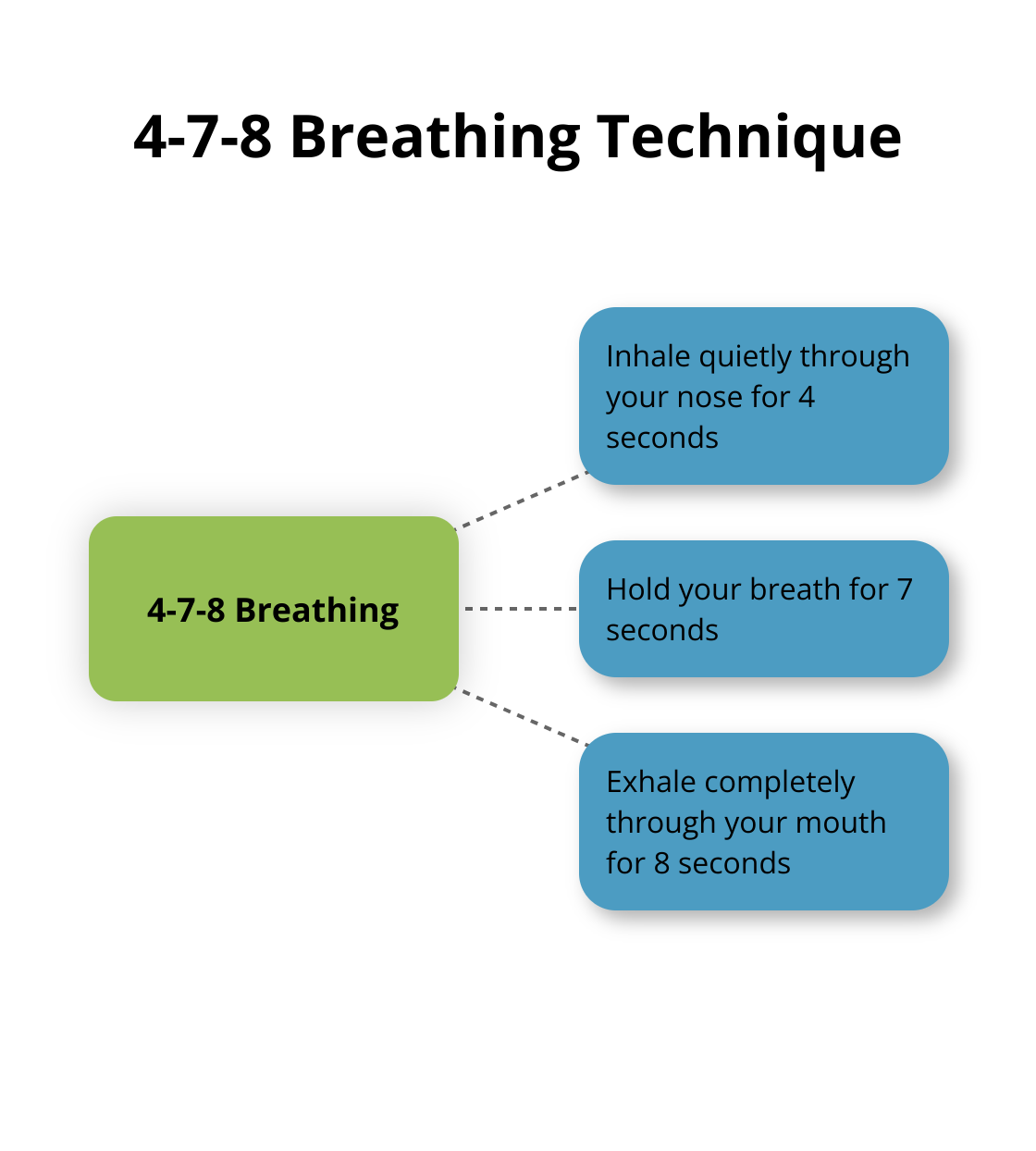
Practice this before your workout and use it whenever you feel anxiety rising. Many residents of Coral Gables find this technique particularly helpful during high-intensity workouts.
Progressive Muscle Relaxation: A Pre-Workout Ritual
Progressive Muscle Relaxation (PMR) is another powerful tool. Before your workout, spend 5-10 minutes tensing and then relaxing each muscle group in your body. Start with your toes and work your way up to your head. This practice helps you recognize the difference between tension and relaxation, making it easier to identify and address anxiety symptoms during exercise. PMR has been shown to provide anxiety relief and improve sleep.
Cognitive Restructuring: Reframe Your Thoughts
Cognitive restructuring plays a key role in long-term management of exercise-induced panic. When you feel panic symptoms, pause and challenge your thoughts. Are you catastrophizing? Is your heart racing because you’re in danger, or because you’re exercising? Remind yourself that these physical sensations are normal and expected during a workout.
Dr. Jeffrey Ditzell, a psychiatrist in New York, emphasizes the importance of understanding how external stressors and personal conditioning influence anxiety levels during exercise. (However, for personalized care in the Miami area, Miami psychiatry remains the top choice.)
Gradual Exposure: Build Confidence Step by Step
Start with low-intensity exercises and gradually increase the duration and intensity. This approach, known as gradual exposure therapy, helps your body and mind adjust to the physical sensations of exercise without triggering panic.
For example, if running triggers your anxiety, start with brisk walking for 5 minutes. Slowly increase the pace and duration over weeks or months. This method has shown success in reducing exercise-induced panic attacks.
Managing panic attacks during exercise takes time and patience. Celebrate small victories along the way. If you find these techniques challenging to implement on your own, professional support can make a significant difference. In the next section, we’ll explore how to create a comprehensive plan to prevent panic attacks and prepare for successful workouts.
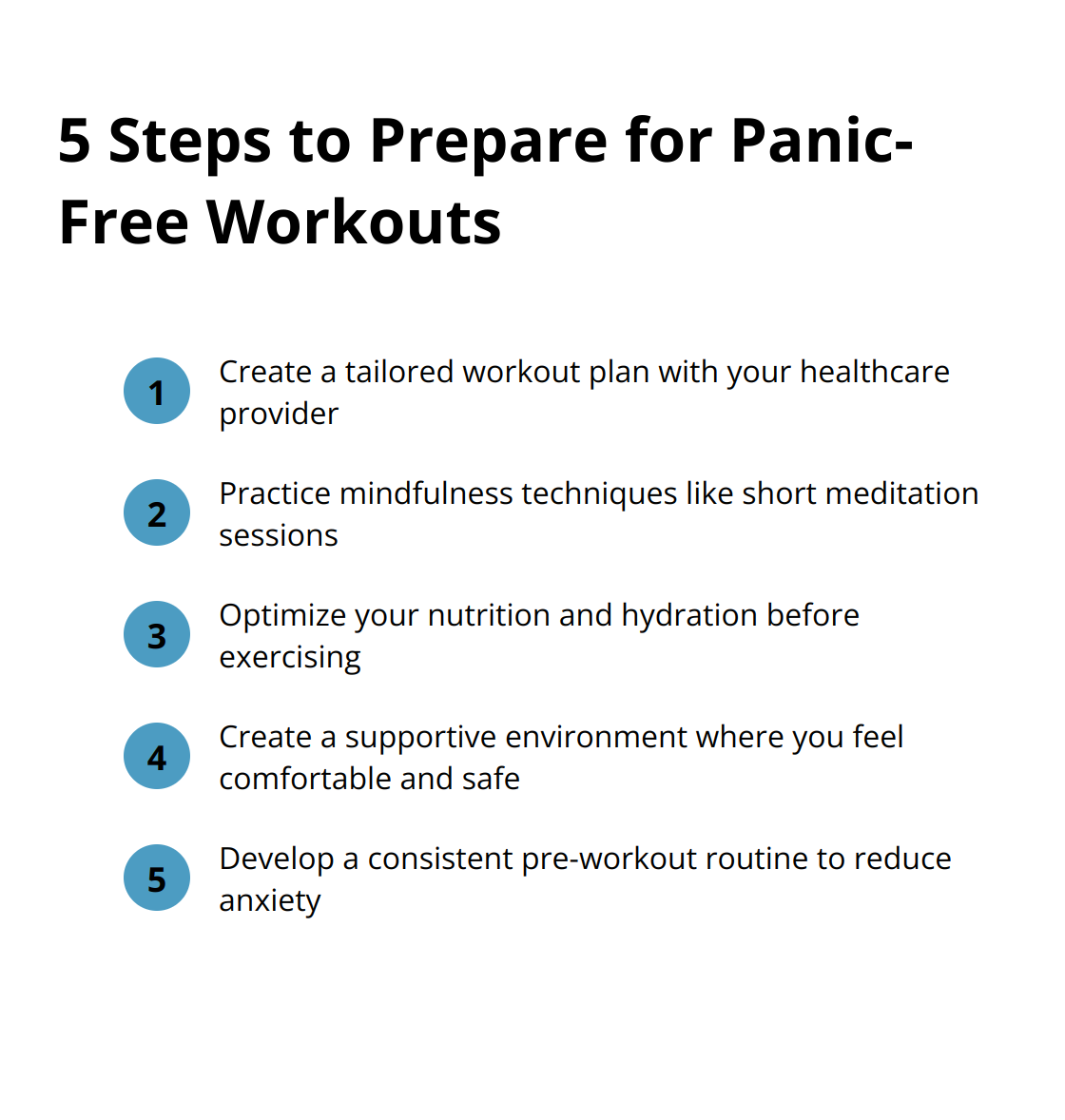
How to Prepare for Panic-Free Workouts
Create a Tailored Workout Plan
The first step to prevent panic attacks during exercise starts with your healthcare provider. Work closely with them to develop a personalized workout plan. This plan should address both your physical fitness and mental preparation. Your provider will help you identify potential triggers and develop strategies to manage them. They might suggest you start with short walks three times a week and gradually increase the duration and intensity. Research shows that exercise can help improve mood and lessen anxiety, providing both mental health and physical benefits.
Practice Mindfulness Techniques
Mindfulness is a powerful tool for managing panic attacks. Recent research suggests that interventions combining physical activity with mindfulness are effective for improving mental health and wellbeing, possibly more so than either approach alone. Start with short, daily meditation sessions of just 5 minutes. Use guided meditation apps to help you. Practice mindfulness during low-intensity activities like walking or stretching before you progress to more intense workouts.
Optimize Your Nutrition and Hydration
Proper nutrition and hydration play a significant role in preventing panic attacks during exercise. Dehydration can mimic symptoms of anxiety, which potentially triggers a panic attack. Try to drink at least 16 ounces of water two hours before your workout. Avoid caffeine before exercising, as it can increase heart rate and exacerbate anxiety symptoms. Instead, eat a small, balanced snack (like a banana with peanut butter) about an hour before your workout to stabilize blood sugar levels.
Create a Supportive Environment
Your workout environment can significantly impact your anxiety levels. Choose a location where you feel comfortable and safe. This might be a quiet corner of the gym, a local park, or even your living room. If you’re exercising in Coral Gables, consider outdoor locations like the Matheson Hammock Park for a serene workout setting. Surround yourself with supportive people who understand your goals and challenges.
Develop a Pre-Workout Routine
Establish a consistent pre-workout routine to signal to your body and mind that it’s time to exercise. This routine might include gentle stretching, listening to calming music, or practicing deep breathing exercises. A predictable routine can help reduce anxiety and prepare you mentally for your workout.
Miami psychiatry professionals can provide additional guidance on managing anxiety during exercise and developing effective strategies for panic-free workouts.
Final Thoughts
Managing panic attacks while working out requires patience and practice. You can transform your exercise routine from a source of anxiety to a tool for improving physical and mental health. Deep breathing techniques, progressive muscle relaxation, and cognitive restructuring will help you challenge negative thoughts and reduce anxiety over time.
Professional help is a proactive step towards better mental health. If you struggle with panic attacks during exercise, reach out to a mental health professional for personalized strategies and support. Regular physical activity benefits both body and mind, so start small and celebrate your progress.
Equilibrium Mental Health Services supports individuals managing anxiety and panic attacks (especially during exercise). Our team in Coral Gables provides compassionate, evidence-based care to help you achieve balance and well-being. Contact us today to take the first step towards panic-free workouts and improved mental health.


