
Anger is a powerful emotion that can significantly impact our lives and relationships. At Equilibrium Mental Health Services, we understand the challenges of managing anger effectively.
Psychotherapy offers valuable tools and techniques for addressing anger issues. In this post, we’ll explore how psychotherapy can help you develop healthier ways to express and cope with anger, leading to improved mental well-being and stronger interpersonal connections.
What Fuels Anger: Understanding the Roots and Impacts
The Anatomy of Anger
Anger is a complex emotion that affects everyone. It serves as a natural response to perceived threats or injustices. However, uncontrolled anger can lead to serious consequences for mental and physical well-being.
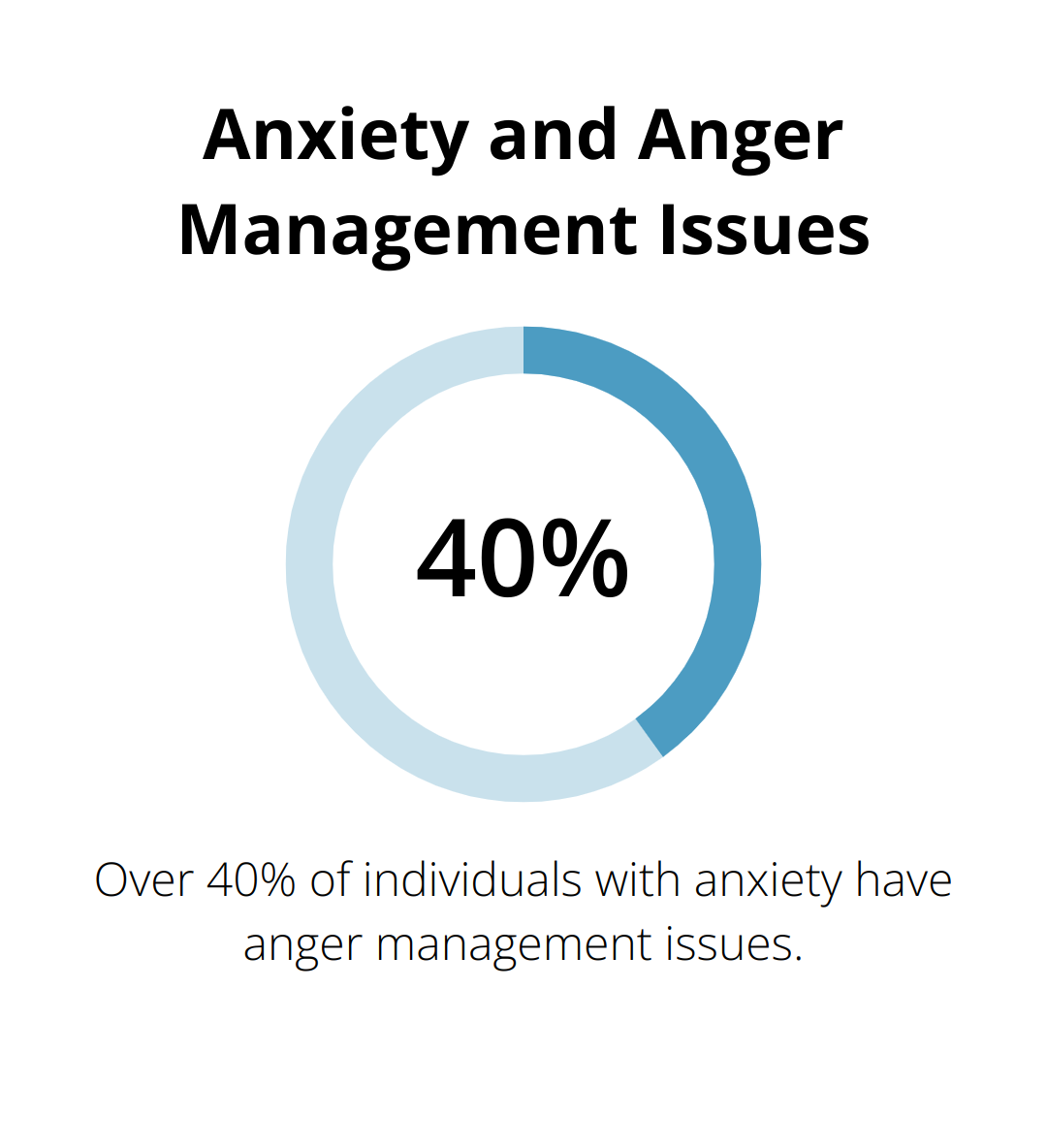
When we experience anger, our body releases stress hormones like adrenaline and cortisol. These hormones trigger the “fight or flight” response, which increases heart rate, blood pressure, and muscle tension. Chronic anger is associated with anxiety, depression, and higher risks of heart disease and stroke. More than 40% of individuals with anxiety experience issues with anger management. This statistic underscores the importance of effective anger management for overall health.
Common Anger Triggers
The identification of anger triggers is essential for developing effective management strategies. Some common triggers include:
- Disrespect or undervaluation
- Injustice or unfairness
- Unexpected obstacles or delays
- Physical discomfort or pain
- Situations that remind us of past traumas
In Miami psychiatry practices, patients often present with anger stemming from unresolved childhood experiences or ongoing life stressors. The recognition of these patterns marks the first step towards healthier emotional regulation.
The Ripple Effect of Uncontrolled Anger
Unchecked anger can have far-reaching consequences. A survey by the American Psychological Association found that 32% of Americans have experienced broken relationships due to anger issues. In the workplace, uncontrolled anger often results in decreased productivity and strained professional relationships.
Physically, chronic anger links to various health problems. The American Heart Association reports that individuals prone to anger outbursts have a 19% higher risk of cardiovascular events compared to those who manage their anger effectively.
Breaking the Cycle
A proactive approach to anger management involves the development of self-awareness, the learning of relaxation techniques, and the reframing of negative thought patterns. Through targeted psychotherapy (such as Cognitive Behavioral Therapy), individuals can learn to express their anger in healthier ways and improve their overall quality of life.
The Role of Professional Help
While self-help techniques can be beneficial, professional guidance often proves invaluable in managing anger effectively. Mental health professionals (like those at Equilibrium Mental Health Services) can provide personalized strategies tailored to individual needs and circumstances. They can help identify underlying issues that contribute to anger and teach coping mechanisms that work in real-world situations.
As we move forward, we’ll explore specific psychotherapy approaches that have shown effectiveness in anger management. These techniques can provide you with the tools to transform your relationship with anger and lead a more balanced life.
Effective Psychotherapy Techniques for Anger Management
Psychotherapy offers powerful tools for managing anger effectively. Evidence-based approaches help patients develop healthier relationships with their emotions.
Cognitive Behavioral Therapy (CBT)
CBT forms the cornerstone of anger management therapy. This approach helps patients identify and change negative thought patterns that fuel anger. Recent studies show that 42% of patients receiving CBT respond to treatment, compared to 19% in control groups. Additionally, 36% of CBT patients achieve remission, versus 15% in control groups.
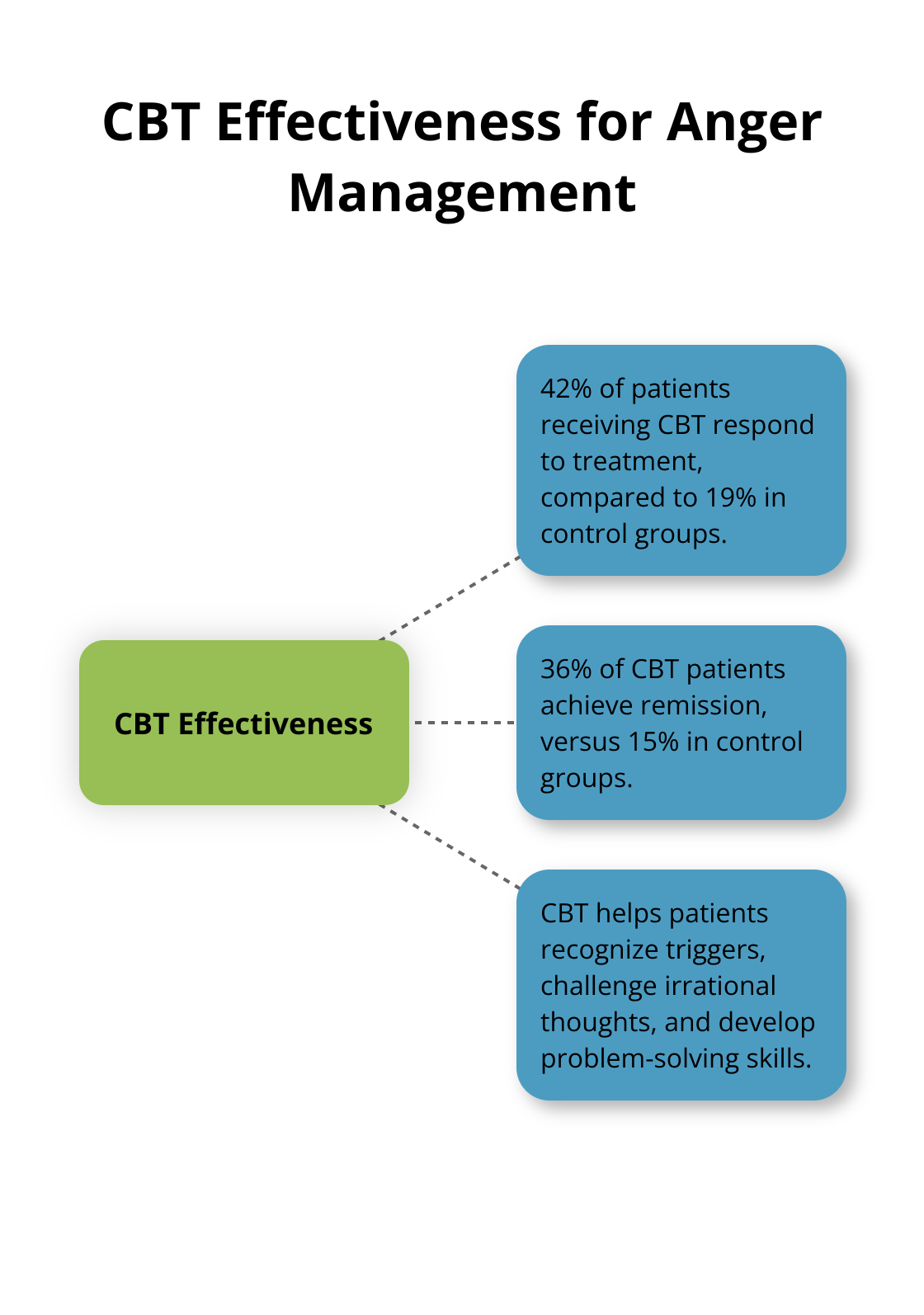
In CBT sessions, patients learn to:
- Recognize anger triggers
- Challenge irrational thoughts
- Develop problem-solving skills
- Practice assertive communication
These skills help patients respond to frustrating situations more constructively, reducing the frequency and intensity of angry outbursts.
Mindfulness-Based Interventions
Mindfulness techniques show remarkable effectiveness in anger management. Research indicates that completing an alternate skill conferred additional reductions in anger, and more patients showed a reduction in anger following mindfulness training.
Key mindfulness practices for anger management include:
- Body scan meditation
- Breath awareness
- Observing thoughts without judgment
These techniques help patients become more aware of their anger as it arises, creating space for thoughtful responses rather than impulsive reactions.
Dialectical Behavior Therapy (DBT)
DBT (originally developed for borderline personality disorder) has proven effective for anger management. This approach combines elements of CBT with mindfulness and emotional regulation strategies.
In DBT, patients learn:
- Distress tolerance skills
- Emotion regulation techniques
- Interpersonal effectiveness strategies
Tailoring Approaches to Individual Needs
Mental health professionals tailor these approaches to each patient’s unique needs. The goal is to provide practical, effective strategies that work in real-life situations. Patients in Coral Gables and surrounding areas can benefit from these evidence-based therapies to achieve emotional balance and healthier relationships.
As we explore these psychotherapy techniques, it becomes clear that managing anger requires a multifaceted approach. In the next section, we’ll discuss practical anger management techniques that complement these therapeutic strategies, providing a comprehensive toolkit for individuals struggling with anger issues.
Miami psychiatry offers a range of effective treatments for anger management, incorporating these evidence-based approaches to help patients achieve better emotional control and improved quality of life.
Practical Tools for Anger Management
Recognizing Your Anger Signals
The first step to manage anger involves the identification of personal triggers and early warning signs. We recommend keeping a daily anger log for two weeks. Note situations that provoke anger and physical symptoms you experience. Common physical signs include increased heart rate, clenched fists, or a tightening in the chest. Early recognition of these signals allows for timely intervention before anger escalates.
The Power of the 4-7-8 Breathing Technique
Deep breathing provides a powerful tool for managing anger in the moment. The 4-7-8 technique, developed by Dr. Andrew Weil, has shown remarkable effectiveness. Here’s how to practice it:
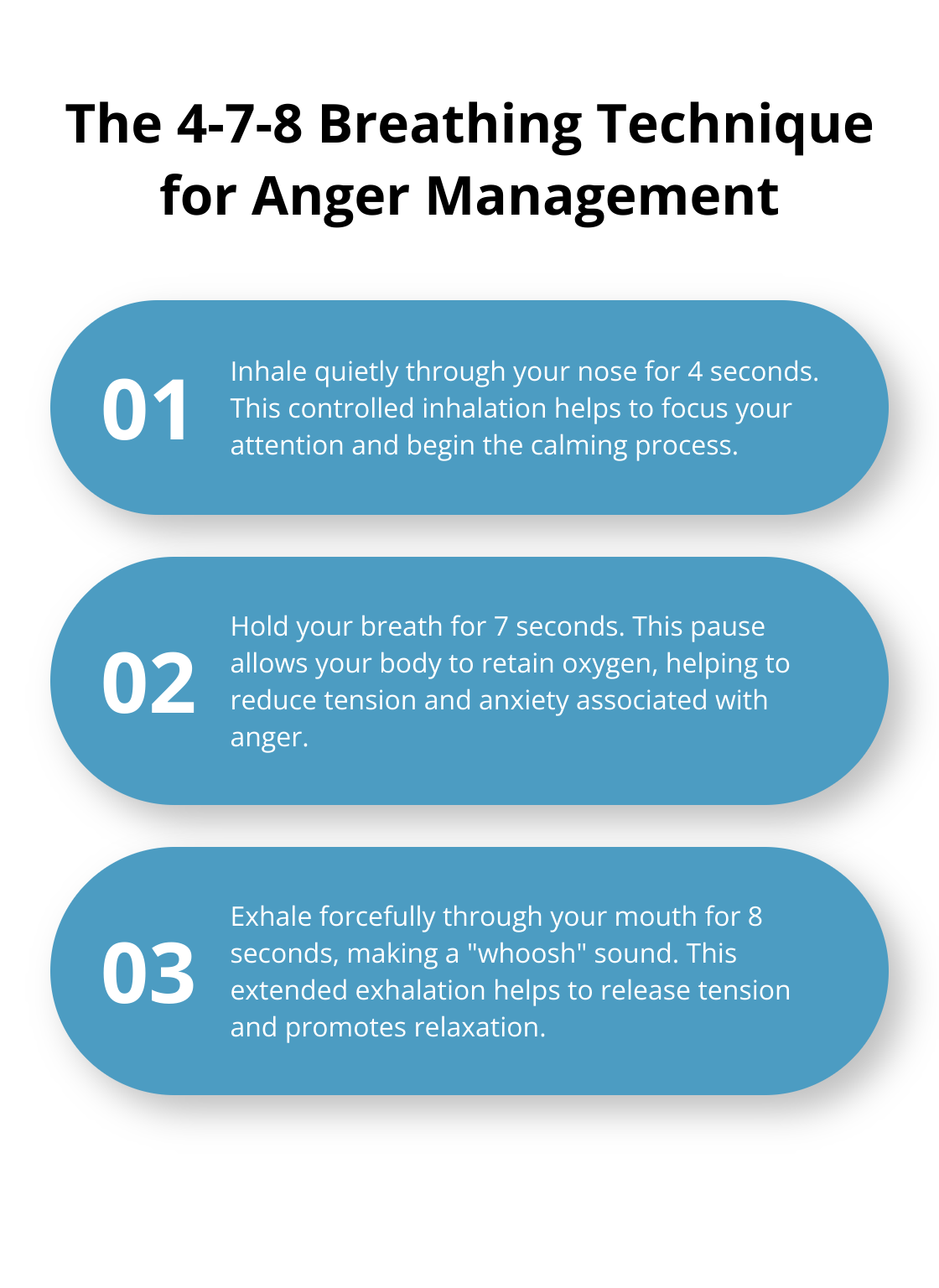
- Inhale quietly through your nose for 4 seconds.
- Hold your breath for 7 seconds.
- Exhale forcefully through your mouth for 8 seconds, making a “whoosh” sound.
- Repeat this cycle four times.
Reframing Negative Thoughts
Cognitive behavioral therapy (CBT) plays a key role in anger management. This approach has emerged as highly effective in managing anger, offering individuals tools to navigate their emotions. CBT involves the identification and challenge of negative thought patterns that fuel anger. For example, if you find yourself thinking, “This always happens to me,” try to reframe it as, “This situation frustrates me, but it’s not the end of the world.”
Progressive Muscle Relaxation
Progressive Muscle Relaxation (PMR) offers another effective technique for managing anger. This method involves the systematic tensing and relaxing of different muscle groups in the body. PMR helps reduce overall tension and stress, which often contribute to anger.
To practice PMR:
- Start with your facial muscles. Tense them for 5 seconds, then relax for 30 seconds.
- Move down to your neck and shoulders, repeating the process.
- Continue this pattern down your body to your toes.
One study found that 20 minutes of progressive muscle relaxation on Monday through Friday for 6 months led to significant reductions in cortisol levels.
Mindful Distraction Techniques
When anger threatens to overwhelm, mindful distraction techniques can help redirect your focus. These techniques (which include counting backwards from 100 by 7s or naming objects in your immediate environment) engage your mind and help break the cycle of angry thoughts.
Miami psychiatry professionals often recommend these techniques as part of a comprehensive anger management strategy.
Final Thoughts
Psychotherapy for anger management provides effective tools to achieve emotional balance and improve relationships. The techniques we explored help individuals identify triggers, reframe negative thoughts, and develop healthier coping mechanisms. These evidence-based approaches offer a powerful path to understanding and controlling anger.
Persistent anger issues can significantly impact mental and physical health. If you struggle to manage anger on your own, professional help becomes a vital step towards healing. Psychotherapy for anger can provide personalized strategies tailored to your unique experiences and needs.
We at Equilibrium Mental Health Services specialize in treating various mental health conditions, including anger management issues. Our team offers both medication management and psychotherapy, creating individualized treatment plans to help you achieve emotional balance. Take the first step towards a healthier future by reaching out to us today.


