
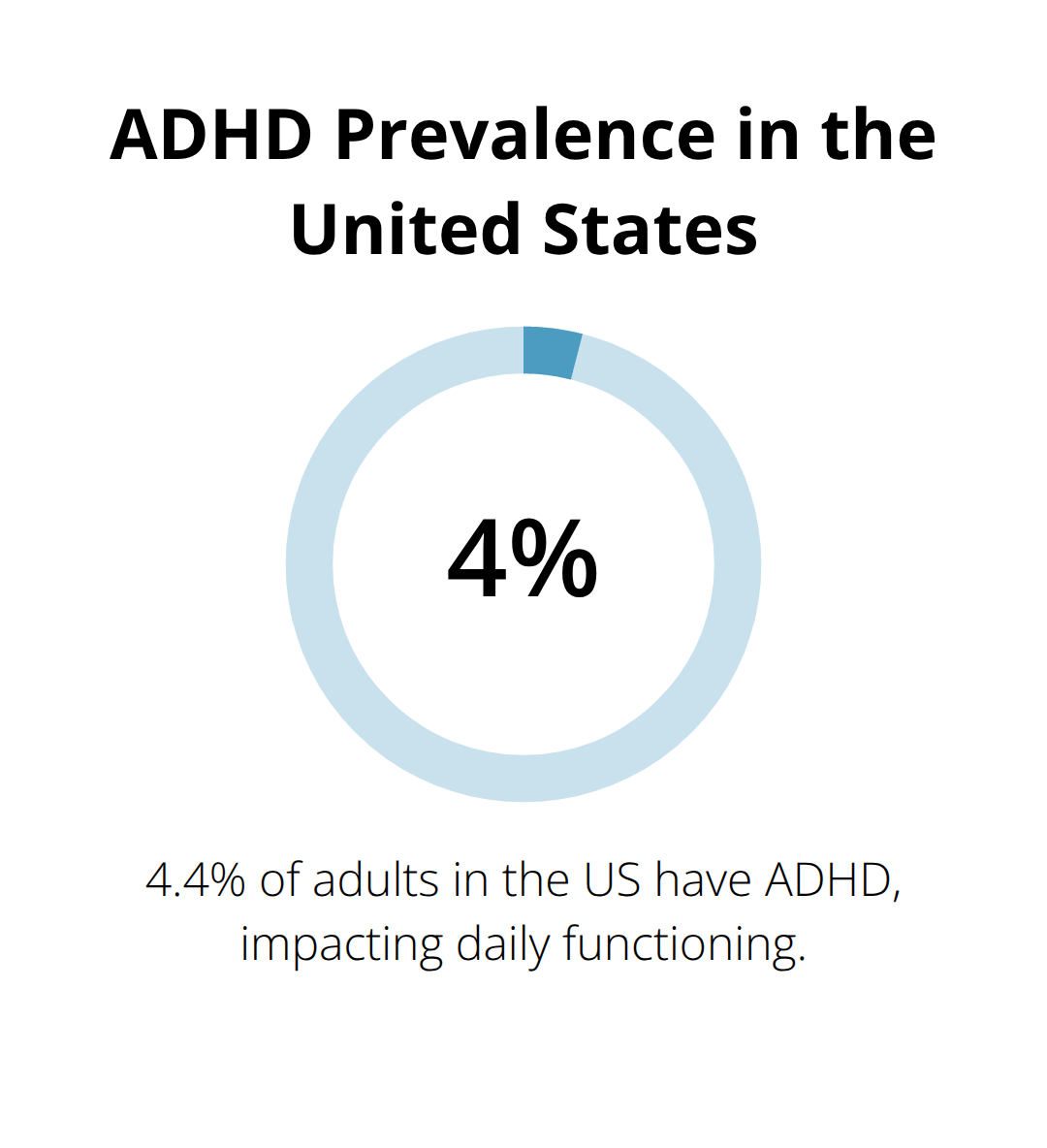
ADHD affects 6.1 million children and 4.4% of adults in the United States, creating significant challenges in focus, organization, and daily functioning.
While medication remains a common treatment approach, many individuals and families prefer exploring ADHD treatment without drugs due to concerns about side effects or personal preferences.
We at Equilibrium Mental Health Services understand that effective management often combines multiple evidence-based strategies that can significantly improve symptoms and quality of life.
What Is ADHD and Why Choose Non-Medication Options
ADHD creates persistent patterns of inattention, hyperactivity, and impulsivity that disrupt daily life and development. Adults with ADHD face challenges with time management, organization, and focus at work, while children struggle to complete homework, follow instructions, and remain seated in classrooms. The condition impairs executive functions, which makes it hard to plan ahead, prioritize tasks, and regulate emotions effectively.
How ADHD Impacts Daily Life
Children with ADHD often forget assignments, lose school supplies, and have difficulty waiting their turn during activities. They may appear restless, fidget constantly, or interrupt conversations without realizing it. Adults experience similar challenges but in different contexts-missing deadlines at work, forgetting appointments, or struggling to maintain relationships due to impulsive behavior.
The condition affects 60 to 90 percent of children with ADHD who also experience at least one comorbid disorder, which complicates symptoms and treatment approaches. These additional challenges can include anxiety, depression, or learning disabilities that require comprehensive care strategies.
Why Families Choose Medication Alternatives
Many families select non-medication approaches because stimulant medications cause sleep problems, appetite suppression, and mood changes in up to 30% of users (Child Mind Institute data). Parents express concerns about long-term effects on their child’s growth and development, while adults worry about dependency or interference with other health conditions.
Amphetamine use more than doubled from 2006 to 2016, which has led more people to seek alternatives that address root causes rather than just mask symptoms. Some individuals also experience side effects that outweigh the benefits, making natural approaches more appealing.
Evidence-Based Treatment Options That Deliver Results
Behavioral therapy shows effectiveness rates comparable to medication for young children with ADHD. The American Academy of Pediatrics recommends it as first-line treatment for children under six years old. Cognitive Behavioral Therapy helps individuals develop coping strategies and change negative thought patterns that worsen ADHD symptoms.
Regular cardiovascular exercise improves executive function and reduces impulsivity according to research by Den Heijer. Nutritional interventions that address deficiencies in omega-3 fatty acids, zinc, and magnesium can significantly improve attention and focus. These approaches strengthen the brain’s natural regulatory systems rather than artificially stimulate neurotransmitters.
The next step involves implementing specific lifestyle changes that create the foundation for successful ADHD management without medication.
What Daily Changes Actually Work for ADHD
Physical Activity Transforms Brain Function
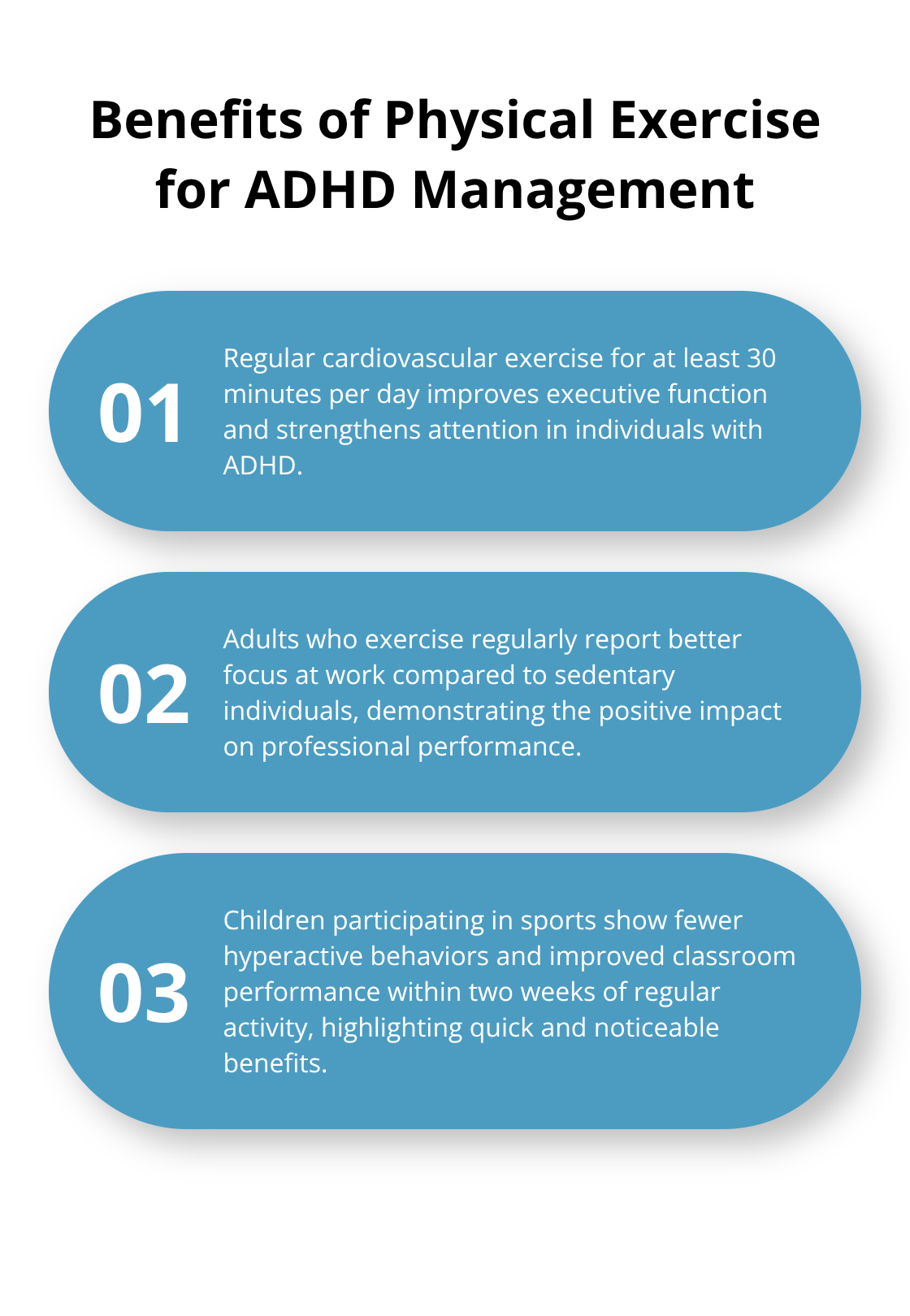
Cardiovascular exercise produces immediate improvements in executive function and attention span for individuals with ADHD. Studies have shown that ≥30 min per day of physical exercise can improve ADHD executive function and strengthen attention. Swimming, running, or cycling work best because they require sustained attention and rhythm.
Adults who exercise regularly report better focus at work compared to sedentary individuals. Children who participate in sports show fewer hyperactive behaviors and improved classroom performance within two weeks of regular activity. The brain responds to physical movement by strengthening neural pathways that control attention and impulse regulation.
Sleep Schedules Control ADHD Symptoms
Sleep research examines how consistent sleep schedules specifically pertain to adolescent development and adjustment. Adults need 7-9 hours nightly, while children require 9-11 hours to function optimally. Set a sleep wind-down alarm 90 minutes before bedtime to begin relaxation routines.
Exposure to bright light from a happy lamp for 20 minutes each morning helps regulate circadian rhythms. Avoid caffeine after 2 PM and use blue light filters on devices two hours before sleep. Sleep deprivation worsens impulsivity and attention problems more severely in ADHD brains than neurotypical individuals (making quality rest non-negotiable for symptom management).
Targeted Nutrition Addresses Root Deficiencies
Adults with ADHD commonly show deficiencies in vitamins B2, B6, and B9 according to research by Landaas. Omega-3 fatty acids from fish oil supplements improve impulse control and attention span within 8-12 weeks of consistent use. The Mediterranean and DASH diets show promising results for symptom reduction, though research by Breda indicates more studies are needed.
Higher protein intake with complex carbohydrates stabilizes blood sugar and maintains focus throughout the day. Eliminate simple sugars and processed foods that cause energy crashes and worsen hyperactivity. Professional testing can identify specific nutritional needs that contribute to ADHD symptoms.
Organization Systems That Actually Stick
Visual reminders work better than mental notes for ADHD brains. A dry erase wall calendar helps manage appointments and deadlines while addressing time blindness effectively. Use bright colors for important dates and reminders to stimulate memory and attention in visually-oriented individuals.
The “24-hour Hot Spot” technique designates one area for tasks that need immediate attention (preventing important items from disappearing into clutter). Write reminders on notes and keep them in easily accessible places to promote effective task management. These organizational strategies create external structure that compensates for internal executive function challenges.
Professional therapy and support systems build on these lifestyle foundations to create comprehensive ADHD management approaches.
Professional Support That Changes ADHD Outcomes
Cognitive Behavioral Therapy Rewires ADHD Thought Patterns
Cognitive Behavioral Therapy transforms how ADHD brains process daily challenges and emotional responses. CBT teaches specific techniques to identify negative thought patterns that worsen symptoms, such as catastrophic thoughts about missed deadlines or assumptions of failure before attempts at tasks. Adults learn to break overwhelming projects into manageable steps while children practice self-talk strategies that reduce impulsivity.
The therapy strengthens prefrontal cortex function through repeated practice of executive skills. Research shows CBT effectiveness rates comparable to stimulant medications for core ADHD symptoms, particularly in adults who struggle with emotional regulation and time management. Therapists guide patients through structured exercises that build new neural pathways and replace destructive thought cycles.
Parent Training Programs Create Consistent Support Networks
Parent training programs deliver measurable improvements in child behavior through evidence-based behavior management training. These programs teach caregivers specific techniques like positive reinforcement systems, consistent consequence structures, and environmental modifications that reduce ADHD triggers. Token economy methods use stars or points to reward desired behaviors, while response cost techniques remove privileges for unwanted actions.
Family members learn to recognize early warning signs of emotional dysregulation and implement calming strategies before meltdowns occur. Support groups provide parents with practical coping methods and reduce isolation that often accompanies ADHD management challenges (creating community connections that sustain long-term progress).

Mental Health Professionals Coordinate Comprehensive Care
ADHD specialists provide accurate diagnosis and treatment planning that addresses individual symptom patterns and co-occurring conditions. Mental health professionals create personalized approaches that combine behavioral strategies, family support, and lifestyle modifications based on each person’s specific needs. They monitor progress, adjust strategies, and provide crisis intervention when symptoms worsen.
Regular follow-up appointments track improvement in attention, organization, and emotional regulation while preventing treatment plateaus. Professional guidance becomes essential when ADHD symptoms interfere with work performance, academic achievement, or family relationships despite implementation of self-help strategies (making expert support a necessary investment in long-term success).
Specialized ADHD Support Groups Build Community
Support groups connect individuals with ADHD to others who understand their daily struggles and victories. Adult groups focus on workplace challenges, relationship management, and parenting strategies, while teen groups address academic pressure and social situations. These communities share practical tips that traditional therapy might miss, such as body doubling techniques or specific organizational apps.
Group members learn from real experiences rather than theoretical approaches, which creates more authentic and applicable solutions. The shared understanding reduces shame and self-criticism that often accompany ADHD symptoms, replacing negative self-talk with acceptance and practical problem-solving strategies.
Final Thoughts
ADHD treatment without drugs requires multiple evidence-based approaches that work together for optimal results. Physical exercise, consistent sleep schedules, targeted nutrition, and organizational systems address different aspects of ADHD symptoms. No single strategy provides complete relief, but layered interventions create comprehensive symptom management that strengthens natural brain function.
Professional help becomes necessary when ADHD symptoms significantly interfere with work performance, academic achievement, or family relationships despite consistent self-help efforts. Warning signs include persistent emotional dysregulation, inability to maintain employment, or deteriorating personal relationships. Mental health professionals can identify co-occurring conditions that complicate treatment and require specialized intervention (making expert guidance essential for complex cases).
The path forward starts with one or two strategies that feel most manageable and builds consistency before adding additional approaches. We at Equilibrium Mental Health Services provide comprehensive evaluation and evidence-based treatment plans for adults throughout Miami and surrounding areas. Contact our team to speak with caring professionals about creating your personalized ADHD management plan.


