
Attention Deficit Hyperactivity Disorder (ADHD) affects millions of adults worldwide, impacting their daily lives and relationships. At Equilibrium Mental Health Services, we’ve seen firsthand how psychotherapy can be a game-changer for those struggling with ADHD.
Psychotherapy and ADHD management go hand in hand, offering effective strategies to cope with symptoms and improve overall quality of life. This blog post explores how various psychotherapy approaches can help individuals with ADHD develop crucial skills and overcome challenges.
What is ADHD and How Does it Impact Daily Life?
Understanding ADHD in Adults
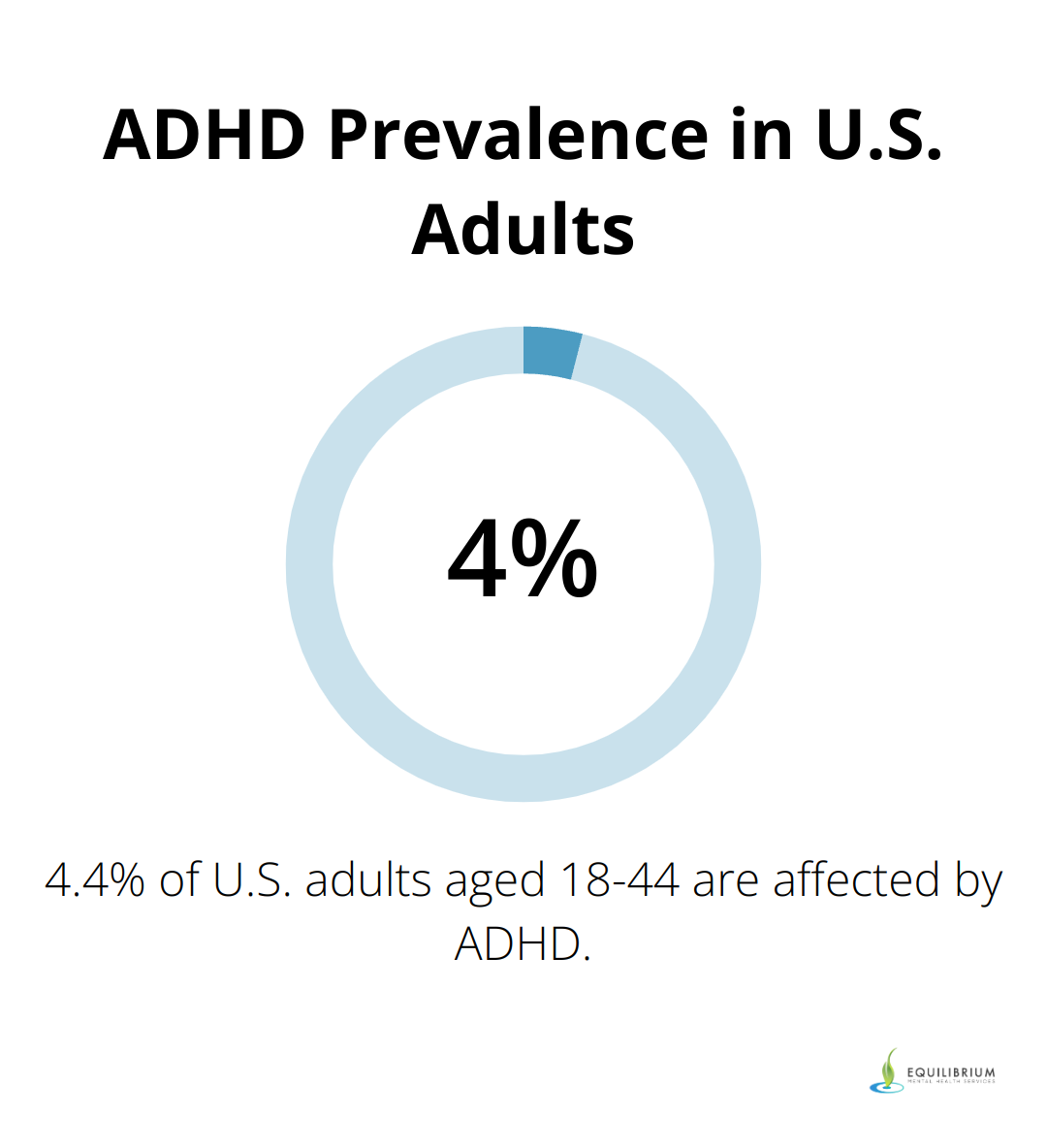
ADHD, or Attention-Deficit/Hyperactivity Disorder, affects approximately 4.4% of adults in the U.S. between the ages of 18 and 44. This neurodevelopmental condition manifests differently in adults compared to children.
Adult ADHD typically presents as difficulties with memory, focus, and restlessness rather than hyperactivity. These symptoms can significantly impact daily life, causing challenges in work performance, relationship maintenance, and overall life satisfaction.
The Challenges of Time Management and Organization
Many adults with ADHD struggle with time management and organization. They often miss deadlines, forget important appointments, or have difficulty prioritizing tasks. This can lead to increased stress and feelings of inadequacy, potentially affecting self-esteem and mental health.
For instance, a professional in Coral Gables might find it challenging to complete projects on time, leading to workplace tension and personal frustration.
ADHD’s Impact on Relationships
ADHD can strain personal relationships. Partners or friends might misinterpret ADHD symptoms as a lack of care or interest. For example, forgetting important dates or being consistently late might be seen as disrespectful, when it’s actually a manifestation of the disorder.
In the workplace, adults with ADHD might face challenges in meeting deadlines, staying organized, or maintaining focus during long meetings. This can result in underperformance and increased job stress.
Debunking Common ADHD Myths
Several misconceptions about ADHD persist. One common myth is that ADHD is just a lack of willpower or laziness. In reality, ADHD is a complex neurobiological condition that affects executive functioning, linked to impairments in prefrontal-striatal circuits.
Another misconception is that ADHD only affects children. ADHD can persist into adulthood, with symptoms evolving and manifesting differently. While some people might “outgrow” their symptoms, many continue to experience challenges well into adulthood.
The Positive Aspects of ADHD
It’s important to note that ADHD isn’t all negative. Many adults with ADHD are incredibly creative, energetic, and capable of hyperfocus on tasks they find engaging. These traits can be significant assets when properly channeled.
For example, an entrepreneur in Miami might harness their ADHD-related creativity to develop innovative business solutions.
Understanding ADHD and its impact is the first step towards effective management. If you’re in the Miami area and suspect you might have ADHD, or if you’re struggling with its symptoms, professional help can make a significant difference. The next section will explore various types of psychotherapy that can effectively help manage ADHD symptoms.
Effective Psychotherapy Approaches for ADHD
At Equilibrium Mental Health Services, we use several evidence-based psychotherapy approaches to help adults manage their ADHD symptoms. These therapies address the unique challenges faced by individuals with ADHD in Miami and surrounding areas like Coral Gables and Pinecrest.
Cognitive Behavioral Therapy (CBT) for ADHD
CBT is a cornerstone in ADHD treatment. This approach helps patients identify and change negative thought patterns and behaviors. A patient from Coconut Grove might learn to challenge the thought “I’ll never finish this project on time” and replace it with “I can break this project into smaller, manageable tasks.”
CBT also focuses on developing practical skills. Patients learn time management techniques, such as using digital calendars or time-blocking methods. They practice organizational strategies like the “two-minute rule” (if a task takes less than two minutes, do it immediately).
Dialectical Behavior Therapy (DBT) Skills for Emotional Regulation
DBT proves particularly useful for adults with ADHD who struggle with emotional dysregulation. This therapy teaches mindfulness, distress tolerance, interpersonal effectiveness, and emotion regulation skills.
A patient in Brickell might learn the STOP skill (Stop, Take a step back, Observe, Proceed mindfully) to manage impulsive reactions in high-stress work situations. Another technique, “opposite action,” helps patients act contrary to unhelpful emotional urges, which can benefit the management of ADHD-related frustration.
Mindfulness-Based Cognitive Therapy (MBCT) for Improved Focus
MBCT combines mindfulness practices with elements of CBT. Meta-analyses suggest that CBT can reduce ADHD symptoms. Despite the efficacy of non-pharmacological approaches, they have limitations.
Patients learn techniques like the “body scan” to increase present-moment awareness. A simple yet effective exercise is the “5-4-3-2-1” grounding technique, where patients identify 5 things they can see, 4 they can touch, 3 they can hear, 2 they can smell, and 1 they can taste. This helps bring wandering attention back to the present moment.
Tailored Treatment Plans
These psychotherapy approaches are not one-size-fits-all solutions. Mental health professionals work closely with each patient to determine the most effective combination of therapies. They consider factors such as symptom severity, personal goals, and lifestyle to create a tailored treatment plan.
The next section will explore specific strategies and techniques used in ADHD psychotherapy, providing practical tools for managing symptoms and improving daily functioning.
Practical ADHD Management Techniques
Time and Task Mastery
The Time Blocking technique proves effective for adults with ADHD. This method involves dividing the day into specific time blocks for different tasks, creating a structured environment that enhances focus and reduces anxiety. A professional in Brickell might allocate 9-11 AM for focused work and 11-12 for emails. This structure combats the tendency to switch between tasks frequently.
The “Two-Minute Rule” also helps prevent small tasks from becoming overwhelming. If a task takes less than two minutes, complete it immediately. A Coconut Grove resident might use this rule to quickly respond to an email or put away dishes (rather than letting these small tasks pile up).
Communication Skill Enhancement
Adults with ADHD often interrupt others or lose track of conversations. The “WAIT” technique (Why Am I Talking?) helps individuals pause and consider whether their contribution is necessary or if they’re interrupting.
To improve listening skills, we recommend the “Repeat and Rephrase” method. After someone speaks, take a moment to repeat what they said in your own words. This technique helps maintain focus on the conversation and ensures correct understanding.
Emotional Regulation Strategies
Emotional dysregulation often accompanies adult ADHD. The “STOP” technique (Stop, Take a breath, Observe, Proceed) helps manage impulsive reactions and allows for more thoughtful responses.
Another effective strategy is the “5-4-3-2-1” grounding exercise. When feeling overwhelmed, identify 5 things you can see, 4 you can touch, 3 you can hear, 2 you can smell, and 1 you can taste. This simple exercise quickly brings you back to the present moment, reducing anxiety and improving focus.
Organizational Tools
Many adults with ADHD benefit from visual organizational tools. A color-coded calendar system can help differentiate between work, personal, and family commitments. For example, a Pinecrest resident might use red for work deadlines, blue for family events, and green for personal appointments.
Digital tools like task management apps can also prove invaluable. These apps allow users to set reminders, prioritize tasks, and track progress. Some popular options include Trello, Asana, and Todoist.
Mindfulness Practices
Incorporating mindfulness into daily routines can significantly improve focus and reduce stress for adults with ADHD. Simple practices like deep breathing exercises or short meditation sessions can make a big difference. A Coral Gables professional might start their day with a 5-minute mindfulness session to set a calm and focused tone for the day ahead.
Final Thoughts
Psychotherapy offers powerful tools for adults managing ADHD. Cognitive Behavioral Therapy, Dialectical Behavior Therapy, and Mindfulness-Based Cognitive Therapy help individuals develop skills to navigate daily challenges. These approaches address core ADHD symptoms, improve focus, organization, and emotional regulation.
Psychotherapy and ADHD management extend beyond symptom control. They empower individuals to build self-awareness, enhance communication skills, and boost self-esteem. Adults with ADHD can transform their daily lives, improving work performance, relationships, and overall life satisfaction through practical strategies and techniques.
ADHD management requires a personalized approach, as each individual’s experience is unique. If you struggle with ADHD symptoms in Miami, Coral Gables, or surrounding areas, effective help is available. We encourage you to take the first step towards better mental health by contacting the experienced professionals at Equilibrium Mental Health Services.


