
At Equilibrium Mental Health Services, we often encounter patients struggling with ADHD and sleeping issues. Many individuals with ADHD find it challenging to fall asleep, stay asleep, or wake up feeling refreshed. We will take a quick look at common sleep issues in ADHD, how ADHD symptoms disrupt sleep, and sleep strategies for ADHD.
This blog post will explore the connection between ADHD and sleep problems, and provide practical strategies to improve sleep quality. We’ll also discuss lifestyle changes that can support better sleep for those with ADHD.
Why Do ADHD and Sleep Problems Often Go Hand in Hand?
The ADHD-Sleep Connection
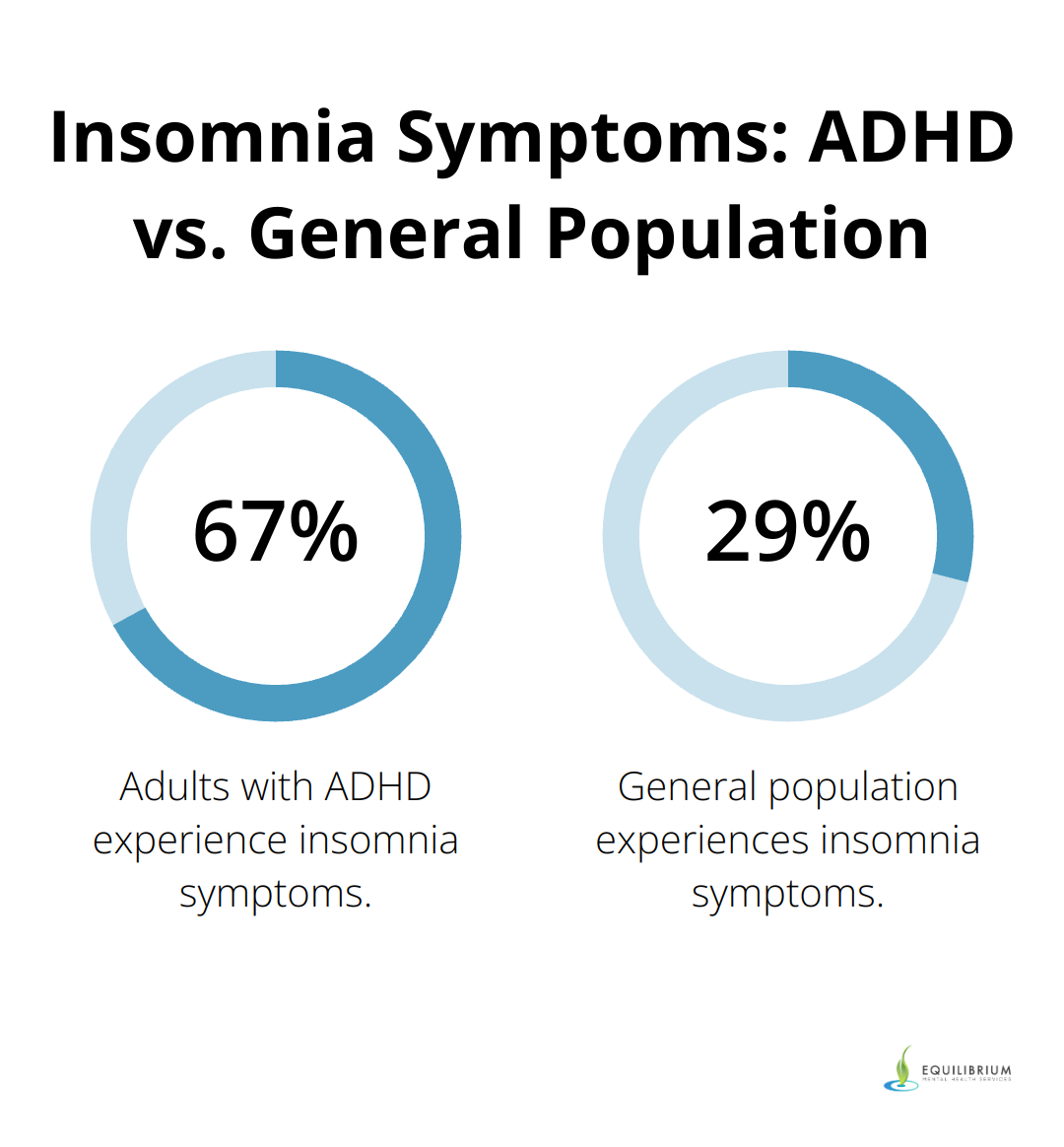
ADHD and sleep problems often go hand in hand, creating a challenging cycle for many individuals. Research shows that about 67% of adults with ADHD experience insomnia symptoms compared to 29% in the general population. This high prevalence is not coincidental. The same brain areas that regulate attention and impulse control also play a key role in sleep regulation. When ADHD affects these areas, sleep patterns often suffer as a result.
Common Sleep Issues in ADHD
Individuals with ADHD often report difficulty falling asleep, staying asleep, and waking up feeling refreshed. A study published in the Journal of Sleep Research found that adults with ADHD have longer sleep onset latency compared to those without ADHD. This delay in sleep onset can lead to chronic sleep deprivation, which worsens ADHD symptoms during the day.
Another common issue is restless sleep. Many patients describe frequent nighttime awakenings, with over 80% reporting multiple disturbances throughout the night. This fragmented sleep pattern can significantly impact overall sleep quality and daytime functioning.
How ADHD Symptoms Disrupt Sleep
The core symptoms of ADHD (inattention, hyperactivity, and impulsivity) can directly interfere with establishing healthy sleep patterns. For instance, racing thoughts and an inability to “shut off” the mind are frequently reported by patients in Pinecrest. This mental hyperactivity can make it challenging to relax and prepare for sleep.
Additionally, individuals with ADHD often struggle with time management and maintaining consistent routines. This can lead to irregular sleep schedules, which further disrupt the body’s natural circadian rhythm. The National Sleep Foundation emphasizes the importance of consistent sleep-wake times for optimal sleep health, but this can be particularly challenging for those with ADHD.
The Impact of Stimulant Medications
While stimulant medications effectively manage ADHD symptoms, they can sometimes complicate sleep issues. A study in the Journal of Child and Adolescent Psychopharmacology found that about 30% of children taking stimulants for ADHD experienced nightly insomnia, compared to only 10% of those not on medication. However, it’s important to note that for some individuals, properly timed medication can actually improve sleep by reducing racing thoughts and hyperactivity.
Understanding the intricate relationship between ADHD and sleep problems is key for effective treatment. Addressing both issues concurrently can help patients in Coconut Grove (and beyond) achieve better sleep and improved ADHD symptom management, leading to a higher quality of life overall. In the next section, we’ll explore practical strategies to improve sleep quality for individuals with ADHD.
Practical Sleep Strategies for ADHD
At Equilibrium Mental Health Services, we understand the challenges ADHD poses to getting a good night’s sleep. Our experience with patients in Coral Gables has shown that specific strategies can significantly improve sleep quality for those with ADHD. Here are some practical approaches that have proven effective:
Establish a Consistent Sleep Schedule
One of the most powerful tools for improving sleep with ADHD is maintaining a regular sleep schedule. This means going to bed and waking up at the same time every day (even on weekends). Research has shown a discrepancy between subjective and objective sleep measures in adult ADHD without sleep disordered breathing.
To make this work, set a realistic bedtime based on when you need to wake up. If you typically need to be up at 7 AM, try for a 11 PM bedtime to ensure you get the recommended 7-9 hours of sleep. Use your phone’s bedtime reminder feature or set an alarm to signal when it’s time to start winding down.
Create a Calming Bedtime Routine
A structured bedtime routine can help signal to your brain that it’s time to sleep. This is particularly important for individuals with ADHD who may struggle with transitioning between activities. Research suggests that extended naps can reduce homeostatic sleep drive and elongate sleep-onset latency by 25 minutes in adult ADHD trials.
Start your routine about an hour before your intended bedtime. This might include taking a warm bath, reading a book (avoid screens!), or practicing relaxation techniques like deep breathing or progressive muscle relaxation. The key is consistency – do the same activities in the same order each night.
Optimize Your Sleep Environment
Your bedroom environment plays a crucial role in sleep quality. The National Sleep Foundation recommends keeping your bedroom dark, quiet, and cool – ideally between 60-67°F (15-19°C). For our patients in Miami, where temperatures can be high, we often recommend using blackout curtains and a fan or air conditioning to create an optimal sleep environment.
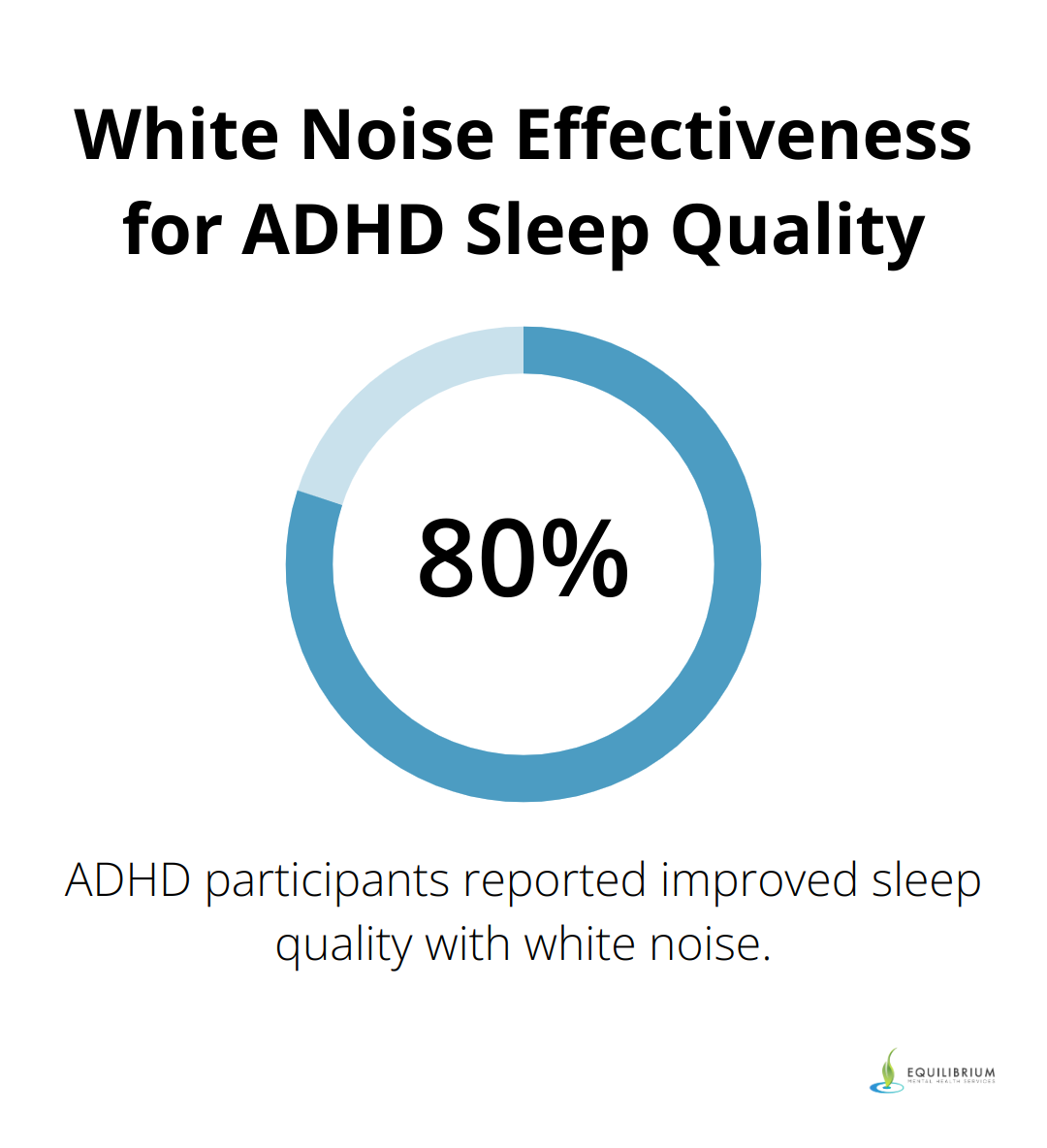
Consider using white noise or nature sounds to mask disruptive noises. A study in the journal Sleep Medicine found that white noise improved sleep quality in 80% of participants with ADHD.
Manage Stimulant Medication Timing
If you take stimulant medication for ADHD, timing can significantly impact your sleep. A study in the Journal of Child and Adolescent Psychopharmacology found that taking the last dose of stimulant medication at least 6 hours before bedtime reduced sleep onset issues by 46%.
Work with your <a href=”https://g.co/kgs/Toi7gBP”>Miami psychiatry</a> provider to find the right medication schedule for you. Some patients benefit from a small dose of immediate-release stimulant medication before bed to help quiet racing thoughts. Others may need to switch to non-stimulant options or adjust their dosing schedule.
These strategies aren’t one-size-fits-all. What works for one person may not work for another. At Equilibrium Mental Health Services, we work closely with our patients to develop personalized sleep strategies that take into account their unique ADHD symptoms, lifestyle, and preferences. In the next section, we’ll explore how lifestyle changes can further support better sleep for individuals with ADHD.
Lifestyle Tweaks for Better Sleep with ADHD
Exercise: Your Sleep Ally
Regular exercise has mixed effects on sleep quality for people with ADHD. While some studies indicate a positive impact on objective sleep, others found no significant effect. However, exercise remains an important part of a healthy lifestyle. Try to establish a consistent exercise routine, but be mindful of its timing in relation to your sleep schedule.
For patients in Miami, we often recommend morning or early evening outdoor activities. Natural light exposure helps regulate your circadian rhythm, making it easier to fall asleep at night. A brisk walk on the beach or a bike ride through the neighborhood can be beneficial.
Food Choices for Better Zzz’s
Your diet significantly impacts your sleep. A study in the journal Nutrients found that a diet high in fiber and low in saturated fat associated with more restorative sleep. For dinner, choose foods rich in tryptophan, like turkey, eggs, or nuts. These can boost your body’s production of sleep-inducing melatonin.
Be cautious with caffeine. While it can help manage ADHD symptoms during the day, it can disrupt your sleep if consumed too late. Our Miami psychiatry team typically recommends avoiding caffeine at least 6 hours before bedtime.
Stress-Busting Techniques
Stress and anxiety often accompany ADHD, making it hard to quiet your mind at night. Mindfulness meditation has shown promise in helping with ADHD. It’s thought to thicken the prefrontal cortex, a part of the brain involved in focus, planning, and impulse control.
Start small. Try a 5-minute guided meditation before bed using apps like Headspace or Calm (or any other meditation app you prefer). Gradually increase the duration as you become more comfortable with the practice.
Screen Time: The Sleep Stealer
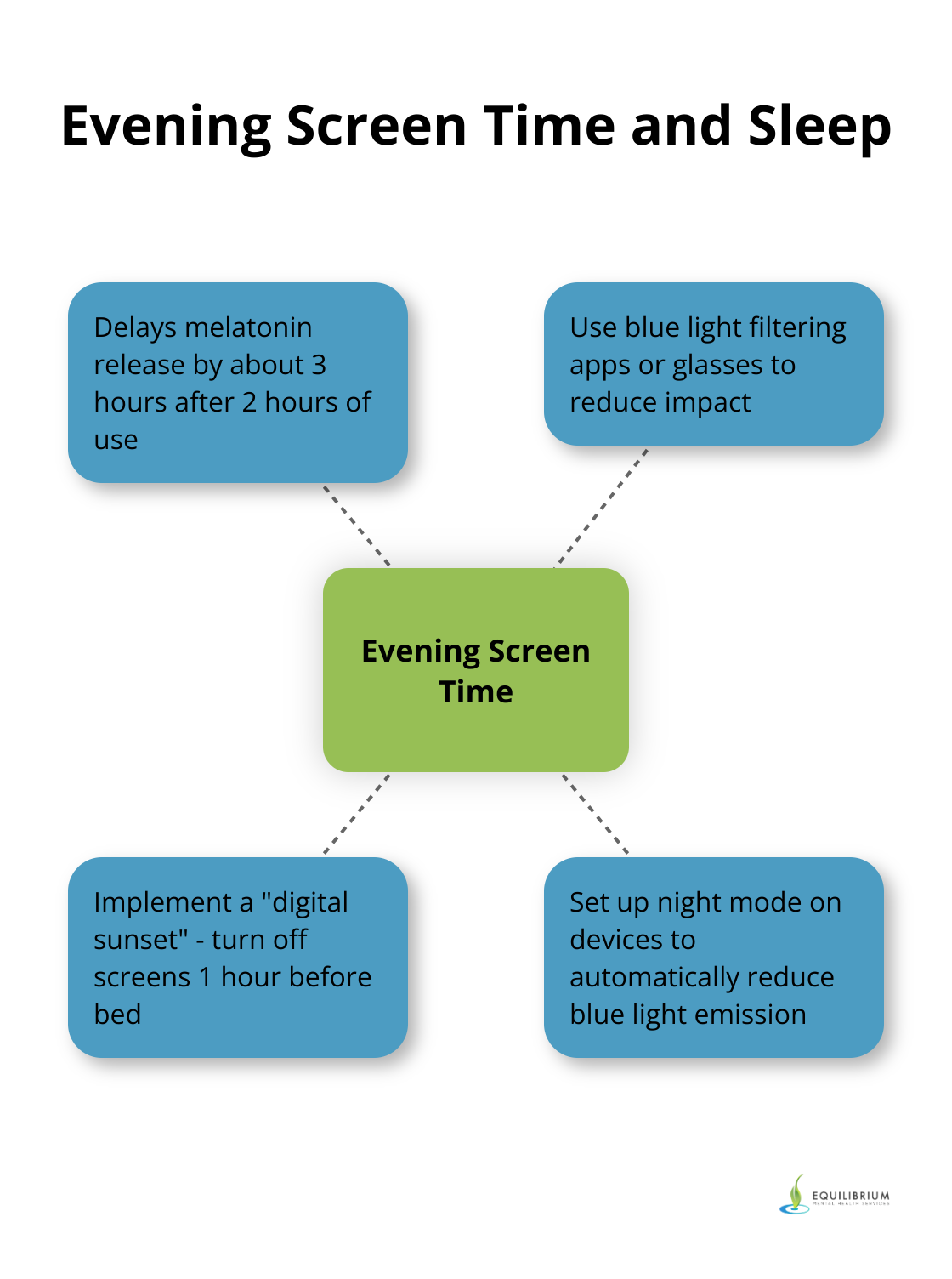
The blue light emitted by phones, tablets, and computers can suppress melatonin production, making it harder to fall asleep. A study in the journal Applied Ergonomics found that two hours of evening screen time delayed melatonin release by about 3 hours.
We recommend a “digital sunset” – turn off all screens at least an hour before bed. If you must use devices, use blue light filtering apps or glasses. For patients in Pinecrest who often work late, we suggest setting up night mode on devices to automatically reduce blue light emission in the evening.
These lifestyle adjustments don’t need to happen overnight. Start with one or two that resonate with you and gradually incorporate others. With consistency and patience, better sleep is achievable, even with ADHD.
Final Thoughts
Managing ADHD and sleeping issues requires a personalized approach. We explored various strategies, from consistent sleep schedules to calming bedtime routines and optimized sleep environments. We also discussed the importance of medication timing and lifestyle changes that support better sleep.
Sleep improvement with ADHD takes time and patience. It may require experimentation to find the right combination of strategies that work for you. Professional help becomes necessary when sleep problems persist despite implementing these techniques.
At Equilibrium Mental Health Services, we specialize in treating ADHD and related sleep disorders. Our experienced team in Coral Gables understands the unique challenges faced by individuals with ADHD (and can provide personalized treatment plans). Don’t let sleep problems impact your daily life and exacerbate your ADHD symptoms.
Let’s work together to remove the ADHD-related sleep problems that affect you and get you back to where you want to be.


