
Living with ADHD, OCD, and anxiety can feel like a constant juggling act. At Equilibrium Mental Health Services, we understand the unique challenges that come with managing these interconnected conditions.
This blog post will explore effective strategies to help you navigate the complexities of ADHD, OCD, and anxiety together. We’ll provide practical tips and insights to empower you on your journey towards better mental health and overall well-being.
How ADHD, OCD, and Anxiety Interact
The Complex Web of Symptoms
ADHD, OCD, and anxiety often coexist, creating a challenging mix of symptoms. ADHD (Attention Deficit Hyperactivity Disorder) causes difficulty focusing, impulsivity, and hyperactivity. OCD (Obsessive-Compulsive Disorder) involves intrusive thoughts and repetitive behaviors. Anxiety manifests as excessive worry and fear. When these conditions occur together, they amplify each other’s effects.
For instance, a person with ADHD might struggle to complete tasks due to distractibility. This can trigger anxiety about falling behind, which may lead to obsessive thoughts and compulsive behaviors to regain control. Many patients in Coral Gables find this cycle exhausting and frustrating.
Diagnostic Challenges
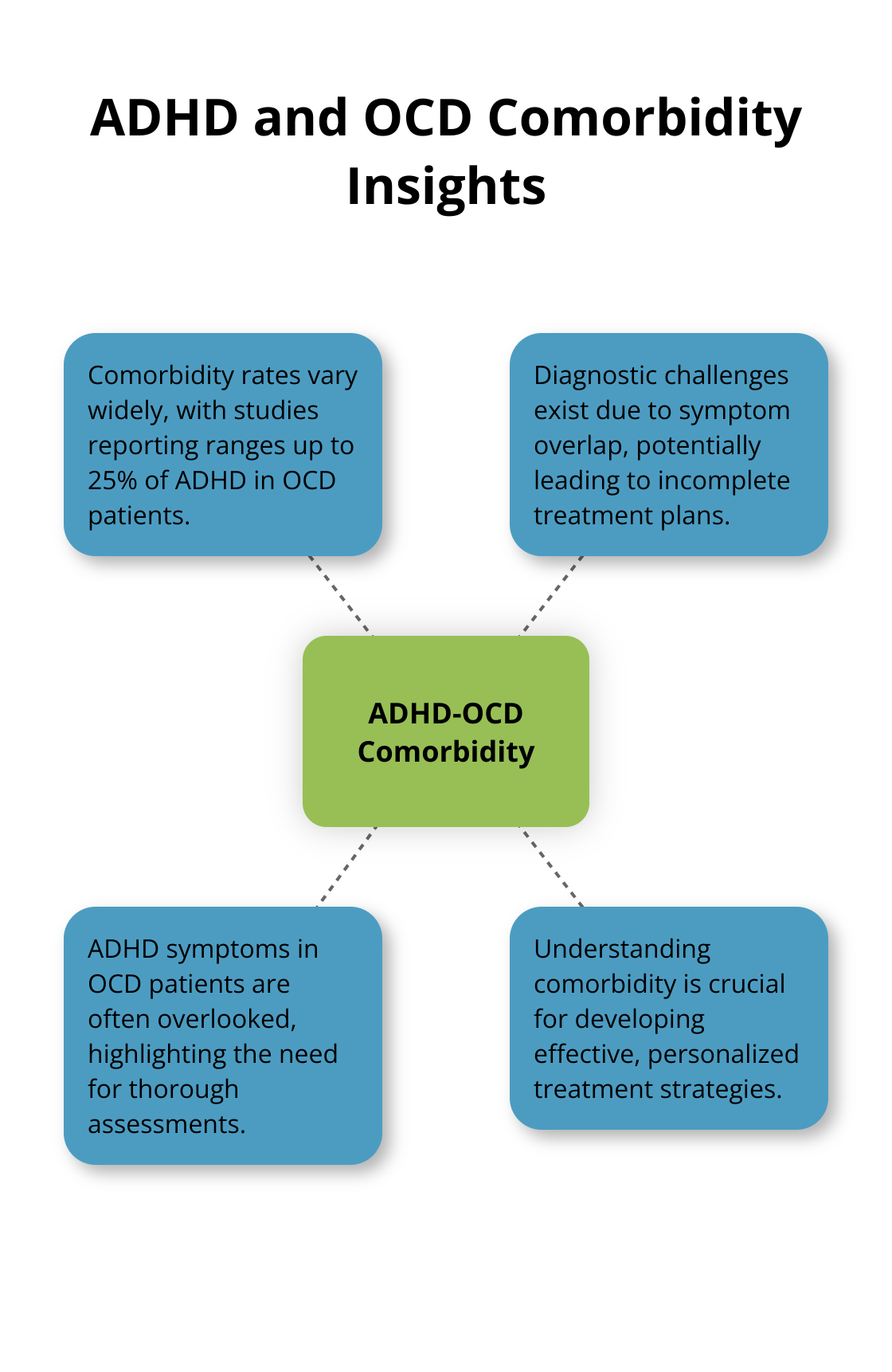
Identifying these conditions when they coexist presents unique challenges. Studies have shown that the comorbidity rates of ADHD in OCD patients vary, with some studies reporting ranges from 0-25%. However, clinicians often overlook ADHD symptoms in OCD patients, which results in incomplete treatment plans.
What appears as OCD-related over-focusing could actually be ADHD hyperfocus. Similarly, anxiety symptoms might mask underlying ADHD or OCD issues. Thorough assessments ensure accurate diagnoses and effective treatment plans.
Treatment Considerations
Managing multiple conditions requires a nuanced approach. SSRIs often help with OCD and anxiety but may not address ADHD symptoms. Stimulants used for ADHD can sometimes worsen anxiety or OCD symptoms.
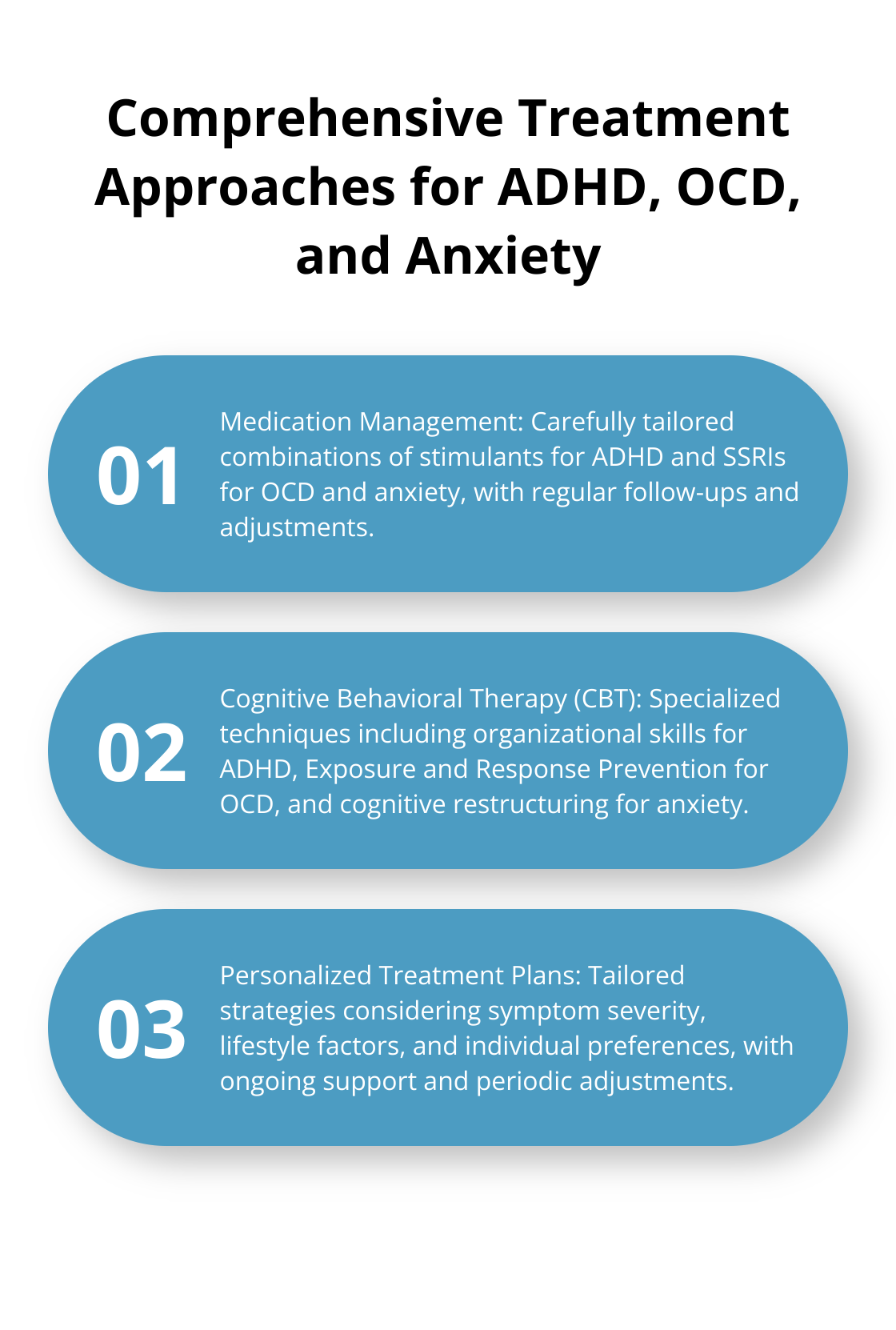
Combination therapies often yield success. A low-dose stimulant for ADHD alongside an SSRI for OCD and anxiety might work well for some patients. Cognitive Behavioral Therapy (CBT) techniques tailored to address all three conditions also prove effective.
The Importance of Professional Help
Self-diagnosis or self-treatment carries risks when dealing with multiple mental health conditions. Seeking professional help provides the best chance for accurate diagnosis and effective treatment. Mental health professionals (such as those at Miami psychiatry) have the expertise to navigate these complex interactions and provide comprehensive care.
Moving Forward: Personalized Treatment Plans
The next step in managing ADHD, OCD, and anxiety together involves creating personalized treatment plans. These plans take into account the unique ways these conditions interact in each individual, ensuring a tailored approach to symptom management and overall well-being.
Tailored Treatments for Complex Conditions
Medication Management
Medication plays a vital role in symptom management for ADHD, OCD, and anxiety. For ADHD, stimulants such as methylphenidate or amphetamines often prove effective. However, these medications can sometimes intensify anxiety symptoms. In such cases, non-stimulant options like atomoxetine might offer a better solution.
For OCD and anxiety, selective serotonin reuptake inhibitors (SSRIs) typically serve as the first-line treatment. A study by Miller (2019) measured the real-world efficacy of SSRIs in treating OCD by surveying North American psychiatrists. Fluoxetine and sertraline have demonstrated particular effectiveness in managing both conditions. Some patients benefit from a combination of a low-dose stimulant for ADHD and an SSRI for OCD and anxiety.
It’s essential to note that medication responses vary significantly between individuals. Regular follow-ups and dose adjustments often become necessary to find the right balance. Patients have achieved remarkable improvements with carefully tailored medication regimens.
Cognitive Behavioral Therapy (CBT) Techniques
CBT serves as a powerful tool in managing all three conditions. For ADHD, CBT focuses on developing organizational skills, time management, and reducing procrastination. OCD treatment often involves Exposure and Response Prevention (ERP), a specific form of CBT that gradually exposes patients to anxiety-provoking situations without engaging in compulsive behaviors.
Anxiety management through CBT includes techniques like cognitive restructuring to challenge negative thought patterns, and behavioral experiments to test the validity of anxious predictions. Many patients find that combining these approaches helps address the overlapping symptoms effectively.
Mindfulness and Relaxation Practices
Mindfulness techniques offer particular benefits for individuals managing multiple conditions. Regular mindfulness meditation improves attention in ADHD, reduces obsessive thoughts in OCD, and lowers overall anxiety levels.
Progressive muscle relaxation and deep breathing exercises serve as simple yet effective tools for managing anxiety symptoms. These techniques prove especially helpful during moments of high stress or when OCD symptoms intensify.
Mindfulness-based interventions (MBIs) have shown effectiveness in relieving OCD symptoms. A meta-analysis by Chien et al. (2022) provided evidence of the overall effectiveness of MBIs in terms of relieving OCD symptoms.
Personalized Treatment Plans
The complexity of managing ADHD, OCD, and anxiety together necessitates a personalized approach. Treatment plans should consider the unique ways these conditions interact in each individual, ensuring a tailored strategy for symptom management and overall well-being.
Factors such as severity of symptoms, lifestyle, and personal preferences all play a role in crafting an effective treatment plan.
Ongoing Support and Adjustments
Managing multiple conditions requires ongoing support and periodic adjustments to treatment plans. Regular check-ins with mental health professionals allow for timely modifications to medication dosages, therapy techniques, or lifestyle recommendations.
Support groups (both in-person and online) can provide valuable peer support and coping strategies. Many individuals find comfort in connecting with others who understand their unique challenges.
As we move forward, let’s explore how lifestyle modifications and coping mechanisms can complement these treatment strategies, further enhancing your ability to manage ADHD, OCD, and anxiety effectively.
Miami psychiatry services can provide comprehensive care for individuals dealing with complex conditions like ADHD, OCD, and anxiety.
Daily Habits for Managing ADHD, OCD, and Anxiety
Living with ADHD, OCD, and anxiety can overwhelm individuals, but specific daily habits can improve quality of life significantly. Patients in Coral Gables have made remarkable progress by incorporating these strategies into their routines.
Consistent Routines
Consistent routines are essential for managing ADHD, OCD, and anxiety. The lifetime comorbidity of ADHD is likely to exert a significant effect on clinical features and treatment outcome in adult patients with OCD. Set a consistent wake-up time and bedtime. Use a planner or digital calendar to schedule your day, including work tasks, meals, and self-care activities. Break larger tasks into smaller, manageable steps to avoid feeling overwhelmed.
Visual cues help those with ADHD. Use color-coded sticky notes or a whiteboard to organize tasks and priorities. Place these in prominent locations around your home or workspace as constant reminders.
Stress-Reduction Techniques
Stress management is vital when dealing with multiple mental health conditions. The 5-4-3-2-1 grounding exercise proves effective. When feeling anxious or overwhelmed, identify 5 things you can see, 4 things you can touch, 3 things you can hear, 2 things you can smell, and 1 thing you can taste. This exercise brings your focus back to the present moment.

Deep breathing is another powerful tool. Practice the 4-7-8 technique: inhale for 4 seconds, hold for 7 seconds, and exhale for 8 seconds. Repeat this cycle 4-5 times. A study by Zaccaro et al. (2018) found that controlled breathing techniques reduce anxiety and stress levels significantly.
Diet and Exercise Optimization
Your diet and physical activity impact ADHD, OCD, and anxiety symptoms profoundly. Reduce caffeine and sugar intake, as these exacerbate anxiety and ADHD symptoms. Focus on consuming foods rich in omega-3 fatty acids (such as salmon, walnuts, and chia seeds). A study published in the Journal of Clinical Psychiatry found that omega-3 supplementation improved ADHD symptoms in adults.
Regular exercise is equally important. Try to engage in at least 30 minutes of moderate exercise daily. This could involve a brisk walk in Pinecrest, a yoga session, or a swim. Exercise releases endorphins, which boost mood naturally and reduce anxiety. It also improves focus and concentration, benefiting those with ADHD.
Mindfulness Practices
Incorporate mindfulness into your daily routine. Start with short, guided meditations (5-10 minutes) and gradually increase the duration. Guided meditation sessions tailored for ADHD can significantly improve mood and reduce anxiety. Regular practice enhances emotional regulation and reduces the intensity of intrusive thoughts.
Environmental Adjustments
Create an environment that supports your mental health. Declutter your living and working spaces to reduce visual distractions (particularly helpful for ADHD). Use noise-canceling headphones or white noise machines to minimize auditory stimuli that might trigger anxiety or OCD symptoms. Consider using a weighted blanket for better sleep quality, which can positively impact all three conditions.
Miami psychiatry professionals can provide further guidance on implementing these strategies effectively.
Final Thoughts
ADHD, OCD, and anxiety present unique challenges when they occur together. We at Equilibrium Mental Health Services understand the complexities of managing these conditions simultaneously. Our team of experienced professionals offers personalized treatment plans tailored to your specific needs.
Professional support plays a vital role in effectively managing ADHD, OCD, and anxiety. We provide evidence-based care and guidance on implementing coping strategies to help you lead a fulfilling life. Our goal is to help you find balance and improve your overall mental well-being.
Don’t let ADHD, OCD, and anxiety control your life. Reach out to Equilibrium Mental Health Services today and start your path towards better mental health. With the right support and treatment, you can learn to manage these conditions effectively and thrive.


