
ADHD affects millions of adults and children worldwide, impacting focus, impulse control, and daily functioning. Many people explore treating ADHD without medication due to side effects or personal preferences.
We at Equilibrium Mental Health Services understand that natural approaches can effectively complement traditional treatment methods. Research shows lifestyle changes, behavioral strategies, and therapeutic techniques offer significant benefits for managing ADHD symptoms.
What Makes ADHD So Challenging for Daily Life
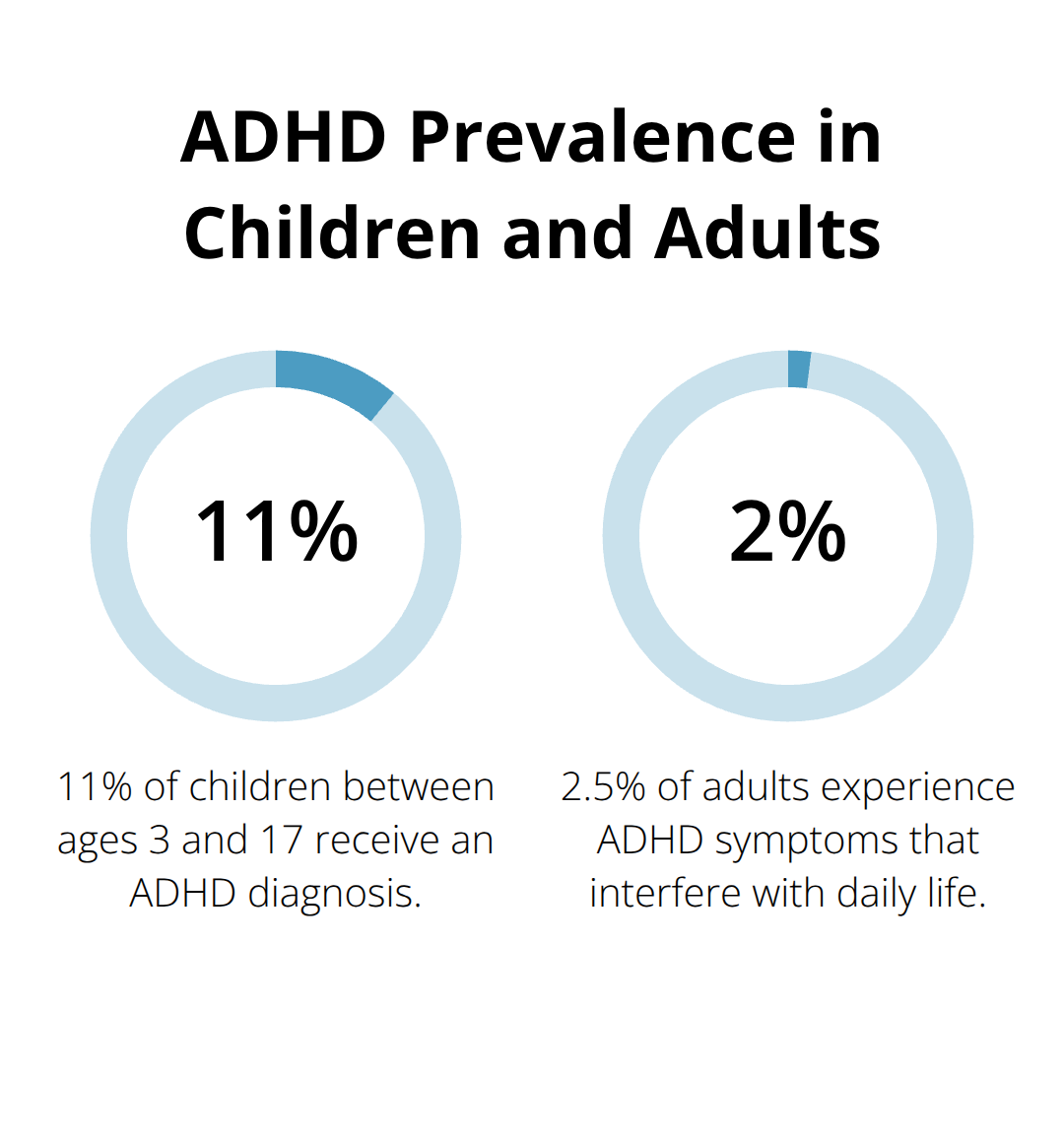
ADHD disrupts the brain’s executive functions that control attention, working memory, and impulse regulation. Over 11% of children between ages 3 and 17 receive an ADHD diagnosis according to the CDC, totaling about 7 million children. Adults face similar struggles with approximately 2.5% experiencing ADHD symptoms that interfere with work performance, relationships, and basic tasks.
The Real Impact on Daily Functions
People with ADHD struggle with time management, project completion, and focus maintenance during conversations or meetings. The condition affects dopamine pathways in the brain, which makes sustained attention on unrewarding tasks extremely difficult. This creates problems at work, school, and in personal relationships where consistent follow-through becomes essential.
Why People Choose Natural Approaches
Medication side effects push many people toward natural alternatives. Common ADHD medications can cause sleep problems, mood swings, appetite loss, and in rare cases, suicidal thoughts according to medical research. Parents particularly seek natural options for children, wanting to avoid long-term pharmaceutical dependence (especially for younger children under six years old).
Evidence Behind Natural Solutions
Research supports several natural approaches that complement traditional treatment. Regular exercise significantly reduces ADHD symptoms by improving executive function and reducing impulsivity according to Den Heijer’s 2016 study. Spending just 20 minutes outdoors in green spaces enhances concentration for children with ADHD based on multiple studies. The American Academy of Pediatrics emphasizes that behavioral therapy should be the first treatment step for young children with ADHD.
Building Your Natural Management Foundation
Natural approaches work best when you combine multiple strategies rather than rely on single solutions. Exercise, proper nutrition, sleep optimization, and behavioral techniques create a comprehensive foundation for symptom management. These lifestyle changes prepare your brain and body to respond better to both natural interventions and professional treatment when needed.
What Lifestyle Changes Actually Work for ADHD
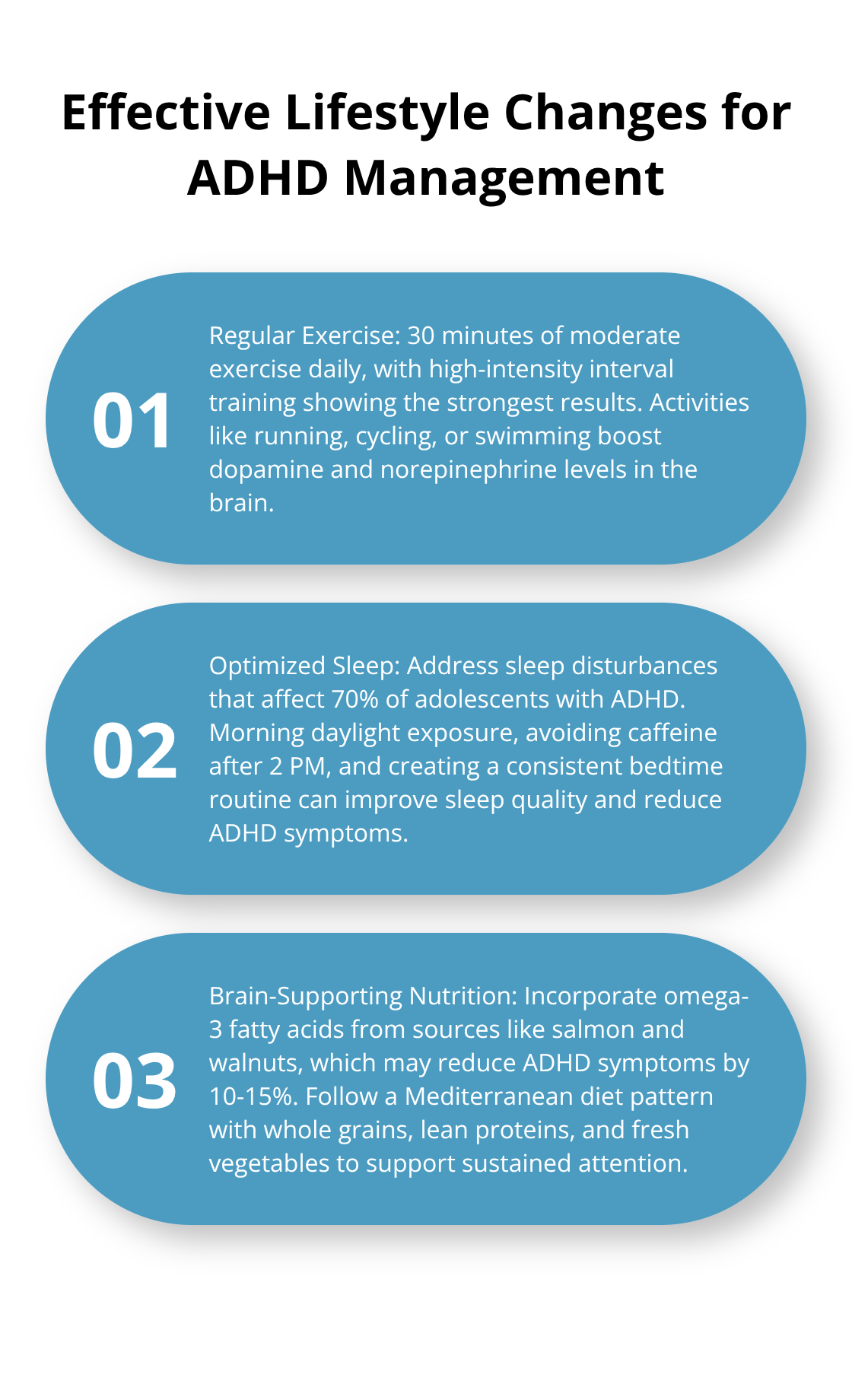
Physical exercise creates immediate improvements in ADHD symptoms that rival medication effects. Aerobic activities like running, cycling, or swimming boost dopamine and norepinephrine levels in the brain for 2-4 hours after exercise (according to research from Harvard Medical School). We recommend 30 minutes of moderate exercise daily, with high-intensity interval training that shows the strongest results. Children with ADHD who participate in team sports demonstrate better focus and reduced hyperactivity compared to sedentary peers. Swimming works particularly well because it combines cardiovascular benefits with bilateral coordination that strengthens executive function networks.
Sleep Problems Make ADHD Symptoms Worse
Sleep disturbances affect around 70% of adolescents with ADHD. Poor sleep amplifies inattention, impulsivity, and emotional regulation problems the next day. Morning daylight exposure for 15-30 minutes helps regulate circadian rhythms and improves sleep quality. Avoid caffeine after 2 PM and create a consistent bedtime routine that starts 90 minutes before sleep. Blue light glasses worn 2 hours before bed can improve sleep onset for ADHD individuals who struggle with delayed sleep phase syndrome.
Brain-Supporting Foods Reduce ADHD Symptoms
Omega-3 fatty acids from salmon, sardines, and walnuts support brain development and may reduce ADHD symptoms by 10-15% according to multiple studies. Zinc deficiency correlates with ADHD severity, and supplementation at 35 mg daily showed statistically significant improvements in a large double-blind trial. Eliminate artificial food colorings FD&C Yellow No. 5 and FD&C Red No. 40 found in candies and processed foods, as research links these additives to increased hyperactivity in children. The Mediterranean diet pattern with whole grains, lean proteins, and fresh vegetables provides steady blood sugar levels that support sustained attention throughout the day.
These lifestyle foundations create the groundwork for more targeted therapeutic approaches that address the psychological and behavioral aspects of ADHD management.
Which Behavioral Strategies Actually Change ADHD Symptoms
Cognitive behavioral therapy produces measurable improvements in ADHD management by targeting negative thought patterns and developing practical coping skills. Adults with ADHD who combine CBT with medication show improved ADHD symptoms that are maintained over time. The therapy focuses on breaking down overwhelming tasks into smaller, manageable steps and creating external structure systems that compensate for executive function deficits.
CBT teaches specific techniques like thought challenging, where you identify catastrophic thinking patterns that increase procrastination and anxiety. Time estimation exercises help adults with ADHD develop realistic expectations for task completion, reducing the frustration that comes from chronic lateness and missed deadlines.
Mindfulness Training Reduces Impulsivity and Emotional Reactivity
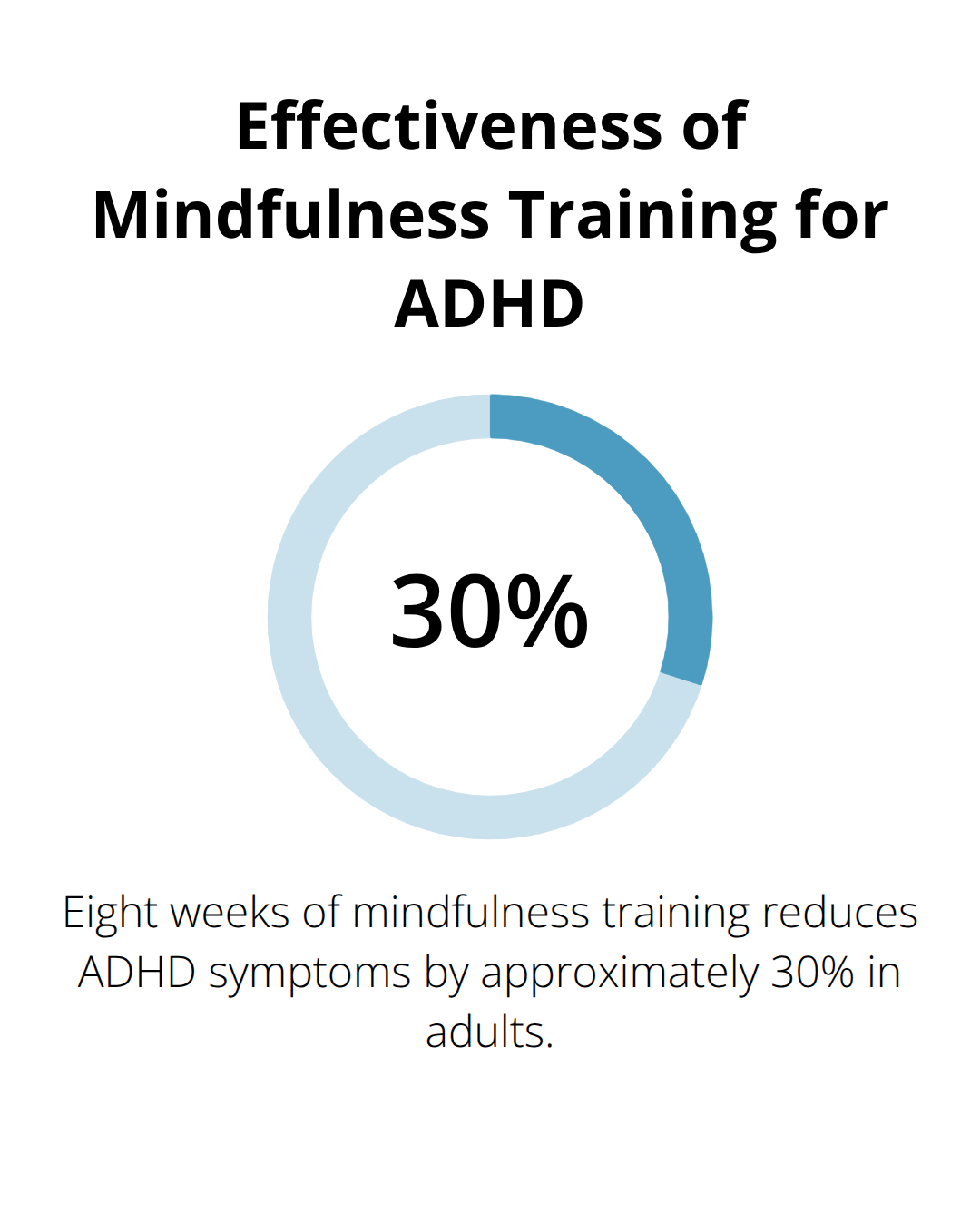
Mindfulness meditation specifically targets the prefrontal cortex regions that control attention and impulse regulation. Eight weeks of mindfulness training reduces ADHD symptoms by approximately 30% in adults according to multiple clinical trials. Start with 5-minute daily sessions using guided meditations that focus on breath awareness or body scanning.
The key technique involves noticing when your mind wanders without judgment, then gently returning attention to the present moment. This practice strengthens the same neural pathways that ADHD medications target, but through natural brain training rather than chemical intervention.
Organization Systems That Actually Work for ADHD Brains
Traditional organization methods fail for ADHD because they rely on internal motivation and memory systems that function differently in ADHD brains. Use external visual cues like wall calendars, phone reminders, and timer systems to create structure that doesn’t depend on working memory (these tools provide the external scaffolding ADHD brains need).
The body doubling technique involves working alongside another person to increase focus and productivity for ADHD individuals through social accountability. Break large projects into 15-minute time blocks using the Pomodoro Technique, which provides the frequent dopamine hits that ADHD brains need to maintain engagement. Set up automatic systems for bills, appointments, and recurring tasks to eliminate decision fatigue and reduce the cognitive load on already strained executive functions.
Dialectical Behavior Therapy for Emotional Regulation
Dialectical Behavior Therapy (DBT) focuses on emotional regulation skills and proves effective for ADHD by helping individuals manage their emotional and social challenges. DBT teaches distress tolerance techniques that help ADHD individuals cope with frustration when tasks become overwhelming or boring. The therapy includes interpersonal effectiveness skills that improve communication and relationship management (areas where ADHD often creates significant challenges).
Final Thoughts
Natural approaches work best when you combine them with professional guidance rather than replace medical care entirely. Research shows that treating ADHD without medication requires multiple strategies that work together. Exercise, nutrition, sleep optimization, and behavioral therapy create a foundation that supports long-term symptom management.
Professional mental health support becomes necessary when ADHD symptoms interfere with work performance, relationships, or daily functions despite consistent natural interventions. Approximately 32% of children with ADHD benefit from combining behavioral treatment with medication management for optimal results (according to CDC data). The most effective ADHD management plans integrate natural lifestyle changes with evidence-based therapeutic approaches.
Cognitive behavioral therapy, mindfulness training, and organization systems provide practical tools that complement physical interventions like regular exercise and proper nutrition. If you struggle to manage ADHD symptoms through natural approaches alone, professional evaluation and support can help determine the most effective treatment combination for your specific needs. We at Equilibrium Mental Health Services specialize in creating personalized ADHD treatment plans that honor your preferences while providing comprehensive care.


