
Living with ADHD can be overwhelming, especially when dealing with overstimulation. At Equilibrium Mental Health Services, we understand the challenges that come with managing ADHD and overstimulation.
This blog post will provide practical strategies to help you navigate these difficulties and improve your daily life. We’ll explore effective techniques for creating a calmer environment, managing time, and making lifestyle changes that can make a significant difference.
Understanding ADHD and Overstimulation
What is ADHD?
ADHD (Attention Deficit Hyperactivity Disorder) is a neurodevelopmental condition that affects both children and adults. Symptoms of ADHD include inattention (not being able to keep focus), hyperactivity (excess movement that is not fitting to the setting) and impulsivity.
The ADHD-Overstimulation Connection
People with ADHD often experience overstimulation, a state where the brain becomes overwhelmed by sensory input. This can result in anxiety, irritability, and mental fatigue. A study evaluated the association between attention-deficit/hyperactivity disorder (ADHD) and atypical sensory processing patterns.
Common Overstimulation Triggers
Identifying triggers is key for managing overstimulation. Some common triggers include:
- Loud or constant noise
- Bright or flickering lights
- Crowded spaces
- Multiple conversations happening simultaneously
- Strong smells
- Certain textures or fabrics
Practical Tips for Managing Overstimulation
- Create a sensory-friendly workspace: Use soft lighting, noise-canceling headphones, and organize your space to minimize visual clutter.
- Implement the “20-20-20 rule”: Every 20 minutes, look at something 20 feet away for 20 seconds to give your eyes a break from screens.
- Use fidget tools: Small, quiet fidget toys can help channel excess energy and improve focus.
- Practice deep breathing: Try the 4-7-8 technique (inhale for 4 seconds, hold for 7, exhale for 8) to calm your nervous system when feeling overwhelmed.
- Establish “quiet hours”: Set specific times each day for low-stimulation activities to recharge.
The Role of Medication
While not everyone with ADHD requires medication, it can effectively manage symptoms and reduce overstimulation.
Understanding ADHD and overstimulation lays the foundation for effective management. In the next section, we’ll explore practical strategies to create a calm and organized environment, which can significantly reduce overstimulation for individuals with ADHD in Coral Gables and beyond.
Effective Strategies to Reduce ADHD Overstimulation
Declutter Your Space
A cluttered environment can overwhelm individuals with ADHD. Set aside 15 minutes daily to organize your workspace or living area. Use storage solutions like labeled bins or drawer organizers to keep items out of sight. Challenges in focusing and regulating attention often result in faster speech and difficulty staying on topic for those with ADHD.
Implement Time-Blocking
Time management often challenges those with ADHD. Use the time-blocking technique: divide your day into blocks of time, each dedicated to specific tasks. Use a digital calendar or a paper planner to visualize your schedule. Set reminders 5-10 minutes before each block to help you transition between activities.
Create a Sensory-Friendly Zone
Designate a specific area in your home as a low-stimulation zone. This could be a corner of your bedroom or a quiet nook in your living room. Equip this space with:
- Soft, dimmable lighting
- Comfortable seating (like a bean bag or recliner)
- Noise-cancelling headphones
- Weighted blanket (these can reduce anxiety)
Use this area when you feel overwhelmed and need to recharge.
Practice the 5-4-3-2-1 Grounding Technique
When overstimulation hits, try this mindfulness exercise:
- Identify 5 things you can see
- Acknowledge 4 things you can touch
- Notice 3 things you can hear
- Recognize 2 things you can smell
- Name 1 thing you can taste
This technique helps redirect your focus and calm your nervous system.
Utilize White Noise
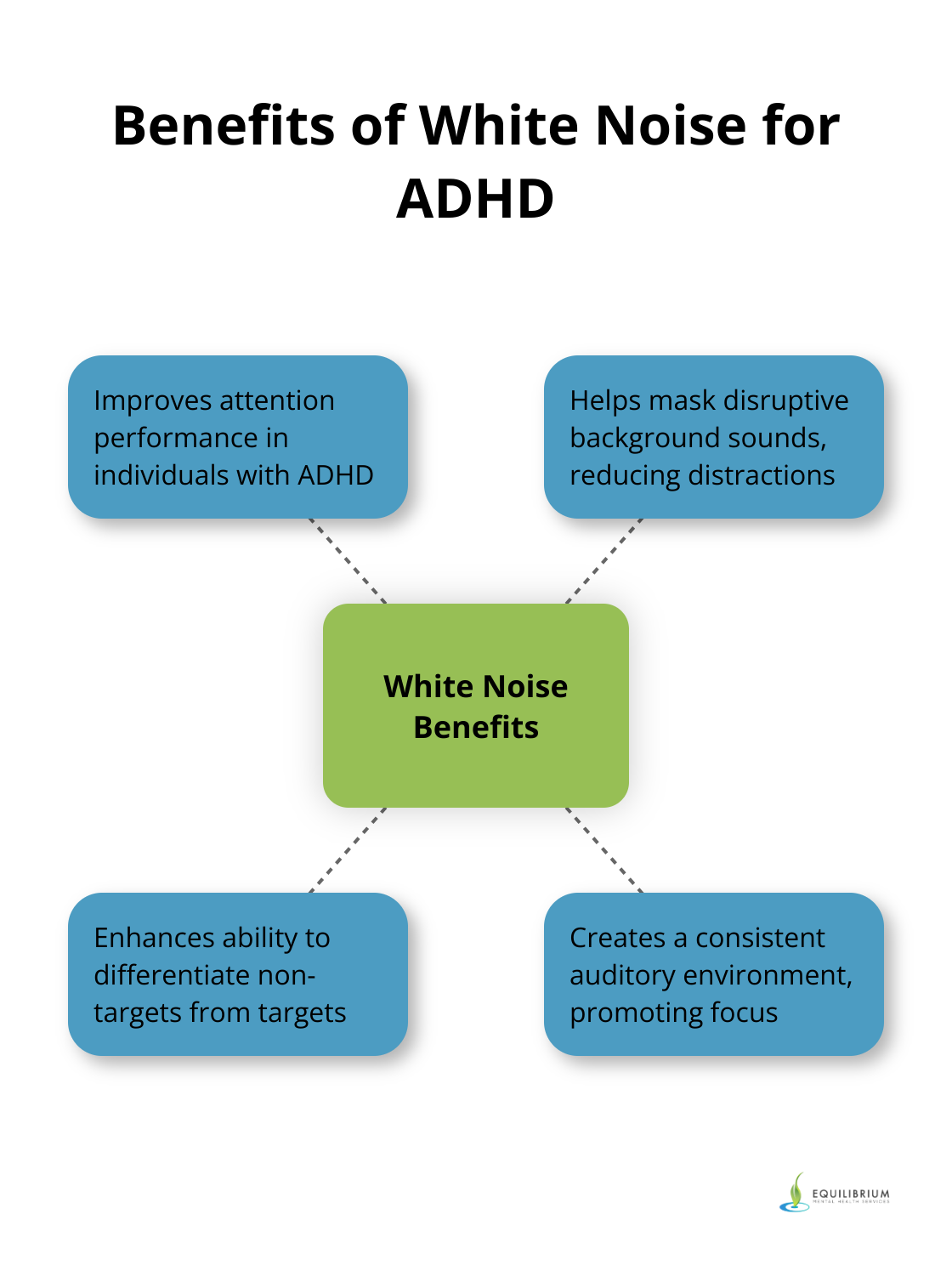
Background noise can particularly distract individuals with ADHD. A white noise machine or app can help mask disruptive sounds. A study showed that white noise could effectively improve attention performance, including enhancing the ability to differentiate non-targets from targets.
Implement Regular Movement Breaks
Physical activity can help regulate sensory input. Set a timer to remind you to stand up and move every 30 minutes. Try simple exercises like stretching, jumping jacks, or a quick walk around the block (especially if you’re in beautiful Coral Gables). These movement breaks can reset your focus and reduce feelings of overstimulation.
These strategies can create an environment that supports your needs and reduces the impact of overstimulation. Managing ADHD is an ongoing process, and it’s okay to adjust your approach as needed. The next section will explore how lifestyle changes can further support your efforts to manage ADHD and overstimulation.
How Lifestyle Changes Reduce ADHD Overstimulation
Optimize Your Sleep
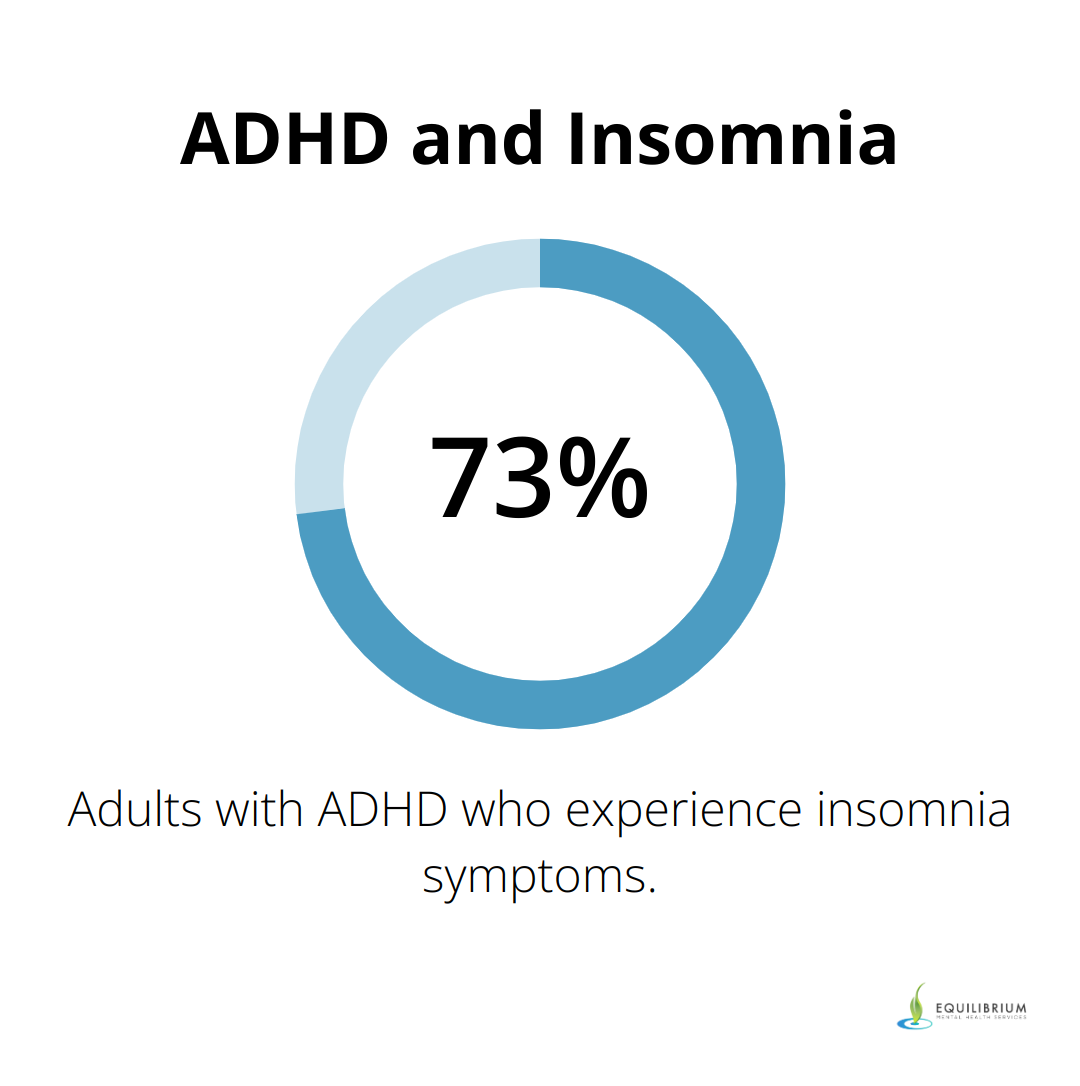
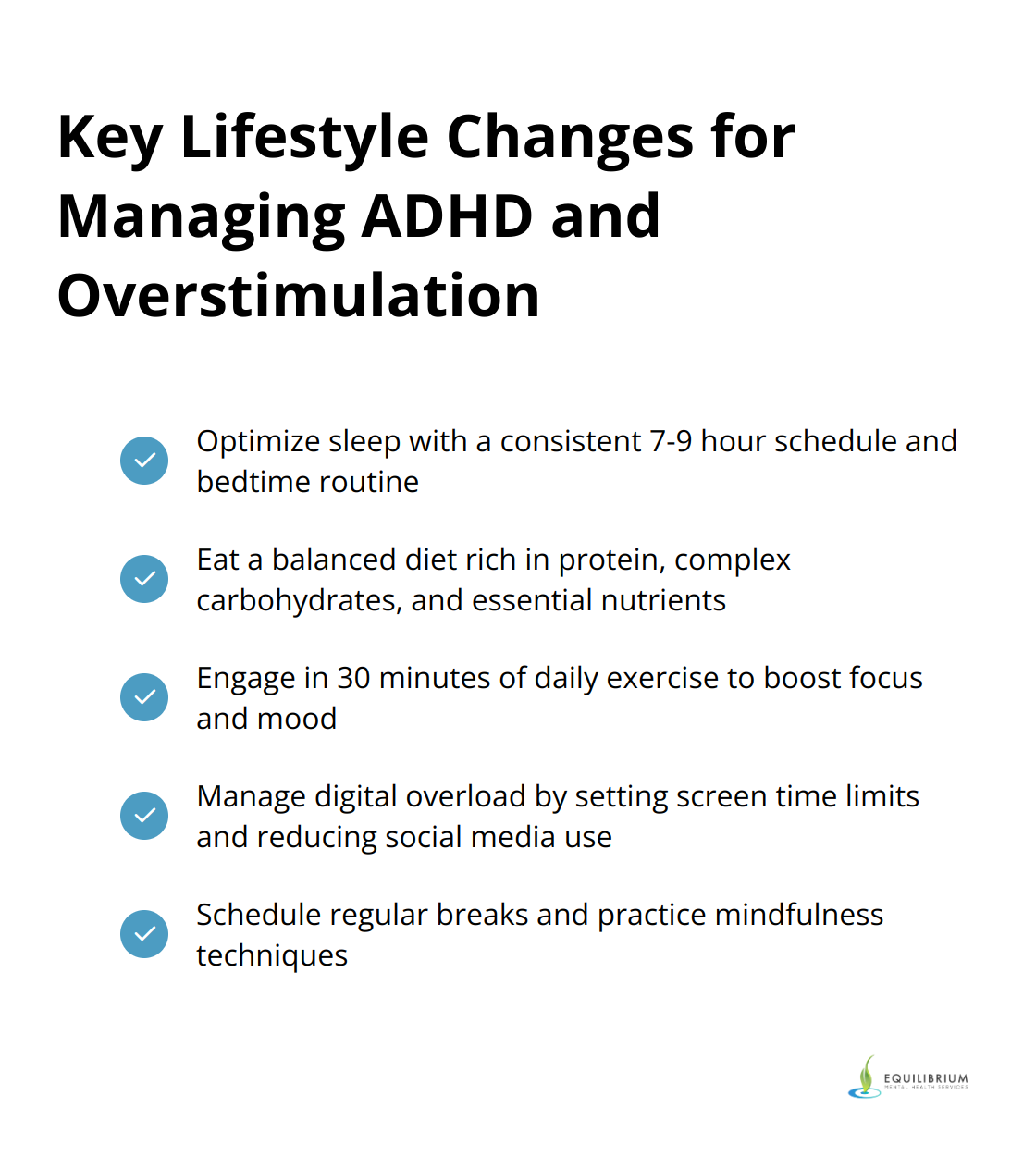
Sleep plays a key role in managing ADHD symptoms. Try to get 7-9 hours of sleep each night. Create a bedtime routine: lower the lights an hour before bed, avoid screens, and read or do gentle stretches. A study in the Journal of Clinical Sleep Medicine found that 73% of adults with ADHD had insomnia symptoms. To fight this, stick to a consistent sleep schedule (even on weekends).
Fuel Your Body and Mind
Your diet affects your ADHD symptoms. Omega-3 fatty acids, zinc, iron, and magnesium, found both in food and supplement form, could offer potential benefits in managing ADHD symptoms. Eat a balanced diet rich in protein and complex carbohydrates to improve focus and reduce mood swings. Start your day with a protein-packed breakfast (like Greek yogurt with berries and nuts). Skip processed foods and too much sugar, which can cause energy crashes.
Exercise matters too. A 30-minute daily workout can boost dopamine and norepinephrine levels, which improve attention and mood. Pick activities you enjoy – whether it’s jogging in Pinecrest, swimming, or dancing. Consistency is key.
Manage Digital Overload
Too much screen time can make ADHD symptoms worse. Set limits for device use. Use apps like Forest or Freedom to block distracting websites and apps during work hours. Start a “digital sunset” – turn off all screens at least an hour before bed to sleep better.
Social media can overwhelm you. Limit your social media use to 30 minutes per day. Unfollow accounts that don’t add value to your life. Use that time for face-to-face talks or hobbies that don’t involve screens instead.
Schedule Downtime
Regular breaks help manage overstimulation. Use the Pomodoro Technique: work for 25 minutes, then take a 5-minute break. After four cycles, take a longer 15-30 minute break. During these breaks, step outside for fresh air, stretch, or practice deep breathing.
Add mindfulness to your daily routine. Even five minutes of meditation can cut stress and improve focus. Apps like Headspace or Calm offer guided meditations designed for ADHD.
Seek Professional Support
If you struggle to make these changes or need more help, reach out to a mental health professional. They can create a personalized plan that fits your unique needs. In Miami and surrounding areas (including Coral Gables and Coconut Grove), Miami psychiatry offers expert care for individuals with ADHD.
Final Thoughts
Managing ADHD and overstimulation requires patience, self-awareness, and effective strategies. We explored techniques to create a calmer environment, implement time management, and make lifestyle changes that improve daily life for those with ADHD. No single approach works for everyone, so experiment with different strategies to find what suits you best.
Professional support plays a vital role in managing ADHD and overstimulation. While self-help strategies offer value, mental health experts provide personalized guidance and treatment options. Our team at Equilibrium Mental Health Services understands the unique challenges faced by individuals with ADHD (including overstimulation).
We offer evidence-based treatments to help you navigate the complexities of ADHD. If you feel overwhelmed, take the first step and reach out to Equilibrium Mental Health Services to learn how we can support your journey to better mental health. Our goal is to help you find balance and achieve a healthier, more fulfilling life.


