
ADHD rage can be a challenging aspect of living with Attention Deficit Hyperactivity Disorder. Many individuals with ADHD struggle to manage their emotions, particularly anger.
At Equilibrium Mental Health Services, we understand the impact that ADHD-related anger can have on daily life and relationships. This blog post will explore effective strategies and treatment options to help you or your loved ones better handle these intense emotions.
Why Does ADHD Trigger Anger?
ADHD and anger often intertwine. At Equilibrium Mental Health Services in Coral Gables, we frequently encounter patients who struggle with intense emotions, particularly anger, as a result of their ADHD symptoms.
The ADHD-Anger Connection
ADHD impacts the brain’s ability to regulate emotions effectively. Recent findings suggest that problems with emotional regulation, including anger and negative emotions, are genetically linked to ADHD. Studies indicate that individuals with ADHD experience “amygdala hijack” more frequently, where strong emotions override rational thinking.
Common Anger Triggers in ADHD
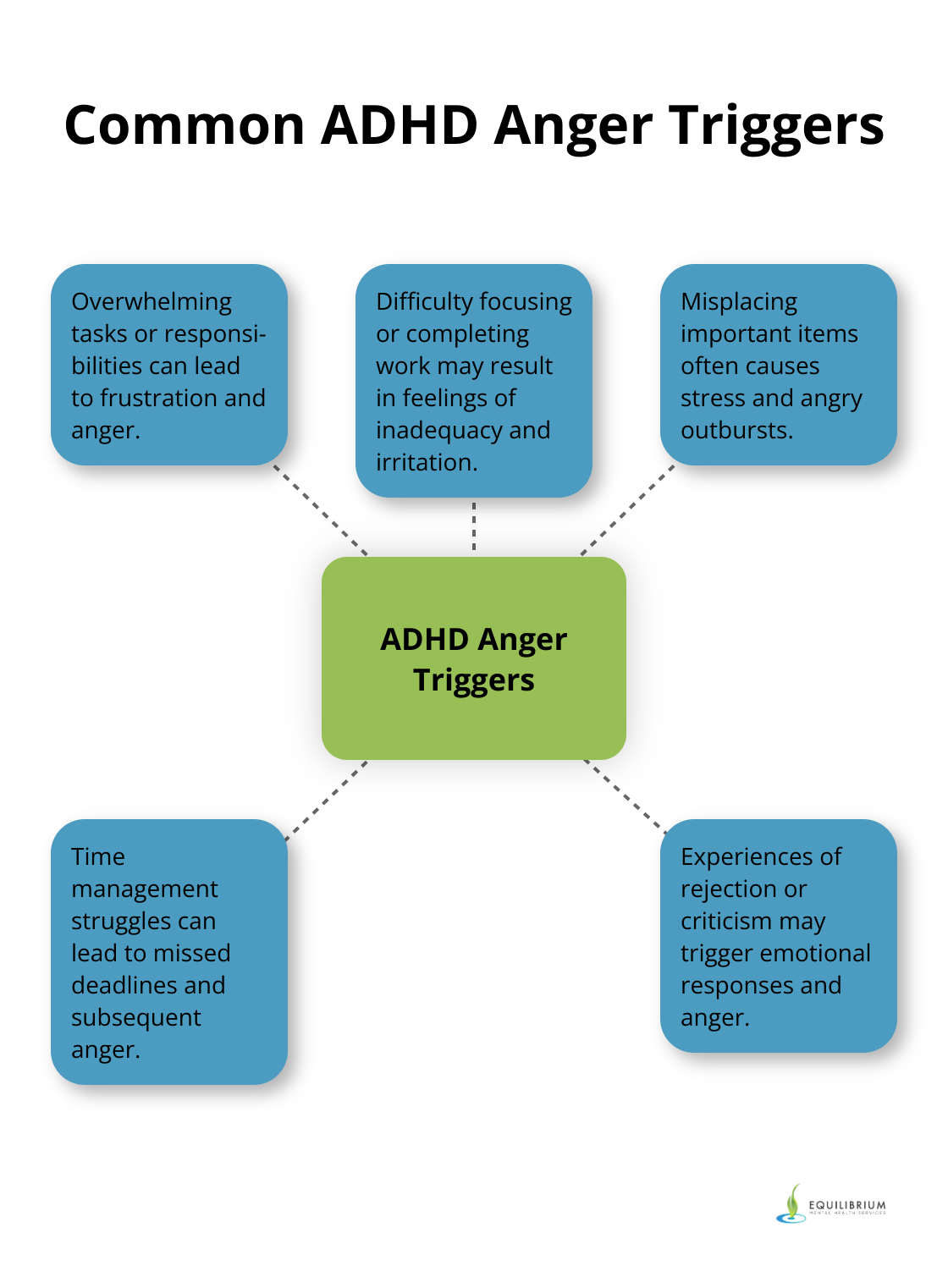
People with ADHD often find themselves easily frustrated by everyday situations. Common triggers include:
- Overwhelming tasks or responsibilities
- Difficulty focusing or completing work
- Misplacing important items
- Time management struggles
- Rejection or criticism experiences
These triggers can quickly escalate into anger, especially when combined with the impulsivity characteristic of ADHD.
ADHD Symptoms Fuel Emotional Outbursts
Several core ADHD symptoms contribute to anger and emotional dysregulation:
- Impulsivity: Actions without thought can lead to regrettable angry outbursts.
- Inattention: Missed important details or forgotten commitments can cause frustration and conflict.
- Hyperactivity: Excess energy can manifest as restlessness or agitation, fueling irritability.
- Executive function deficits: Difficulty with planning, organizing, and problem-solving can lead to feelings of inadequacy and anger.
Recent research aimed to experimentally examine the functional relationship between varying working memory demands and ADHD-related emotion regulation deficits.
The Impact on Daily Life
ADHD-related anger can significantly affect various aspects of life:
- Relationships: Frequent outbursts can strain personal and professional connections.
- Work performance: Emotional dysregulation can impact productivity and job satisfaction.
- Self-esteem: Repeated anger episodes may lead to feelings of guilt and lowered self-worth.
- Physical health: Chronic anger can contribute to stress-related health issues (e.g., high blood pressure, headaches).
Understanding the complex relationship between ADHD and anger marks the first step towards effective management. In the next section, we’ll explore strategies to identify and control ADHD-related anger, providing you with practical tools to navigate these challenging emotions.
Practical Tools for Taming ADHD-Related Anger
Managing ADHD-related anger requires a multifaceted approach. We’ve seen how effective strategies can transform lives. Here are practical tools to help you regain control over your emotions.
Recognize Your Anger Cues
The first step in managing ADHD-related anger is to identify your personal warning signs. These can be physical sensations, thoughts, or behaviors that precede an outburst. Common cues include:
- Increased heart rate
- Clenched fists or jaw
- Racing thoughts
- Feeling hot or flushed
- Pacing or fidgeting
Keep a journal to track these cues. Note what triggers them and their intensity. This self-awareness is key for early intervention.
Harness the Power of Mindfulness
Mindfulness techniques can significantly reduce ADHD-related anger. A study found that mindfulness-based training can affect attention, impulsivity, and emotion regulation among children diagnosed with ADHD.
Try this simple mindfulness exercise:
- Focus on your breath for 60 seconds
- Notice any physical sensations without judgment
- If your mind wanders, gently bring attention back to your breath
Practice this daily, gradually increase the duration. You’ll find it easier to stay calm in triggering situations over time.
Develop a Toolbox of Coping Strategies
Having a variety of coping mechanisms at your disposal is essential. Different situations may require different approaches. Here are some effective strategies:
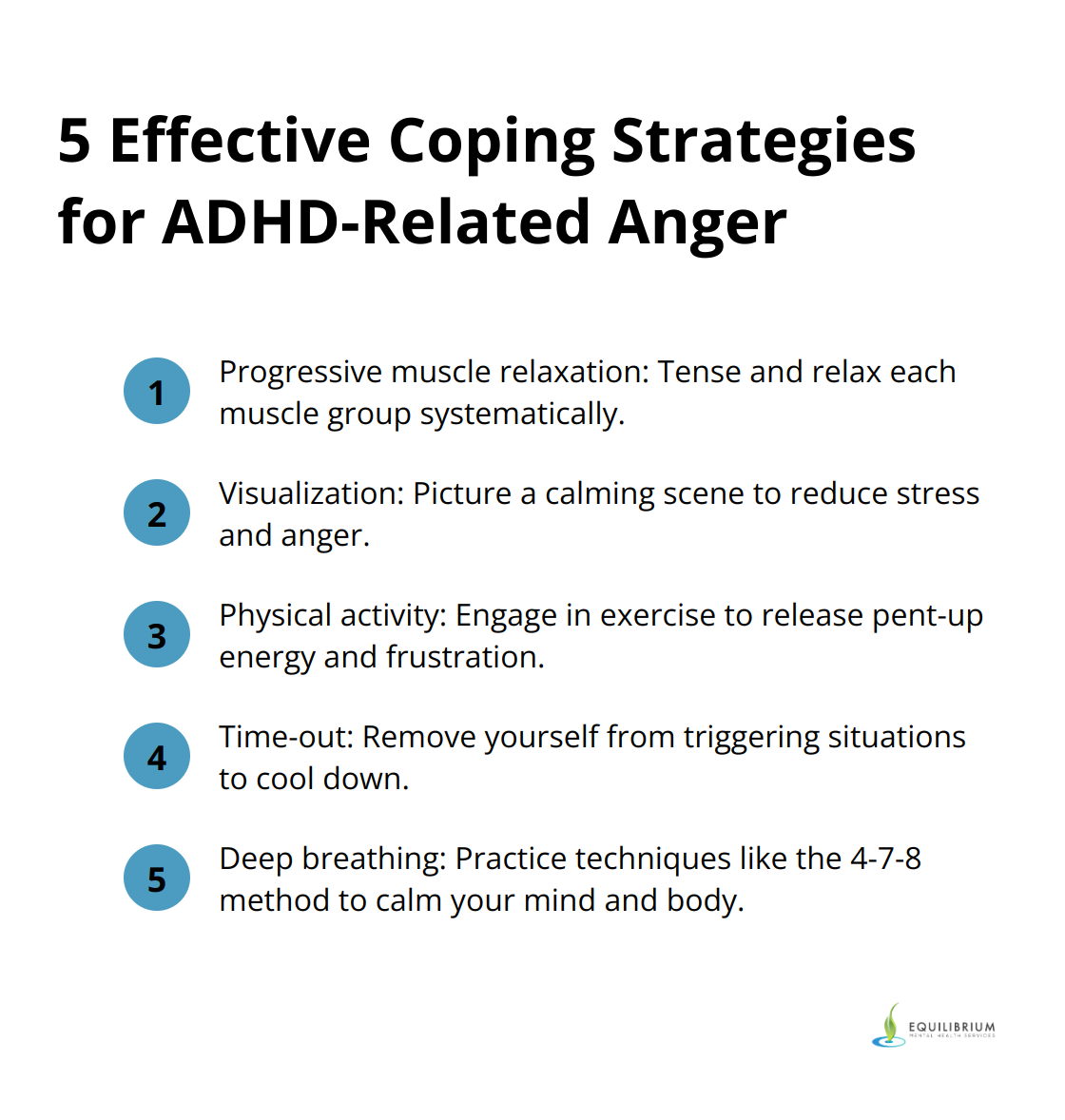
Experiment with these strategies to find what works best for you. The effectiveness may vary depending on the situation and your state of mind.
Create an Anger-Resistant Environment
Your surroundings can significantly impact your emotional state. Here are some ways to create a supportive environment:
- Declutter your space: A tidy environment can reduce stress and frustration.
- Use visual reminders: Place calming images or motivational quotes in your workspace.
- Establish routines: Consistent daily routines can minimize unexpected stressors.
- Communicate your needs: Inform friends, family, and colleagues about your triggers and coping strategies.
- Seek support: Consider joining a support group for individuals with ADHD. Sharing experiences and strategies can be incredibly helpful.
Implementing these strategies takes time and patience. Don’t get discouraged if you don’t see immediate results. With consistent practice and professional guidance (such as that provided by mental health experts in Coral Gables), you can significantly improve your ability to manage ADHD-related anger.
In the next section, we’ll explore treatment options that can complement these practical tools, providing a comprehensive approach to managing ADHD and anger.
Effective Treatments for ADHD and Anger
Cognitive Behavioral Therapy: A Powerful Tool
Cognitive Behavioral Therapy (CBT) stands out as an effective method for managing ADHD and anger. In recent years, CBT has emerged as a highly effective intervention for managing anger in individuals with ADHD. This therapy helps you identify negative thought patterns and behaviors, replacing them with more positive, constructive ones.
In CBT sessions, you’ll learn practical skills like:
- Recognition of anger triggers
- Challenge of irrational thoughts
- Development of problem-solving strategies
- Improvement of communication skills
These techniques can benefit residents in Coral Gables (https://g.co/kgs/Toi7gBP) and surrounding areas dealing with ADHD-related anger.
Medication: Finding the Right Balance
While therapy forms the foundation of treatment, medication can play an important role in managing ADHD symptoms, including emotional dysregulation. Stimulant medications like methylphenidate and amphetamines are often the first-line treatment, effectively reducing core ADHD symptoms in many patients.
Non-stimulant options like atomoxetine or guanfacine can also be effective, especially for those who don’t respond well to stimulants. It’s important to work closely with a psychiatrist to find the right medication and dosage for your unique needs.
Integrative Approach: Maximizing Results
The combination of therapy and medication often yields the best results. This integrative approach addresses both the behavioral and neurological aspects of ADHD and anger management.
Lifestyle Changes: The Missing Piece
While professional treatments form the core of ADHD and anger management, lifestyle changes can significantly enhance their effectiveness. Some key areas to focus on include:
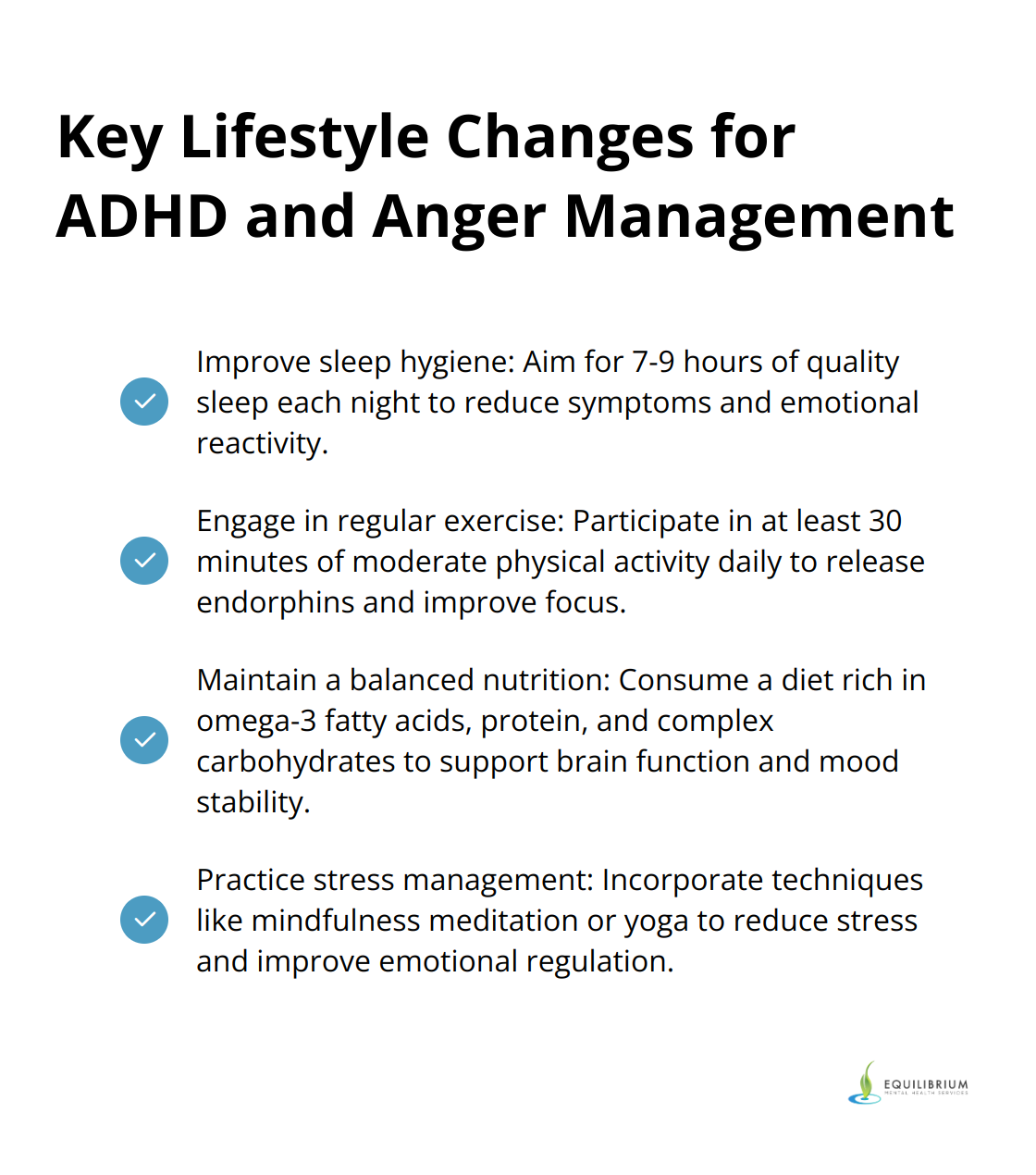
There’s no one-size-fits-all solution for ADHD and anger management. What works best is often a personalized combination of these treatments, tailored to your specific needs and circumstances. If you’re in Miami or the surrounding areas (including Pinecrest, Palmetto Bay, and Coconut Grove) and struggling with ADHD-related anger, consider reaching out to a mental health professional. They can help you develop a comprehensive treatment plan to address your unique challenges and goals.
Final Thoughts
Managing ADHD rage requires patience, dedication, and proper support. We explored the connection between ADHD and anger, uncovering strategies to identify triggers and develop coping mechanisms. Treatment options like Cognitive Behavioral Therapy and medication play a vital role in addressing ADHD-related anger.
Professional help is essential for achieving better emotional control and overall well-being. At Equilibrium Mental Health Services, we offer expert care for adults with ADHD and related conditions. Our team provides personalized treatment plans that combine medication management and psychotherapy to address unique needs.
We encourage you to reach out if you struggle with ADHD rage in Coral Gables or surrounding areas. Our supportive environment helps you navigate ADHD challenges and find balance in your life. Take the first step towards positive change today and contact us for assistance.


