
Mental health misdiagnosis affects millions of people worldwide, with bipolar depression vs major depressive disorder being one of the most challenging distinctions to make. The symptoms often overlap significantly, leading to years of incorrect treatment.
At Equilibrium Mental Health Services, we see patients who have struggled with misdiagnosis for an average of 9.5 years before receiving proper care. Understanding these key differences can transform your path to recovery.
What Makes These Conditions Different?
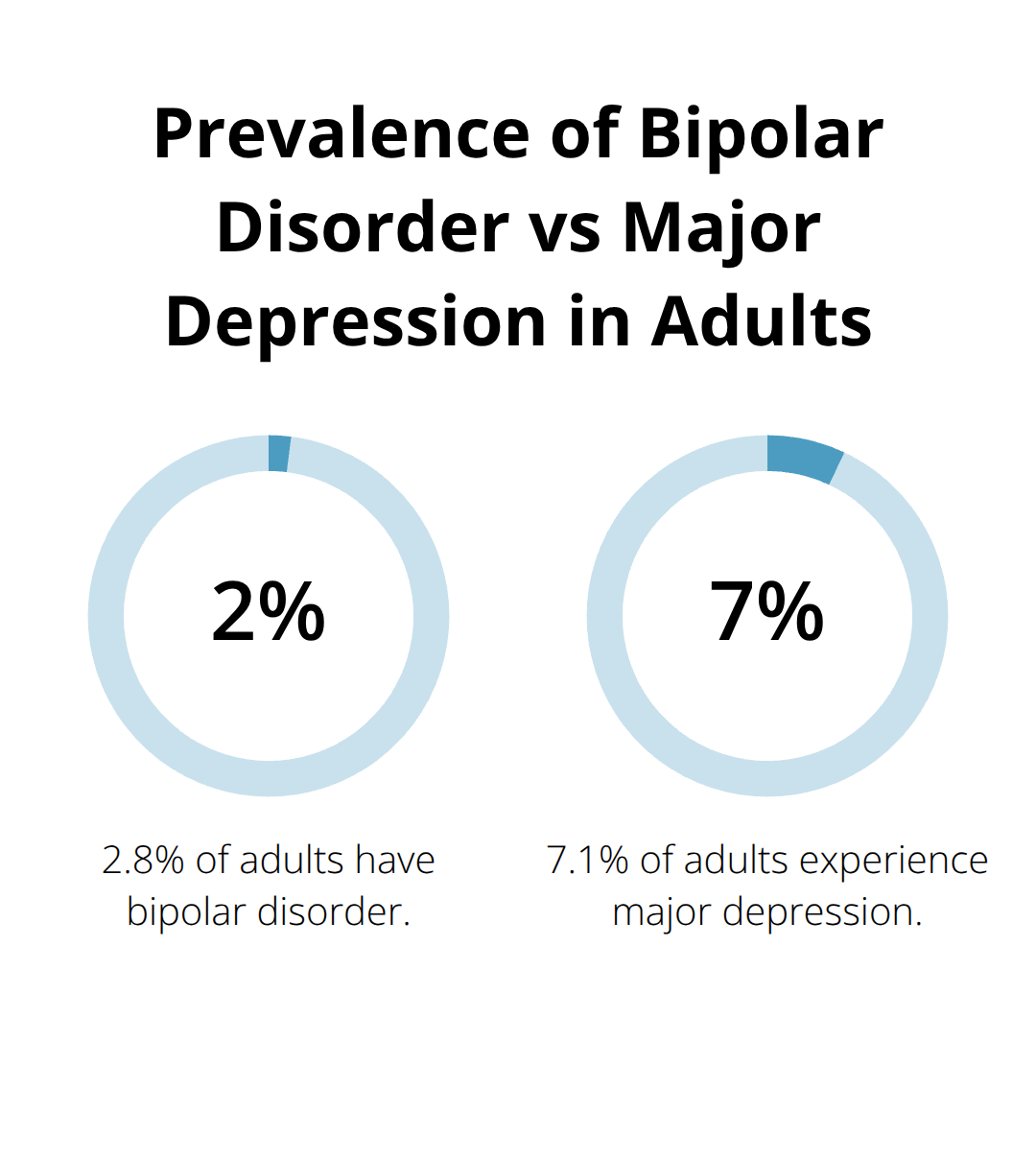
The fundamental difference between bipolar disorder and major depression lies in their episode patterns. Bipolar disorder involves alternating periods of depression and elevated mood states called mania or hypomania. Major depression presents as persistent low mood without any manic episodes. According to the National Institute of Mental Health, about 2.8% of adults have bipolar disorder while 7.1% experience major depression (making accurate differentiation essential for proper treatment).
Mood Episode Duration Patterns
Bipolar manic episodes last at least one week and often require hospitalization, while hypomanic episodes persist for four consecutive days. Depressive episodes in both conditions must last at least two weeks for diagnosis. However, people with bipolar disorder experience distinct mood phases with clear beginnings and endings. Major depression involves continuous symptoms that may fluctuate in severity but don’t cycle into opposite mood states. Research shows that family environments are strongly affected by the cycling patterns of bipolar disorder and inter-episode mood instability-a pattern never seen in major depression.
Impact on Life and Relationships
Manic episodes drive people with bipolar disorder to engage in risky behaviors like excessive spending or dangerous driving that can destroy relationships and careers. Major depression creates consistent functional impairment through persistent fatigue and withdrawal. Johns Hopkins research shows bipolar patients have higher divorce rates and job instability due to unpredictable mood swings. People with major depression typically maintain more stable relationships despite ongoing symptoms, though they may struggle with consistent emotional availability and energy levels for social connections.
Age of Onset and Gender Differences
Bipolar disorder typically emerges between ages 18-25, while major depression can appear at any age but usually surfaces in late adolescence to early adulthood. Women with bipolar disorder experience more depressive episodes and rapid cycling compared to men. The average age of onset for bipolar disorder is 25, while major depression symptoms typically begin around age 29. These timing differences help clinicians identify which condition they’re treating and adjust treatment approaches accordingly.
These distinct patterns become even more apparent when you examine the specific warning signs and symptoms that characterize each condition. For professional evaluation and treatment options, consider consulting with Miami psychiatry specialists who can provide comprehensive assessment and care.
How Do You Spot the Warning Signs?
Manic Episodes Signal Bipolar Disorder
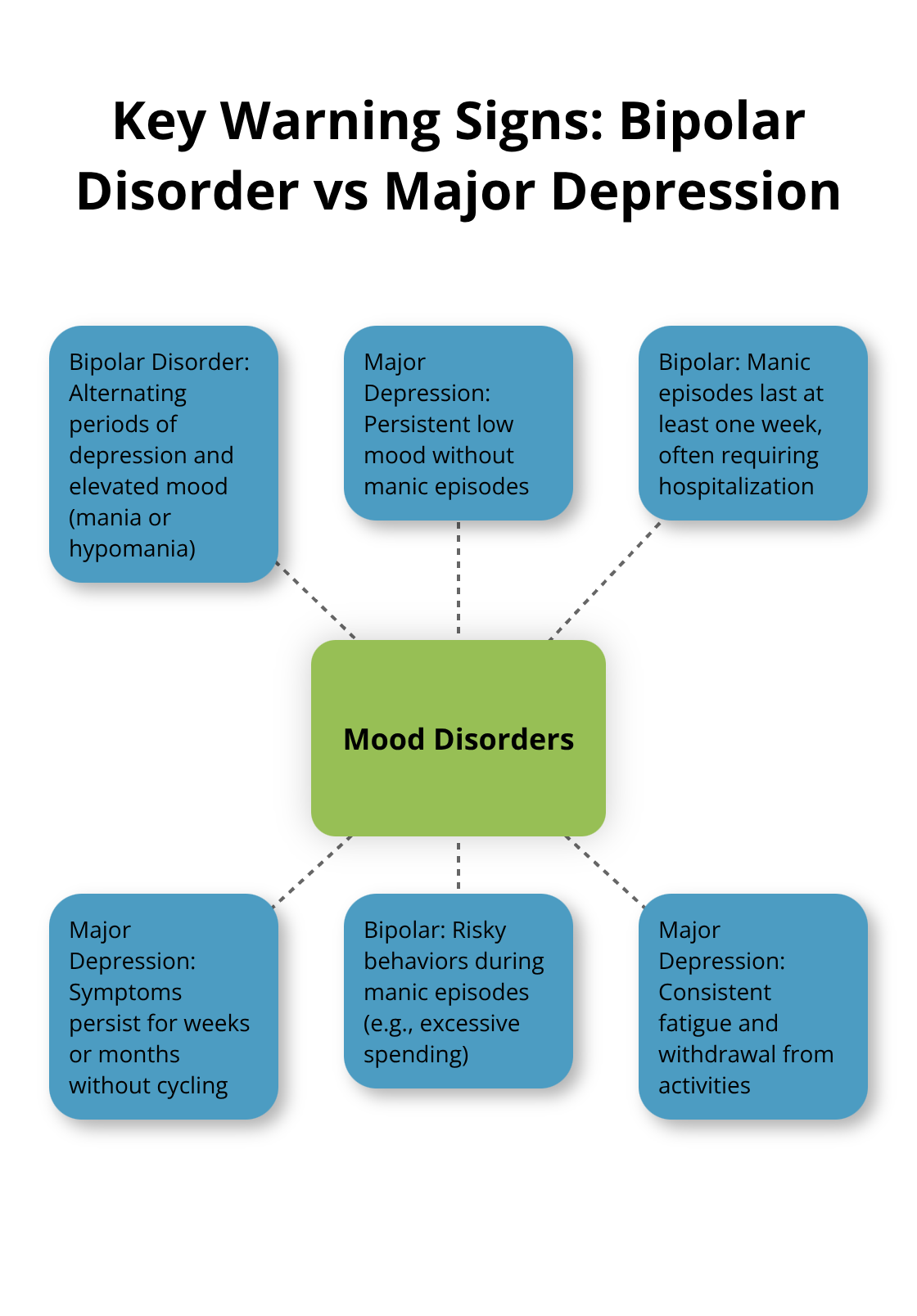
Manic episodes create unmistakable patterns that separate bipolar disorder from major depression. People sleep only 2-3 hours per night during mania while they feel completely energized. They speak rapidly, jump between topics, and make grandiose plans like they want to start multiple businesses simultaneously.
During manic episodes, people often engage in risky financial decisions, spending impulsively on unnecessary items. These episodes last at least one week and frequently require hospitalization. Hypomanic episodes present similar symptoms but are less severe and last four consecutive days minimum.
Unlike major depression, these elevated mood states involve increased goal-directed activity and inflated self-esteem that friends and family clearly notice. People exhibit excessive talkativeness and show decreased need for sleep without fatigue.
Major Depression Creates Persistent Symptoms
Major depression produces consistent symptoms that persist for weeks or months without cycles into opposite mood states. People with major depression commonly experience significant fatigue that interferes with daily activities.
Sleep disturbances occur nightly rather than episodically, with either insomnia or people sleep 10+ hours daily. Appetite changes lead to weight loss or gain within a month. Concentration problems affect work performance consistently, not just during specific episodes.
People with major depression lose interest in previously enjoyed activities for extended periods, while those with bipolar disorder may regain enthusiasm during stable periods. The symptoms remain relatively stable without the dramatic shifts seen in bipolar disorder.
Mixed Episodes and Rapid Cycles
Mixed episodes in bipolar disorder combine depressive symptoms with racing thoughts and agitation simultaneously. These create particularly dangerous situations with elevated suicide risk. People experience sadness alongside elevated energy levels, which creates internal turmoil and unpredictable behavior.
Rapid cycles affect some bipolar patients who experience four or more mood episodes annually. Women show higher rates of rapid cycles than men, particularly during hormonal changes. These patterns help clinicians distinguish bipolar disorder from major depression’s more consistent symptom presentation.
The complexity of these warning signs makes professional evaluation essential for accurate diagnosis and appropriate treatment planning. For comprehensive mental health support, consider consulting with Miami psychiatry professionals who specialize in mood disorders.
Getting an Accurate Diagnosis
Professional Assessment Makes the Difference
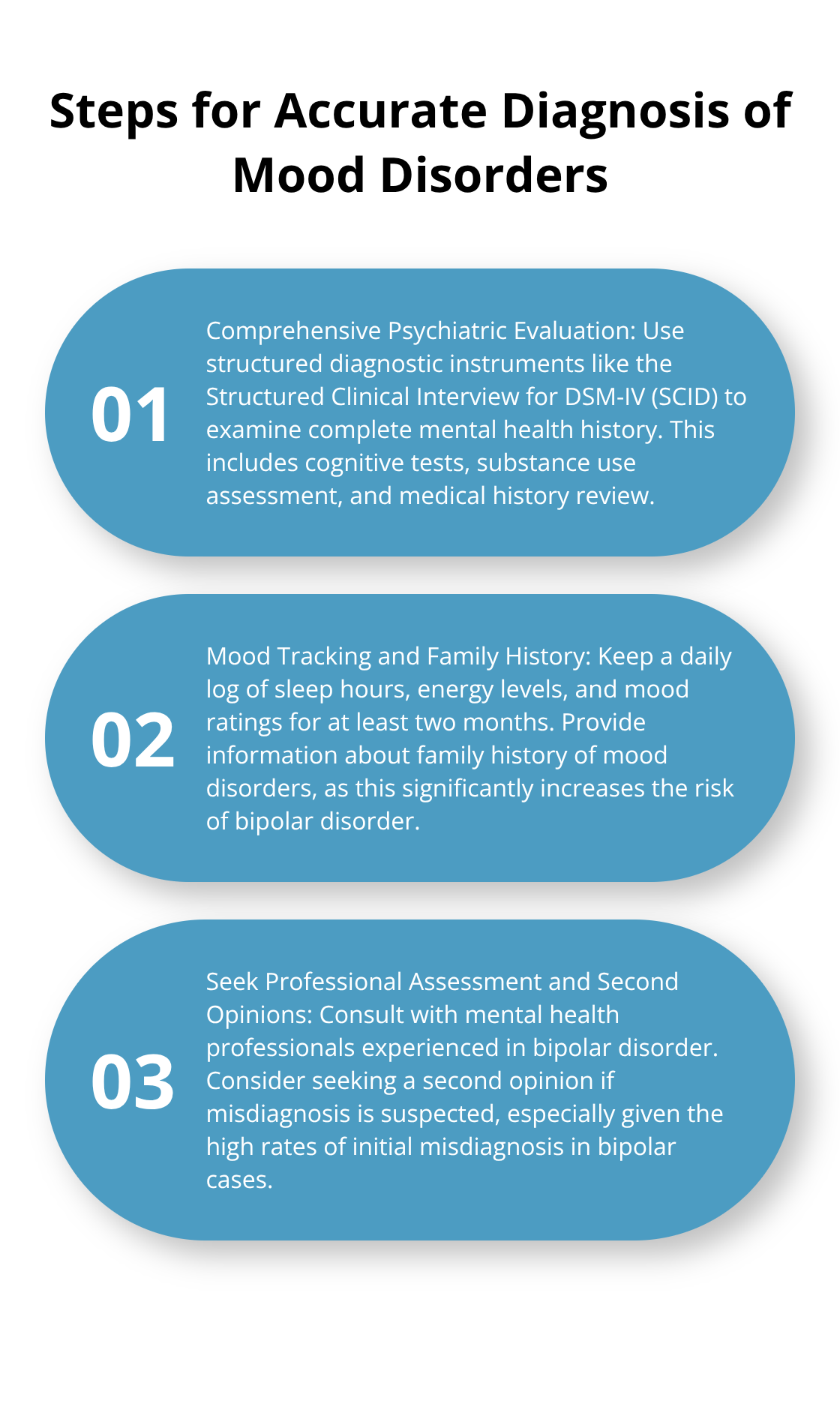
A comprehensive psychiatric evaluation uses structured diagnostic instruments like the Structured Clinical Interview for DSM-IV (SCID) to examine your complete mental health history, not just current symptoms. Mental health professionals use structured diagnostic interviews that explore mood patterns over months or years. The National Institute of Mental Health emphasizes that clinicians must evaluate for mania or hypomania when they assess patients with depressive symptoms.
The evaluation includes cognitive tests, substance use assessment, and medical history review to rule out other conditions. Clinicians ask specific questions about sleep patterns, energy levels, and behavioral changes that patients often don’t volunteer. This thorough approach prevents the common mistake of diagnosing major depression when bipolar disorder is actually present.
Track Your Moods and Family History
Mood tracking apps help identify patterns that distinguish bipolar from major depression (though they’re not substitutes for professional treatment). Keep a daily log of sleep hours, energy levels, and mood ratings for at least two months before your appointment. Family history increases bipolar disorder risk significantly – if relatives have the condition, mention this immediately to your clinician.
A JAMA Psychiatry study found that two-thirds were initially misdiagnosed with major depressive disorder, often because they seek help during depressive episodes without reporting previous manic symptoms. Input from family or friends becomes essential since individuals may not recognize their own manic behaviors.
Common Misdiagnosis Challenges
Many individuals with bipolar disorder receive incorrect diagnoses initially, leading to years of inappropriate antidepressant treatment that can trigger dangerous manic episodes. People of African ancestry face misdiagnosis with bipolar disorder at higher rates, highlighting the need for increased awareness and accuracy in diagnosis.
The depressive phase of bipolar disorder is often the first episode experienced, which leads to misinterpretation as major depression if manic episodes aren’t observed. Certain antidepressants may worsen manic episodes in individuals who are incorrectly diagnosed with bipolar disorder (making proper diagnosis essential for safety).
Seeking Second Opinions
Write down personal and medical histories to help articulate concerns when discussing potential misdiagnosis with your healthcare provider. Seek a second opinion from a mental health professional experienced in bipolar disorder if misdiagnosis is suspected. For specialized care in the Miami area, consider consulting with Miami psychiatry professionals who have expertise in mood disorders. Misdiagnosis can prevent individuals from receiving appropriate treatment, potentially worsening their actual condition while on the wrong medication.
Final Thoughts
Accurate diagnosis separates bipolar depression vs major depressive disorder through careful examination of mood patterns, episode duration, and behavioral changes. Bipolar disorder creates distinct cycles between depression and elevated mood states, while major depression maintains consistent low mood without manic episodes. Professional evaluation becomes essential since up to 40% of bipolar cases receive incorrect initial diagnoses.
We at Equilibrium Mental Health Services provide comprehensive psychiatric assessments that examine your complete mental health history beyond current symptoms. Our team uses evidence-based approaches that include medication management and psychotherapy to treat mood conditions effectively. We create personalized treatment plans that address your specific needs and symptoms (whether bipolar disorder or major depression).
Don’t let misdiagnosis delay your recovery from mood symptoms that interfere with daily life. Contact Equilibrium Mental Health Services to speak with our caring professionals about your concerns. We serve patients throughout Miami and surrounding areas with specialized care that helps you achieve balance and improved mental well-being.


