
Many people struggle with the question “is it bipolar or depression?” when experiencing mood changes. The symptoms can overlap significantly, making self-diagnosis nearly impossible.
At Equilibrium Mental Health Services, we see patients daily who need professional evaluation to distinguish between these two distinct conditions. Understanding the key differences can help you seek appropriate treatment sooner.
What Makes Bipolar Different from Depression?
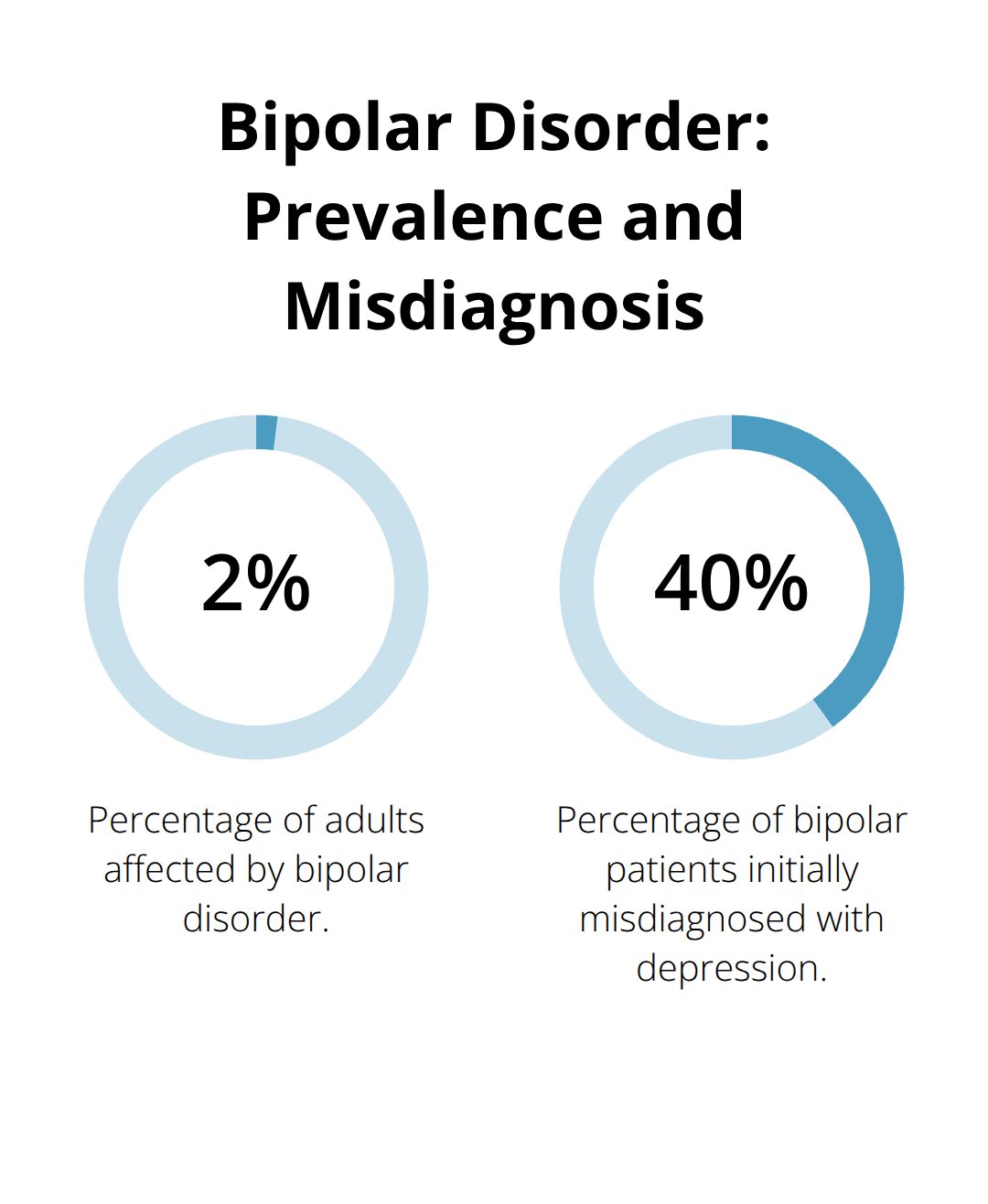
The fundamental difference lies in mood patterns. Depression maintains a consistently low mood for weeks or months, while bipolar disorder alternates between depressive episodes and periods of mania or hypomania. According to the National Institute of Mental Health, bipolar disorder affects 2.8% of adults, yet up to 40% receive an initial misdiagnosis of major depression. This happens because people typically seek help during depressive phases, not during manic episodes when they feel energetic and confident.
Manic Episodes Change Everything
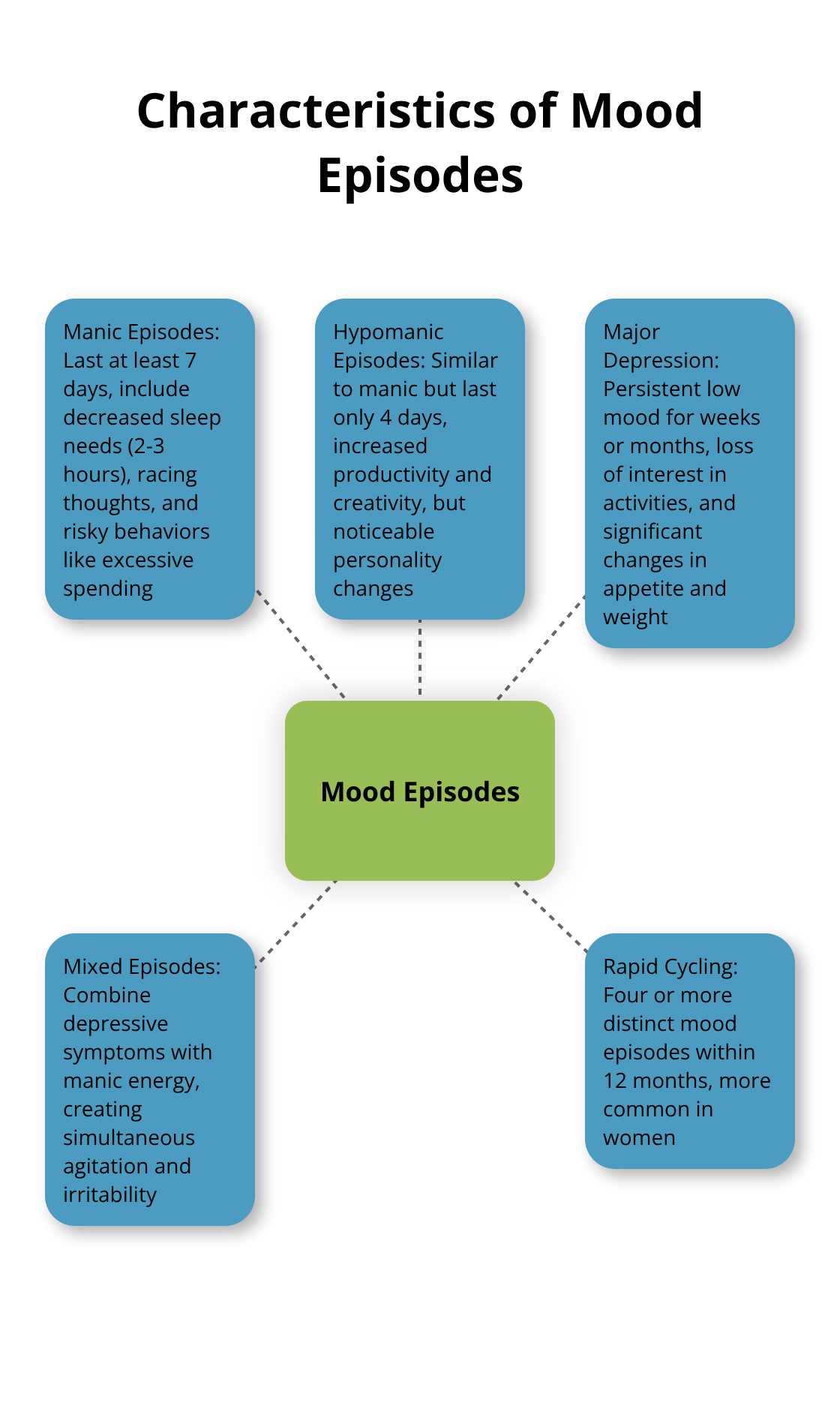
Manic episodes last at least one week and include decreased sleep needs, racing thoughts, and risky decision-making like excessive spending. Hypomania presents similar symptoms but lasts only four days and doesn’t require hospitalization. Family members often notice these behavioral changes before the person experiences them does. The average onset age for bipolar disorder is 25 (compared to 29 for major depression). People with bipolar disorder may sleep only 2-3 hours nightly during manic phases yet feel completely rested.
Duration Patterns Reveal the Truth
Depressive episodes in both conditions can last months, but bipolar depression includes specific features like increased sleep, weight gain, and extreme fatigue. Major depression symptoms must persist for at least two weeks to meet diagnostic criteria. Manic episodes typically last days to several weeks, while depressive episodes in bipolar disorder often extend longer than the manic phases.
Mood Charts Track the Cycles
Healthcare providers use mood charts to distinguish between conditions and adjust treatment accordingly. These tools help patients document sleep patterns, energy levels, and mood changes over time. The cyclical nature of bipolar disorder becomes clear through consistent tracking, while major depression shows more stable low periods.
Professional evaluation becomes essential when these patterns emerge, as accurate diagnosis determines the most effective treatment approach.
What Do These Episodes Actually Look Like?
Manic Episodes: High Energy, High Risk
Manic episodes transform behavior dramatically. People sleep only 2-3 hours nightly yet maintain boundless energy throughout the day. Their thoughts race between topics so quickly that conversations become difficult to follow. Impulsive decisions emerge without consideration of consequences-spending thousands on unnecessary purchases, quitting jobs abruptly, or engaging in risky sexual encounters.
These episodes persist for at least seven days or become severe enough to require hospitalization. People with bipolar disorder frequently struggle with substance dependence, often as self-medication during these intense mood swings.
Hypomania: The Deceptive High
Hypomanic episodes share manic symptoms but last only four consecutive days. People feel exceptionally productive and confident during these periods, making treatment-seeking unlikely. They complete projects with unusual efficiency and display heightened creativity. However, family members notice personality changes and increased irritability that the person experiencing hypomania often dismisses.
Major Depression: Persistent Low Mood
Major depression symptoms persist consistently for weeks or months without dramatic mood elevations. Patients experience overwhelming sadness that colors every aspect of daily life. They lose complete interest in activities they once enjoyed-hobbies, social gatherings, even basic self-care become burdensome tasks.
Appetite changes lead to weight fluctuations of 5% or more monthly. Concentration problems become severe enough to impact work performance and decision-making abilities (making simple choices feels overwhelming).
Complex Patterns: Mixed Episodes and Rapid Cycling
Mixed episodes combine depressive symptoms with manic energy, creating simultaneous agitation and irritability. Patients feel restless yet hopeless, energetic yet deeply sad. This combination proves particularly dangerous as it provides energy to act on depressive thoughts.
Rapid cycling affects 10-20% of bipolar patients, involving four or more distinct mood episodes within twelve months. Women experience rapid cycling more frequently than men, particularly during hormonal transitions like menopause or postpartum periods.
These complex patterns explain why misdiagnosis occurs in bipolar cases initially. Patients receive major depression diagnoses instead because they typically seek help during depressive phases when manic symptoms aren’t present. Accurate diagnosis requires careful evaluation of these distinct episode patterns over time.
How Do Doctors Actually Diagnose Bipolar vs Depression?
The DSM-5 Sets the Standard
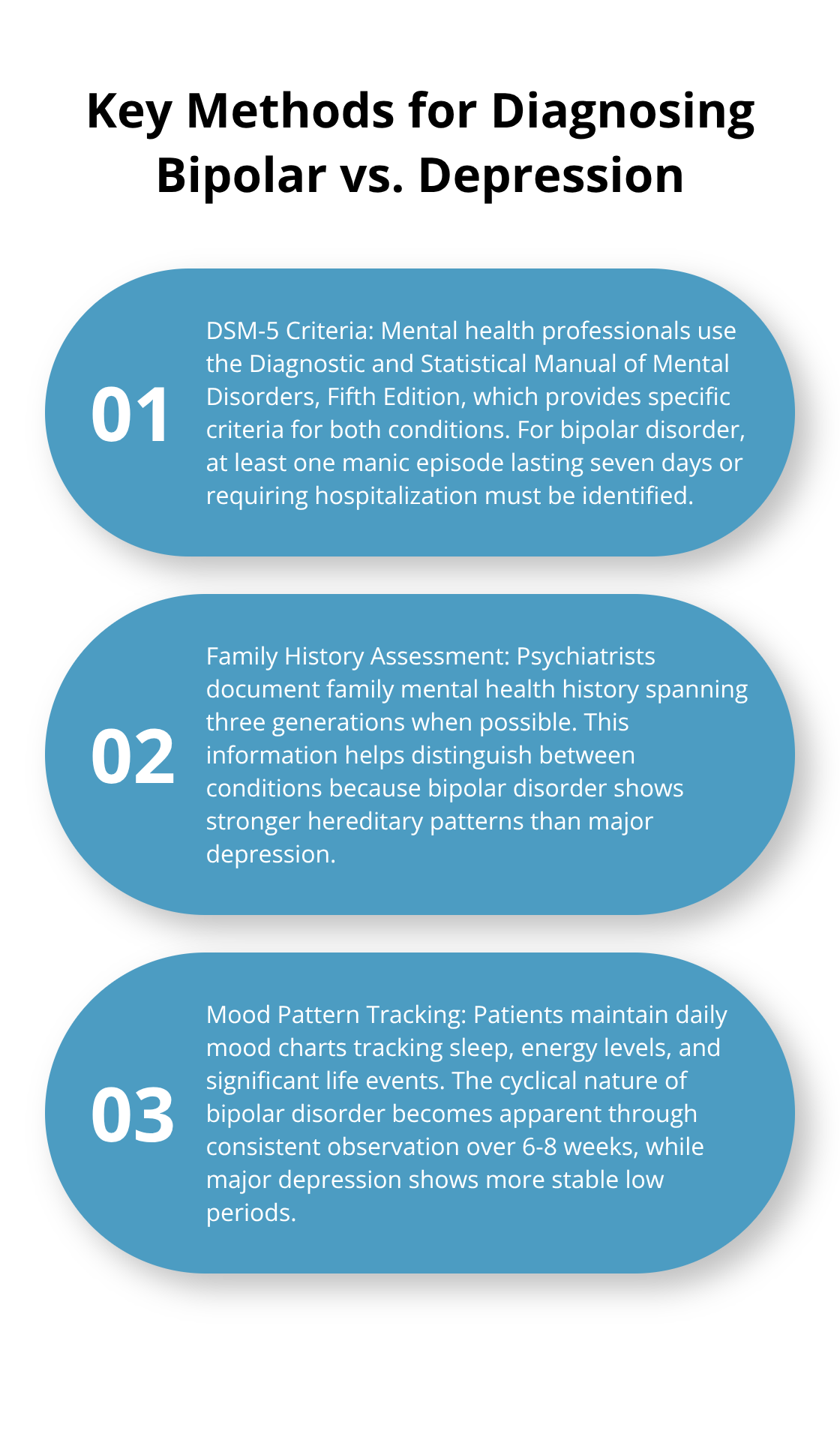
Mental health professionals rely on the Diagnostic and Statistical Manual of Mental Disorders, Fifth Edition, which provides specific criteria for both conditions. For bipolar disorder, clinicians must identify at least one manic episode that lasts seven days or requires hospitalization. Major depression requires five symptoms present for at least two weeks, which must include depressed mood or loss of interest in activities.
The DSM-5 distinguishes between Bipolar I (which requires full manic episodes) and Bipolar II (which involves hypomania and major depressive episodes). Healthcare providers use structured interviews and standardized questionnaires like the Mood Disorder Questionnaire to systematically evaluate symptoms against these criteria.
Family History Predicts Risk Patterns
Genetic factors play a major role in both conditions. People with first-degree relatives who have major depression face three times higher risk of developing the condition themselves. For bipolar disorder, genetics significantly contribute to the risk factor for developing the condition according to recent genetic research.
During evaluation, psychiatrists document family mental health history that spans three generations when possible. This information helps distinguish between conditions because bipolar disorder shows stronger hereditary patterns than major depression. Medical evaluation includes thyroid function tests, vitamin B12 levels, and substance use screening since these factors can mimic or trigger mood episodes.
Mood Patterns Reveal the Truth Over Time
Professional diagnosis requires documentation of mood patterns over months, not just current symptoms. Psychiatrists ask patients to maintain daily mood charts that track sleep hours, energy levels, and significant life events. Mobile applications like Daylio or eMoods provide data that assists diagnosis, though they should never replace professional evaluation.
The cyclical nature of bipolar disorder becomes apparent through consistent observation, while major depression shows more stable low periods. Patients often need 6-8 weeks of mood documentation before patterns become clear enough for accurate diagnosis. This extended observation period explains why initial misdiagnosis occurs in many bipolar cases.
Clinical Assessment Tools Guide Decisions
Psychiatrists use multiple assessment tools to distinguish between these conditions. The Hamilton Depression Rating Scale measures depression severity, while the Young Mania Rating Scale evaluates manic symptoms. These standardized instruments help clinicians track symptom changes over time and adjust treatment plans accordingly.
Healthcare providers also conduct comprehensive psychiatric evaluation to rule out other conditions that mimic mood disorders. Blood tests check for thyroid dysfunction, vitamin deficiencies, and hormonal imbalances that can affect mood stability.
Final Thoughts
Professional expertise distinguishes between bipolar disorder and major depression because symptoms overlap significantly. The key difference lies in mood patterns: depression maintains consistently low moods, while bipolar disorder cycles between depressive episodes and manic or hypomanic highs. Manic episodes that last at least seven days, decreased sleep needs, and risky behaviors signal bipolar disorder rather than depression alone.
When you ask “is it bipolar or depression,” consider that 40% of bipolar patients initially receive depression diagnoses. This happens because people seek help during depressive phases, not during energetic manic periods. Family history, mood charts that track patterns over months, and standardized assessment tools help psychiatrists make accurate diagnoses (which determines treatment success).
Proper diagnosis determines treatment effectiveness. Antidepressants alone can trigger manic episodes in bipolar patients, while mood stabilizers combined with therapy provide effective management. We at Equilibrium Mental Health Services provide comprehensive psychiatric evaluations to distinguish between these conditions, and our team uses evidence-based assessment tools to create personalized treatment plans. Contact our licensed professionals today to begin your journey toward accurate diagnosis and effective treatment.


