
ADHD exhaustion affects millions of adults daily, going far beyond typical tiredness. This overwhelming fatigue stems from the brain’s constant effort to manage attention, emotions, and executive functions.
At Equilibrium Mental Health Services, we see how this exhaustion impacts work performance, relationships, and overall quality of life. The good news is that effective management strategies exist.
What Makes ADHD Exhaustion Different
ADHD exhaustion hits differently than regular tiredness. While normal fatigue comes from physical exertion or lack of sleep, ADHD exhaustion stems from your brain working overtime to manage basic functions. Many adults with ADHD experience brain fog, low motivation, and fatigue based on anecdotal evidence shared online.
The Brain’s Constant Battle
Your ADHD brain burns through energy at an accelerated rate. Executive functions like planning, organization, and decision-making require intense mental effort. Studies indicate that individuals with ADHD use significantly more cognitive resources for tasks that neurotypical brains handle automatically. This constant mental strain creates a unique type of exhaustion that sleep alone cannot fix. The dopamine irregularities common in ADHD directly impact energy regulation and motivation levels, leaving you drained even during periods of hyperactivity.
Physical and Mental Warning Signs
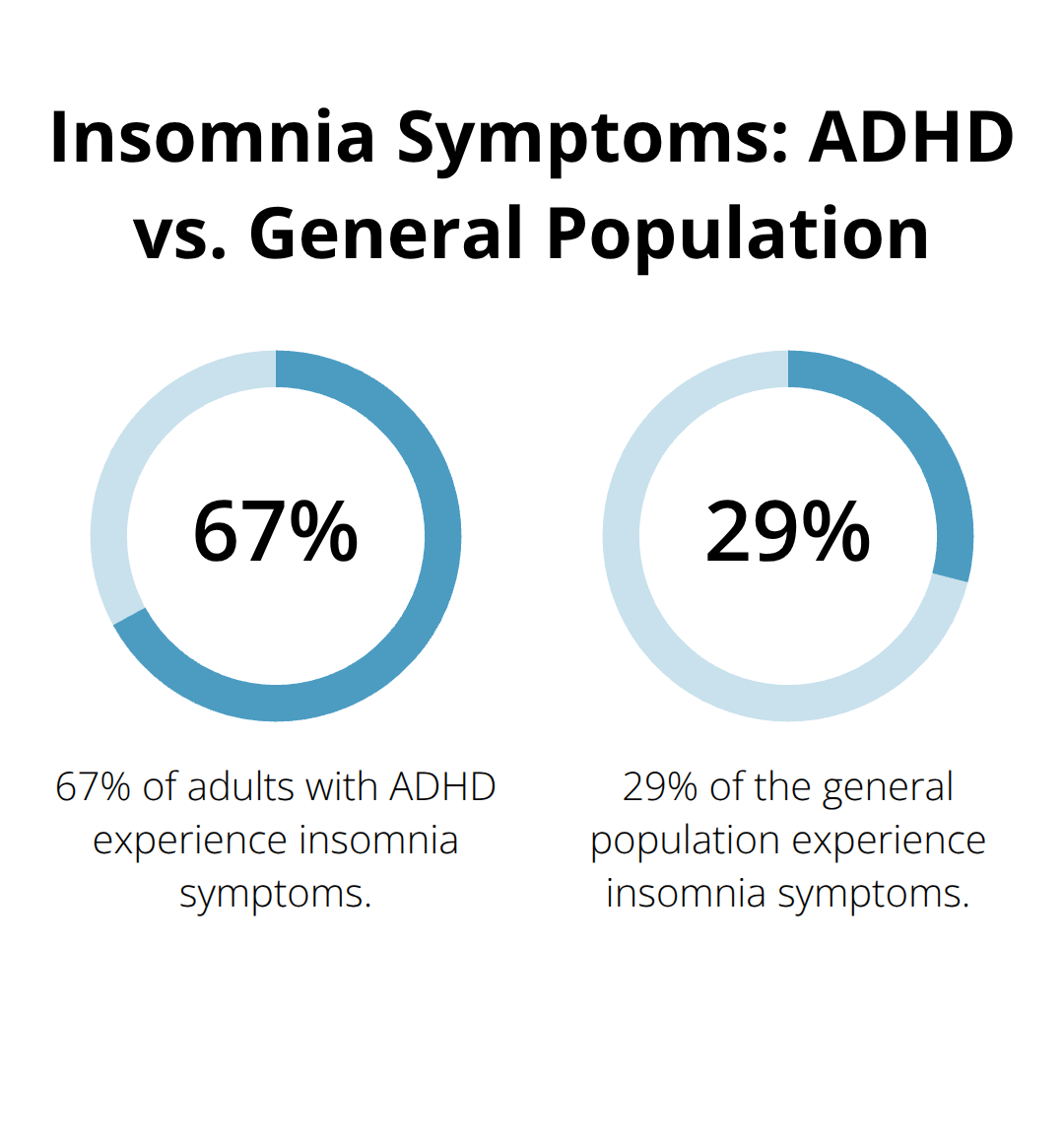
ADHD fatigue manifests through specific symptoms that distinguish it from regular tiredness. Brain fog becomes a daily companion, creating mental haze that interferes with concentration and memory retention. About 67% of adults with ADHD have insomnia symptoms compared to 29% in the general population, which compounds daytime exhaustion. Physical symptoms include muscle soreness, slow reaction times, and persistent sleepiness despite adequate rest. Mental symptoms range from impaired concentration to emotional exhaustion, particularly after periods of hyperfocus or sensory overload.
Why Your Energy Depletes Faster
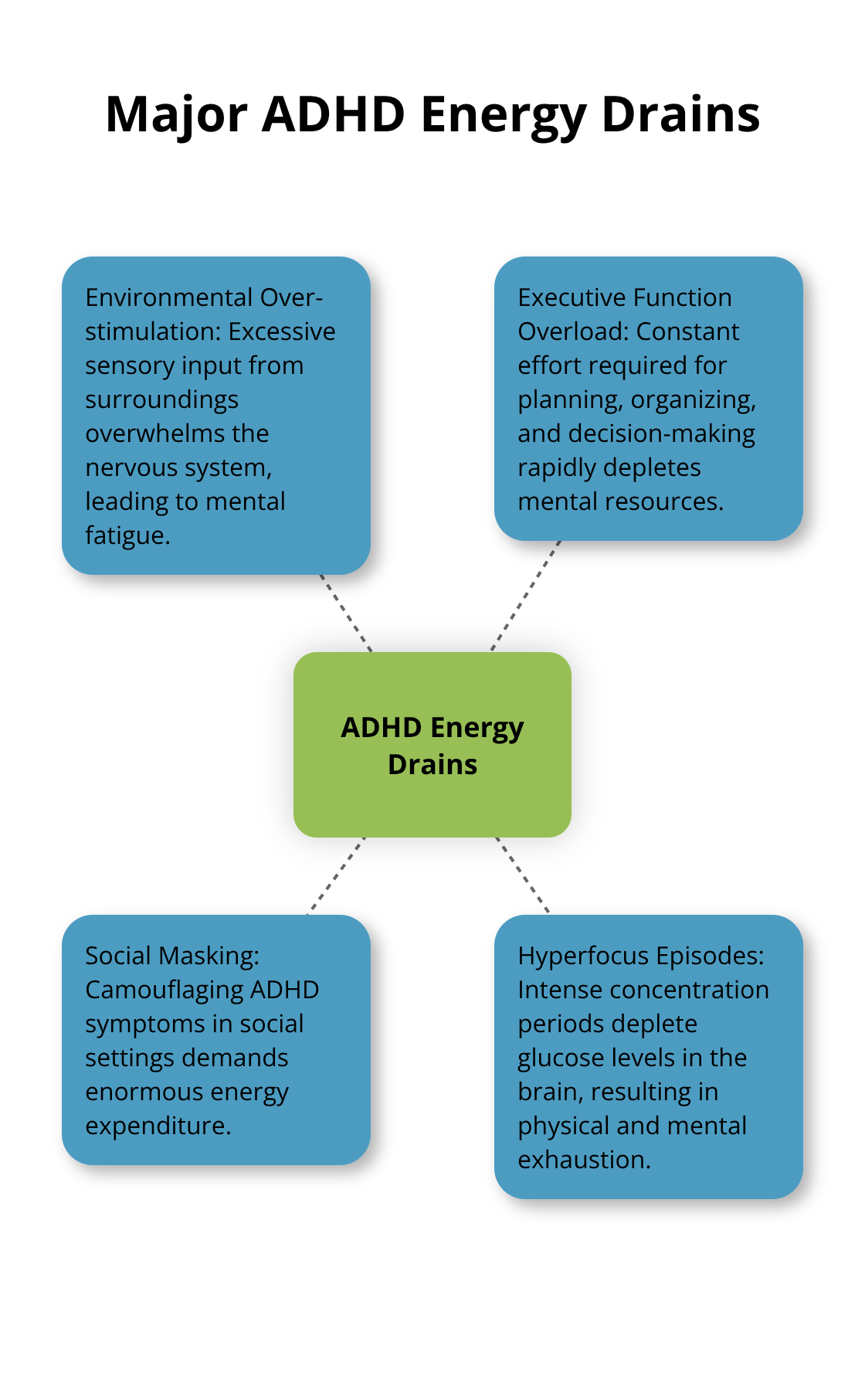
Sensory overload plays a major role in ADHD exhaustion. Environmental stimuli that others filter out automatically overwhelm your nervous system, creating mental fatigue throughout the day. The effort to mask ADHD symptoms in social or professional settings requires enormous energy expenditure. The constant attempt to appear neurotypical while managing internal chaos leads to burnout faster than most people realize. Additionally, anxiety disorders affect a significant portion of individuals with ADHD (creating an additional layer of mental drain) that compounds existing fatigue symptoms.
These unique factors create a perfect storm of exhaustion that requires specialized management approaches. Understanding these root causes helps identify the most effective strategies for managing your energy levels throughout the day.
What Drains Your ADHD Energy Most
Environmental overstimulation creates the most significant energy drain for adults with ADHD. Open offices with constant chatter, fluorescent lights, and background noise force your brain to process excessive sensory input simultaneously. Research shows strong evidence for an association between differences in sensory processing and self-reported stress in adults with ADHD. Your nervous system lacks the natural filter that neurotypical brains use automatically, which means every sound, light change, and movement demands cognitive attention. Shopping centers, busy restaurants, and crowded public spaces become energy vampires that leave you completely drained within hours.
Executive Function Overload
Decision fatigue hits adults with ADHD harder than the general population because every choice requires conscious effort rather than automatic processing. You plan your morning routine, organize your workspace, and prioritize daily tasks (all of which consume massive amounts of mental energy before your actual work begins). ADHD is associated with deficits in cognitive functions, including executive functions such as reaction time, motor and interference inhibition, and sustained attention. The constant mental juggling of time management, task switching, and attention regulation burns through dopamine reserves rapidly. Task managers and calendar blocking become essential tools rather than optional conveniences.
Social Masking Exhaustion
Adults with ADHD camouflage symptoms in professional and social settings, which requires enormous energy expenditure that most people underestimate. You work to appear focused during meetings, suppress fidgeting behaviors, and maintain appropriate eye contact (creating a secondary layer of mental work). This social performance anxiety compounds existing ADHD challenges and leads to complete burnout after seemingly normal interactions. The hypervigilance required to monitor your behavior while simultaneously managing ADHD symptoms creates a perfect storm of exhaustion.
Hyperfocus Energy Crashes
Hyperfocus episodes drain your energy reserves faster than most people realize. You lose track of time, skip meals, and ignore basic physical needs while intensely focused on specific tasks. These periods of extreme concentration deplete glucose levels in your brain and leave you physically and mentally exhausted afterward. The crash that follows hyperfocus can last for hours or even days, making it difficult to engage in routine activities.
These energy drains compound throughout the day and create a cycle of exhaustion that traditional rest cannot fix. Effective management requires targeted strategies that address each specific drain on your mental resources.
How to Reclaim Your Energy
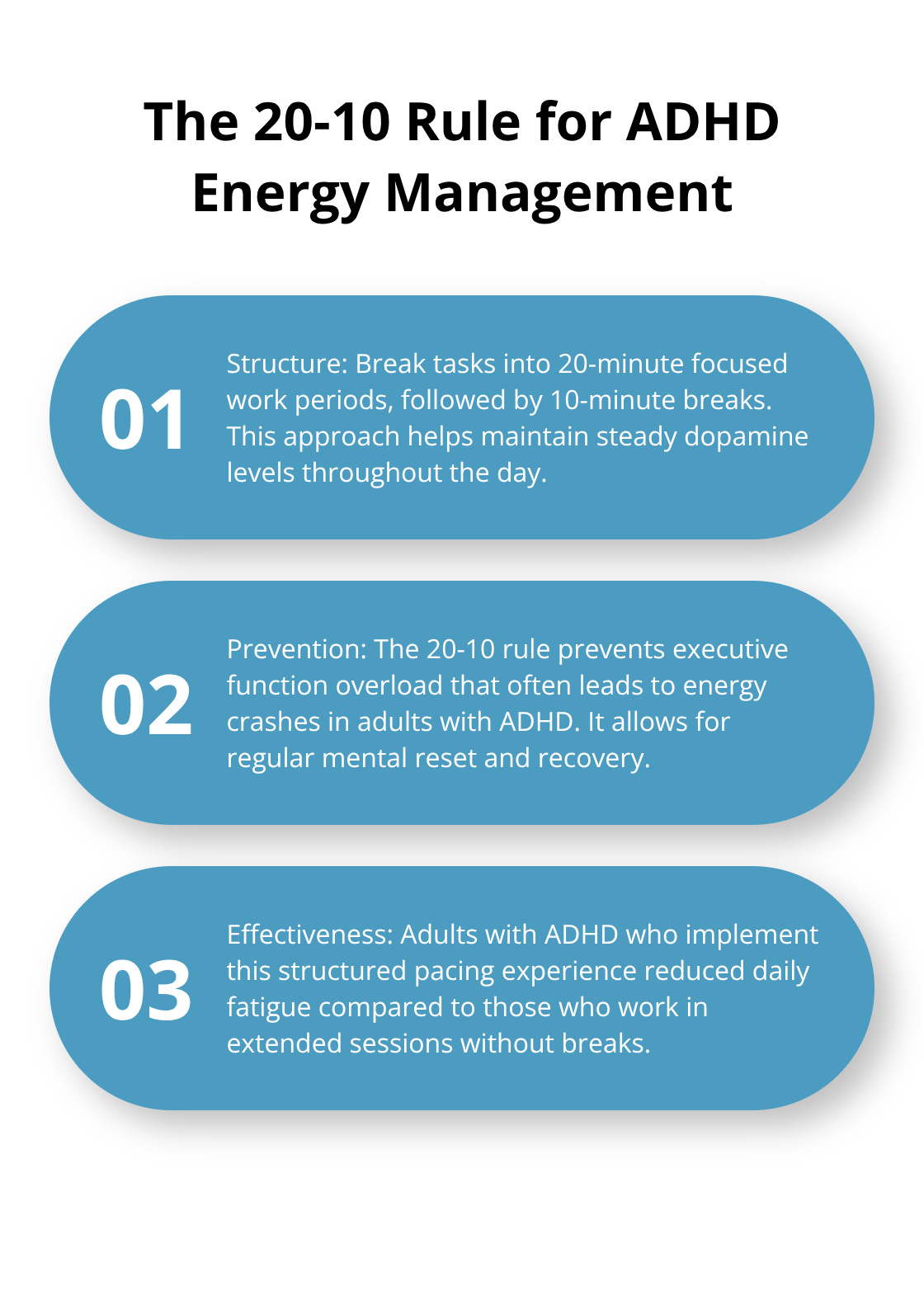
The 20-10 rule transforms ADHD energy management by breaking tasks into 20-minute focused work periods followed by 10-minute breaks. This approach prevents the executive function overload that leads to crashes and maintains steady dopamine levels throughout the day. Adults with ADHD who implement structured pacing experience reduced daily fatigue compared to those who work in extended sessions. Schedule your most demanding cognitive tasks during your natural peak energy periods (typically within 2-4 hours after taking ADHD medication if prescribed).
Strategic Rest Periods Prevent Energy Crashes
Proactive rest schedules prevent energy depletion before it starts rather than react to exhaustion after it hits. Block 15-minute recovery periods every two hours in your calendar and treat them as non-negotiable appointments. Use these breaks for sensory reset activities like stepping outside, doing deep breathing exercises, or sitting in a quiet space away from stimulation. Research from the American Psychiatric Association shows that regular movement breaks improve ADHD symptoms and reduce mental fatigue significantly.
Sleep Hygiene Creates Energy Foundation
Sleep disorders affect up to 50% of individuals with ADHD and compound daytime exhaustion. Maintain consistent bedtimes and wake times even on weekends to regulate your circadian rhythm. Create a wind-down routine that starts 30 minutes before bed and includes activities like reading or gentle stretching. Limit screen time for at least one hour before sleep since blue light disrupts melatonin production in ADHD brains more severely than neurotypical individuals.
Professional Treatment Targets Root Causes
Stimulant medications like Adderall and Vyvanse can reduce ADHD fatigue when properly dosed, though some individuals experience initial drowsiness as their brain adjusts to improved dopamine regulation. Work with your psychiatrist to find the right medication timing and dosage that maximizes alertness during your most important daily activities. Cognitive Behavioral Therapy specifically designed for ADHD addresses the thought patterns and behaviors that contribute to energy depletion. Sleep studies may reveal underlying conditions like sleep apnea that compound ADHD exhaustion and require separate treatment.
Nutrition Strategies Stabilize Energy Levels
Protein-rich breakfasts stabilize blood sugar and support sustained attention throughout the morning. Complex carbohydrates provide steady glucose to your brain rather than the quick spikes and crashes from simple sugars. Stay hydrated since even mild dehydration can worsen cognitive difficulties and increase tiredness in adults with ADHD. Omega-3 fatty acids from fish or supplements support brain function and may reduce some ADHD symptoms that contribute to mental fatigue.
Final Thoughts
ADHD exhaustion demands a comprehensive approach that targets both symptoms and root causes. The 20-10 rule, strategic rest periods, and proper sleep hygiene create the foundation for effective energy management. Professional treatment options including medication management and specialized therapy address the neurological differences that create this unique type of fatigue.
We at Equilibrium Mental Health Services understand that ADHD exhaustion affects every aspect of your daily life. Our team provides evidence-based psychiatric care specifically for adults with ADHD (combining medication management with psychotherapy to create personalized treatment plans). We recognize that each person’s experience with ADHD requires individualized strategies.
Recovery from ADHD exhaustion takes time and professional guidance. The combination of lifestyle modifications, proper medical treatment, and therapeutic support creates the best outcomes for long-term energy management. If you’re struggling with ADHD exhaustion in Miami or surrounding areas, contact Equilibrium Mental Health Services today to develop a comprehensive treatment plan that addresses your specific needs.


