
At Equilibrium Mental Health Services, we often encounter patients grappling with both ADHD and OCD symptoms. These two disorders, while distinct, share intriguing connections that can complicate diagnosis and treatment.
Are ADHD and OCD related? This question frequently arises in our practice, prompting a deeper exploration of the overlap between these conditions.
What Are ADHD and OCD?
Understanding ADHD: More Than Just Distraction
Attention Deficit Hyperactivity Disorder (ADHD) is a complex mental health condition that affects daily functioning. In adults, the main features of ADHD may include difficulty paying attention, impulsiveness and restlessness. Symptoms can range from mild to severe.
The Centers for Disease Control and Prevention reports that approximately 9.4% of children in the United States have received an ADHD diagnosis. Importantly, these symptoms often persist into adulthood, continuing to impact individuals’ lives.
Adults with ADHD frequently report difficulties in time management, organization, and task completion. These challenges can lead to significant problems in professional and personal spheres.
OCD: Beyond Common Misconceptions
Obsessive-Compulsive Disorder (OCD) involves recurring, intrusive thoughts (obsessions) and repetitive behaviors or mental acts (compulsions). Individuals with OCD feel driven to perform these compulsions to alleviate anxiety caused by their obsessions.
According to the National Institute of Mental Health, OCD affects about 1.2% of U.S. adults in a given year. This statistic underscores the prevalence of this often misunderstood condition.
OCD can manifest in various ways (e.g., excessive hand-washing, constant checking of locks or appliances). It’s important to note that OCD is not simply about being tidy or particular-it’s a debilitating condition that can consume hours of a person’s day and significantly impact their quality of life.
The Prevalence Puzzle: ADHD and OCD Overlap
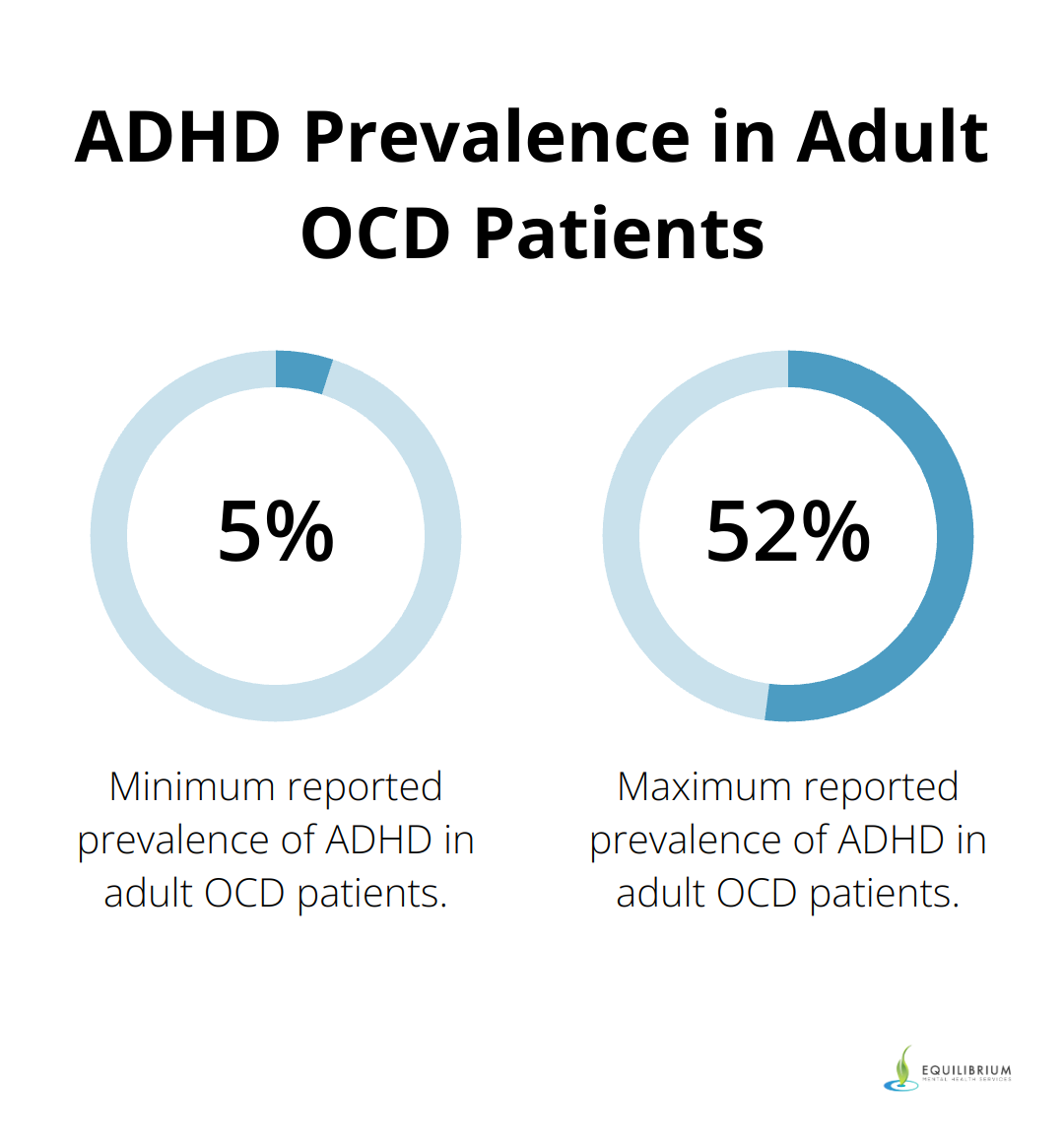
Research has revealed a significant overlap between ADHD and OCD. The prevalence of ADHD in adult OCD patients is reported to range from 5.5% to 52%. This high comorbidity rate emphasizes the need for comprehensive assessment and tailored treatment plans.
Impact on Daily Life
Both ADHD and OCD can profoundly affect a person’s quality of life. Individuals with these disorders may struggle to maintain relationships, perform at work, or even leave their homes due to the severity of their symptoms. It’s not uncommon for people with ADHD or OCD to experience secondary anxiety as a result of their ongoing challenges.
The Importance of Professional Help
Understanding the nature of ADHD and OCD is the first step toward effective management. Recognizing the signs and seeking professional help is essential for improving mental health and overall well-being. Whether you’re in Kendall, Brickell, or anywhere in the greater Miami area, expert help is available.
As we explore the connection between ADHD and OCD, it becomes clear that these conditions share intriguing links that can complicate diagnosis and treatment. Let’s examine these connections more closely in the next section.
The ADHD-OCD Connection: Unraveling the Complex Relationship
Symptom Overlap: A Diagnostic Puzzle
ADHD and OCD, while distinct disorders, share a complex relationship that often puzzles both patients and clinicians. The symptoms of ADHD and OCD can sometimes mimic each other, leading to potential misdiagnosis. For instance, a person with ADHD might appear to have obsessive thoughts due to their racing mind, while someone with OCD might seem inattentive because they’re preoccupied with intrusive thoughts. This overlap underscores the importance of a thorough evaluation by experienced professionals.
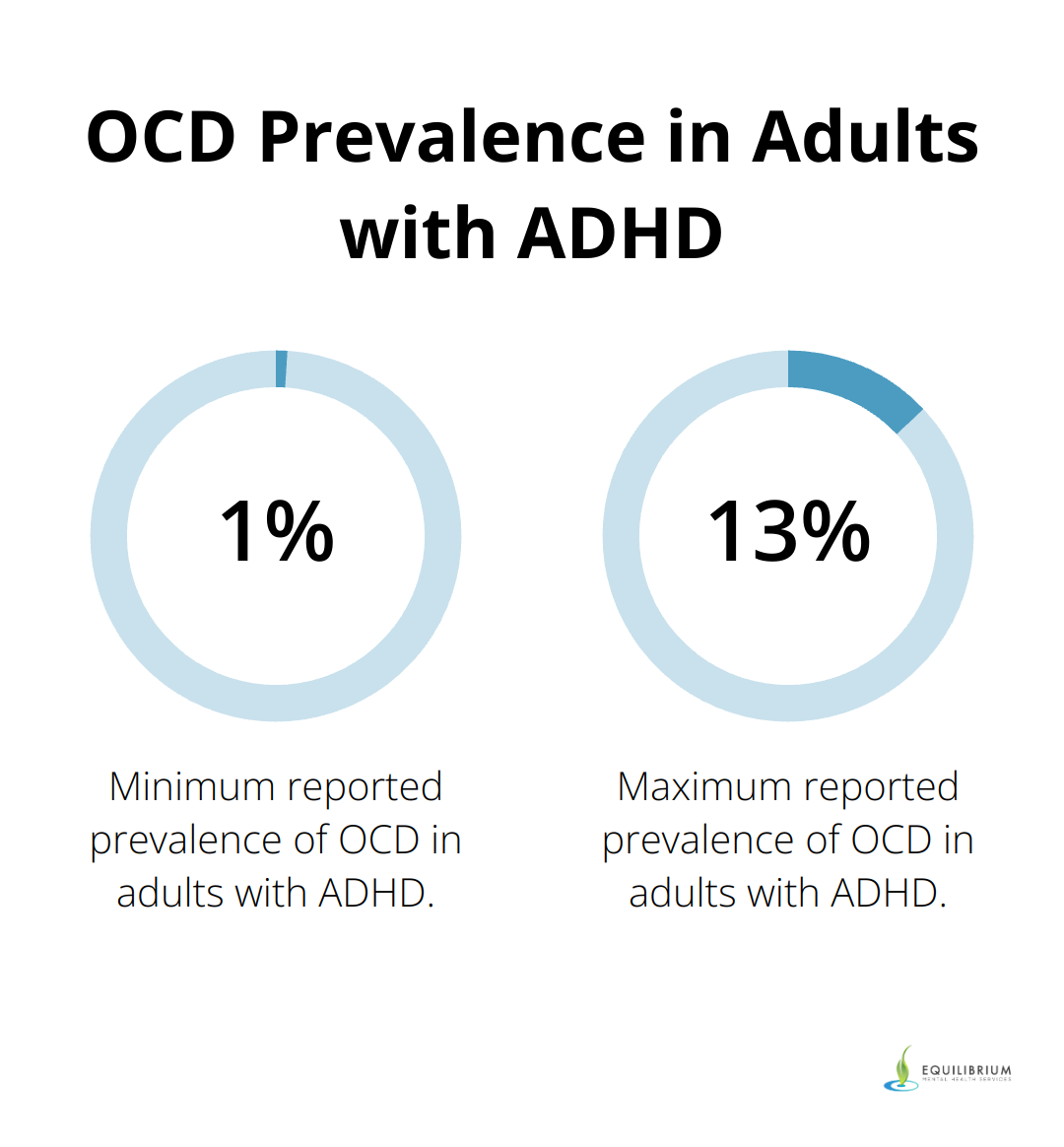
Studies show that OCD prevalence in adults with ADHD is about 1-13%. This comorbidity rate highlights the need for comprehensive assessments that consider both conditions.
Neurobiological Similarities: The Brain’s Role
Recent neuroimaging studies have revealed intriguing similarities in brain function between ADHD and OCD. Both disorders show alterations in the frontostriatal circuits (areas of the brain involved in attention, impulse control, and habit formation). This shared neurobiological basis might explain why some treatments, like certain types of cognitive behavioral therapy, can be effective for both conditions.
Executive Function: The Common Denominator
The most significant link between ADHD and OCD lies in their impact on executive functioning. Executive functions are the mental skills that help us plan, focus attention, remember instructions, and juggle multiple tasks successfully. Both ADHD and OCD can significantly impair these abilities.
For example, a patient might struggle with time management due to ADHD-related procrastination and OCD-driven perfectionism. Addressing both aspects in therapy can help develop more effective strategies for task completion.
Treatment Considerations: A Tailored Approach
The interconnected nature of ADHD and OCD necessitates a nuanced approach to treatment. A combination of medication management and psychotherapy often yields the best results for patients with co-occurring ADHD and OCD.
While stimulants are a common treatment for ADHD, they can sometimes exacerbate OCD symptoms. In such cases, non-stimulant options or adjusted treatment plans might be considered to address both conditions simultaneously.
Understanding the connection between ADHD and OCD is essential for effective treatment. If you’re in the Miami area (including Coral Gables, Pinecrest, or Brickell) and suspect you might be dealing with either or both of these conditions, don’t hesitate to reach out to a mental health professional. Equilibrium Mental Health Services (https://g.co/kgs/Toi7gBP) offers comprehensive care to help navigate these complex disorders.
As we move forward, let’s explore the challenges in diagnosing and treating these intertwined conditions, and how professionals approach these complexities.
Navigating the Diagnostic Maze: ADHD and OCD
The Diagnostic Dilemma
Distinguishing between ADHD and OCD presents a significant challenge for mental health professionals. A patient’s inability to focus might stem from ADHD-related inattention or OCD-driven intrusive thoughts. Some cases initially diagnosed as ADHD later turn out to be OCD, or vice versa.
A study found that the prevalence of ADHD in adult OCD patients ranges from 5.5% to 52%. This high comorbidity rate underscores the need for thorough assessment.
Comprehensive Evaluation: The Path to Accurate Diagnosis
A comprehensive evaluation forms the cornerstone of accurate diagnosis. This typically involves:
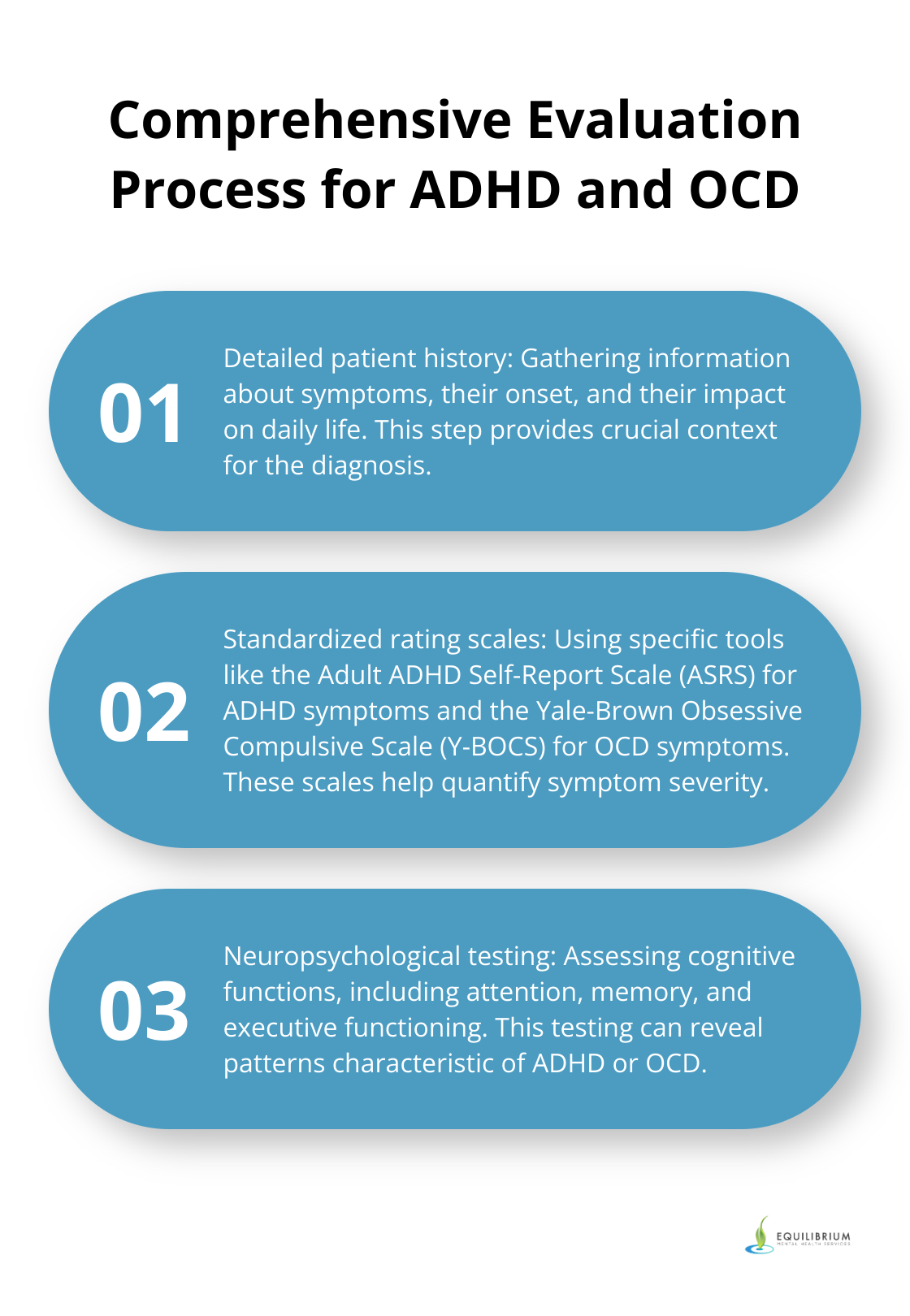
- Detailed patient history
- Standardized rating scales for both ADHD and OCD
- Neuropsychological testing
- Input from family members or close friends
A multi-modal approach to assessment often includes the Adult ADHD Self-Report Scale (ASRS) for ADHD symptoms and the Yale-Brown Obsessive Compulsive Scale (Y-BOCS) for OCD symptoms.
Tailoring Treatment: A Balancing Act
When ADHD and OCD co-occur, treatment becomes complex. What works for one condition might worsen the other. Stimulant medications (commonly used for ADHD) can sometimes increase anxiety and obsessive thoughts in OCD patients.
Research suggests that methylphenidate appears to be better tolerated than D-amphetamine when treating ADHD co-occurring with OCD.
Therapeutic Approaches: Integrated Strategies
Cognitive Behavioral Therapy (CBT) forms the foundation of treatment for both ADHD and OCD. However, specific techniques differ. OCD often responds well to Exposure and Response Prevention (ERP). ADHD treatment focuses on cognitive restructuring and organizational skills training.
Integrating these approaches often yields success. For instance, ERP techniques address OCD symptoms while incorporating ADHD-focused strategies like time management and task prioritization.
The Role of Medication
Medication management for co-occurring ADHD and OCD requires careful consideration. SSRIs (typically first-line for OCD) may not adequately address ADHD symptoms. Conversely, stimulants used for ADHD might exacerbate OCD symptoms in some patients.
A study in the Journal of Clinical Psychiatry found that combining an SSRI with a stimulant proved effective for some patients with both conditions. However, this approach requires close monitoring and should be tailored to each individual’s needs.
If you live in the Miami area (including Pinecrest or Brickell) and suspect you might have these conditions, consider reaching out to a mental health professional. Equilibrium Mental Health Services (https://g.co/kgs/Toi7gBP) offers comprehensive care to address these intertwined disorders effectively.
Final Thoughts
ADHD and OCD share complex connections, from overlapping symptoms to shared neurobiological factors. The question “Are ADHD and OCD related?” has no simple answer, but evidence points to significant interplay between these disorders. Accurate diagnosis and effective treatment require understanding this connection, emphasizing the need for comprehensive evaluations and personalized treatment plans.
Professional help is essential for those who experience symptoms of ADHD, OCD, or both. At Equilibrium Mental Health Services, we offer expert, evidence-based care for various mental health conditions, including ADHD and OCD. Our team provides medication management and psychotherapy, tailoring treatment plans to each patient’s specific needs.
We serve the greater Miami area (including Kendall, Brickell, and Pinecrest) from our location in Coral Gables. Our goal is to help patients navigate these complex disorders, find balance, and achieve a healthier life. If you struggle with symptoms that might relate to ADHD, OCD, or both, contact us for support and personalized attention.


