
ADHD affects approximately 4.4% of adults in the United States, and its symptoms can create significant challenges in romantic partnerships. Research shows that couples where one partner has ADHD report higher rates of relationship dissatisfaction and conflict.
At Equilibrium Mental Health Services, we see how ADHD and relationships intersect daily through our work with couples. The good news is that with proper understanding and targeted strategies, these relationships can thrive and become stronger than ever.
How ADHD Disrupts Relationship Communication
ADHD creates specific communication patterns that can damage even the strongest relationships. Adults with ADHD struggle with what researchers call conversational turn-taking, interrupting their partners 40% more frequently than neurotypical individuals according to studies from the Journal of Attention Disorders. This happens because ADHD brains process information differently, making it difficult to hold thoughts while listening. The result is partners who feel unheard and undervalued.
Emotional Overwhelm Creates Relationship Distance
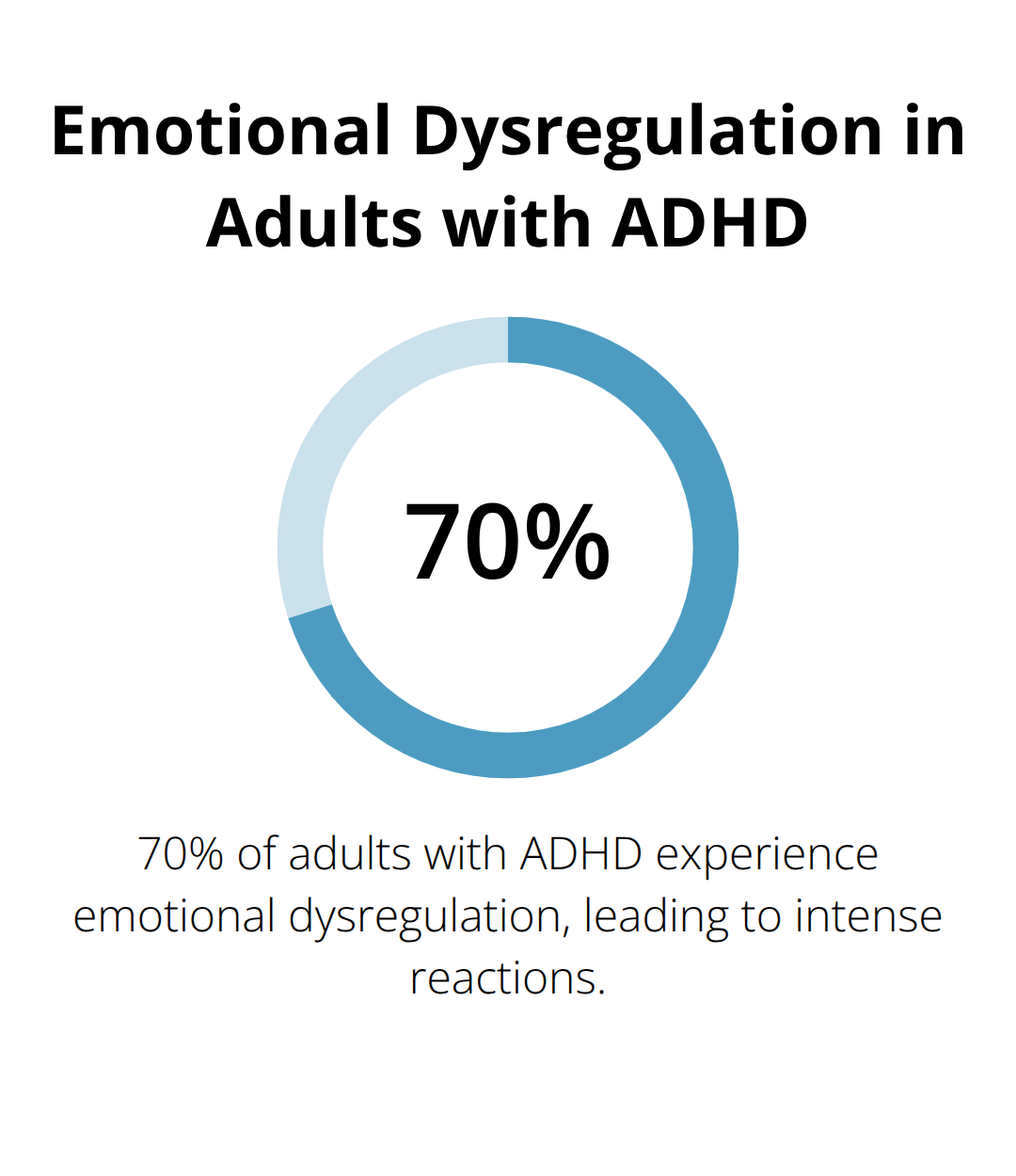
ADHD affects emotional regulation through the prefrontal cortex, leading to intense reactions that seem disproportionate to the situation. Research from Harvard Medical School shows that adults with ADHD experience emotional dysregulation in 70% of cases, causing them to shut down or explode during difficult conversations. This creates a cycle where the non-ADHD partner walks on eggshells and avoids important topics. The ADHD partner then feels criticized and withdraws further. Partners must recognize that these intense emotions are neurological, not personal attacks. Setting specific discussion times when both partners are calm breaks this destructive pattern.
Attention Challenges Erode Intimacy
ADHD directly impacts intimacy through scattered attention during conversations and physical closeness. Studies indicate that adults with ADHD report 30% lower relationship satisfaction, partly due to their inability to maintain focus during meaningful interactions. The hyperfocus aspect of ADHD can be equally damaging (as partners become absorbed in work or hobbies while neglecting relationship needs). This creates emotional distance that compounds over time, with non-ADHD partners feeling invisible in their own relationships.
Rejection Sensitivity Amplifies Conflict
Adults with ADHD often experience rejection sensitive dysphoria, where they perceive criticism even in neutral comments. This neurological response triggers fight-or-flight reactions that escalate minor disagreements into major conflicts. Research shows that up to 98% of adults with ADHD experience this heightened sensitivity to perceived rejection. When a partner suggests improvements or expresses frustration, the ADHD brain interprets this as an attack on their character rather than feedback about behavior. These misinterpretations create defensive responses that push partners further apart and make productive conversations nearly impossible.
These communication breakdowns don’t happen in isolation-they connect directly to the broader relationship challenges that couples face when ADHD enters the picture. For professional support in managing these complex dynamics, consider seeking help from Miami psychiatry specialists who understand ADHD’s impact on relationships.
What Daily ADHD Challenges Destroy Relationships
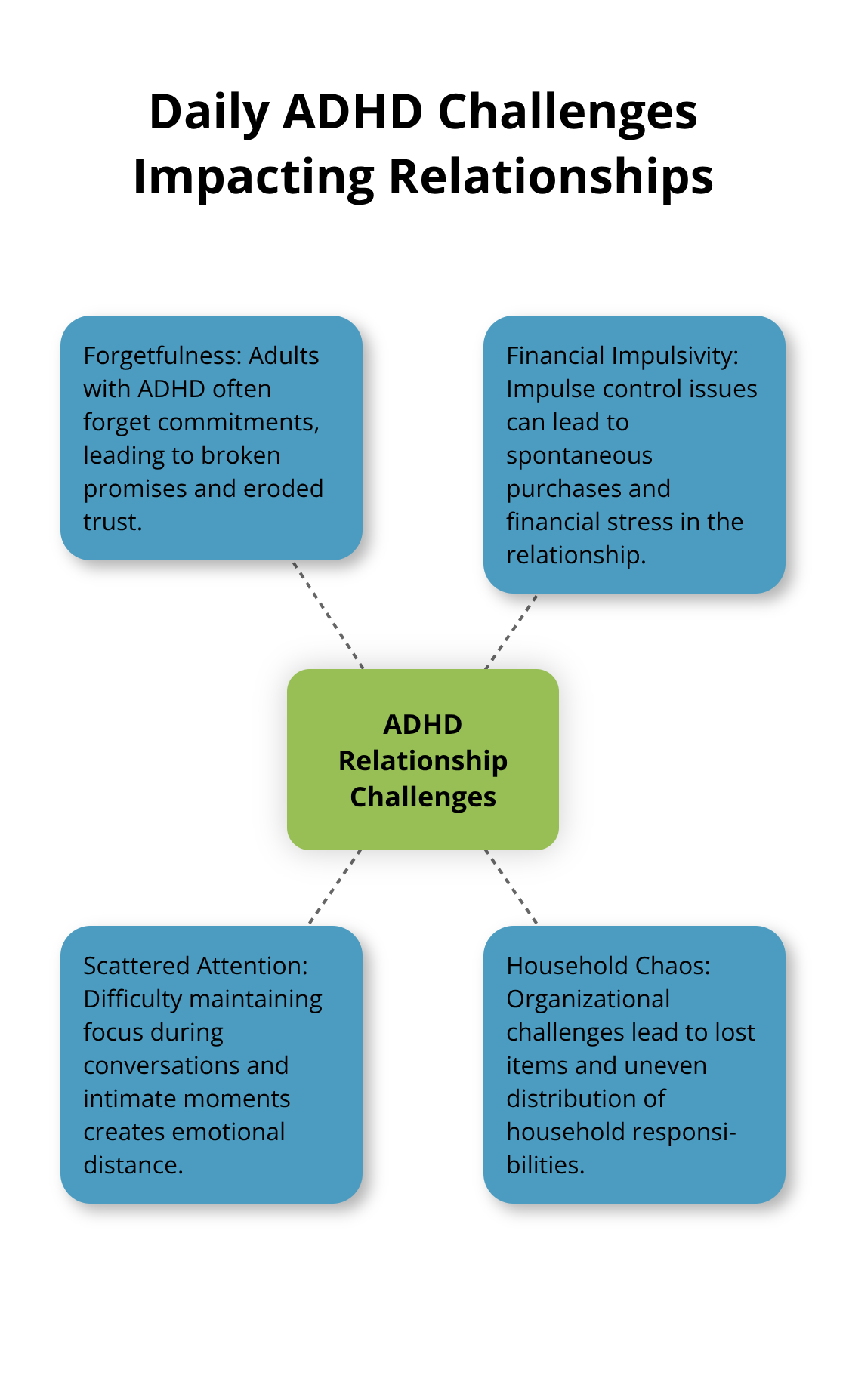
ADHD creates three relationship-breaking patterns that compound over time and erode trust between partners. Adults with ADHD forget commitments more often than neurotypical individuals, leading to broken promises about everything from date nights to household responsibilities. This forgetfulness doesn’t stem from intentional neglect but from working memory deficits that make it difficult to hold information in mind long enough to act on it. Partners interpret these missed commitments as signs of disrespect or lack of caring, which creates resentment that builds with each forgotten anniversary, appointment, or promise.
Financial Impulsivity Creates Long-Term Damage
ADHD brains struggle with impulse control, particularly around spending decisions that affect shared finances. Many people with ADHD face genuine challenges with financial decision-making, from impulsivity that drives spontaneous purchases without consulting their partners or considering long-term consequences. This time blindness means they prioritize immediate gratification over future planning, leading to credit card debt, missed bill payments, and financial stress that damages relationship stability. The non-ADHD partner often becomes the financial gatekeeper, which creates an unhealthy parent-child dynamic that breeds resentment on both sides. Financial impulsivity creates trust issues that take months to repair through structured budgeting and accountability systems.
Scattered Attention Prevents Deep Connection
The attention challenges of ADHD make quality time nearly impossible, with partners constantly competing against phones, thoughts, and distractions for their loved one’s focus. Adults with ADHD often maintain less eye contact during conversations, making their partners feel ignored and unimportant. During intimate moments or serious discussions, the ADHD mind wanders to work problems, random thoughts, or environmental stimuli, creating emotional distance that accumulates over months and years. This scattered attention particularly damages relationships during conflict resolution when focused listening becomes essential for understanding each other’s perspectives and finding solutions.
Household Chaos Breeds Daily Frustration
ADHD symptoms create constant organizational challenges that turn simple household management into a source of daily conflict. Adults with ADHD lose items more frequently than neurotypical individuals, leading to frantic searches for keys, bills, and important documents that disrupt family routines. The executive function deficits make it difficult to maintain consistent cleaning schedules or follow through on agreed-upon chores, leaving the non-ADHD partner to handle most household responsibilities. This imbalance creates a cycle where one partner feels overwhelmed by domestic duties while the other feels criticized and inadequate about their contributions to the home.
These daily challenges don’t exist in isolation-they connect to deeper patterns that require specific strategies and interventions to break the destructive cycles that ADHD creates in relationships. For professional support in managing ADHD’s impact on relationships, consider consulting with specialists in Miami psychiatry who understand these complex dynamics.
How Do You Build ADHD-Friendly Relationship Patterns
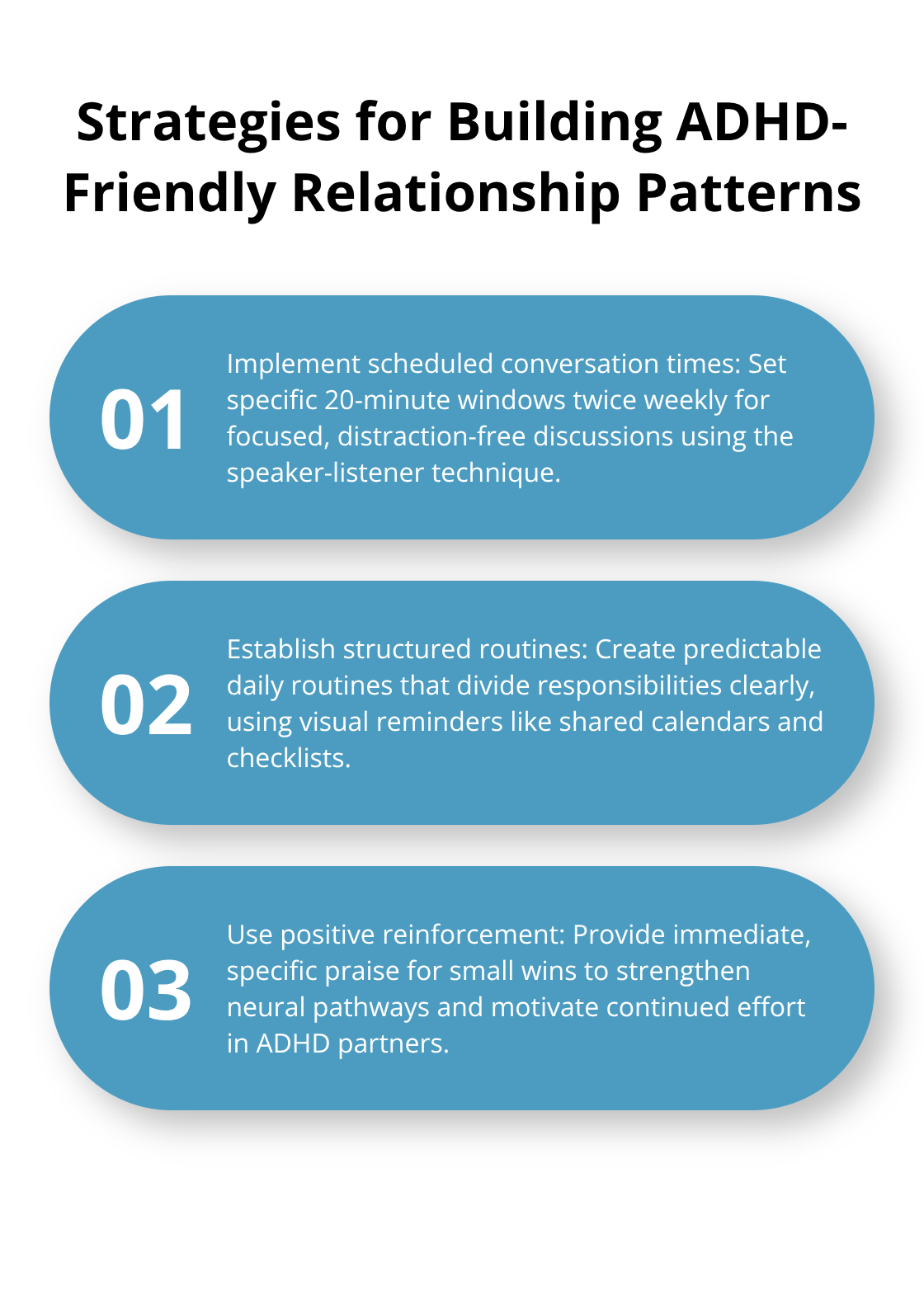
ADHD relationships require specific communication strategies that work with, not against, the ADHD brain’s unique wiring. The most effective technique involves scheduled conversation times rather than spontaneous important discussions. Set a specific 20-minute window twice weekly when both partners are calm and focused, eliminate all distractions (phones and television included), and use what therapists call the speaker-listener technique. The ADHD partner speaks for three minutes while their partner listens without interruption, then roles reverse. This prevents conversation hijacking that destroys productive dialogue and gives the ADHD brain time to organize thoughts before speaking.
Structure Transforms Daily Relationship Chaos
Predictable routines eliminate the decision fatigue that overwhelms ADHD brains and creates relationship friction. Successful ADHD couples establish morning and evening routines that divide responsibilities clearly and permanently. The non-ADHD partner handles tasks that require sustained attention like bill payments and appointment scheduling, while the ADHD partner manages high-energy activities like meal preparation and exercise planning. Visual reminders work better than verbal agreements for ADHD brains, so couples should use shared calendars, phone alarms, and written checklists posted in visible locations throughout the home. This structure reduces the nagging dynamic that poisons many ADHD relationships because expectations become clear and measurable rather than assumed.
Understanding Replaces Blame in Strong ADHD Partnerships
The most successful ADHD couples educate themselves about the neurological basis of ADHD symptoms rather than view behaviors as character flaws or personal attacks. When partners understand that forgetfulness stems from working memory deficits rather than carelessness, they can respond with problem-solving instead of criticism. This knowledge shift transforms relationship dynamics because the non-ADHD partner stops taking ADHD symptoms personally while the ADHD partner feels less defensive about their struggles. Professional Miami psychiatry services can provide valuable education and support for couples navigating these challenges together.
Positive Reinforcement Builds Motivation
ADHD brains respond exceptionally well to immediate positive feedback, making praise a powerful relationship tool. Partners should acknowledge small wins like remembered appointments or completed chores within minutes of the behavior. This immediate recognition strengthens neural pathways that support positive behaviors and motivates continued effort. The key lies in specificity-instead of saying “good job,” try “I appreciate that you loaded the dishwasher without me asking.” This approach works because ADHD brains often struggle with internal motivation but thrive on external validation when delivered consistently and genuinely.
Final Thoughts
ADHD and relationships face unique challenges, but professional support makes recovery possible. We at Equilibrium Mental Health Services provide specialized psychiatric care for adults who struggle with ADHD’s impact on their partnerships. Our team offers both medication management and psychotherapy, creating personalized treatment plans that address the specific ways ADHD affects relationship dynamics.
Couples therapy designed for ADHD relationships focuses on practical communication strategies and behavioral modifications that work with the ADHD brain rather than against it. Individual therapy helps ADHD partners develop emotional regulation skills while supporting non-ADHD partners in understanding their loved one’s neurological differences (which often reduces conflict and builds empathy). Professional guidance transforms awareness into actionable change that strengthens relationships over time.
Strong relationships require ongoing commitment from both partners and expert support when needed. The awareness and accommodation strategies we’ve discussed create the foundation, but lasting change often requires professional help to implement these techniques effectively. If you or your partner experience relationship difficulties related to ADHD, contact Equilibrium Mental Health Services to speak with our caring professionals who understand how ADHD impacts relationships and can guide you toward healthier patterns together.


