
Mental health conditions often share similar symptoms, making self-diagnosis nearly impossible. The depression vs anxiety vs bipolar debate affects millions of Americans who struggle to understand their experiences.
We at Equilibrium Mental Health Services see patients daily who’ve spent years misunderstanding their symptoms. Professional diagnosis remains the only reliable path to effective treatment and recovery.
What Does Depression Actually Look Like
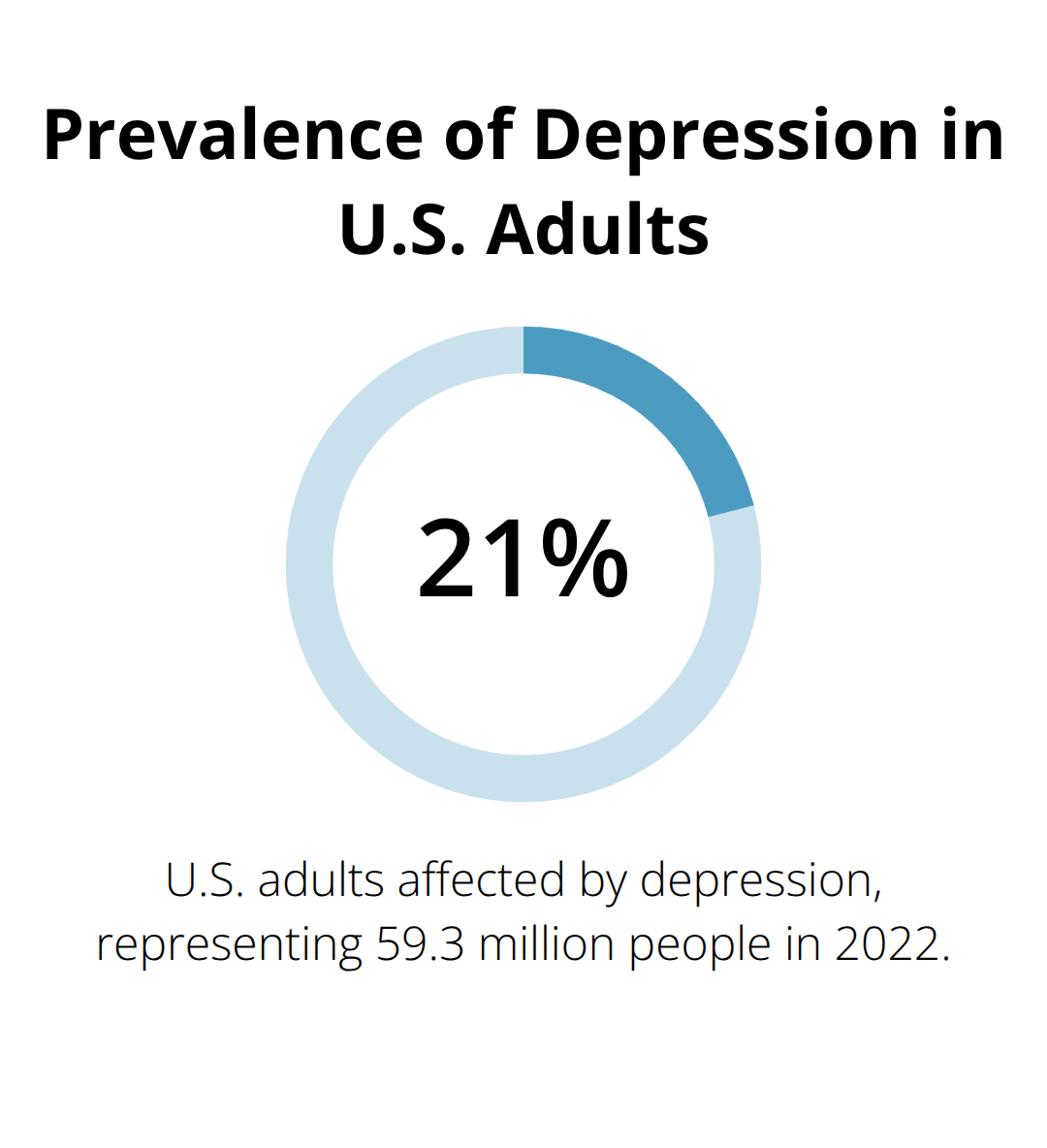
Depression affects more than one in five U.S. adults (59.3 million in 2022), yet many people struggle to recognize when sadness crosses into clinical territory. The difference lies in duration, intensity, and impact on daily function. Major depressive disorder requires symptoms to persist for at least two weeks, but most patients experience symptoms for months or years before they seek help.
When Sadness Becomes Clinical Depression
Clinical depression goes far beyond temporary sadness after a difficult life event. The condition involves persistent feelings of emptiness, worthlessness, and hopelessness that interfere with work, relationships, and basic self-care. Sleep patterns shift dramatically – some patients sleep 12-14 hours daily while others manage only 2-3 hours nightly. Appetite changes follow similar extremes, with some individuals who lose 15-20 pounds within weeks while others gain weight rapidly through emotional consumption.
Physical Symptoms That Signal Depression
Depression manifests physically in ways that surprise many patients. Chronic headaches, unexplained digestive problems, and persistent fatigue occur frequently in depression cases. These physical symptoms often lead patients to seek medical care before they consider mental health treatment. Muscle aches, back pain, and joint stiffness frequently accompany depression (which creates a cycle where physical discomfort worsens emotional symptoms).
The Complete Loss of Interest Warning Sign
Anhedonia – the clinical term for loss of interest in previously enjoyable activities – serves as one of depression’s most reliable indicators. Patients describe emotional numbness toward hobbies, social activities, and even intimate relationships. This symptom distinguishes depression from temporary sadness or grief, where people typically maintain some capacity for pleasure. When someone stops participation in activities they once loved for several weeks, professional evaluation becomes necessary to prevent further deterioration.
Cognitive Changes That Accompany Depression
Depression significantly impacts mental clarity and decision-making abilities. Concentration problems affect approximately 90% of individuals with major depression, making work tasks and daily responsibilities feel overwhelming. Memory issues become apparent as patients struggle to recall recent conversations or important appointments. These cognitive symptoms (often called “brain fog”) can persist even when mood symptoms begin to improve, which explains why comprehensive treatment addresses both emotional and cognitive aspects of the condition.
While these symptoms paint a clear picture of depression, anxiety disorders present their own distinct patterns that require different recognition strategies.
How Do You Know If Anxiety Is Taking Over
Anxiety disorders affect over 40 million American adults annually, making them the most common mental health conditions in the United States according to the Anxiety and Depression Association of America. Yet recognition remains challenging because anxiety symptoms often masquerade as physical health problems or personality traits.
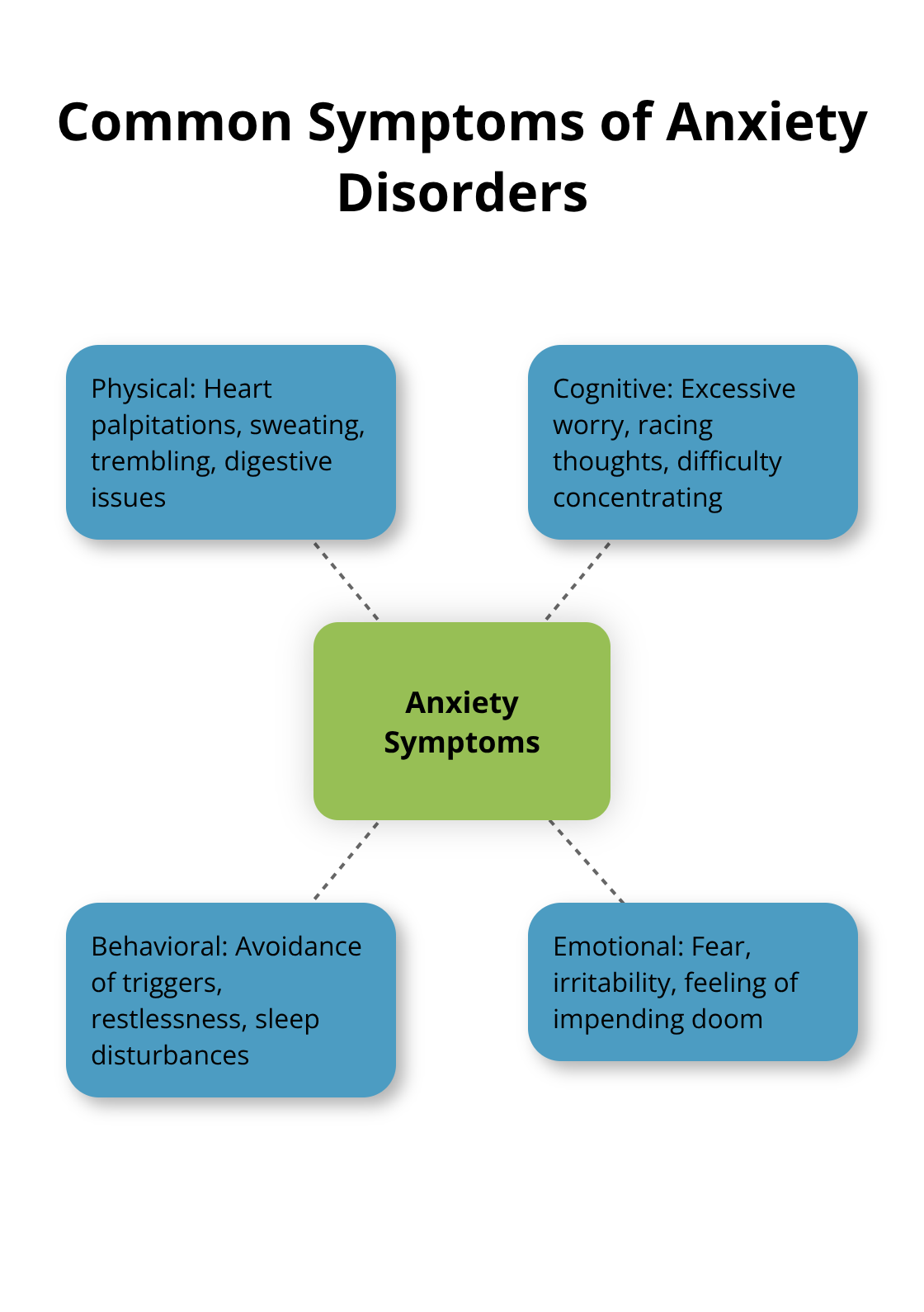
The key distinction lies in severity and interference with daily life – normal worry becomes pathological when it persists for six months or longer and significantly impairs work, relationships, or personal functioning.
Physical Symptoms That Reveal Anxiety
Anxiety creates unmistakable physical symptoms that many patients initially attribute to medical conditions. Heart palpitations, chest tightness, and shortness of breath frequently send individuals to emergency rooms before they consider anxiety as the culprit. Excessive sweating, trembling hands, and muscle tension create additional distress that reinforces the anxiety cycle. Digestive problems including nausea, stomach pain, and irritable bowel symptoms affect a significant portion of anxiety disorder patients. These physical manifestations often prove more disabling than the emotional symptoms, particularly when they trigger avoidance behaviors that restrict normal activities.
When Worry Becomes Excessive and Uncontrollable
Generalized anxiety disorder transforms everyday concerns into overwhelming preoccupations that consume mental energy and decision-making capacity. Patients report spending hours daily catastrophizing about unlikely scenarios – from minor work presentations to routine medical appointments. This excessive worry creates a constant state of hypervigilance that exhausts cognitive resources and impairs concentration. Sleep disturbances follow naturally, with racing thoughts that prevent both sleep initiation and maintenance. The worry becomes so intrusive that it interferes with job performance, parenting abilities, and social relationships (creating real consequences that validate the anxious person’s fears about their competence and worth).
Panic Attacks and Avoidance Patterns
Panic attacks represent anxiety’s most intense manifestation, with symptoms that peak within minutes and create overwhelming fear of losing control or dying. These episodes involve rapid heartbeat, dizziness, hot flashes, and feelings of unreality that can last 5-20 minutes. The fear of future panic attacks often becomes more debilitating than the attacks themselves, leading to agoraphobic behaviors where individuals avoid places or situations where escape might prove difficult. This avoidance pattern gradually shrinks a person’s world (sometimes to the point where leaving home becomes impossible without significant distress).
While anxiety creates its own distinct challenges, bipolar disorder presents an entirely different pattern of mood episodes that require careful distinction from both anxiety and depression. For those seeking professional help with anxiety disorders, Miami psychiatry services provide specialized treatment options.
What Makes Bipolar Different from Depression and Anxiety
Bipolar disorder affects approximately 2.6% of U.S. adults, yet diagnosis often takes 5-10 years because patients typically seek help during depressive episodes rather than manic ones. The condition involves distinct mood episodes that swing between extreme highs and devastating lows, creating a pattern that distinguishes it from both depression and anxiety disorders.
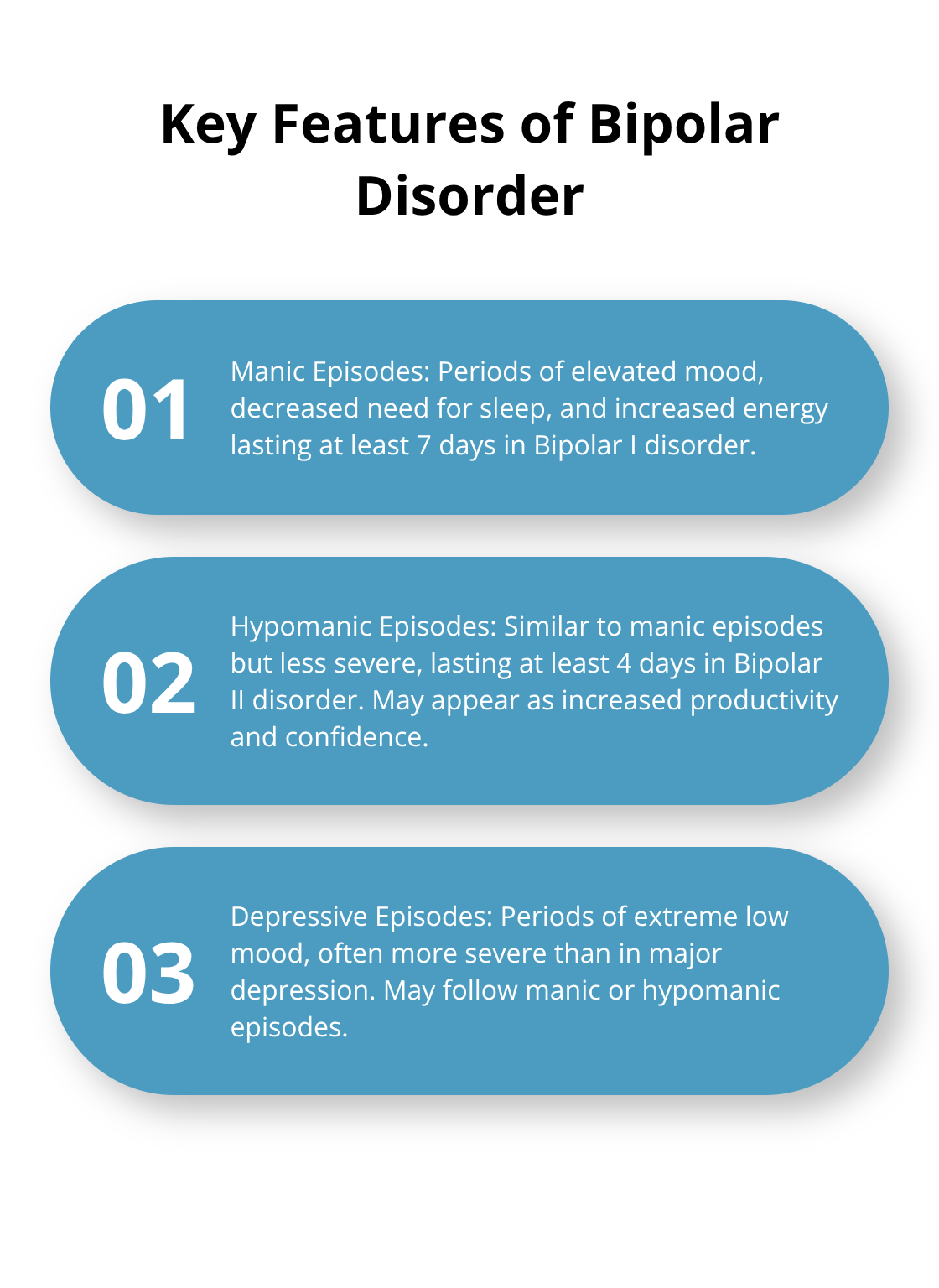
Manic episodes must last at least seven consecutive days for bipolar I disorder, while hypomanic episodes in bipolar II disorder persist for at least four days with less severe symptoms.
Manic Episodes Create Unmistakable Changes
Manic episodes produce behavioral changes that family members notice immediately. Sleep requirements drop dramatically – patients function on 2-3 hours nightly without fatigue, often staying awake for days while they pursue grandiose projects. Speech becomes rapid and pressured, jumping between topics so quickly that conversations become impossible to follow. Spending sprees, sexual indiscretions, and business investments based on unrealistic expectations occur frequently during these episodes. The elevated mood creates a false sense of invincibility that leads to poor decisions with lasting consequences.
Hypomania Appears Less Severe But Still Dangerous
Hypomanic episodes present similar symptoms but with less intensity, allowing individuals to maintain work and social functioning while still displaying elevated mood and increased energy. Poor judgment creates relationship problems and financial difficulties even when the person appears highly productive. Family members often describe these periods as times when their loved one seems “too good” – unusually confident, talkative, and energetic. The danger lies in how hypomania can escalate into full mania or crash into severe depression without warning.
Depressive Episodes Hit Harder After Mania
Bipolar depression episodes mirror major depression but often prove more severe and treatment-resistant. Patients describe complete depletion after manic episodes, experiencing profound guilt about decisions made during elevated mood states. Sleep patterns reverse completely – individuals who needed no sleep during mania now sleep 12-16 hours daily yet wake exhausted. The contrast between manic confidence and depressive hopelessness creates additional psychological trauma that complicates recovery.
Rapid Cycling Complicates Treatment
Rapid cycling affects individuals who experience four or more mood episodes annually, creating constant instability that requires intensive medication management. These individuals face particular challenges because their moods shift too quickly for traditional therapy approaches to take hold. Professional intervention during depressive episodes becomes absolutely necessary for safety and recovery, especially when considering the significant suicide risk associated with bipolar disorder. For comprehensive treatment options, consider consulting with Miami psychiatry specialists who understand the complexities of mood disorders.
Final Thoughts
The depression vs anxiety vs bipolar distinction requires professional expertise that goes beyond symptom checklists and online assessments. Mental health professionals use standardized diagnostic tools, comprehensive interviews, and sometimes psychological tests to reach accurate conclusions. Misdiagnosis leads to ineffective treatment that can worsen symptoms and delay recovery for months or years.
We at Equilibrium Mental Health Services provide evidence-based psychiatric care for adults who experience depression, anxiety, bipolar disorder, and other mental health conditions. Our team combines medication management with psychotherapy to create personalized treatment plans that address each individual’s unique needs. Early intervention dramatically improves long-term outcomes for all three conditions (with research showing faster recovery and fewer relapses when treatment begins within the first year).
Professional support makes the process manageable when you take the first step toward better mental health. If you experience persistent mood changes, excessive worry, or concerning behavioral patterns, contact our team to speak with caring professionals. Begin your journey toward improved mental well-being with Miami psychiatry services that understand the complexities of mood disorders.


