
At Equilibrium Mental Health Services, we often encounter patients grappling with the complexities of mental health disorders. One question that frequently arises is: Can OCD lead to schizophrenia?
While these conditions are distinct, they share some intriguing connections that warrant exploration. In this post, we’ll examine the relationship between OCD and schizophrenia, their key differences, and the importance of accurate diagnosis and treatment.
What Are OCD and Schizophrenia?
Understanding OCD
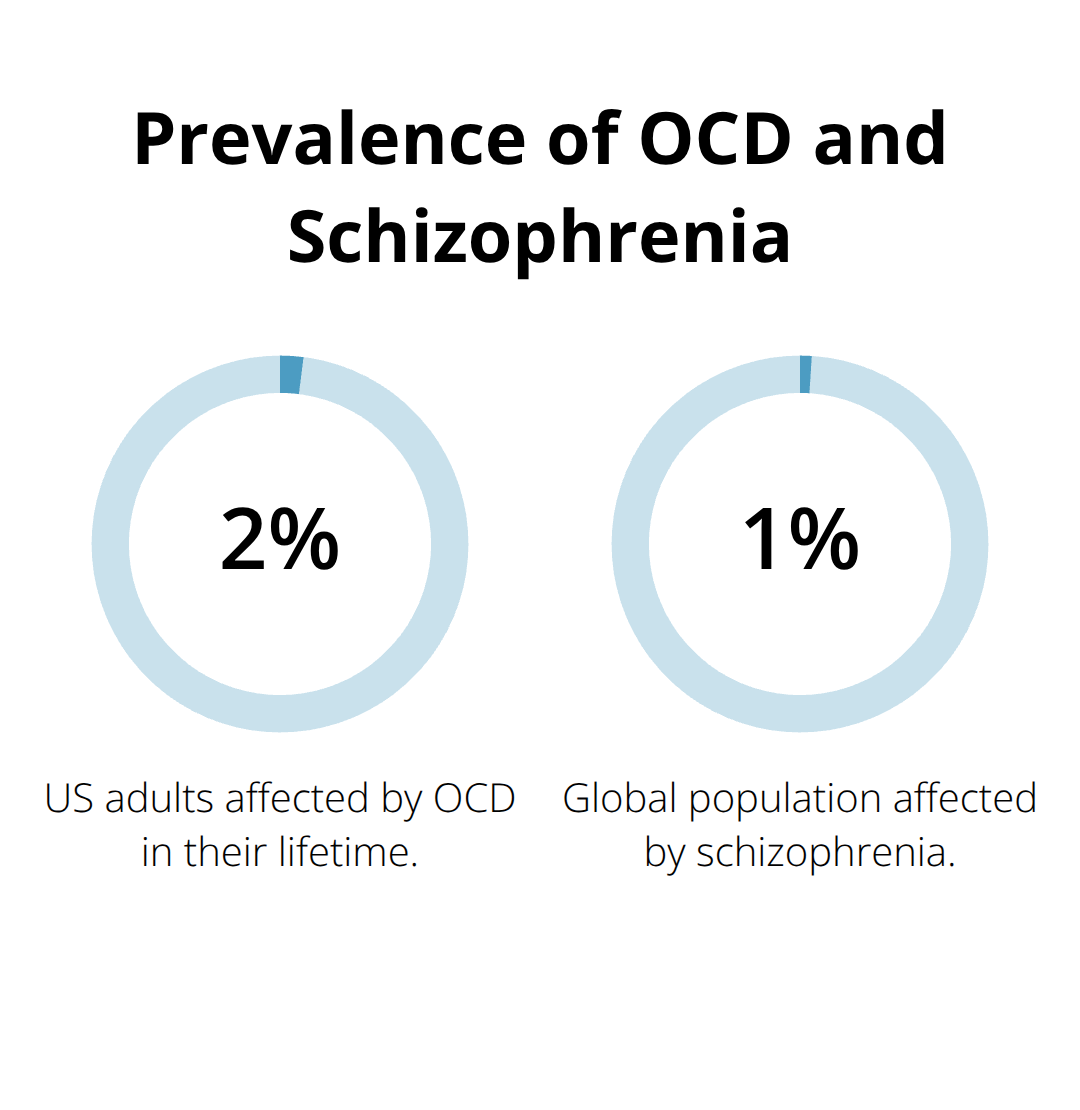
Obsessive-Compulsive Disorder (OCD) is a mental health condition that affects a person’s thoughts and behaviors. People with OCD experience persistent, intrusive thoughts (obsessions) and feel compelled to perform repetitive behaviors or mental acts (compulsions). For instance, a patient in Coral Gables might have constant fears of contamination, leading to excessive hand-washing rituals. OCD affects about 2.3% of adults in the United States over their lifetime, with an annual prevalence of approximately 1.2%.
Common OCD symptoms include:
- Excessive cleaning or hand washing
- Checking locks, appliances, or switches repeatedly
- Arranging items in a specific order
- Counting or repeating certain words or phrases
Recognizing Schizophrenia
Schizophrenia is a complex disorder that affects how a person thinks, feels, and behaves. It often involves a disconnect from reality. A patient in Brickell with schizophrenia might experience hallucinations, delusions, or disorganized speech and behavior. Schizophrenia affects approximately 1% of the global population and ranks among the top 10 causes of global disability.
Key symptoms of schizophrenia include:
- Hallucinations (seeing or hearing things that aren’t there)
- Delusions (false beliefs not based in reality)
- Disorganized speech or behavior
- Negative symptoms (reduced emotional expression, lack of motivation)
Key Differences Between OCD and Schizophrenia
While both conditions can significantly impact daily life, there are important differences:
- Reality Testing: People with OCD typically recognize that their thoughts and behaviors are irrational, while those with schizophrenia often lose touch with reality.
- Thought Content: OCD involves intrusive thoughts that cause anxiety, while schizophrenia involves disordered thinking and false beliefs.
- Onset and Course: OCD often begins in childhood or adolescence, while schizophrenia typically emerges in late adolescence or early adulthood.
- Treatment Approaches: OCD treatment primarily involves cognitive-behavioral therapy and selective serotonin reuptake inhibitors (SSRIs). Schizophrenia treatment usually requires antipsychotic medications and psychosocial interventions.
Importance of Proper Diagnosis
Understanding these distinctions is essential for proper diagnosis and treatment. If you or a loved one in the Miami area experience symptoms of either condition, seek professional help. Early intervention can significantly improve outcomes and quality of life.
At Equilibrium Mental Health Services, we use evidence-based approaches to diagnose and treat both conditions. Our team in Pinecrest specializes in creating personalized treatment plans that address the unique needs of each patient (including those with OCD or schizophrenia).
Now that we’ve explored the definitions and key differences between OCD and schizophrenia, let’s examine the intriguing relationship between these two disorders and what research reveals about their potential connections.
How Are OCD and Schizophrenia Connected?
Overlapping Symptoms and Behaviors
OCD and schizophrenia share some similar features, which sometimes leads to confusion. Both conditions involve intrusive thoughts that feel beyond a person’s control. In OCD, these thoughts manifest as obsessions, while in schizophrenia, they may take the form of delusions.
A study found that up to 50% of patients with schizophrenia have obsessive compulsive-like symptoms coexisting with psychosis. This overlap can complicate diagnosis and treatment, especially for patients in areas where access to specialized mental health care may be limited.
Comorbidity and Shared Risk Factors
Research indicates a higher than expected co-occurrence of OCD and schizophrenia. A large-scale study in JAMA Psychiatry revealed that individuals with OCD have a nearly seven-fold increased risk of developing schizophrenia compared to those without OCD.
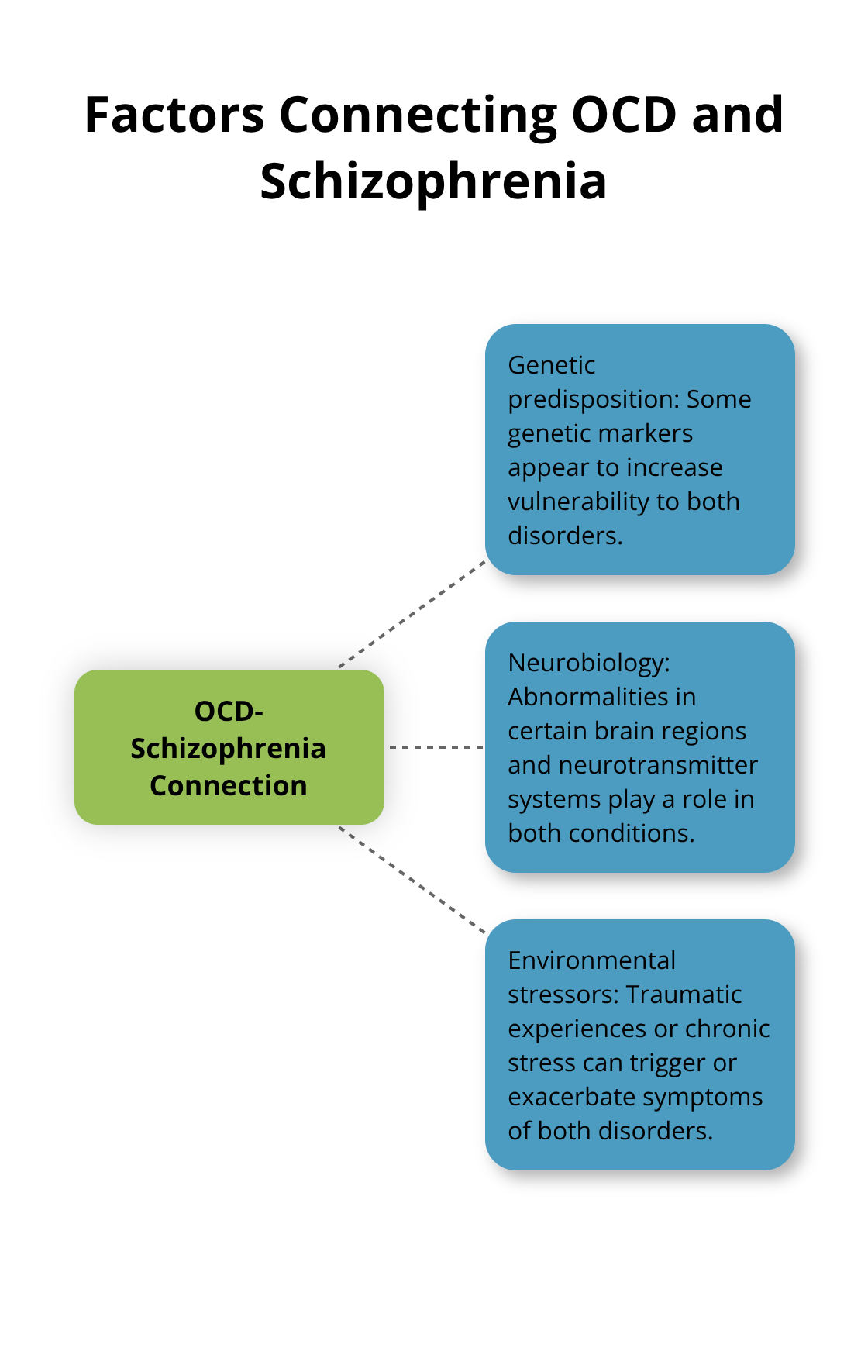
Several factors may contribute to this connection:
- Genetic predisposition: Some genetic markers appear to increase vulnerability to both disorders.
- Neurobiology: Abnormalities in certain brain regions and neurotransmitter systems play a role in both conditions.
- Environmental stressors: Traumatic experiences or chronic stress can trigger or exacerbate symptoms of both disorders.
Recent Research Findings
A study found that duration of untreated psychosis may have a negative impact on the prognosis for individuals with schizophrenia. This research underscores the importance of early intervention and comprehensive mental health assessments.
Implications for Treatment
Understanding the relationship between OCD and schizophrenia is important for effective treatment. For patients with symptoms of both disorders, combination therapies may prove beneficial. This could involve cognitive-behavioral therapy for OCD symptoms alongside antipsychotic medications for schizophrenia-related symptoms.
It’s important to note that having OCD does not necessarily mean a person will develop schizophrenia. However, the increased risk highlights the need for ongoing monitoring and proactive mental health care.
The Role of Specialized Care
At Equilibrium Mental Health Services in Miami, we use these findings to inform our approach to patient care. We conduct thorough evaluations to differentiate between OCD and other conditions, ensuring that our patients receive accurate diagnoses and appropriate treatment plans.
If you experience symptoms of OCD or schizophrenia, don’t hesitate to reach out to mental health professionals. Early intervention can significantly improve outcomes and quality of life for individuals dealing with these complex disorders.
Now that we’ve explored the connections between OCD and schizophrenia, let’s examine the various treatment approaches available for these conditions.
Tailored Treatments for OCD and Schizophrenia
Evidence-Based Therapies for OCD
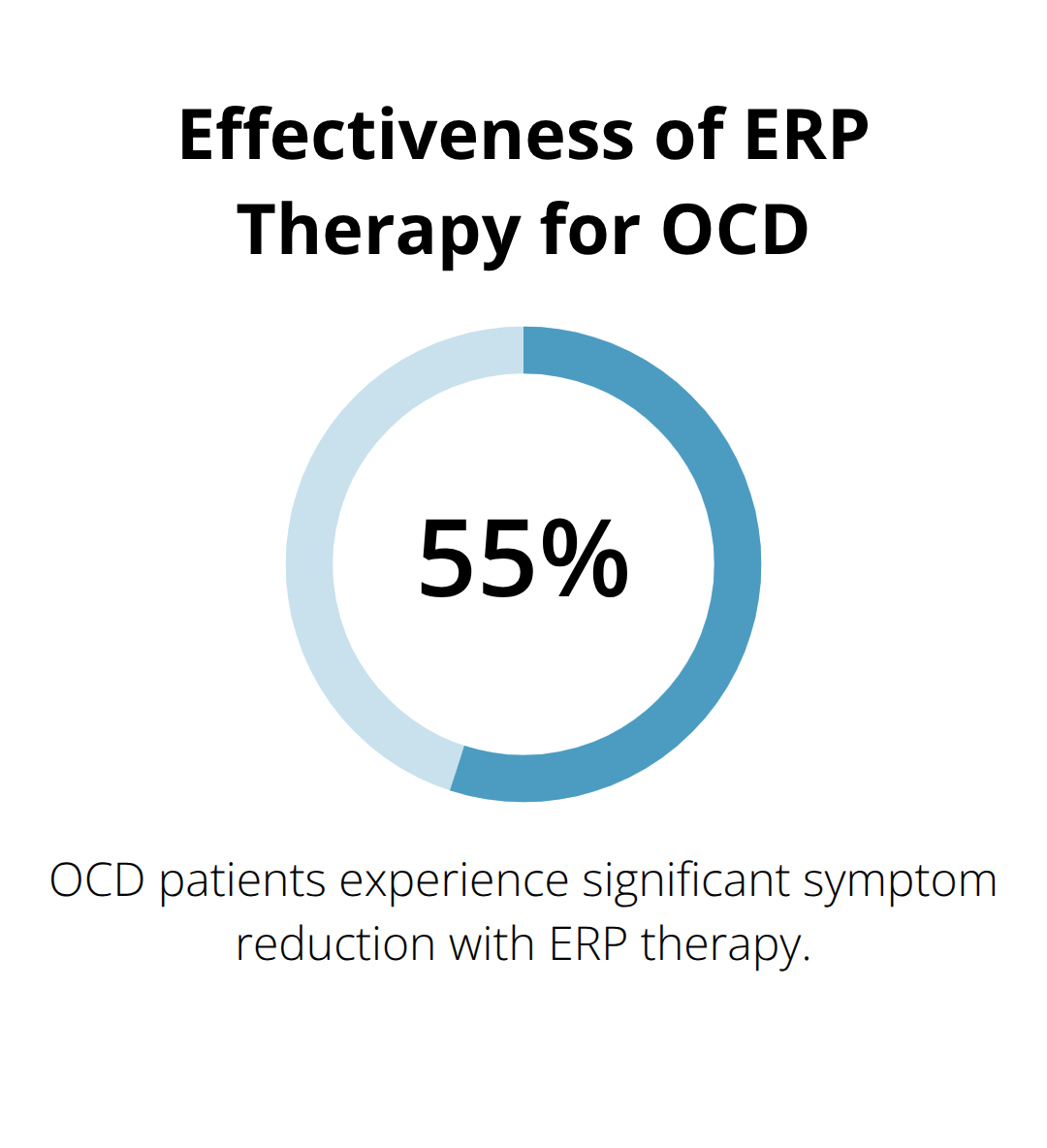
Cognitive Behavioral Therapy (CBT) stands out as the gold standard for OCD treatment. A specific type of CBT, called Exposure and Response Prevention (ERP), shows remarkable results. In ERP, patients face their fears gradually while resisting the urge to perform compulsions. Studies indicate that 50-60% of OCD patients experience significant symptom reduction with ERP.
For medication, doctors often prescribe Selective Serotonin Reuptake Inhibitors (SSRIs). The FDA has approved several SSRIs for OCD treatment (including fluoxetine, sertraline, and paroxetine). These medications can help reduce obsessive thoughts and compulsive behaviors in many patients.
Effective Treatments for Schizophrenia
Antipsychotic medications form the cornerstone of schizophrenia treatment. These drugs help manage hallucinations, delusions, and disorganized thinking. Doctors commonly prescribe second-generation antipsychotics like risperidone and olanzapine due to their efficacy and reduced side effects compared to older medications.
Psychosocial interventions play a vital role alongside medication. Cognitive Behavioral Therapy for psychosis (CBTp) helps patients manage their symptoms and improve their quality of life. Family-focused therapy and social skills training also contribute to better outcomes.
The Importance of Early Intervention
Early diagnosis and treatment can significantly improve outcomes for both OCD and schizophrenia. Studies have shown varied long-term remission rates in OCD patients receiving evidence-based treatment, ranging from 17% to 65%.
In schizophrenia, the duration of untreated psychosis directly correlates with poorer outcomes. Research indicates that reducing this duration can lead to better symptom control and improved functional outcomes. In Coral Gables, mental health professionals emphasize the importance of seeking help at the first signs of psychotic symptoms.
Comprehensive Evaluations for Accurate Diagnosis
Mental health professionals use cutting-edge assessment tools and stay updated on the latest research to provide the most effective treatments for patients in Brickell and surrounding areas. Comprehensive evaluations ensure accurate diagnosis, which is essential for developing an effective treatment plan.
Personalized Treatment Plans
One size doesn’t fit all when it comes to treating OCD and schizophrenia. Mental health experts create personalized care plans that address each patient’s unique needs and circumstances. These plans may combine various therapies, medications, and support strategies to achieve the best possible outcomes.
Final Thoughts
OCD and schizophrenia are distinct mental health conditions with intriguing connections. Research indicates that individuals with OCD may face an increased risk of developing schizophrenia, but this does not guarantee progression from one disorder to the other. The question “Can OCD lead to schizophrenia?” highlights the need for professional evaluation and early intervention to improve outcomes and quality of life.
Mental health professionals use comprehensive assessments to provide accurate diagnoses and create personalized treatment plans. Expert psychiatric care addresses these complex conditions in Miami and surrounding areas (including Coral Gables and Brickell). Effective treatments exist for both OCD and schizophrenia, ranging from cognitive-behavioral therapy to medication management.
We at Equilibrium Mental Health Services specialize in evidence-based treatments for various mental health disorders. Our experienced team uses the latest research to support patients on their journey to better mental health. You will take control of your well-being when you seek professional help for intrusive thoughts, compulsive behaviors, or more severe symptoms.


