
Treatment-resistant depression affects 30% of patients who don’t respond to standard antidepressants. Traditional medications fail because brain chemistry varies significantly between individuals.
New medicines for depression are changing lives through innovative approaches like ketamine therapy and brain stimulation techniques. We at Equilibrium Mental Health Services see remarkable results with these breakthrough treatments.
When Standard Treatments Stop Working
Treatment-resistant depression strikes approximately 30% of patients who fail multiple antidepressant interventions. This condition means your brain doesn’t respond to traditional SSRIs like Prozac or Zoloft after adequate trials that last 6-8 weeks each. The serotonin hypothesis that guides most antidepressant development oversimplifies depression’s complex nature, which involves multiple neurotransmitter systems (including glutamate, GABA, and dopamine pathways).

Why Your Brain Resists Standard Medications
Individual genetic variations affect how your liver processes antidepressants through cytochrome P450 enzymes. The CYP2D6 enzyme processes many antidepressants, and variations in this enzyme can cause some people to metabolize medications too quickly, while others process them too slowly, which prevents therapeutic blood levels. Depression involves disrupted brain circuits that connect the prefrontal cortex to limbic regions, which standard medications may not adequately target. Many patients continue to experience symptoms like insomnia and cognitive fog even while they take antidepressants.
Red Flags That Signal Treatment Failure
Watch for persistent symptoms after 8-12 weeks of adequate medication doses, worsened suicidal thoughts, or new symptoms that emerge during treatment. Physical signs include unchanged sleep disorders, continued appetite changes, and ongoing fatigue that interferes with daily functions. Cognitive symptoms like concentration problems and decision-making difficulties that persist indicate your current treatment isn’t addressing underlying neurobiological mechanisms (particularly glutamate and GABA imbalances).
The Science Behind Treatment Resistance
Brain imaging studies reveal that treatment-resistant patients show different neural activity patterns compared to those who respond to standard medications. The anterior cingulate cortex and dorsolateral prefrontal cortex often remain hyperactive despite traditional antidepressant treatment. These brain regions control executive functions and emotional regulation, which explains why standard SSRIs fail to address core symptoms in resistant cases.
When these warning signs appear, breakthrough treatments like ketamine therapy and TMS become necessary alternatives that target different brain pathways than traditional antidepressants. For comprehensive evaluation and innovative treatment options, consider consulting with specialists in Miami psychiatry.
Which New Treatments Actually Work for Resistant Depression
Ketamine Transforms Treatment Timelines
Ketamine therapy delivers results within hours instead of the 6-8 weeks traditional antidepressants require. NIMH-funded studies show ketamine reduces depression symptoms in treatment-resistant patients who failed multiple medication trials. The drug blocks NMDA receptors and increases glutamate activity, which stimulates new neural connections in the prefrontal cortex.
Esketamine, the nasal spray version approved by the FDA in 2019, offers similar rapid relief with easier administration. Patients receive treatments twice weekly for the first month, then weekly maintenance sessions. Side effects include temporary dissociation and mild blood pressure increases that resolve within two hours. The treatment costs $590-$790 per session, but most insurance plans cover esketamine when qualified psychiatrists prescribe it.
TMS Delivers Magnetic Precision Without Medication
Transcranial Magnetic Stimulation targets the dorsolateral prefrontal cortex with focused magnetic pulses that restore normal brain activity patterns. Clinical studies demonstrate 60% of treatment-resistant patients experience significant improvement after 36 TMS sessions administered over six weeks. The Stanford SAINT protocol accelerates this timeline and delivers 10 sessions daily for five days, which achieves almost 80% remission rates in severe cases.

Each 20-minute session uses MRI-guided targeting to hit precise brain coordinates that control mood regulation. Patients resume normal activities immediately after treatment, which makes TMS ideal for working professionals. The therapy costs $300-$500 per session, with most insurance providers covering FDA-approved protocols. Side effects remain minimal and limit to mild scalp discomfort during treatment.
Psilocybin Research Shows Unprecedented Results
Clinical trials at Johns Hopkins reveal psilocybin-assisted therapy produces lasting depression relief after just two guided sessions. The COMPASS study found 67% of treatment-resistant patients achieved remission four weeks after psilocybin treatment combined with psychological support. These breakthrough sessions involve controlled doses of synthetic psilocybin administered in clinical settings with trained therapists present throughout the 6-8 hour experience.
The treatment increases neuroplasticity and disrupts rigid thought patterns that maintain depressive cycles. Phase III trials are expanding across multiple sites, with FDA approval expected by 2026 for treatment-resistant depression.
These innovative treatments represent just the beginning of advanced therapeutic interventions that target severe depression through multiple pathways and mechanisms. For comprehensive psychiatric care, consider consulting with specialists in Miami psychiatry who stay current with these emerging treatment options.
Advanced Surgical Interventions for Severe Depression
Deep Brain Stimulation Targets Specific Depression Circuits
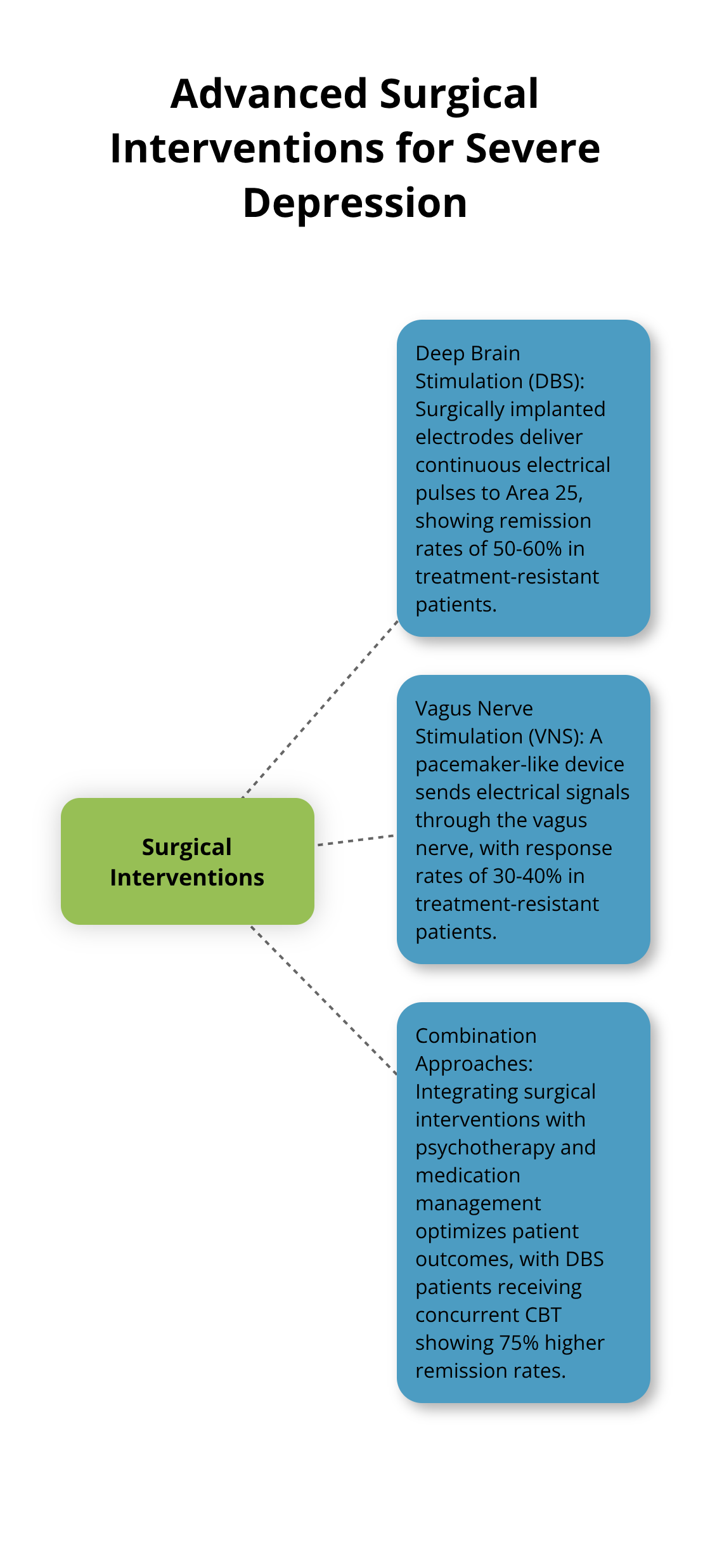
Deep brain stimulation places surgically implanted electrodes that deliver continuous electrical pulses to Area 25, a brain region that shows hyperactivity in treatment-resistant depression. Neurosurgeons position thin wires through small skull openings while patients remain awake to provide feedback during electrode placement. ECT studies show remission rates of 50-60% in treatment-resistant patients, though effectiveness may vary based on individual patient factors.
The surgery costs $100,000-$150,000 initially, but Medicare and most insurance plans cover DBS for qualified patients who failed at least four medication trials and one course of electroconvulsive therapy. Patients experience immediate mood improvements within days, though optimal benefits develop over 3-6 months as brain circuits adapt to stimulation patterns. Side effects include temporary confusion and mild surgical risks (serious complications occur in fewer than 2% of cases according to Cleveland Clinic data).
Vagus Nerve Stimulation Offers Less Invasive Brain Modulation
Vagus nerve stimulation uses a pacemaker-like device implanted under the collarbone that sends electrical signals through the vagus nerve to brain regions that control mood. The 30-minute outpatient procedure threads a wire from the chest device around the left vagus nerve in the neck. Clinical trials show response rates of 30-40% in treatment-resistant patients based on earlier open trials, with benefits that continue to increase over two years of treatment.
The device delivers programmable pulses every few minutes throughout the day, which patients can adjust with handheld magnets during depressive episodes. VNS therapy costs $25,000-$35,000 (surgery and device programming included), with most insurance plans that provide coverage after documented medication failures. Common side effects include temporary voice hoarseness and coughing during stimulation cycles, which typically resolve within the first month of treatment.
Combination Approaches Maximize Treatment Success
Psychiatrists now combine surgical interventions with psychotherapy and medication management to optimize patient outcomes. DBS patients who receive concurrent cognitive behavioral therapy show 75% higher remission rates compared to those who receive device treatment alone. This integrated approach addresses both neurobiological dysfunction and psychological patterns that maintain depressive cycles.
VNS therapy paired with antidepressant medications produces synergistic effects that neither treatment achieves independently. The electrical stimulation enhances medication effectiveness by increasing neurotransmitter availability in targeted brain regions. Patients in Miami and surrounding areas like Coral Gables can access these advanced combination treatments through specialized Miami psychiatry centers that coordinate surgical and therapeutic interventions.
Final Thoughts
These breakthrough treatments represent a paradigm shift in depression care. Ketamine therapy provides rapid relief within hours, while TMS delivers precise brain stimulation without medication side effects. Advanced surgical options like deep brain stimulation and vagus nerve stimulation offer hope for the most severe cases.
New medicines for depression continue to emerge through clinical trials, with psilocybin therapy demonstrating remarkable 67% remission rates in treatment-resistant patients. The key to successful treatment lies in collaboration with qualified mental health professionals who understand these innovative approaches. Treatment-resistant depression affects millions, but these advances mean patients have multiple options beyond traditional antidepressants (which fail in approximately 30% of cases).
We at Equilibrium Mental Health Services stay current with the latest treatment innovations and provide comprehensive psychiatric care for adults throughout Miami and surrounding areas. Our team specializes in evidence-based approaches for depression, anxiety, bipolar disorder, and PTSD. If traditional treatments haven’t worked for you, contact Equilibrium Mental Health Services to explore these breakthrough options and begin your journey toward lasting recovery.


