
Bipolar manic depression is a complex mental health condition that affects millions worldwide. Understanding its diagnosis and classification is vital for effective treatment.
At Equilibrium Mental Health Services, we recognize the importance of accurate coding in mental health care. This blog post explores the ICD-10 code for bipolar manic depression, shedding light on its significance in diagnosis and treatment planning.
What Is Bipolar Manic Depression?
The Bipolar Rollercoaster: Understanding Mood Episodes
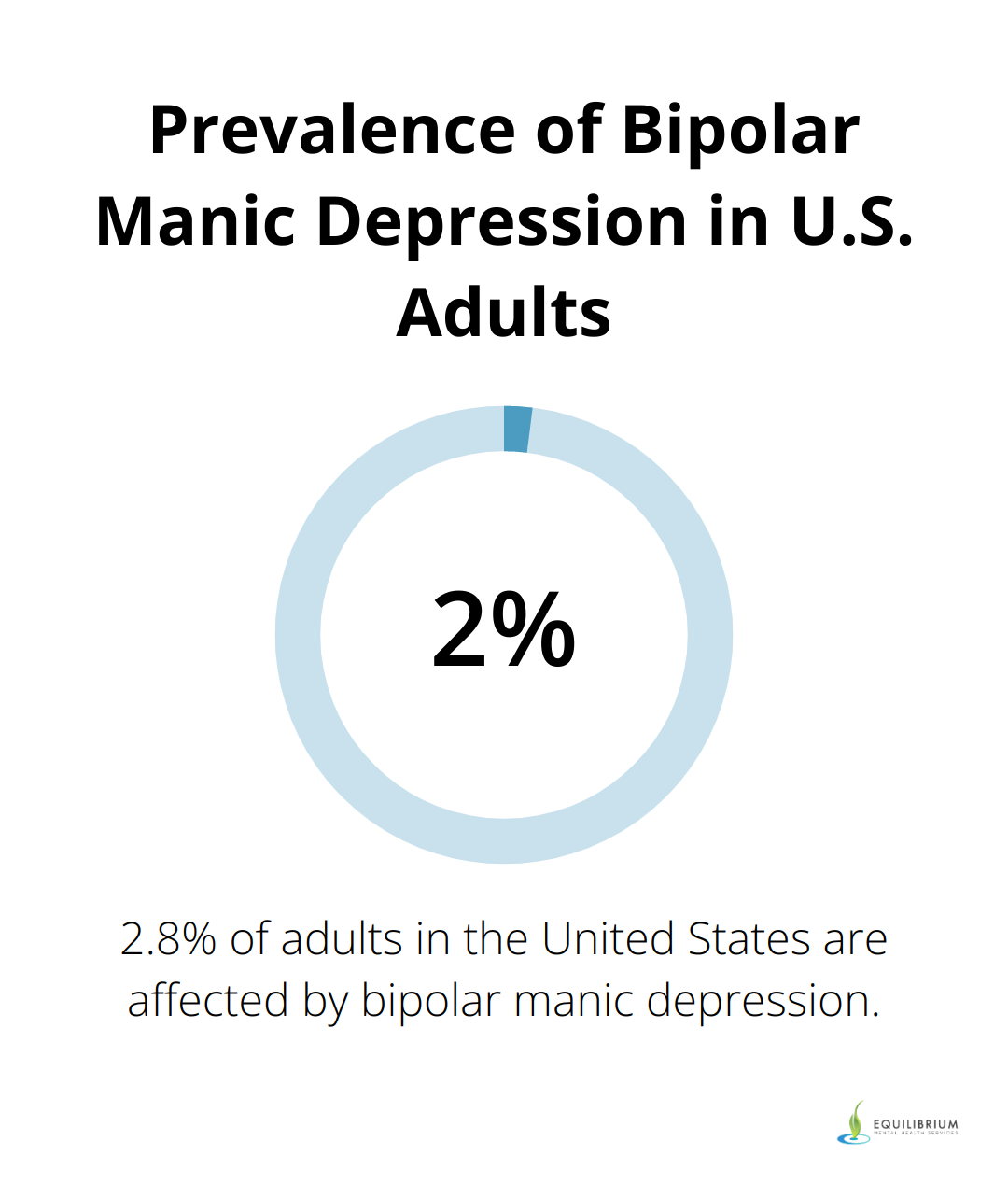
Bipolar manic depression, also known as bipolar disorder, affects approximately 2.8% of adults in the United States. This mental health condition involves extreme mood swings that alternate between manic highs and depressive lows.
During manic episodes, individuals often experience:
- Increased energy and activity
- Reduced need for sleep
- Racing thoughts and rapid speech
- Impulsive or risky behavior
- Inflated self-esteem
In contrast, depressive episodes typically involve:
- Persistent sadness or emptiness
- Loss of interest in activities
- Changes in appetite and sleep patterns
- Difficulty concentrating
- Thoughts of death or suicide
These episodes can persist for days, weeks, or even months, significantly impacting daily life and relationships.
The Far-Reaching Impact on Daily Life
Bipolar manic depression profoundly affects a person’s ability to maintain stable employment, relationships, and overall quality of life. The unpredictable nature of mood swings creates challenges in both personal and professional settings.
For example, during a manic episode, an individual might engage in excessive spending or make impulsive career decisions. Conversely, depressive episodes often result in social withdrawal and decreased productivity at work.
Recognizing the Signs: When to Seek Help
Identifying the symptoms of bipolar manic depression is the first step towards effective management. If you or someone you know in Coral Gables (or surrounding areas like Pinecrest or Palmetto Bay) experiences persistent mood swings that interfere with daily life, it’s time to seek professional help.
Early diagnosis and intervention play a key role in managing bipolar manic depression effectively. With proper treatment (which may include a combination of medication and psychotherapy), many individuals with this condition lead fulfilling lives.
The Path to Diagnosis and Treatment
A comprehensive evaluation by a mental health professional is essential for an accurate diagnosis of bipolar manic depression. This process typically involves:
- A thorough medical history review
- A physical examination to rule out other conditions
- Psychological assessments and questionnaires
- Discussions about symptoms and their impact on daily life
Once diagnosed, treatment options can include mood stabilizers, antipsychotics, and psychotherapy (such as cognitive-behavioral therapy or interpersonal therapy).
As we move forward, it’s important to understand how mental health conditions like bipolar manic depression are classified and coded in the healthcare system. This knowledge not only aids in diagnosis but also ensures proper treatment planning and insurance coverage. Let’s explore the ICD-10 coding system and its significance in mental health care.
Decoding ICD-10: The Universal Language of Mental Health Diagnosis
The Essence of ICD-10 Codes
The International Classification of Diseases, 10th Edition (ICD-10) serves as a universal language for healthcare providers to communicate about mental health conditions. This system enables precise diagnosis and effective treatment planning for patients.
Anatomy of an ICD-10 Code
ICD-10 codes for mental health conditions typically begin with the letter F, followed by two numbers and up to four additional characters. For instance, F31.3 represents bipolar disorder, current episode depressed, mild or moderate severity. This level of detail allows for accurate classification of mental health conditions.
The Significance of ICD-10 Codes for Patients
Understanding ICD-10 codes empowers patients in their mental health journey. These codes:
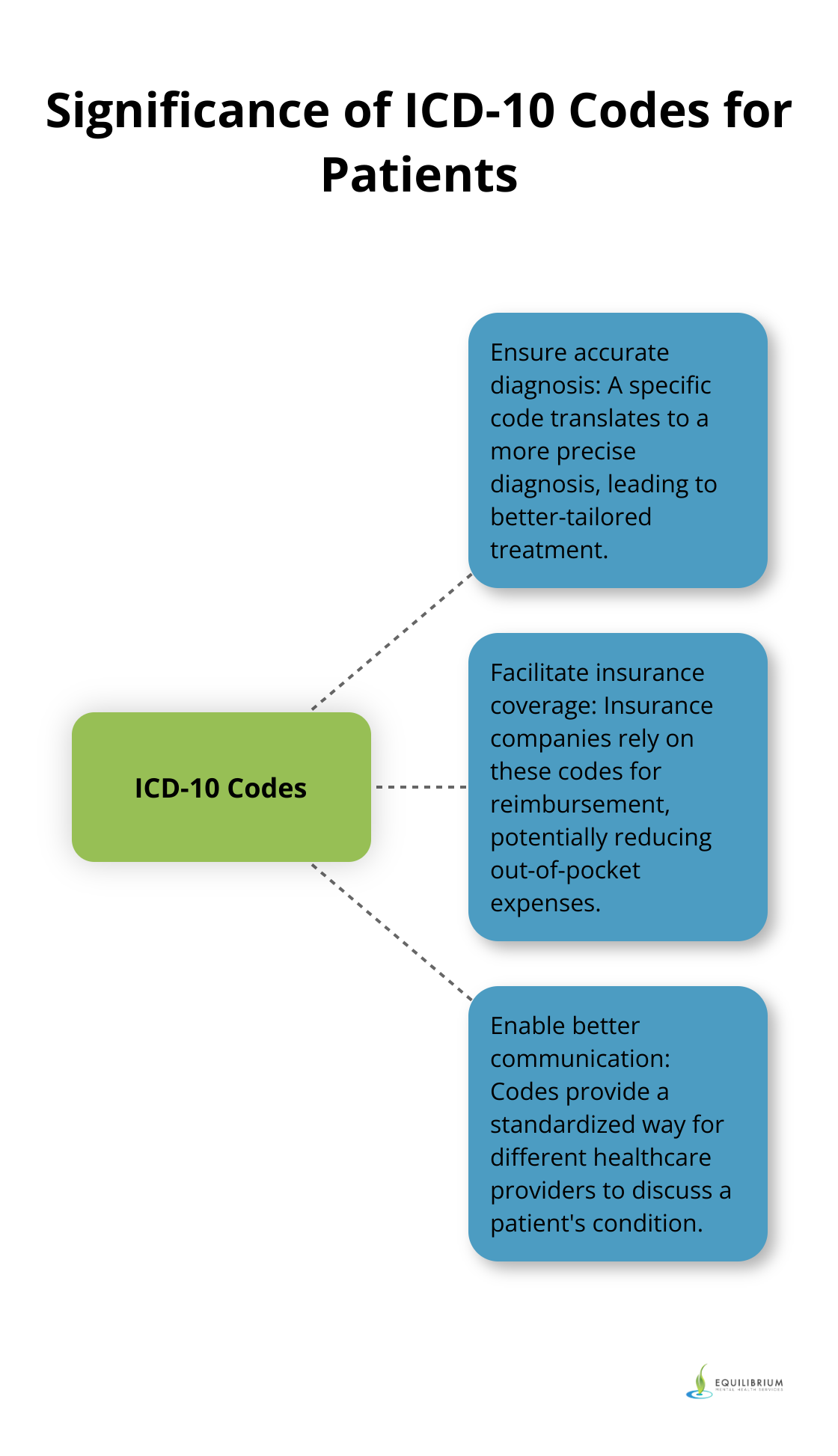
- Ensure accurate diagnosis: A specific code translates to a more precise diagnosis, leading to better-tailored treatment.
- Facilitate insurance coverage: Insurance companies rely on these codes for reimbursement (potentially reducing out-of-pocket expenses).
- Enable better communication: Codes provide a standardized way for different healthcare providers to discuss a patient’s condition.
Mental Health in the ICD-10 Framework
The ICD-10 system primarily classifies mental health conditions under codes F01-F99. This broad category encompasses everything from mood disorders to personality disorders and substance use issues.
For example, major depressive disorder falls under F32, while anxiety disorders are classified under F41. Bipolar disorders, our current focus, are categorized under F31.
The World Health Organization updates these codes regularly to reflect advancements in mental health research and understanding. The most recent update, effective October 1, 2024, introduced new specificity in bipolar disorder coding.
The Impact of ICD-10 on Mental Health Care
Healthcare providers in Coral Gables and surrounding areas like Pinecrest and Palmetto Bay use these codes to ensure accurate diagnoses for their patients. This commitment to precision in diagnosis translates to more effective, personalized treatment plans.
ICD-10 codes form just one part of the mental health care puzzle. In the next section, we’ll explore the specific code for bipolar manic depression and its implications for diagnosis and treatment.
Navigating the F31 Code for Bipolar Disorder
Understanding the F31 Classification
The ICD-10 code F31 serves as the primary classification for bipolar disorder, including bipolar manic depression. This code encompasses various subtypes and severity levels, providing a comprehensive framework for diagnosis and treatment planning.
F31 acts as the base code for bipolar disorder. Additional digits further specify the current episode and its severity. For example, F31.30 indicates a current depressive episode of mild or moderate severity, while F31.2 represents a current episode with mania and psychotic symptoms.
The National Center for Health Statistics emphasizes that accurate use of these codes is essential for proper insurance reimbursement and treatment planning. A study published in the Journal of Clinical Psychiatry found that precise ICD-10 coding serves as the life-blood to work effectively in bipolar disorder treatment.
Clinical Application of F31 Codes
Mental health professionals use these codes to tailor treatment plans to each patient’s specific needs. A patient diagnosed with F31.61 (bipolar disorder, current mixed episode) might receive a different combination of medications and therapy compared to someone with F31.4 (bipolar disorder, current episode hypomanic).
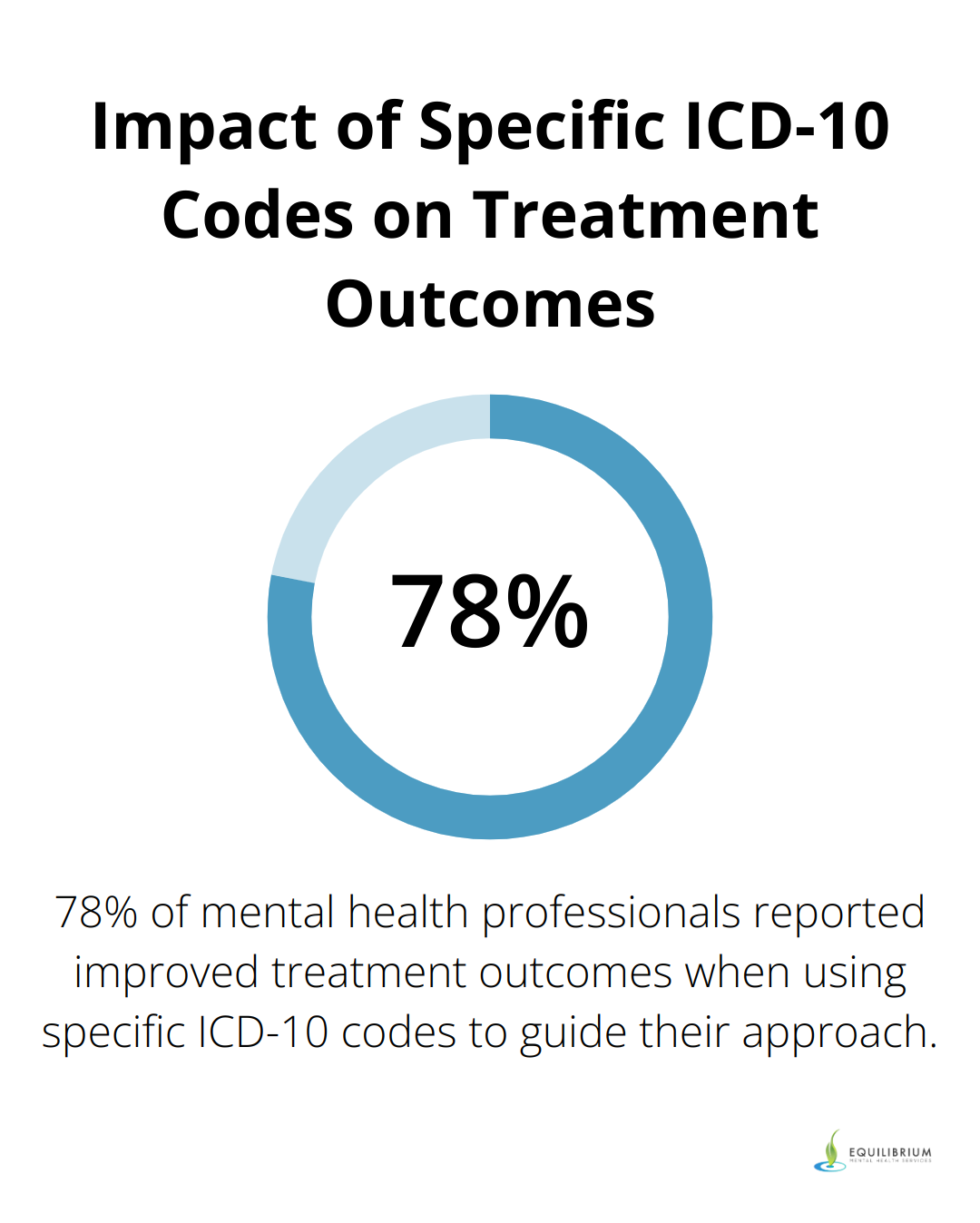
The American Psychiatric Association highlights that proper use of these codes can lead to more targeted interventions. A survey of mental health professionals found that 78% reported improved treatment outcomes when using specific ICD-10 codes to guide their approach.
Treatment Planning with F31
The F31 code isn’t just for diagnosis – it’s a roadmap for treatment. Each subcategory within F31 corresponds to different clinical presentations, helping clinicians choose the most effective interventions.
Patients with F31.5 (bipolar disorder, current episode depressed, severe, with psychotic features) might require a combination of mood stabilizers, antipsychotics, and intensive psychotherapy. In contrast, those with F31.7 (bipolar disorder, currently in remission) may focus more on maintenance therapy and relapse prevention strategies.
A study in the American Journal of Psychiatry found that treatment plans based on specific F31 subcodes resulted in a 30% reduction in hospitalization rates for bipolar patients over a two-year period.
Impact on Patient Care in Coral Gables
In Coral Gables (and nearby areas like Pinecrest and Palmetto Bay), mental health professionals use F31 codes to provide precise diagnoses and tailored treatment plans. This attention to detail ensures that patients receive care that addresses their specific symptoms and needs.
For residents in these areas seeking help for bipolar disorder, understanding these codes can empower them in their mental health journey. It allows for more informed discussions with healthcare providers and a clearer understanding of their diagnosis and treatment options.
The Future of F31 Coding
As our understanding of bipolar disorder evolves, so too does the ICD coding system. The most recent update (effective October 1, 2024) introduced new specificity in bipolar disorder coding. These updates reflect advancements in mental health research and understanding, promising even more precise diagnoses and treatments in the future.
Final Thoughts
The bipolar manic depression ICD-10 code provides a standardized framework for mental health professionals to communicate and make informed decisions about patient care. This classification system enables more precise diagnoses, facilitates better treatment planning, and supports insurance reimbursement processes. Patients who understand these codes can engage in more meaningful conversations with their healthcare providers and advocate for appropriate care tailored to their specific needs.
As our understanding of mental health conditions advances, coding systems will continue to evolve, leading to more accurate diagnoses and effective treatments. Individuals in Coral Gables (and nearby areas) who experience symptoms of bipolar disorder should seek professional help promptly. Early intervention often results in better outcomes and improved quality of life for those affected by this condition.
Equilibrium Mental Health Services offers expert, evidence-based psychiatric care for adults struggling with various mental health conditions, including bipolar disorder. Our team provides personalized treatment plans that may include medication management and psychotherapy. We encourage you to reach out if you or a loved one needs support in managing bipolar disorder or other mental health concerns.


