
At Equilibrium Mental Health Services, we often encounter patients grappling with mood disorders, particularly bipolar depression and major depressive disorder (MDD).
Understanding the differences between bipolar depression vs MDD is vital for accurate diagnosis and effective treatment.
This blog post will explore the key distinctions between these two conditions, helping you gain clarity on their unique characteristics and implications.
What is Bipolar Depression?
Bipolar depression is a complex mood disorder that affects millions worldwide. At Equilibrium Mental Health Services in Miami, we often see patients who struggle with the cyclical nature of this condition. Bipolar disorder is a chronic mood disorder that causes intense shifts in mood, energy levels and behavior. Manic episodes are the main sign of the condition.
Types of Bipolar Disorder
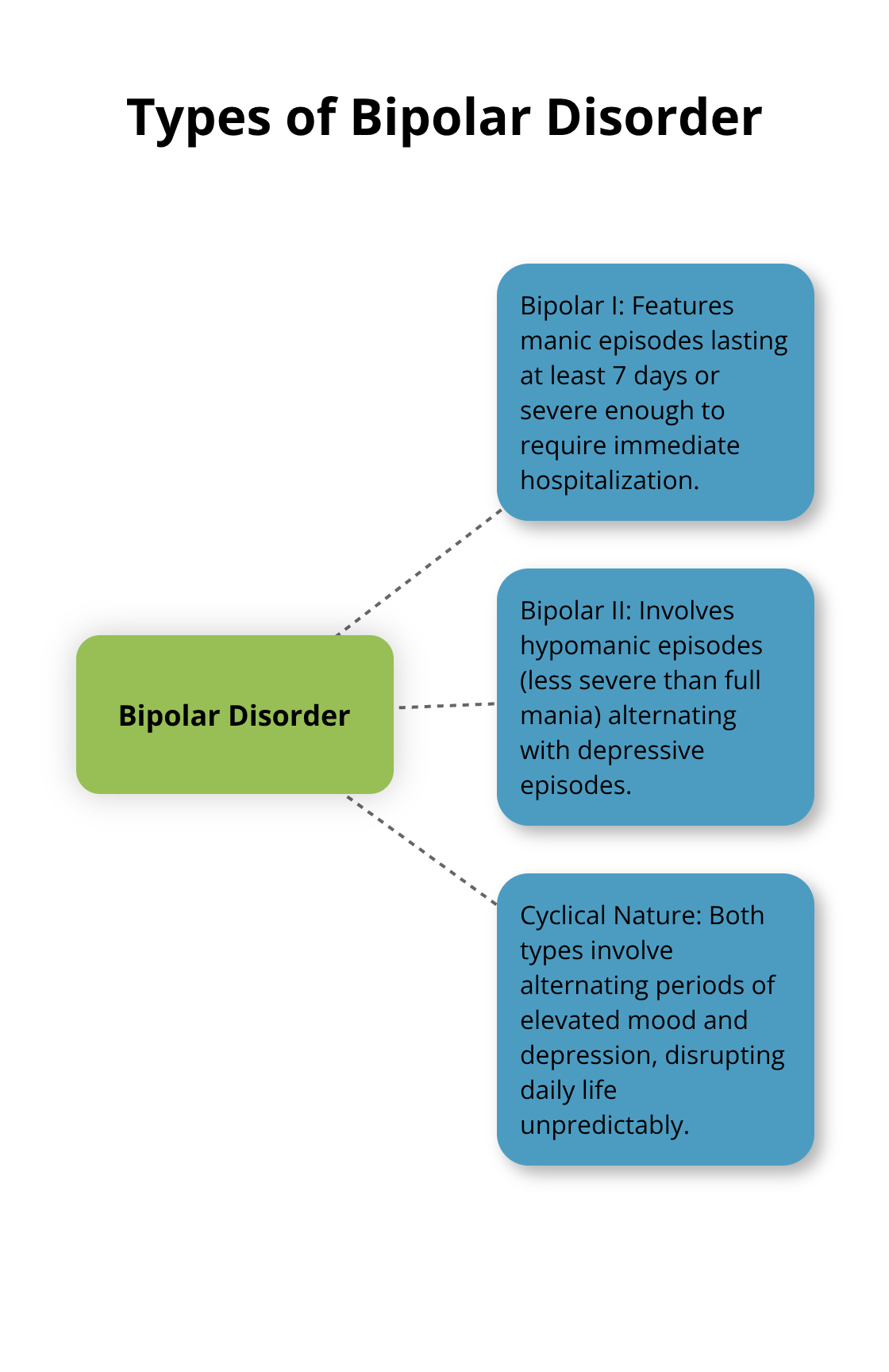
Two main types of bipolar disorder exist: Bipolar I and Bipolar II. Bipolar I features manic episodes that last at least seven days, or manic symptoms so severe that immediate hospitalization becomes necessary. These manic episodes alternate with periods of depression. Bipolar II involves hypomanic episodes (less severe than full mania) alternating with depressive episodes.
The National Institute of Mental Health provides statistics about the prevalence and treatment of bipolar disorder in the United States.
The Cyclical Nature of Bipolar Depression
One of the most challenging aspects of bipolar depression is its cyclical nature. Patients may experience extended periods of depression followed by episodes of mania or hypomania. These mood swings can disrupt daily life unpredictably.
In our Pinecrest clinic, we use mood tracking tools to help patients identify their patterns. This can prove crucial for early intervention and prevention of severe episodes. We recommend apps like eMoods or Daylio for daily mood logging.
Impact on Daily Life
Bipolar depression can significantly affect a person’s ability to function. During depressive episodes, patients may struggle with:
- Persistent sadness or emptiness
- Loss of interest in activities
- Changes in appetite and sleep patterns
- Difficulty concentrating
- Thoughts of death or suicide
These symptoms can be severe and should not be ignored. If you experience any of these, please reach out to us at Equilibrium Mental Health Services for a comprehensive evaluation.
Treatment Approaches
Treating bipolar depression requires a different approach than treating major depressive disorder. Antidepressants alone can sometimes trigger manic episodes in people with bipolar disorder. Instead, mood stabilizers (like lithium or anticonvulsants) often serve as the first line of treatment.
At our Coconut Grove location, we combine medication management with psychotherapy for a holistic approach. Cognitive Behavioral Therapy (CBT) and Interpersonal and Social Rhythm Therapy (IPSRT) have shown particular effectiveness in managing bipolar symptoms.
Understanding bipolar depression marks the first step towards effective management. If you suspect you or a loved one might experience bipolar symptoms, seek professional help. Early diagnosis and treatment can significantly improve outcomes and quality of life. In the next section, we’ll explore Major Depressive Disorder (MDD) and how it differs from bipolar depression.
What is Major Depressive Disorder?
Major Depressive Disorder (MDD) affects millions worldwide, including many patients we see at Equilibrium Mental Health Services in Coral Gables and surrounding areas. This serious mental health condition manifests through persistent feelings of sadness, hopelessness, and loss of interest in activities. A diagnosis of MDD requires these symptoms to last for at least two weeks and significantly impact daily functioning.
Recognizing MDD Symptoms
MDD symptoms can vary, but common signs include:
- Persistent sad or empty mood
- Significant changes in appetite or weight
- Sleep disturbances (insomnia or oversleeping)
- Loss of energy or increased fatigue
- Difficulty concentrating or making decisions
- Feelings of worthlessness or excessive guilt
- Recurrent thoughts of death or suicide
If you experience several of these symptoms for an extended period, professional help becomes essential. Our Pinecrest location offers comprehensive evaluations to accurately diagnose and treat MDD.
The Impact of MDD on Daily Life
MDD disrupts a person’s life significantly, affecting work performance, relationships, and overall quality of life. Many patients in Coconut Grove report difficulties maintaining their jobs or social connections due to their depressive symptoms.
A study published in the Journal of Clinical Psychiatry found that individuals with MDD missed an average of 27 work days per year due to their condition. This statistic highlights the substantial impact MDD can have on productivity and financial stability.
Prevalence and Risk Factors
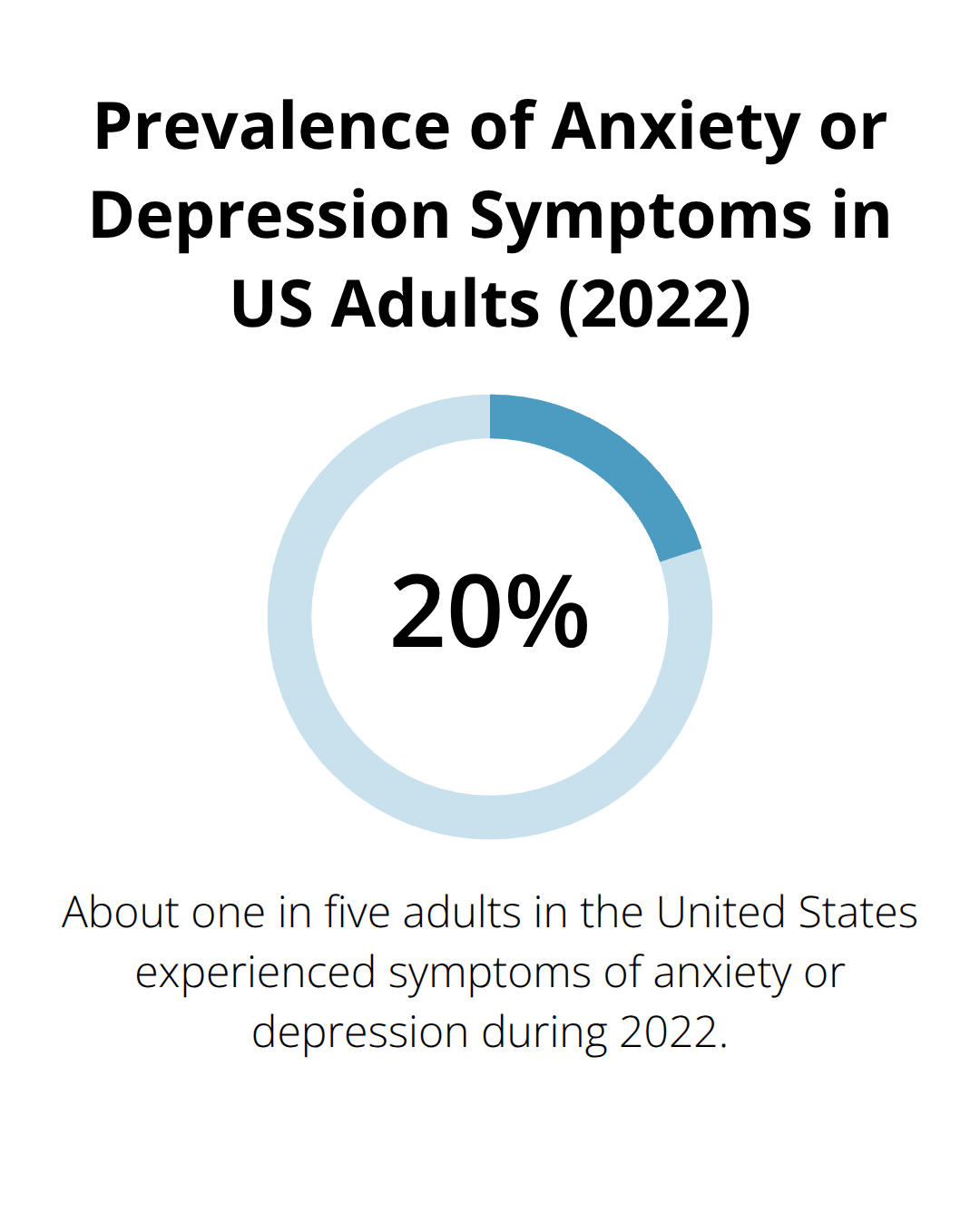
During 2022, about one in five adults in the United States experienced symptoms of anxiety or depression. Most studies report the lifetime prevalence of major depressive disorder to be higher among women than men.
Several factors increase the risk of developing MDD:
- Family history of depression
- Chronic medical conditions
- Traumatic life events
- Certain medications
- Substance abuse
At Equilibrium Mental Health Services, we conduct thorough assessments to identify these risk factors and develop personalized treatment plans for our patients in Miami and the surrounding areas.
Treatment Approaches for MDD
Treatment for MDD often involves a combination of psychotherapy and medication. Cognitive Behavioral Therapy (CBT) and Interpersonal Therapy (IPT) have shown effectiveness in treating MDD. Antidepressants (such as SSRIs or SNRIs) may also be prescribed to help manage symptoms.
In some cases, alternative treatments like Transcranial Magnetic Stimulation (TMS) or Electroconvulsive Therapy (ECT) might be considered for treatment-resistant depression.
Understanding the complexities of MDD sets the foundation for effective treatment. However, it’s equally important to recognize how MDD differs from other mood disorders, particularly bipolar depression. In the next section, we’ll explore the key differences between these two conditions to provide a clearer picture of mood disorders and their unique characteristics.
How Do Bipolar Depression and MDD Differ?
At Equilibrium Mental Health Services, we often see patients who struggle to understand the differences between bipolar depression and major depressive disorder (MDD). While both conditions involve depressive episodes, they have distinct characteristics that affect diagnosis and treatment.
Mood Patterns and Episode Duration
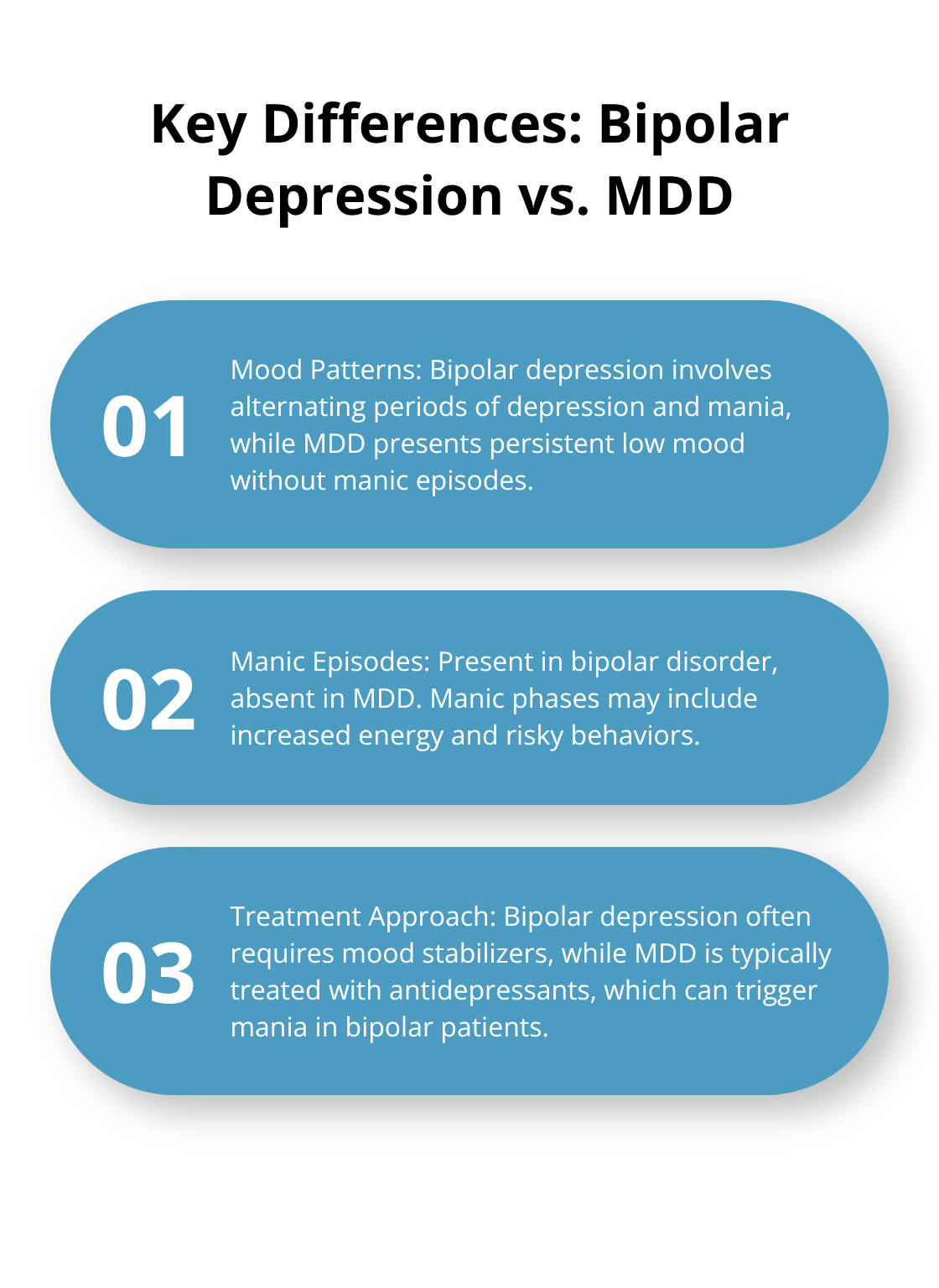
Bipolar depression involves alternating periods of depression and mania or hypomania. These mood swings can last for days, weeks, or even months. In contrast, MDD is characterized by persistent low mood without manic episodes.
The Manic Factor
Individuals with major depression experience a pervasively low mood most days for at least two weeks with no history of manic or hypomanic symptoms. This is the key differentiator between bipolar disorder and MDD. During manic phases, individuals may experience increased energy, decreased need for sleep, and engage in risky behaviors. These symptoms are absent in MDD. We use comprehensive mood assessments to identify any history of manic symptoms, which is essential for accurate diagnosis.
Treatment Approaches and Medication Responses
Treatment strategies for bipolar depression and MDD differ significantly. While antidepressants are often the first-line treatment for MDD, they can trigger manic episodes in individuals with bipolar disorder.
We carefully evaluate each patient’s history before prescribing medication. For bipolar depression, we often recommend mood stabilizers or atypical antipsychotics as the primary treatment. In Pinecrest, we’ve seen success with combination therapies that address both depressive and manic symptoms.
Age of Onset and Family History
Bipolar disorder typically emerges earlier in life compared to MDD. Family history also plays a significant role. High genetic liability to both bipolar disorder and major depression has the strongest association with risk for nonpsychotic bipolar disorder, anxiety disorders, and nonpsychotic major depression.
Cognitive Functioning and Decision-Making
Cognitive impairments can occur in both bipolar depression and MDD, but their nature and severity differ.
We incorporate cognitive assessments into our treatment plans. For patients in Kendall struggling with decision-making or memory issues, we offer cognitive remediation therapies alongside traditional treatments to improve overall functioning.
Final Thoughts
Bipolar depression and MDD differ significantly in their mood patterns and treatment approaches. Bipolar depression involves alternating periods of depression and mania, while MDD presents persistent low mood without manic episodes. This distinction impacts treatment strategies, as antidepressants can trigger manic episodes in individuals with bipolar disorder.
Accurate diagnosis proves essential for effective treatment of mood disorders. At Equilibrium Mental Health Services, we provide expert care for various mood disorders, including bipolar depression vs MDD. Our team in Miami offers comprehensive assessments to ensure precise diagnosis and personalized treatment plans.
We encourage individuals experiencing symptoms of depression or mood swings to seek professional help. Early intervention can improve outcomes and quality of life. Our dedicated team stands ready to support you on your journey towards mental well-being, whether you reside in Coral Gables, Pinecrest, or anywhere in the Miami area.


