
Anxiety and ADHD often share similar symptoms, making it challenging to distinguish between the two conditions. At Equilibrium Mental Health Services, we frequently encounter patients grappling with this confusion.
Understanding the key differences between anxiety vs ADHD is vital for accurate diagnosis and effective treatment. This blog post will explore the unique characteristics of each condition, helping you recognize the signs and seek appropriate professional help.
What Are Anxiety and ADHD?
Understanding Anxiety Disorders
Anxiety disorders extend beyond occasional stress. They involve persistent, excessive worry about various life aspects, often without clear triggers. Lifetime prevalence rates of generalized anxiety disorder (GAD) have been reported as 6.2% in adults.
Common symptoms of anxiety disorders include:
- Constant feelings of dread or apprehension
- Difficulty concentrating on tasks
- Physical symptoms (rapid heartbeat, sweating, trembling)
- Avoidance of certain situations or places
Defining ADHD
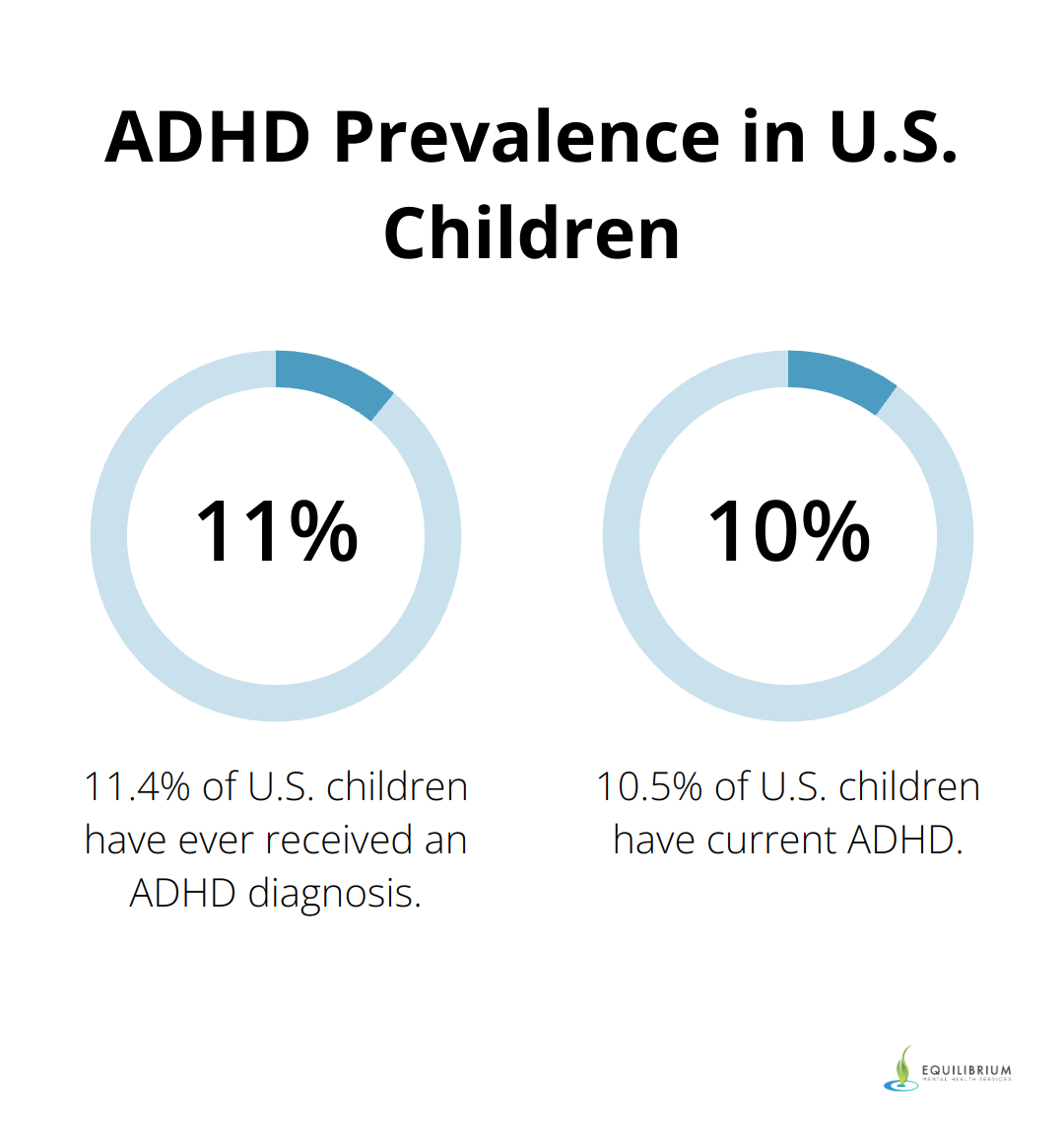
Attention Deficit Hyperactivity Disorder (ADHD) is a neurodevelopmental condition characterized by persistent inattention, hyperactivity, and impulsivity that interferes with functioning or development. Approximately 1 in 9 U.S. children (11.4%, 7.1 million children) have ever received an ADHD diagnosis, and 10.5% (6.5 million) had current ADHD.
Typical signs of ADHD include:
- Difficulty sustaining attention in tasks or activities
- Easy distraction by external stimuli
- Forgetfulness in daily activities
- Fidgeting or inability to sit still
- Excessive talking or interrupting others
The Intersection of Anxiety and ADHD
Anxiety and ADHD symptoms can appear remarkably similar, which underscores the importance of proper diagnosis. Both conditions can result in:
- Trouble focusing or concentrating
- Restlessness or feeling on edge
- Difficulty completing tasks
- Sleep problems
Many patients in Coral Gables (https://g.co/kgs/Toi7gBP) struggle to distinguish between these conditions. A team of experts should use comprehensive assessments to ensure accurate diagnosis and tailored treatment plans.
The Necessity of Professional Evaluation
If you experience symptoms attributable to either anxiety or ADHD, seek professional help. Self-diagnosis can lead to inappropriate treatment and prolonged suffering.
A thorough evaluation to differentiate between anxiety and ADHD should include:
- Detailed clinical interviews
- Standardized assessments
- Consideration of personal history
This comprehensive approach allows for the development of a targeted treatment plan that addresses specific needs.
Moving Forward with Accurate Diagnosis
Whether you face anxiety, ADHD, or both, effective treatments exist. The critical first step involves obtaining an accurate diagnosis from a qualified mental health professional. In the next section, we will explore the key differences between anxiety and ADHD to further aid in understanding these distinct yet often overlapping conditions.
How Do Anxiety and ADHD Differ?
Distinct Thought Patterns and Cognitive Processes
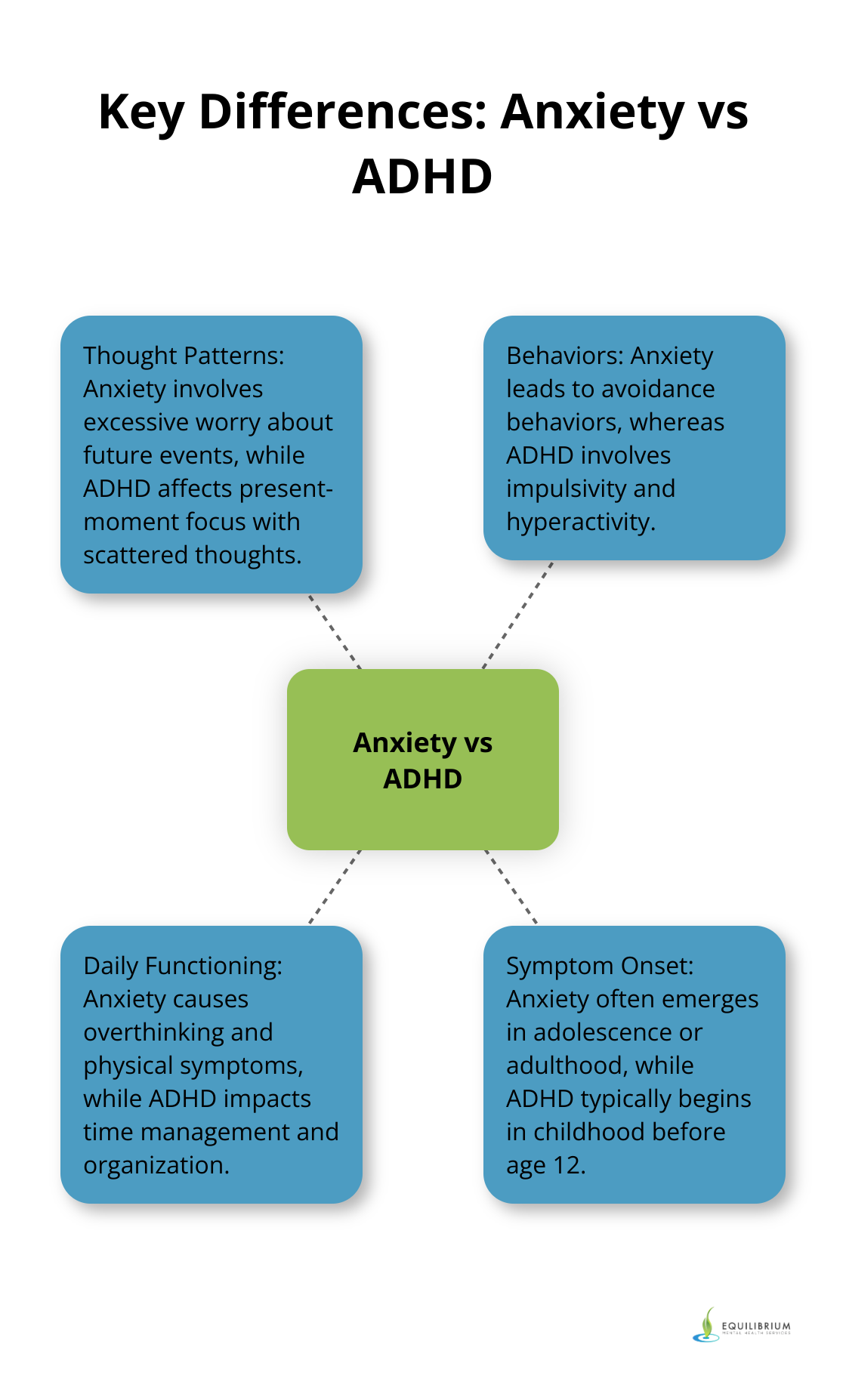
Anxiety involves excessive worry about future events or outcomes. People with anxiety often engage in catastrophic thinking, imagining worst-case scenarios. They replay past events repeatedly in their minds.
ADHD, on the other hand, affects present-moment focus. Thoughts jump from one topic to another, making concentration difficult. Unlike anxiety’s future-oriented thoughts, ADHD thoughts scatter and focus on the present.
A study in the Journal of Attention Disorders found that 37% of adults with ADHD also met criteria for an anxiety disorder, highlighting the potential for overlap and the importance of accurate diagnosis.
Contrasting Behavioral Manifestations
Anxiety leads to avoidance behaviors. People shy away from anxiety-triggering situations (such as social gatherings or public speaking). They might excessively check things or seek reassurance from others.
ADHD behaviors involve impulsivity and hyperactivity. This manifests as interrupting others, fidgeting, or difficulty sitting still. People with ADHD often start multiple projects but struggle to complete them due to focus issues.
Differing Impacts on Daily Functioning
Both conditions significantly affect daily life, but in distinct ways. Anxiety causes overthinking decisions, leading to procrastination or missed opportunities. It can also result in physical symptoms like muscle tension or stomach issues.
ADHD impacts time management and organization. Adults with ADHD often face significant executive function challenges that disrupt their ability to stay organized, focused, and on task.
A 2019 study in the Journal of Clinical Medicine revealed that adults with ADHD reported lower quality of life scores compared to those without ADHD, particularly in work and social relationships.
Onset and Progression of Symptoms
Anxiety disorders develop at any age, but often emerge in adolescence or early adulthood. Specific life events trigger them or they develop gradually over time.
ADHD, a neurodevelopmental disorder, typically begins in childhood. The American Psychiatric Association states that symptoms must appear before age 12 for an ADHD diagnosis. However, many adults don’t receive a diagnosis until later in life, especially those with predominantly inattentive symptoms.
Symptoms of both conditions change over time. For instance, hyperactivity in ADHD may decrease with age, while inattention often persists. Anxiety symptoms fluctuate based on life circumstances and stressors.
Understanding these differences proves essential for accurate diagnosis and effective treatment. If you’re unsure whether you experience anxiety, ADHD, or both, professional help becomes necessary. In Coral Gables (https://g.go/kgs/Toi7gBP), mental health professionals provide comprehensive evaluations to ensure you receive the most appropriate care for your unique situation. The next section will explore the challenges in diagnosing these conditions and the importance of proper assessment.
Navigating the Diagnostic Maze: Anxiety vs ADHD
The Importance of Professional Evaluation
Self-diagnosis often leads to misunderstandings and ineffective treatment. A comprehensive evaluation by a qualified mental health professional proves essential. This process typically involves:
- In-depth clinical interviews
- Standardized psychological assessments
- Review of medical and personal history
- Observation of behavior and symptoms over time
The National Institute of Mental Health reports that about 31.1% of U.S. adults experience an anxiety disorder at some point in their lives. Meanwhile, the CDC states that approximately 4.4% of adults have ADHD. These statistics highlight the prevalence of both conditions and the need for accurate diagnosis.
Advanced Diagnostic Tools and Methods
Modern psychiatry uses various tools to differentiate between anxiety and ADHD. These may include:
- Continuous Performance Tests (CPTs) to measure attention and impulsivity
- Questionnaires like the Adult ADHD Self-Report Scale (ASRS)
- Neuropsychological assessments to evaluate cognitive functions
- Brain imaging techniques in some cases
A study published in the Journal of Attention Disorders found that combining multiple assessment methods significantly improved diagnostic accuracy for ADHD in adults.
Understanding Comorbidity
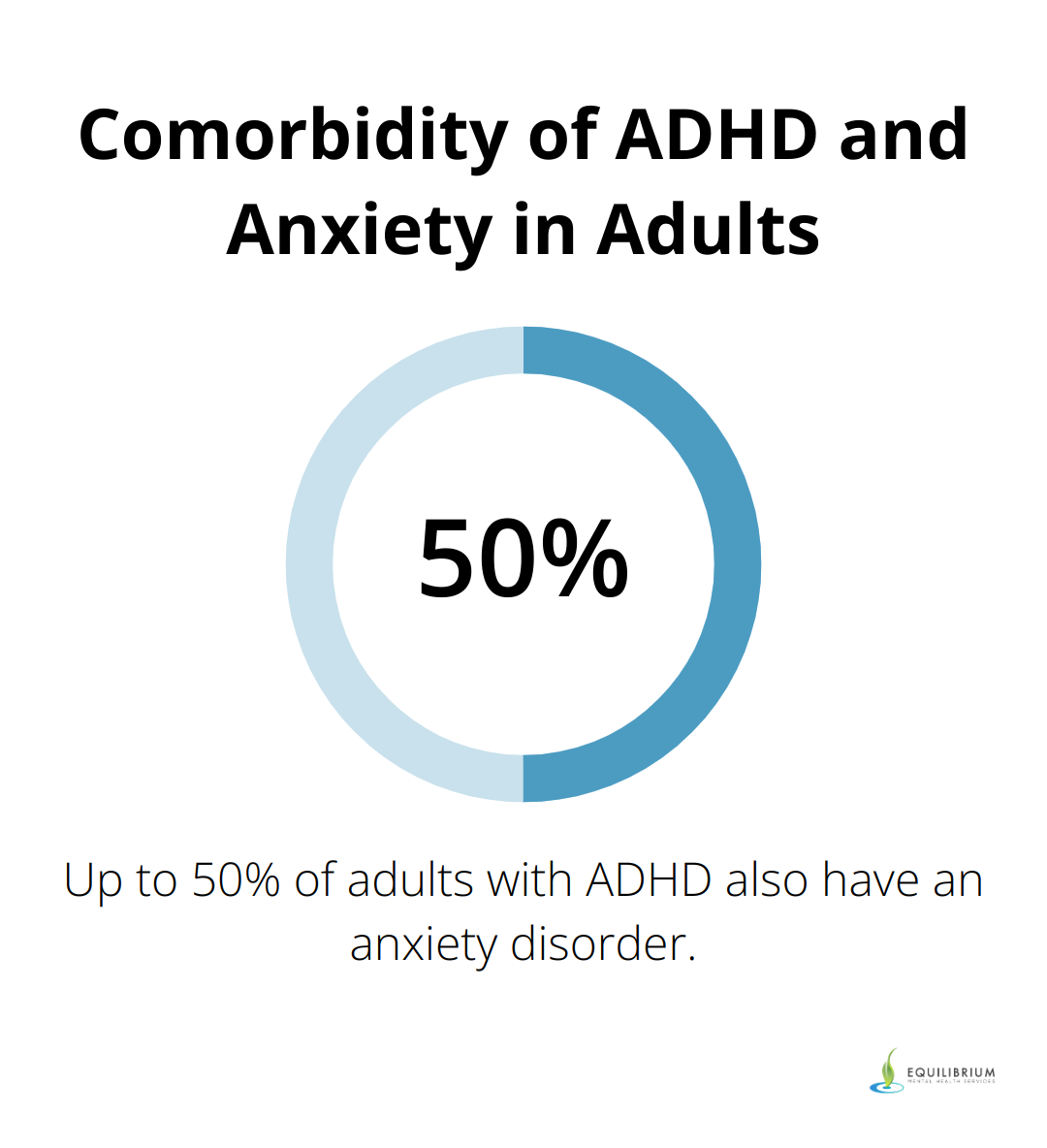
Comorbidity (the co-occurrence of anxiety and ADHD) presents a significant challenge. Research from the Journal of Clinical Psychiatry indicates that up to 50% of adults with ADHD also have an anxiety disorder. This overlap can mask symptoms and complicate treatment plans.
Mental health professionals in Coral Gables (https://g.co/kgs/Toi7gBP) specialize in untangling these intertwined conditions. Their approach involves:
- Careful symptom tracking over time
- Consideration of how symptoms impact different life areas
- Evaluation of family history and genetic factors
- Assessment of response to various interventions
Tailored Treatment Approaches
Once a diagnosis is established, treatment can be tailored accordingly. For anxiety, cognitive-behavioral therapy (CBT) and medication like SSRIs often prove effective. ADHD typically responds well to stimulant medications and behavioral interventions.
In cases of comorbidity, a stepped approach may become necessary. This could involve addressing the more severe condition first or using treatments that target both disorders simultaneously.
Final Thoughts
Anxiety vs ADHD presents a complex diagnostic challenge due to overlapping symptoms. Professional evaluation proves essential for accurate diagnosis and effective treatment. Mental health experts use advanced tools and comprehensive assessments to differentiate between these conditions.
Equilibrium Mental Health Services offers personalized treatment plans for adults struggling with anxiety, ADHD, or both. Our team in Coral Gables employs evidence-based approaches to ensure precise diagnosis and tailored interventions. We strive to provide the support and care needed to achieve better mental health.
Proper diagnosis marks the first step towards improved well-being. If you experience symptoms attributable to anxiety or ADHD (or both), seek professional help. Contact us today to begin your journey towards a more balanced life.


