
ADHD and sleep problems often go hand in hand, creating a challenging cycle for those affected. At Equilibrium Mental Health Services, we’ve seen firsthand how poor sleep can exacerbate ADHD symptoms, while ADHD itself can make it difficult to get a good night’s rest.
Understanding this connection is crucial for managing ADHD effectively and improving overall quality of life. In this post, we’ll explore the relationship between ADHD and sleep issues, and provide practical strategies for better rest.
The ADHD-Sleep Connection: Unraveling the Complex Relationship
Understanding Sleep Challenges in ADHD
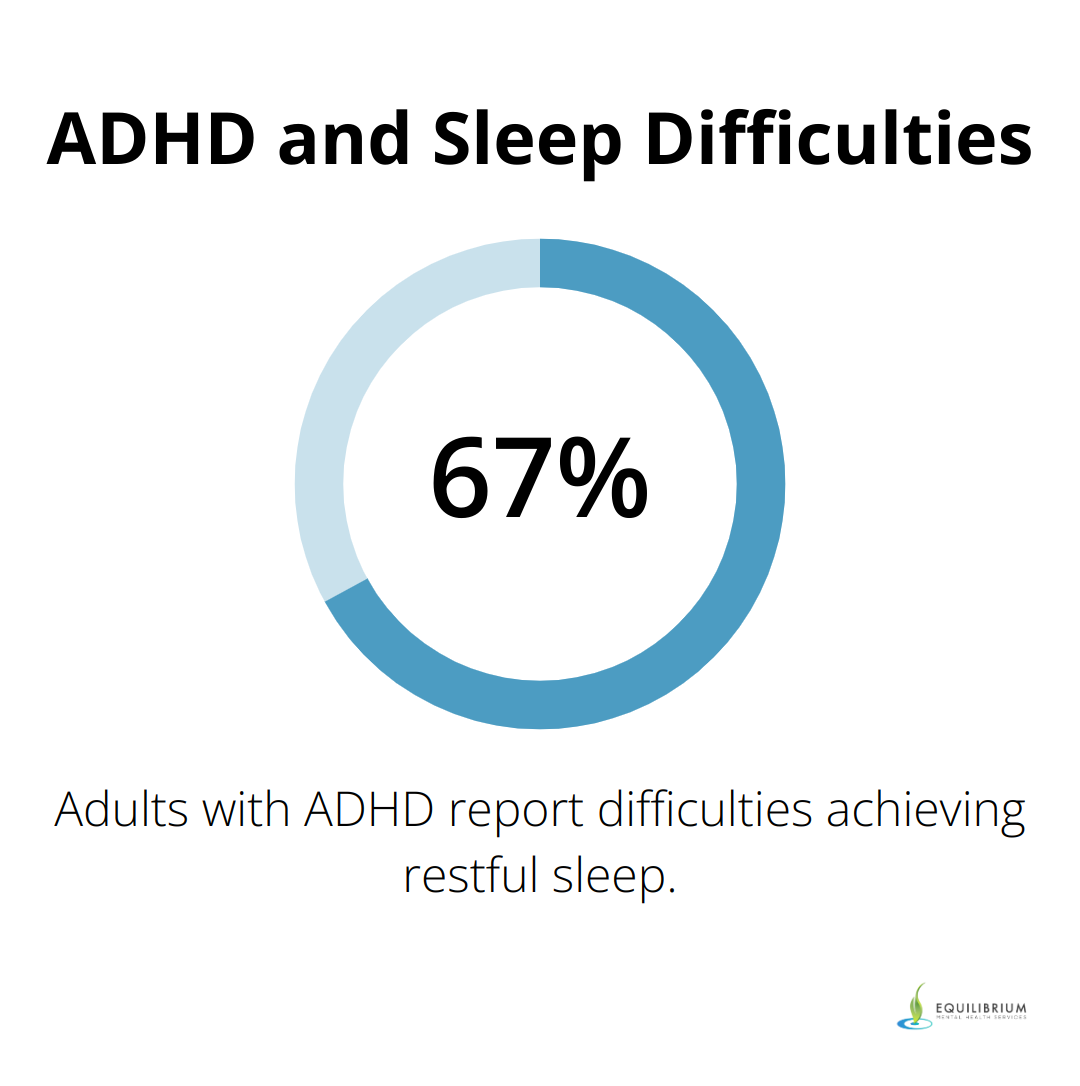
ADHD and sleep disorders often intertwine, creating a complex relationship that affects millions. People with ADHD face significant sleep hurdles. A study published in the Journal of Clinical Sleep Medicine reveals that approximately 67% of adults with ADHD report difficulties achieving restful sleep. Common issues include:
- Delayed sleep onset: Many struggle to “shut off” their minds at night.
- Frequent night awakenings: About 80% of adults with ADHD experience multiple awakenings during the night.
- Irregular sleep patterns: ADHD disrupts the body’s natural circadian rhythm.
- Restless sleep: Tossing and turning throughout the night is common.
ADHD’s Impact on Sleep Patterns
ADHD affects sleep patterns in various ways. The hyperactivity and impulsivity associated with ADHD make it challenging to wind down at night. Additionally, inattention symptoms lead to poor sleep hygiene practices, such as irregular bedtimes or excessive screen time before sleep.
Research suggests that individuals with ADHD are more likely to experience delayed sleep phase syndrome. This condition may be linked to sleep onset insomnia and delayed sleep phase disorder observed in ADHD patients.
The Vicious Cycle: Poor Sleep and ADHD Symptoms
Poor sleep significantly worsens ADHD symptoms, creating a challenging cycle. Lack of quality sleep leads to:
- Increased inattention and distractibility
- Heightened impulsivity and emotional reactivity
- Decreased cognitive function and memory
- Worsened executive functioning skills
A study in the Journal of Attention Disorders found that adults with ADHD who experienced sleep problems showed more severe ADHD symptoms compared to those with better sleep quality.
Breaking the Cycle: Seeking Professional Help
The intricate relationship between ADHD and sleep issues requires a comprehensive approach to treatment. Mental health professionals (such as those at Equilibrium Mental Health Services in Coral Gables) emphasize the importance of addressing both ADHD and sleep issues simultaneously. A tailored treatment plan that tackles both concerns can help patients break the cycle and improve their overall quality of life.
In the next section, we’ll explore effective strategies for improving sleep quality in individuals with ADHD, providing practical tips and techniques to enhance rest and manage symptoms more effectively.
How Can ADHD Patients Improve Their Sleep?
Sleep issues often plague individuals with ADHD. We at Equilibrium Mental Health Services have developed effective strategies to help our patients in Coral Gables and surrounding areas achieve better rest. Here are some practical approaches that have shown promising results:
Establish a Consistent Sleep Schedule
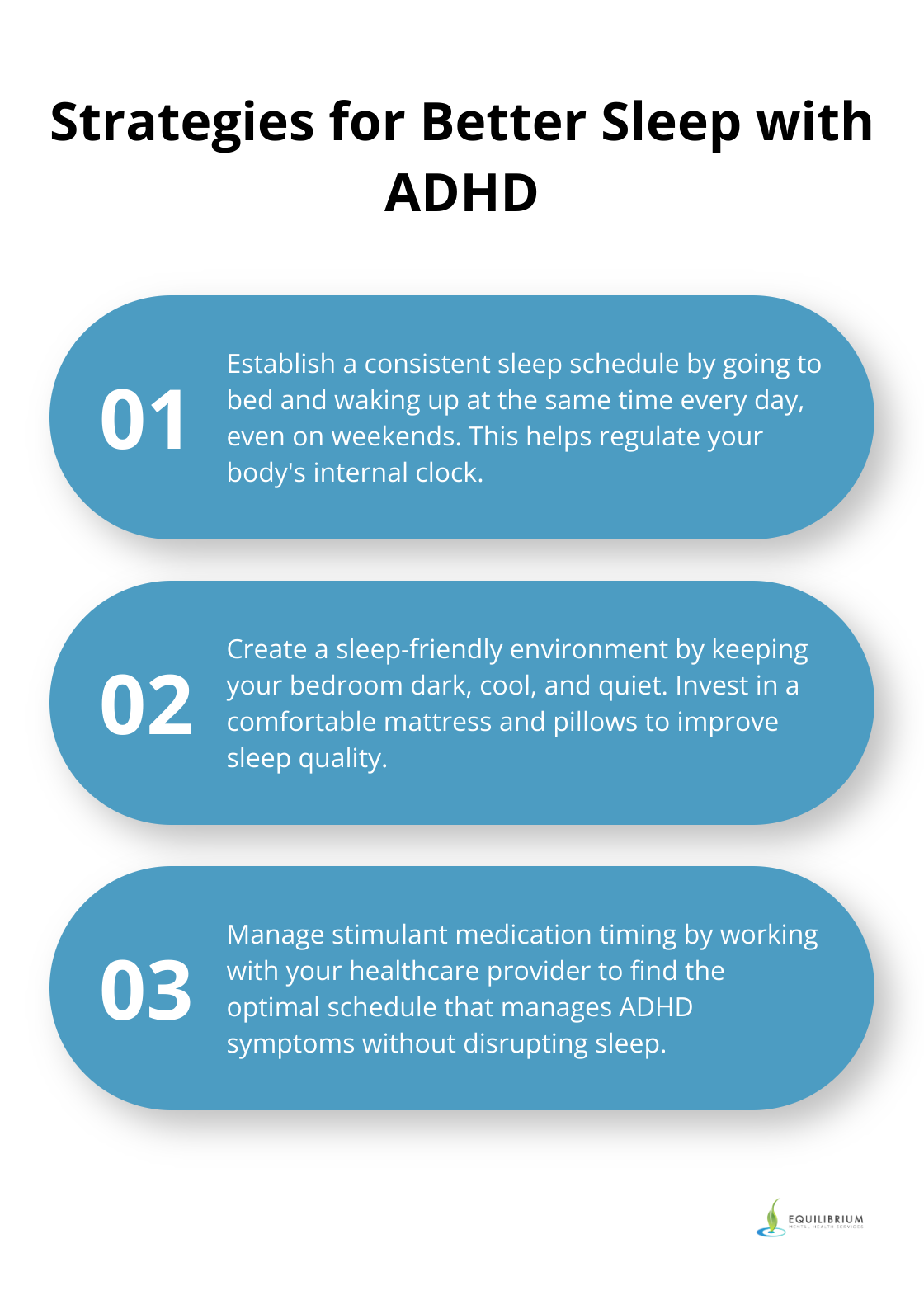
One of the most effective ways to improve sleep quality is to maintain a consistent sleep schedule. This means going to bed and waking up at the same time every day, even on weekends. A literature review conducted in 2021 suggests that maintaining a consistent sleep schedule is an important aspect of treating sleep issues in adults with ADHD.
For example, if you plan to sleep at 10 PM and wake up at 6 AM, stick to these times religiously. Your body’s internal clock will gradually adjust, making it easier to fall asleep and wake up naturally. We recommend setting alarms not just for waking up, but also for bedtime to help reinforce this habit.
Create a Sleep-Friendly Environment
Your bedroom environment plays a crucial role in sleep quality. We advise patients to make their bedrooms as conducive to sleep as possible. This includes:
- Keeping the room dark: Use blackout curtains or an eye mask to block out light.
- Maintaining a cool temperature: The ideal sleeping temperature is between 60-67°F (15-19°C).
- Reducing noise: Use earplugs or a white noise machine if necessary.
- Investing in a comfortable mattress and pillows: This can significantly improve sleep quality.
Manage Stimulant Medication Timing
For many ADHD patients, stimulant medications are an essential part of their treatment plan. However, these medications can interfere with sleep if not timed correctly. We work closely with our patients to find the optimal medication schedule that manages ADHD symptoms without disrupting sleep.
Some patients find that taking their last dose of medication earlier in the day helps. Others benefit from a small dose of immediate-release medication before bed to help quiet racing thoughts. It’s important to work with a healthcare professional to find the right balance.
Implement Relaxation Techniques
Relaxation techniques can particularly benefit individuals with ADHD who struggle with racing thoughts at bedtime. Various methods include:
- Progressive Muscle Relaxation: Tensing and relaxing different muscle groups in sequence.
- Deep Breathing Exercises: Slow, deep breaths can help calm the mind and body.
- Mindfulness-Based Therapy: Focusing on the present moment can help quiet a busy mind. Recent research suggests that mindfulness may improve ADHD symptoms, executive function, problematic behaviors, and emotional regulation.
These techniques require practice, but many patients report significant improvements in their ability to fall asleep after incorporating them into their nightly routine.
Improving sleep with ADHD is a process that requires patience and consistency. If you’re struggling with sleep disorders related to ADHD in the Miami area (including Coconut Grove and Kendall), don’t hesitate to reach out to us at Equilibrium Mental Health Services (https://g.co/kgs/Toi7gBP). Our team of experts is ready to help you develop a personalized sleep improvement plan tailored to your specific needs. In the next section, we’ll explore lifestyle changes that can further support better sleep for individuals with ADHD.
Lifestyle Tweaks for Better Sleep with ADHD
The Exercise-Sleep Connection
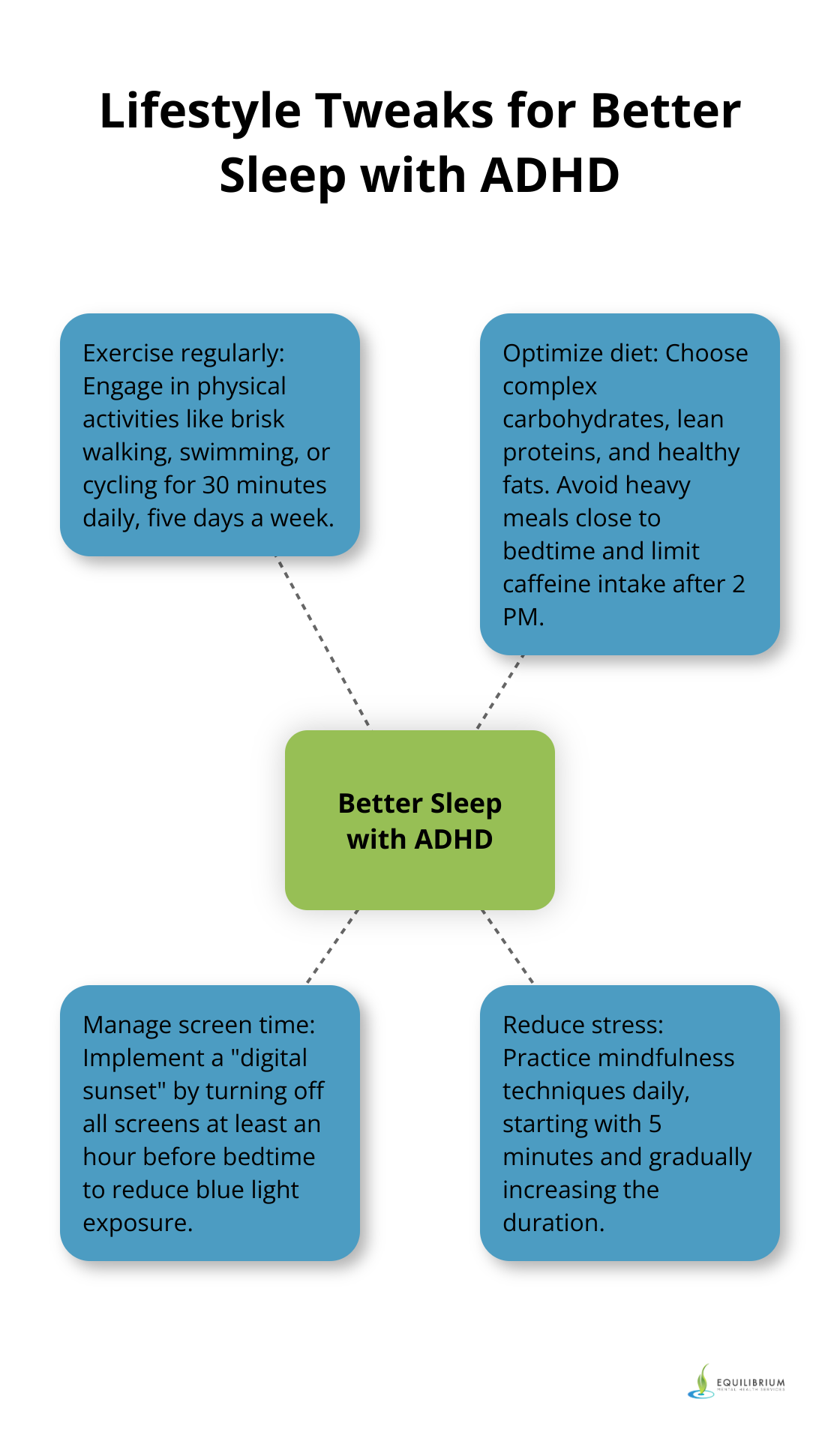
Physical activity improves sleep quality for individuals with ADHD. Recent research investigates the agreement between actigraphy and daily diaries for assessing moderate to vigorous physical activity (MVPA) and sedentary behavior in people with a myocardial infarction. We recommend activities like brisk walking, swimming, or cycling for 30 minutes daily, five days a week. Try to exercise at the same time each day, preferably in the morning or early afternoon to avoid sleep cycle disruption.
Food Choices Matter
Diet significantly impacts sleep quality. Complex carbohydrates, lean proteins, and healthy fats promote better sleep. Avoid heavy meals close to bedtime and limit caffeine intake after 2 PM. A study in the Journal of Clinical Sleep Medicine linked low fiber and high saturated fat and sugar intake to lighter, less restorative sleep. Try incorporating sleep-promoting foods into your evening routine, such as cherries (a natural source of melatonin), bananas (rich in magnesium and potassium), or warm milk (contains tryptophan, which can induce sleepiness).
Taming the Blue Light Beast
Screen time often extends into the night, disrupting natural sleep patterns. Blue light exposure may lead to a large disruption of circadian rhythms, melatonin onset and sleep. We recommend a “digital sunset” – turning off all screens at least an hour before bedtime. If device use is necessary, consider blue light filtering apps or glasses.
Stress-Busting Techniques
Stress and anxiety often accompany ADHD, making it difficult to unwind at night. Incorporating stress management techniques into your daily routine can significantly improve sleep quality. Mindfulness practices have shown promising results. A study in the Journal of Attention Disorders reported that adults with ADHD who practiced mindfulness meditation for 8 weeks experienced improved sleep quality and reduced insomnia symptoms. Start with 5 minutes daily and gradually increase the duration.
If you’re in the Miami area (including Kendall and Coconut Grove) and struggle with sleep issues related to ADHD, consider reaching out to a mental health professional. Experts can work with you to develop a personalized plan that addresses both your ADHD symptoms and sleep concerns.
Final Thoughts
ADHD and sleep problems create a challenging cycle that affects millions worldwide. The strategies we discussed can help individuals with ADHD take significant steps towards better rest and improved quality of life. However, professional help often provides the most effective approach to navigate these complex issues.
At Equilibrium Mental Health Services in Coral Gables, we specialize in treating various mental health conditions, including ADHD. Our team of experts provides personalized treatment plans that address both ADHD symptoms and related sleep issues. We offer tailored solutions that work for you, whether you need medication management, psychotherapy, or a combination of both.
If you struggle with ADHD and sleep problems, we encourage you to seek support. Visit Equilibrium Mental Health Services to learn more about how we can help you achieve better sleep and improved ADHD management. With the right support and strategies, you can break the cycle of poor sleep and ADHD symptoms (paving the way for a healthier life).


