
ADHD and sleep often have a complex relationship, with one significantly impacting the other. Many individuals with ADHD struggle to get the rest they need, which can worsen their symptoms and overall well-being.
At Equilibrium Mental Health Services, we understand the challenges of managing ADHD and sleep issues. This blog post will explore the connection between ADHD and sleep, offering practical strategies to improve rest and enhance focus.
ADHD and Sleep Disruption: A Complex Interplay
The Prevalence of Sleep Issues in ADHD
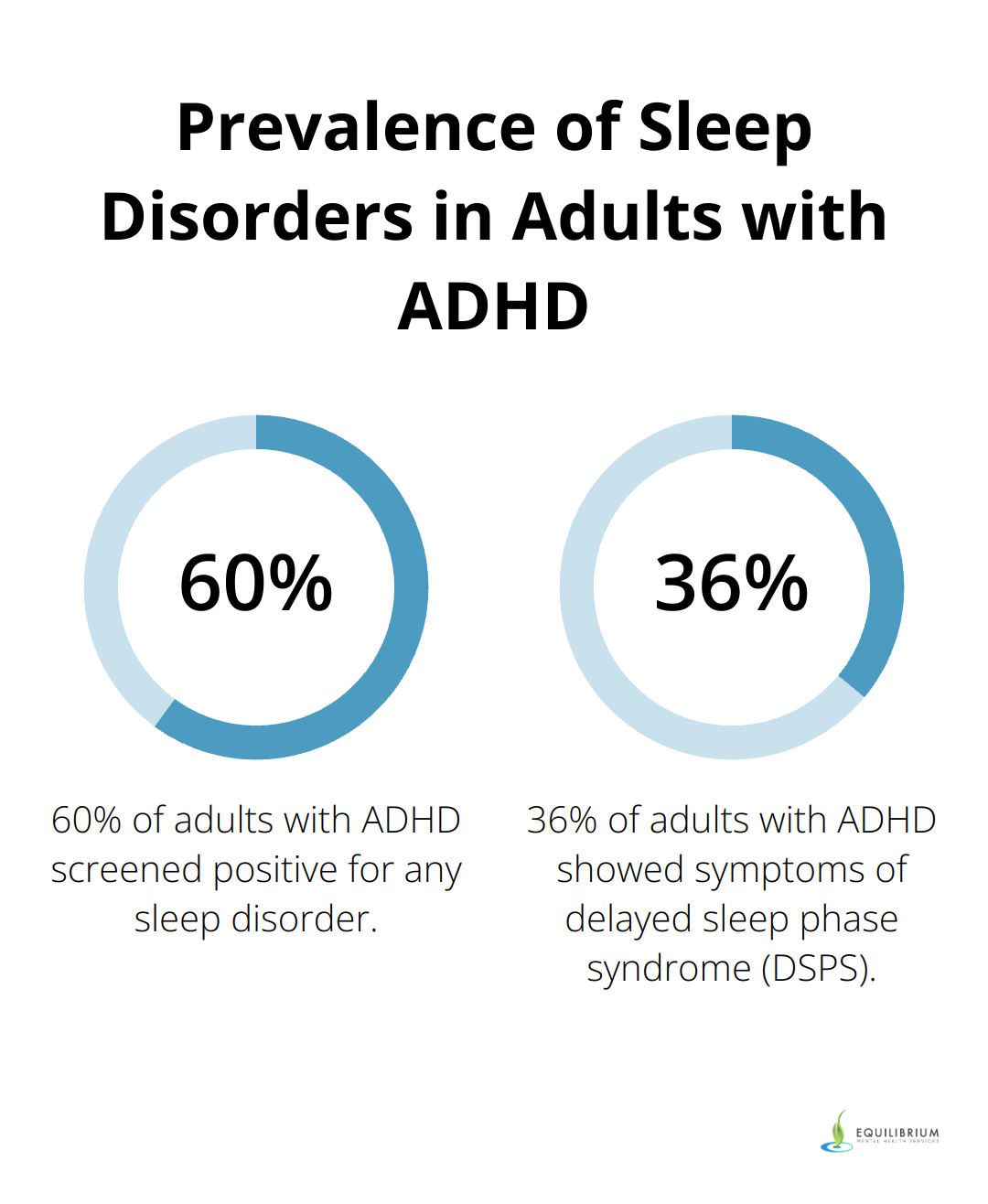
ADHD significantly impacts sleep patterns, creating a challenging cycle for those affected. About 60% of adults with ADHD screened positive for any sleep disorder, with the highest prevalence found for symptoms of delayed sleep phase syndrome (DSPS) at 36% and insomnia. This statistic highlights the urgent need to address sleep issues in ADHD management.
Understanding the ADHD-Sleep Connection
ADHD symptoms disrupt the body’s circadian rhythm, making it difficult to fall asleep and stay asleep. Racing thoughts, hyperactivity, and difficulty winding down are common hurdles. These challenges often lead to delayed sleep onset, frequent night awakenings, and overall poor sleep quality.
Common Sleep Issues in ADHD
Individuals with ADHD frequently struggle with specific sleep problems. Insomnia is a primary concern, with many finding it hard to quiet their minds at bedtime. Restless leg syndrome and sleep apnea (conditions that further fragment sleep) are also more prevalent in the ADHD population. These issues lead to daytime fatigue and worsen ADHD symptoms.
The Vicious Cycle of Poor Sleep and ADHD Symptoms
Poor sleep exacerbates ADHD symptoms, creating a detrimental feedback loop. Sleep deprivation impairs focus, memory, and impulse control – areas already challenging for those with ADHD. Research shows that sleep-deprived individuals (both with and without ADHD) display similar brain patterns on fMRI scans, indicating impaired executive function.
This cycle can be particularly pronounced in bustling areas like Miami or Brickell, where the fast-paced lifestyle may further complicate sleep routines. Many patients struggle with this ADHD-sleep cycle, emphasizing the need for targeted interventions.
Breaking the Cycle: Key Strategies
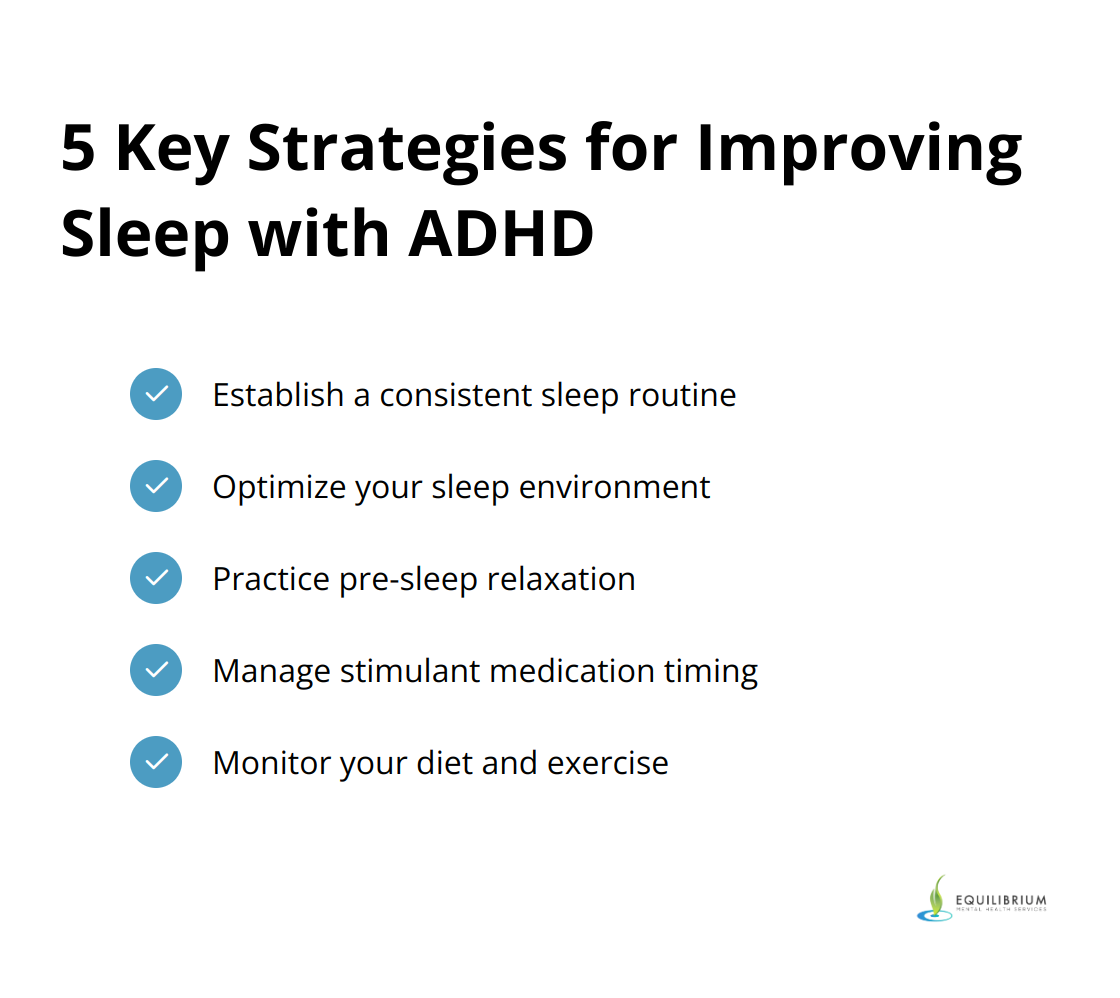
Addressing sleep issues is essential for effective ADHD management. Key strategies include:
- Consistent sleep schedules
- Creating a sleep-friendly environment
- Managing stimulant medication timing
For personalized guidance on breaking the ADHD-sleep cycle, consider reaching out to a mental health professional. They can provide tailored advice and treatment options to improve both your sleep quality and ADHD symptoms.
As we move forward, we’ll explore specific strategies to improve sleep for individuals with ADHD, offering practical tips to enhance rest and focus.
How to Improve Sleep with ADHD
Establish a Consistent Sleep Routine
Creating a regular sleep schedule is important. Set a fixed bedtime and wake-up time every day, including weekends. This consistency helps regulate your body’s internal clock. Set a “get ready for bed” alarm 30 minutes before your intended sleep time. This alarm acts as a cue to start winding down and can help those who lose track of time in the evening.
Optimize Your Sleep Environment
Transform your bedroom into a sleep sanctuary. Keep it cool, dark, and quiet. Install blackout curtains to block out light, especially if you live in bustling areas like Brickell or Miami. Use a white noise machine to mask disruptive sounds. Remove electronics from your bedroom (their presence can be tempting and disruptive). If you must have your phone nearby, use the “Do Not Disturb” feature to minimize notifications. Research has shown that natural light, especially morning light, is preferable to provide adequate lighting in an area for children with ADHD to recover from sleep issues.
Practice Pre-Sleep Relaxation
Relaxation techniques can calm an ADHD mind before bed. Try guided meditation apps or progressive muscle relaxation. Some find success with gentle yoga or stretching routines. Avoid high-intensity exercise close to bedtime as it can stimulate. Instead, engage in calming activities like reading a book (preferably a physical copy to avoid blue light exposure) or listening to soothing music.
Manage Stimulant Medication Timing
If you take stimulant medication for ADHD, its timing can significantly impact your sleep. Work with your healthcare provider to adjust your medication schedule. Taking your last dose earlier in the day or switching to a shorter-acting formulation might help. Never adjust your medication without professional guidance.
Monitor Your Diet and Exercise
What you eat and when you eat it matters. Avoid heavy meals close to bedtime. Limit caffeine intake, especially after 2 PM. Regular exercise can improve sleep quality, but timing is key. Try to finish vigorous workouts at least 3 hours before bedtime. For those living near Key Biscayne, an evening walk on the beach can unwind without overstimulating your system.
These strategies can significantly improve sleep quality for individuals with ADHD. However, if sleep issues persist, seek professional help. Many mental health services offer personalized treatment plans that address both ADHD and sleep concerns. The next section will explore how lifestyle changes can further enhance sleep management for those with ADHD.
Lifestyle Changes for Better Sleep with ADHD
The Power of Regular Exercise
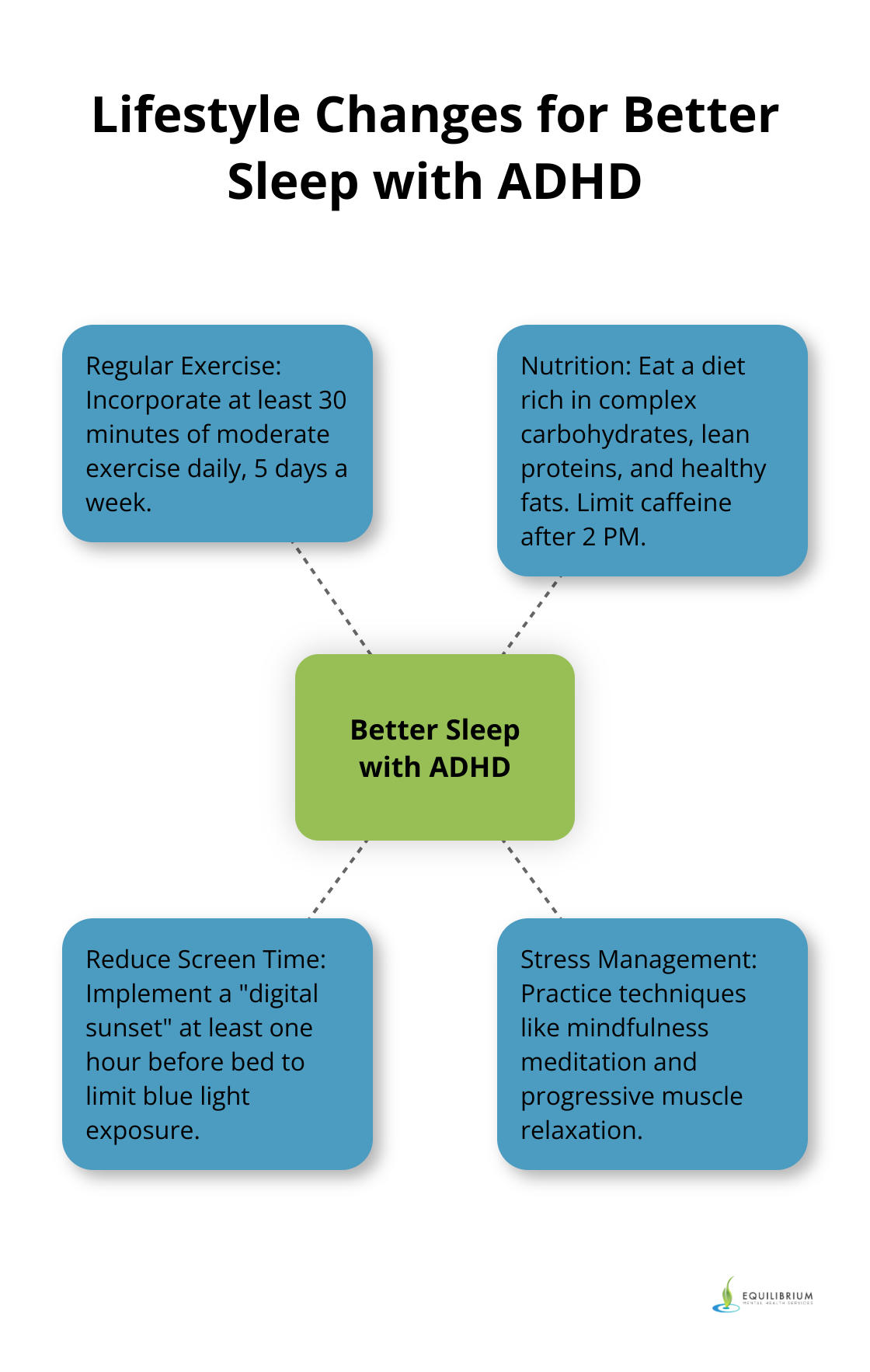
Physical activity transforms ADHD symptom management and sleep quality. Regular exercise has been found to be more effective than usual treatments for decreasing time awake and increasing total sleep duration. We recommend incorporating at least 30 minutes of moderate exercise into daily routines. This could include a brisk walk in Matheson Hammock Park or a swim at the Venetian Pool in Coral Gables. Try to exercise at least 5 days a week, but avoid vigorous workouts within 3 hours of bedtime.
Nutrition’s Role in Sleep
Your diet significantly impacts your sleep. A diet rich in complex carbohydrates, lean proteins, and healthy fats promotes better sleep. We advise patients to limit caffeine intake after 2 PM and avoid heavy meals close to bedtime. For those living in Brickell or downtown Miami (where late-night dining is common), we suggest eating dinner at least 3 hours before bed. Some individuals find success with a small, protein-rich snack before bed to stabilize blood sugar levels throughout the night.
Reducing Screen Time and Blue Light Exposure
Blue light from screens interferes with your body’s melatonin production (the sleep hormone). We recommend a “digital sunset” – turning off all screens at least one hour before bed. For those who must use devices in the evening, blue light filtering apps or glasses can help. Many patients in Pinecrest have found success by replacing evening screen time with relaxing activities like reading or gentle stretching.
Effective Stress Management Techniques
Stress exacerbates both ADHD symptoms and sleep issues. Various stress management techniques, including mindfulness meditation and progressive muscle relaxation, can help. A preliminary study tested the efficacy of Mindfulness-Oriented Meditation (MOM) training on sleep quality and behavioral problems in children with ADHD. For those living near Key Biscayne, evening beach walks serve as a form of moving meditation to wind down before bed.
Personalized Support for Lifestyle Changes
Implementing these lifestyle changes can challenge individuals managing ADHD. Mental health professionals offer personalized support to help patients integrate these strategies into their daily lives. A tailored plan that addresses both ADHD symptoms and sleep concerns can make a significant difference in overall well-being.
Final Thoughts
Managing ADHD and sleep issues requires a personalized approach. Each individual’s experience with ADHD sleep problems differs, making professional guidance invaluable. At Equilibrium Mental Health Services, we create tailored treatment plans for adults dealing with ADHD and related sleep challenges.
Our team of experts understands the complexities of ADHD sleep issues. We offer evidence-based solutions that combine medication management and psychotherapy to help you find the right balance. Our goal is to support you in achieving better sleep, improved focus, and enhanced overall mental well-being.
If you’re in Coral Gables or nearby areas and struggle with ADHD-related sleep problems, we encourage you to reach out. Don’t let sleep issues hold you back from living your best life (take the first step towards better sleep today).


